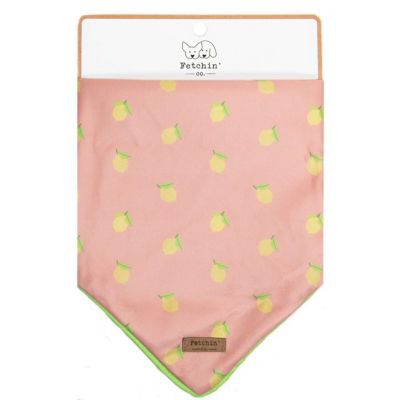
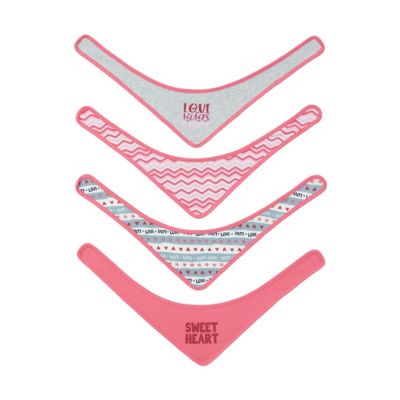
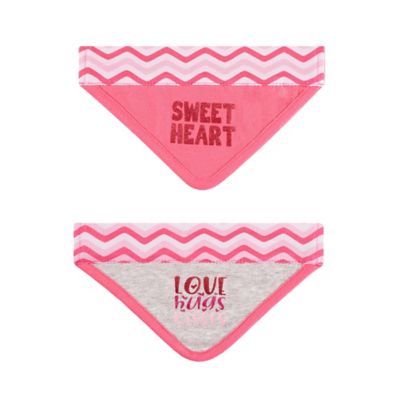
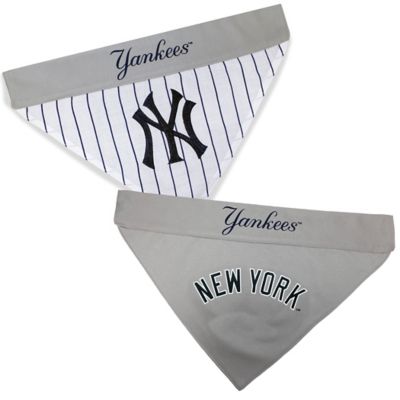
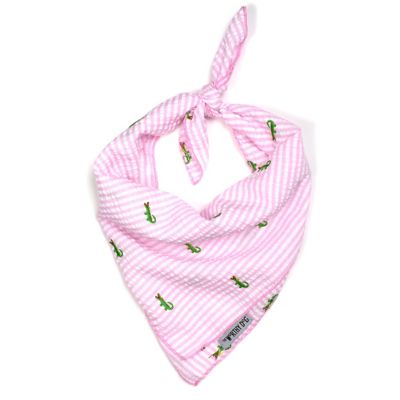
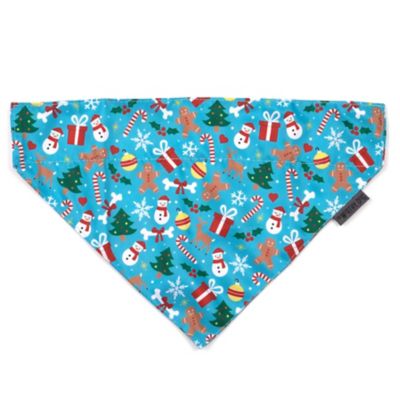
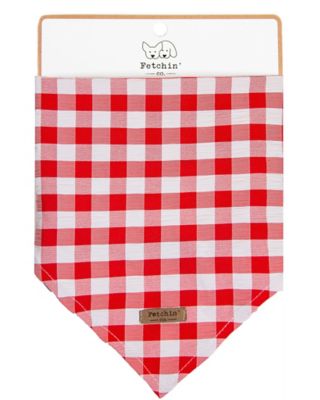
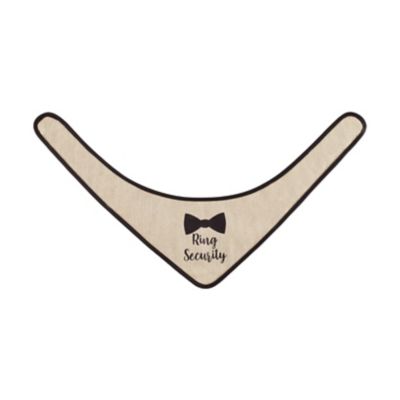
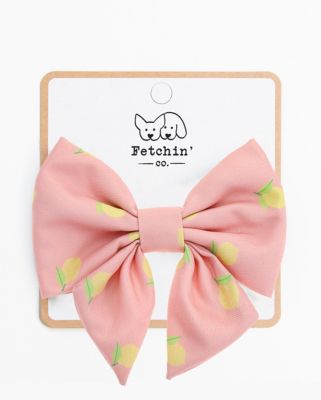
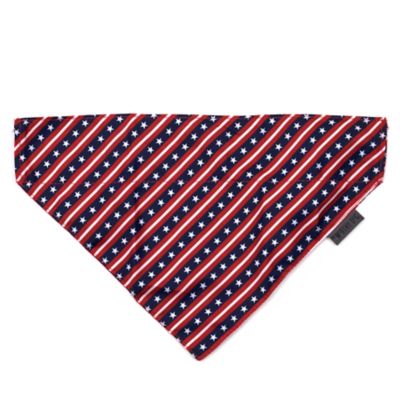
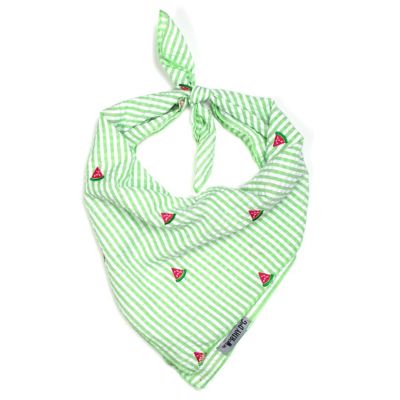
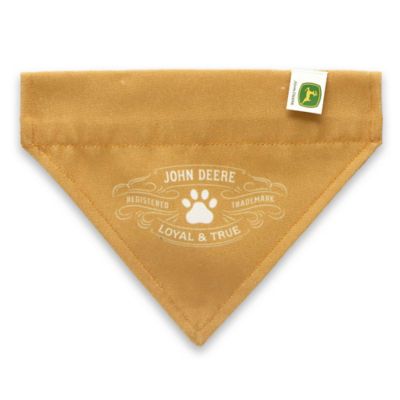
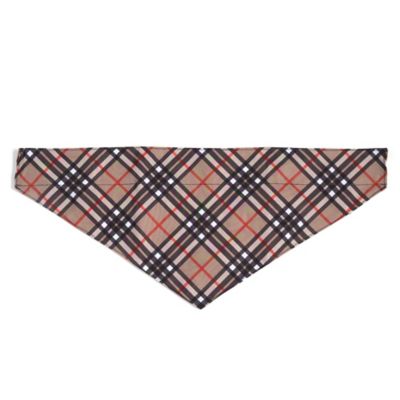
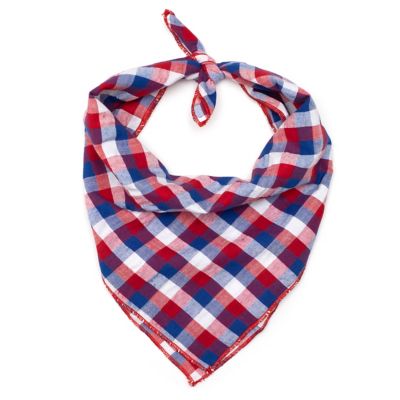
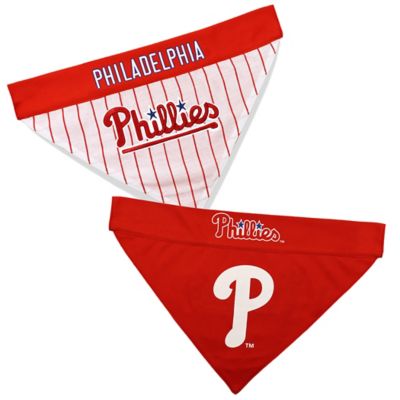
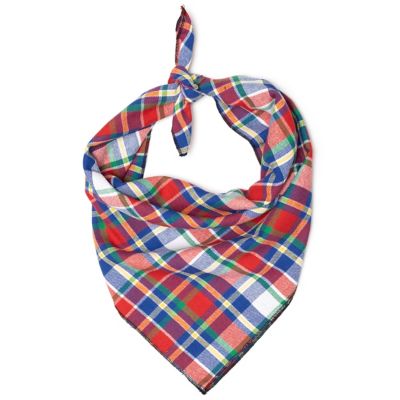
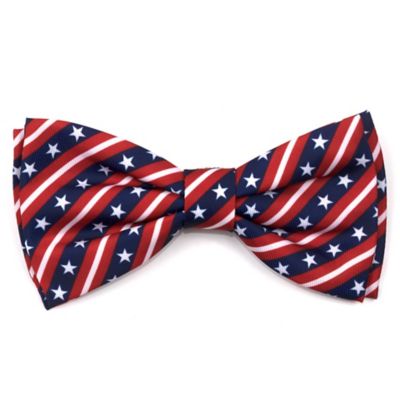
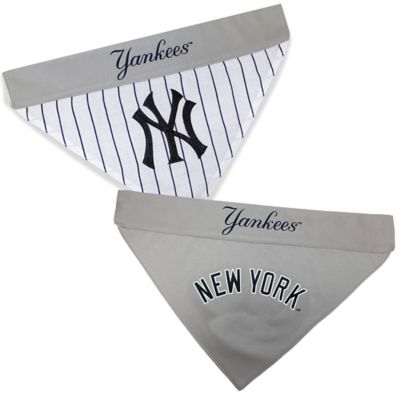
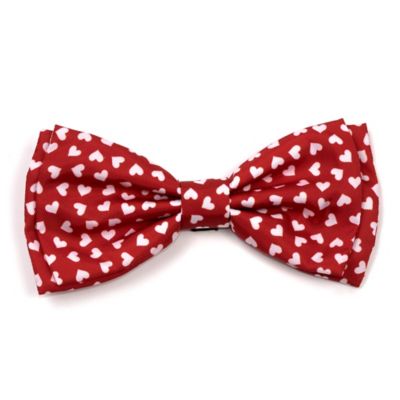
Pet bandanas for Valentine's Day give four-legged family members a little holiday color without calling for a full outfit. Heart prints, red and pink plaids, cheerful lettering, and simple solid colors all suit the occasion, whether the plan is a family picture on the porch or a stop at the feed store with a favorite sidekick. A bandana sits near the face, so even a small splash of color can stand out against a pet's coat. Red shows up nicely on light fur, while pale pink and white can catch the eye against darker coats. Smaller repeating patterns lend a quieter look, and larger hearts or bold lettering make more of a statement in pictures. The shape matters, too: a short triangle creates a tidy accent beneath the chin, while a deeper triangle gives a larger dog a more noticeable splash of color across the chest. Tie-on styles have the familiar look of a folded scarf, while over-the-collar styles have a fabric channel that slips onto a compatible collar. Those differences affect both the appearance and the way the bandana sits as a pet moves. For dogs that already enjoy wearing a collar and light accessories, a Valentine's Day bandana can fit easily into a supervised visit with friends or a relaxed afternoon with the family. Cats that tolerate clothing may enjoy a brief photo session, though comfort comes before getting the picture. Matching colors can bring several pets together in a family portrait without putting every animal in the same pattern. A pink heart print on one and a red plaid on another can feel coordinated while still letting each pet's personality show. These little accessories also make thoughtful gifts for pet parents, especially when the color, size, and fastening style reflect what their companion already likes to wear. The appeal is simple: a familiar everyday accessory with a little extra heart for the holiday.
Fabric and fit make a bigger difference than a bold print alone. Cotton often has a soft, breathable feel, while polyester can offer a smooth, lightweight finish; blends bring different handling and care characteristics depending on their construction. A supple fabric is generally less distracting around the neck than something stiff, particularly for a small dog or a pet trying a bandana for the first time. Fabric weight also changes the drape. A thin scarf can fold into a small, neat triangle, while a heavier fabric may hold its shape more firmly but create more material beneath the chin. Finished edges, even stitching, and neatly sewn collar channels are useful details for an accessory that may go through repeated wearing and washing. Fit starts with the pet's neck measurement rather than a breed name or a guess based on weight. Two dogs of similar size can have very different necks, and a thick coat can change how much room an accessory needs. With a tie-on bandana, the fabric must allow enough length for a secure fastening without pressing into the neck or leaving long, dangling ends. With a collar-slide style, both the channel width and the collar hardware affect compatibility. The front point should stay clear of the mouth and front legs instead of hanging where it can be chewed or stepped on. A bandana also needs to leave leash attachment points, identification tags, and harness straps accessible. It is an accessory, not a replacement for a collar or harness. For cats, nothing should interfere with a breakaway collar's release. Supervised wear makes sense for any pet, especially around brush, fencing, crates, or playmates that might catch loose fabric. A comfortable pet can turn its head, walk, and settle down normally; pawing at the neck, chewing the cloth, or repeatedly trying to rub it off can mean the accessory needs to come off. The best holiday look is one that lets the pet act like itself.
Everyday messes are part of life with animals, even when the occasion calls for hearts and a fresh-looking scarf. A drink from the water bowl, a muddy paw across the chest, or a little drool after a treat can all leave their mark. Washable fabric can make a Valentine's Day pet bandana easier to care for, but the care label determines whether it belongs in the washing machine or needs gentler handling. Printed lettering, trim, and layered details may need different care than plain woven fabric. Thorough drying before storage helps prevent a damp fold from sitting against the material, and an occasional look at seams and edges can catch loose threads before the next outing. For frequent wear, straightforward shapes with secure stitching and minimal dangling details tend to keep the focus on the pet rather than on constant adjustments. Smooth seams and a comfortable neckline matter more than extra embellishment for a companion that likes to stretch out on the rug after a walk. For households that enjoy a coordinated holiday outfit,
pet hoodies for Valentine's Day offer another way to carry the same colors and heart motifs through a pet's look. Any combination should leave the neckline comfortable and avoid bunching beneath the chin. A bandana can also stand on its own, which is often the simpler choice for a dog that prefers less clothing. As a gift, it feels especially thoughtful when the recipient's pet is part of the family routine, from riding along on errands to greeting visitors at the door. Knowing the pet's measurements and usual tolerance for accessories helps make that gift practical as well as festive. Whether the occasion is a casual family gathering, a holiday photo, or a visit with a favorite person, a well-fitting bandana adds a cheerful detail without needing much fuss. A soft feel, manageable shape, and easy-care construction help keep that small holiday touch comfortable from the first picture to the ride home.