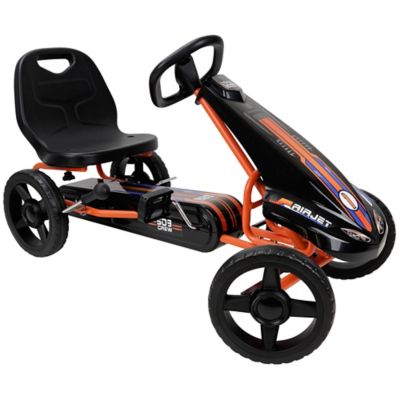
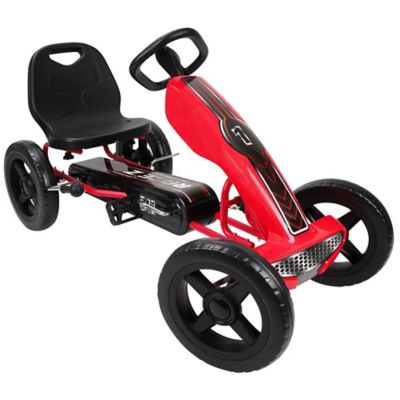
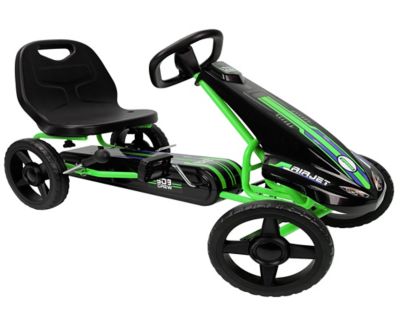
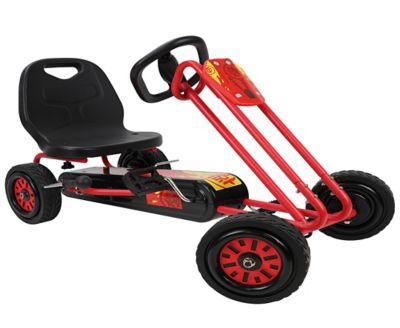
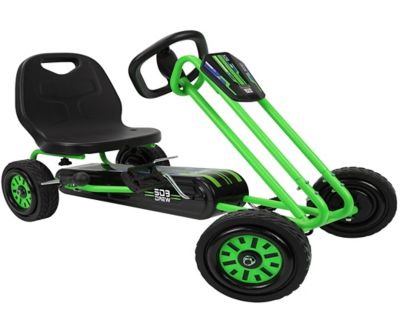
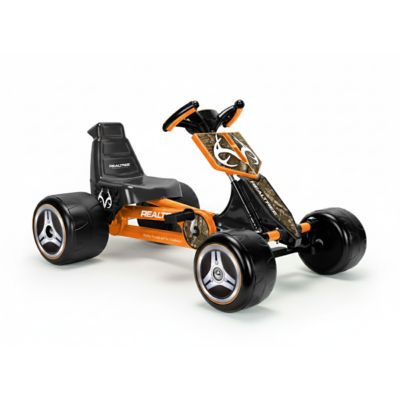
Pedal powered go karts bring a little old-fashioned fun to outdoor play without gas, batteries or a noisy motor. Built around a sturdy four-wheel frame, these human-powered rides let children—and, depending on the size and weight rating, older riders—move by pedaling their own way around the yard, driveway or other suitable riding area. They are quiet enough for everyday play, simple to operate and generally easy to keep ready for the next outing. Instead of charging a battery or filling a tank, riders use leg power to get moving, coast when they want a break and, on many designs, pedal backward to help back up. Some models use a brake, freewheel and reverse-style drive system, while others include a hand brake or lever that helps slow the rear wheels. These details can make a big difference for younger riders who are still learning how to start, stop and steer. Pedal powered go karts can be a memorable birthday, holiday or outdoor gift for kids who enjoy active play, pretend adventures and the feeling of having a ride all their own. They also make a practical choice for families looking to get children away from screens and moving in the fresh air. A child may begin with short trips along the driveway, then spend an afternoon making laps around a flat section of the yard, hauling a favorite stuffed animal or pretending to run a farm, race track or delivery route. During the cooler months, a clear day and a dependable stretch of pavement or packed ground can be all it takes to turn an ordinary afternoon into good family time. For more ideas across different riding styles and age ranges, take a look at
Best Go Karts.
When choosing among pedal powered go karts, start with the rider’s age, height, weight and experience rather than focusing on appearance alone. A seat that adjusts through several positions can help a kart fit a growing child and give the rider enough room to reach the pedals comfortably. Check that the rider can place both feet on the pedals, turn the steering wheel or handlebars without stretching and reach the brake controls with ease. A close fit gives the rider better control and helps prevent frustration during those first few rides. Pay attention to the manufacturer’s recommended age range, maximum rider weight and overall dimensions, especially when storage space is limited or the kart needs to fit through a gate, shed door or garage opening. Four-wheel designs offer a broad, steady base, but they still need to be used on ground that matches the kart’s intended purpose. Smooth pavement and firm, level paths are often easiest for beginners. Grass can be a good place to ride when it is short and dry, though thick turf, mud, loose gravel, steep hills and rutted ground may make pedaling and steering harder. A heavier frame may feel more planted and stand up well to regular outdoor use, while a lighter frame can be easier for a child to handle and for an adult to move into storage. Look over the wheels, pedals, steering parts, seat adjustment points and brake system before the first ride, and continue checking them after rough play or long storage. Tires should be properly filled when applicable, fasteners should be snug and moving parts should work smoothly. Some families keep a small air pump and basic hand tools nearby so simple adjustments do not interrupt a good afternoon outside. If the kart will be shared by siblings, compare each rider’s size with the fit range and consider how easy it is to reposition the seat between rides.
Safe riding habits matter just as much as frame size and features. Children should wear a properly fitted helmet and closed-toe shoes, and loose clothing, scarves or drawstrings should be kept away from wheels, chains and pedals. An adult should stay nearby, especially while a young rider is learning how to steer, brake and reverse. Choose a riding area away from traffic, ponds, drop-offs, livestock, fences, parked vehicles and other obstacles. A flat driveway or open section of yard is usually easier to supervise than a long downhill path. Teach riders to keep both hands on the steering controls, watch where they are going, leave room between riders and slow down before turns. Pedal karts are not designed for public roads, and riding surfaces should be checked for wet leaves, ice, standing water or other seasonal hazards before play begins. In a rural setting, it is also smart to keep an eye out for loose gravel, sticks, garden hoses and equipment that may have been left near the barn, shop or driveway. When the weather turns cool, store the kart in a dry place when possible and wipe away moisture, mud and grass after use. Keeping it under cover can help protect the seat, tires and metal components, while a quick inspection before each outing helps catch ordinary wear early. With the right fit, a suitable riding surface and a little supervision, a pedal powered go kart can become a favorite part of outdoor play, giving kids a chance to build coordination, confidence and leg strength while enjoying the simple fun of steering their own ride.