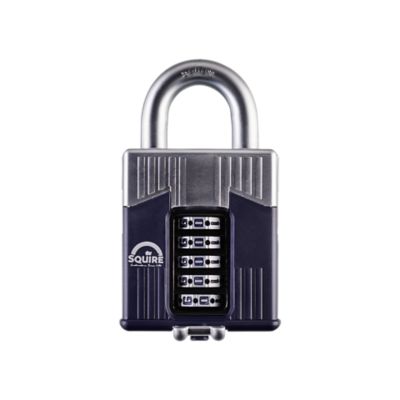
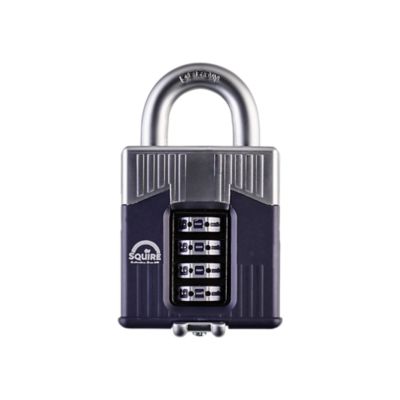
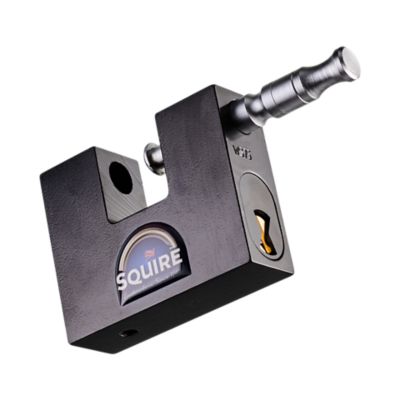
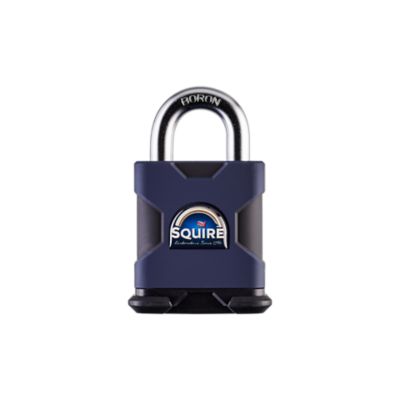
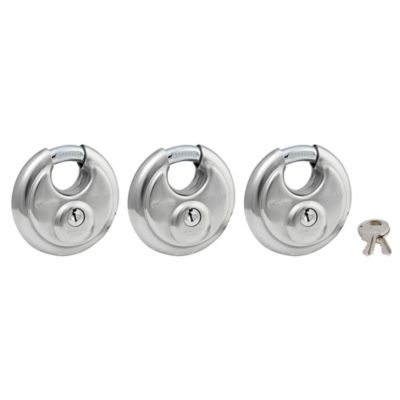
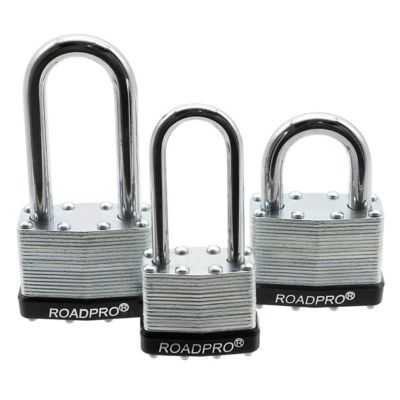
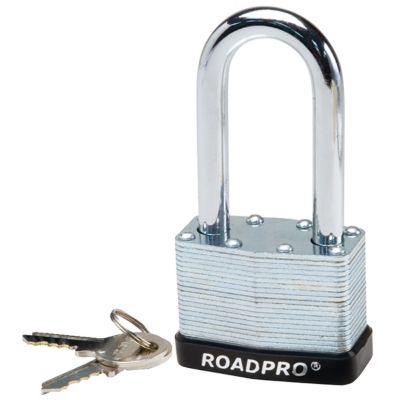
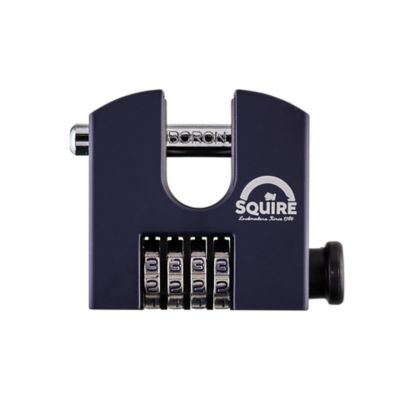
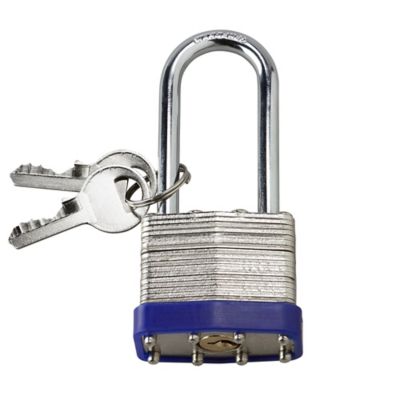
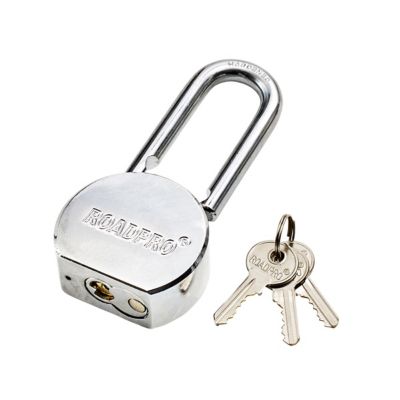
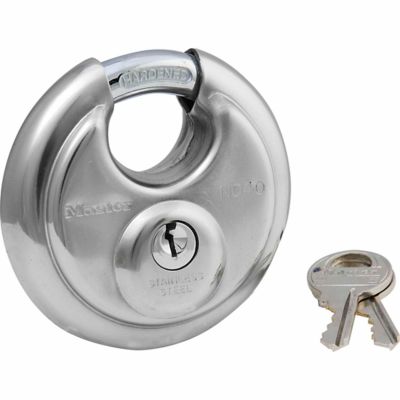
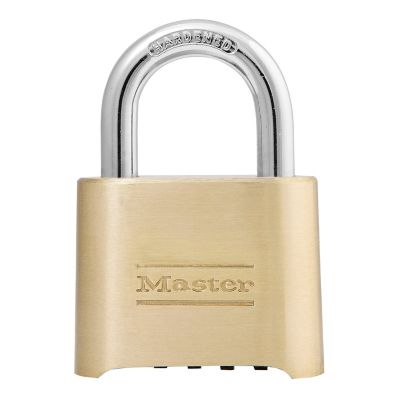
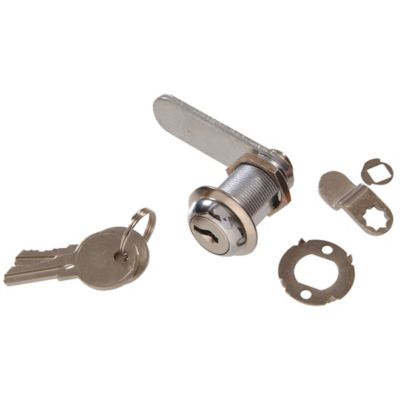
Padlocks for storage units help secure the door latch while furniture, tools, boxed belongings, and business supplies stay tucked away between visits. Disc locks and heavy-duty shrouded padlocks are often a strong match for self-storage because they leave less of the shackle exposed than an open-shackle design. That smaller opening gives cutting and prying tools less room to reach the metal loop. A disc lock has a rounded body that surrounds much of its shackle, while a shrouded padlock has raised shoulders that help shield the shackle from the sides. Both styles can suit a storage-unit latch when their dimensions match the hardware and the facility permits that lock type. Neither makes a unit theft-proof, and the door, hasp, and surrounding hardware also play a part in security. For someone keeping shop equipment between jobs or storing the contents of a house during a move, the right match is a lock that closes securely without leaving unnecessary space around the latch. A long shackle can reach awkward hardware, but that extra length also exposes more metal and can give tools more working room. A shorter, closely fitted shackle is generally preferable when the latch allows it. The lock body should sit close to the hasp without being wedged against the door or hanging at an angle that strains the mechanism. Compact proportions can help limit access around the shackle, but a small body alone does not establish how well a lock resists attack. Shackle material, body construction, locking mechanism, and the condition of the storage door all matter. Facility lock requirements are especially important: some locations accept disc or shrouded styles, while others require a particular design or a cylinder that fits directly into the door hardware. A padlock cannot replace that fitted cylinder unless the facility provides a compatible latch.
Materials and measurements help separate a suitable storage lock from one that merely looks substantial. Stainless steel bodies offer corrosion resistance, while hardened steel shackles are intended to resist cutting better than softer steel of comparable dimensions. Other constructions may combine a solid metal body, protective plating, or an outer covering, so the material beneath the finish deserves attention. A plastic or rubber cover can help reduce scuffs against the door, but it is not a substitute for the metal structure underneath. The shackle diameter must pass through the latch opening, and its inside width and height must leave enough room for the full thickness of the hardware. Some disc locks have bodies around 2-3/4 inches wide and shackles around 3/8 inch in diameter, but those measurements are examples rather than a universal storage-unit standard. Two locks with similar body widths can have very different clearances. On a roll-up door, the latch may include more than one layer of metal, and the opening can become slightly misaligned if the door is not fully seated. That makes the available space through the entire latch more useful than the size of the front opening alone. A good fit allows the shackle to close completely without forcing, twisting, or pulling the door into position with the lock. There also needs to be enough room to insert and turn the key or reach the combination controls without scraping knuckles against the handle. For folks moving a workbench, shelving, and several truckloads of boxes, those details make a difference when the last load is in and it is time to shut the door. Smooth operation matters on later visits, too, particularly when a quick stop for one toolbox turns into an armful of gear. If a lock carries a security rating or a tested performance claim, that information is more useful than judging protection by weight, color, or an oversized body alone.
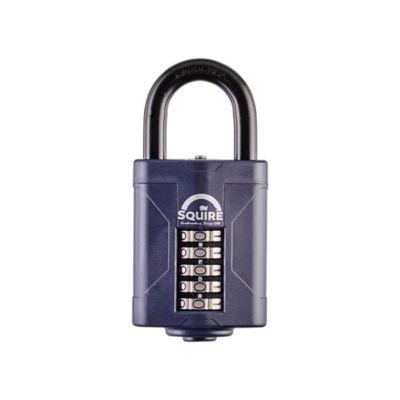
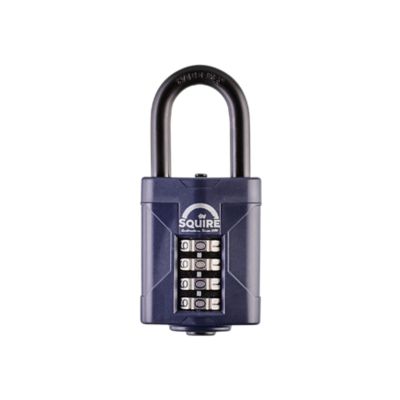
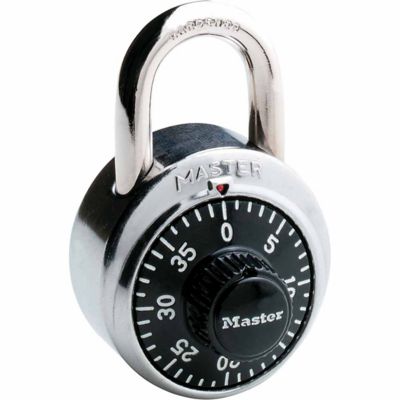
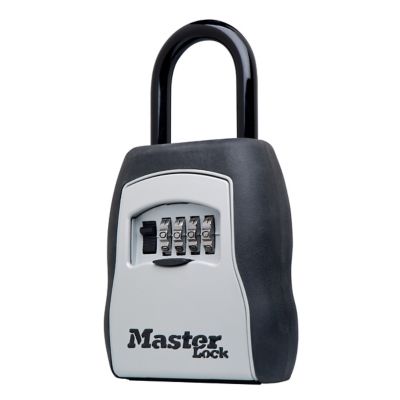
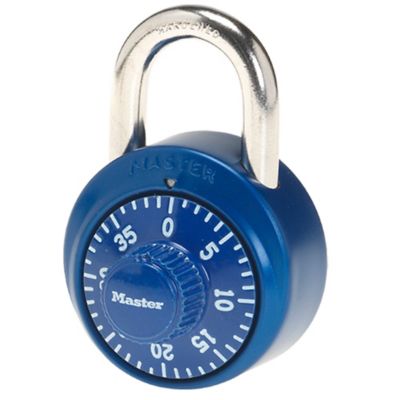
Access arrangements matter just as much as the shape of the lock. Keyed padlocks keep entry straightforward for a single renter, while keyed-alike arrangements can simplify access when one authorized person manages several compatible locks. That convenience also means a missing key may affect more than one storage space. Individually keyed locks keep access separate, which can make sense when different family members or workers are responsible for different units. Combination padlocks remove the need to carry a key, but their suitability still depends on the construction, shackle protection, latch fit, and facility rules. A simple locker-style lock should not be treated as equivalent to a storage-focused design just because both have a combination mechanism. The priorities for
padlocks for gym lockers can include compact size and convenient access during a workout, while a storage-unit lock often needs to protect belongings left unattended for longer stretches. For either access method, a spare key or a securely recorded combination belongs somewhere other than inside the locked space. Key tags that avoid spelling out the storage address and unit number can also help keep a lost key from pointing straight to the door. Routine care supports smooth operation without much fuss: wipe dirt from the body, keep grit out of the keyway, and follow the lock maker’s care directions for cleaning and lubrication. The appropriate lubricant depends on the mechanism, and excess lubricant can attract debris or interfere with operation. A key that starts catching, a shackle that no longer seats fully, or a body showing damage deserves attention before the next load goes into storage. The latch itself also needs to remain firmly attached and free of bending that interferes with closure. Whether the space holds household keepsakes, tools between projects, or supplies for a small business, the most practical padlock balances protected construction, a close fit, manageable access, and care that keeps it working as intended.