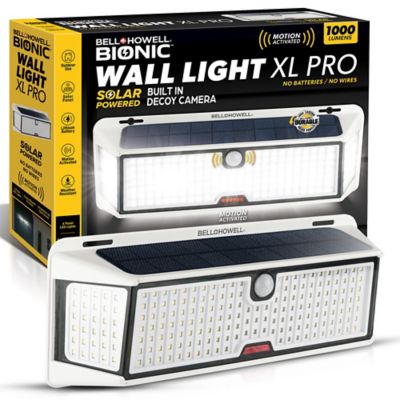
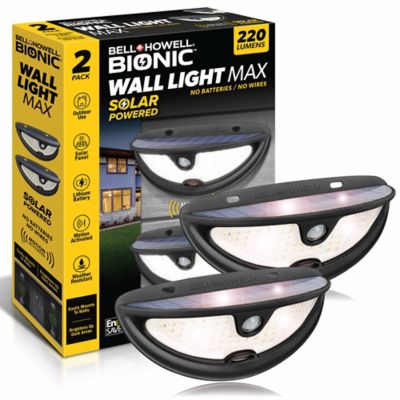
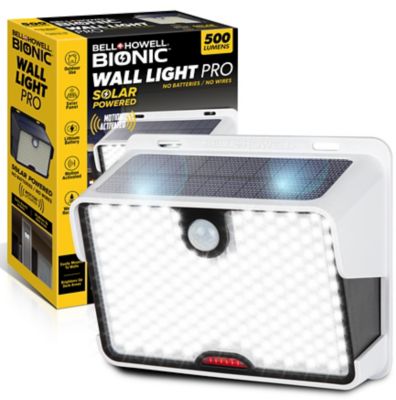
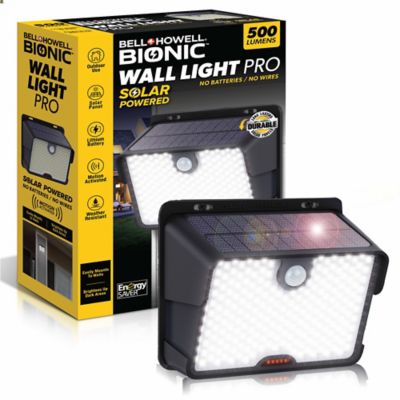
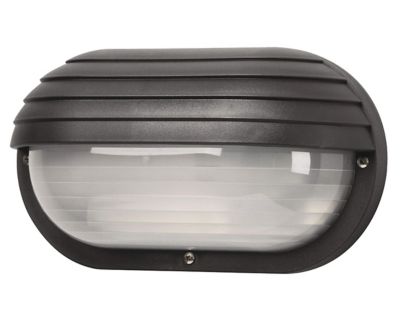
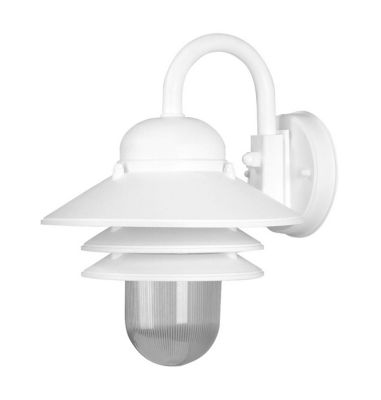
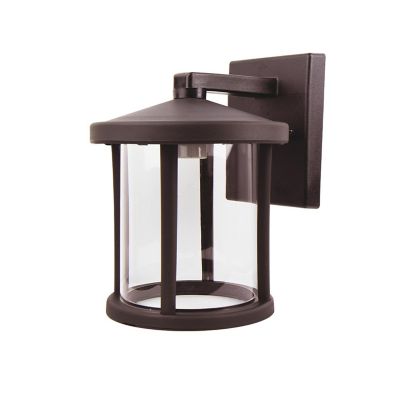
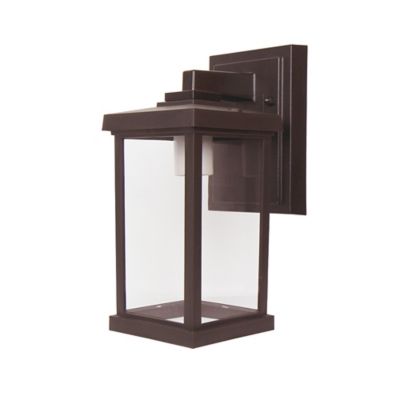
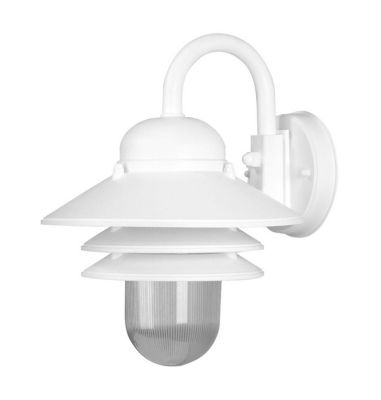
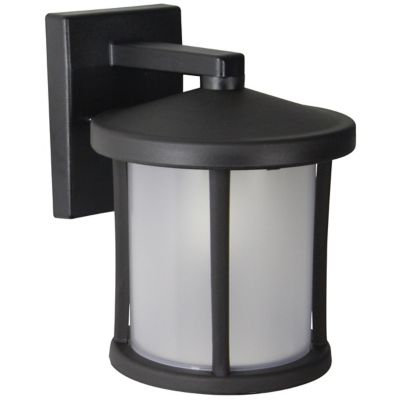
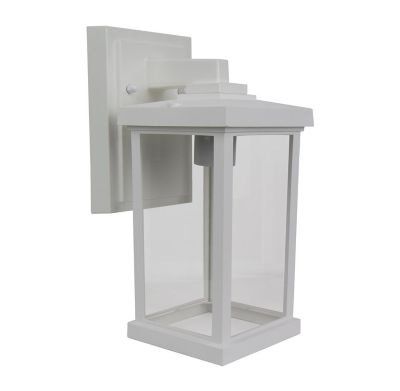
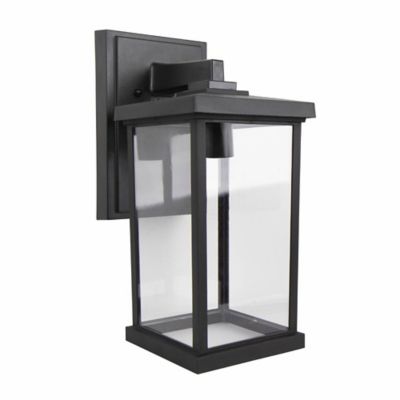
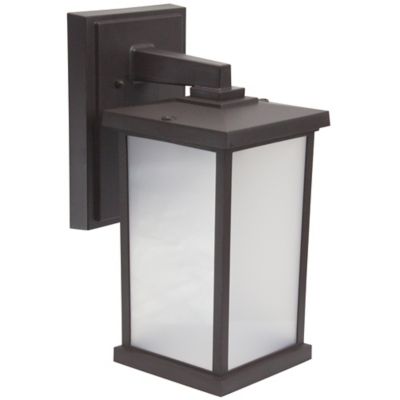
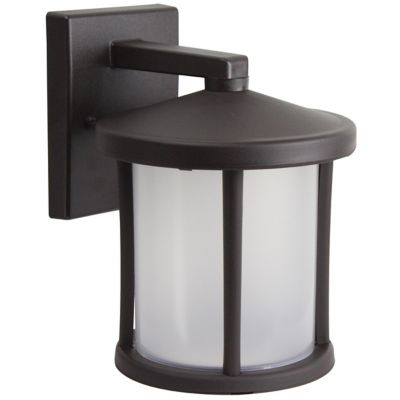
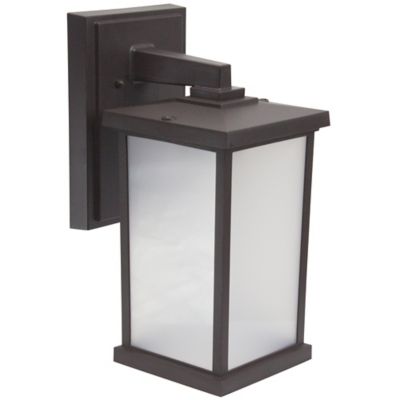
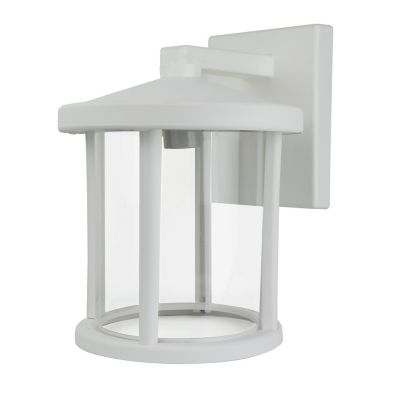
Outdoor wall lights for a garage improve visibility around doors, driveways and walkways while adding a finished look to the building. The main considerations are light output, fixture size, outdoor exposure, mounting requirements and how the light turns on and off. A well-placed fixture makes it easier to find a keyhole, spot a step or carry a toolbox through a side entrance without lighting up the whole yard. Around a working garage, that can mean a clearer view of the latch with an armload of feed or better visibility beside the truck when unloading after dark. Wall lanterns, downward-facing shades and compact wall-mounted fixtures each bring a different look and light pattern. Lantern shapes fit comfortably beside traditional siding and carriage-style garage doors, while simple metal shades suit barns, workshops and straightforward utility buildings. Narrow profiles can make sense beside a tight entry where a deep fixture would crowd the door trim. Size matters beyond appearance: the fixture needs enough presence beside a wide garage door without extending into the path of an opening door or nearby equipment. A pair of lights can give a broad garage front a balanced appearance, while a separate light near the walk-in door keeps attention on the entrance people use most. Brightness is best compared in lumens rather than bulb wattage, especially when looking at LED lighting. More light is not always more helpful if an exposed bulb shines straight into a driver's eyes. Clear glass can leave the bulb more visible, while frosted glass softens its appearance. A shielded shade directs more light toward the ground. Warm white light gives an entry a softer appearance, while neutral white can suit a garage that also serves as a work area. Matching color temperatures across nearby fixtures helps the garage, porch and connecting path look consistent rather than patchy.
Outdoor construction matters just as much as appearance, particularly on a garage wall with little overhead cover. Fixtures exposed to direct rain need a wet-location rating; a damp-location rating is intended for sheltered locations protected from direct water exposure. The rating applies to the complete fixture, not just its finish or the bulb inside. For garage walls with greater exposure,
Weather Resistant Outdoor Wall Lights offer a related category to consider alongside mounting position and care requirements. Aluminum housings resist rust, although their finish and hardware still deserve attention. Steel provides a substantial feel but depends on a protective coating to help prevent corrosion. Some fixtures combine metal frames with glass panels, while others have outdoor-rated polymer housings or lenses. Each material has its own cleaning needs, and the manufacturer's directions are the best reference for protecting finishes and seals. Black, bronze and metallic finishes can coordinate with door hardware, siding and nearby fencing without requiring every surface to match. Clear or textured glass changes both the appearance of the fixture and how easily dirt shows. A simpler enclosure with fewer ledges can be easier to wipe down beside a gravel drive or workshop entrance. Fit also includes the backplate dimensions, wall projection and clearance around the junction box. Lap siding, uneven masonry and ribbed metal walls may need an appropriate mounting block or other approved mounting hardware so the fixture sits securely. Existing wiring, grounding and electrical box suitability all affect installation, making a qualified electrician a sensible choice when those details are uncertain. Fixture weight and mounting hardware matter, too; siding alone is not a substitute for proper support. Around an overhead garage door, placement should account for tracks, trim and moving panels, as well as access for changing bulbs or cleaning glass later. Those practical details help the lighting fit the building instead of becoming another obstacle around a busy entrance.
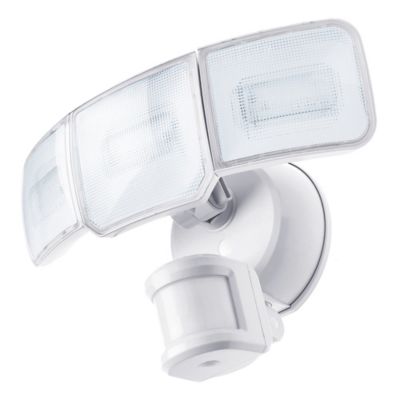
Controls shape how garage wall lighting fits everyday routines. A standard wall switch keeps operation straightforward, while dusk-to-dawn controls respond to surrounding light levels and reduce the need to remember the switch. Motion-activated fixtures can bring light to a side door when someone approaches with groceries, work gear or a leash in hand. Sensor range, viewing angle and shutoff delay matter on properties where the driveway, livestock area or a public road falls within view. Passing vehicles, moving branches and animals can trigger some sensors, so adjustable settings are helpful for keeping activation centered on the intended area. A photocell also needs a suitable position, since nearby lighting can affect how it responds. Some fixtures combine motion sensing with a lower background light level, but those functions depend on the fixture's design. Bulb-based fixtures allow compatible lamps to be replaced separately, while integrated LED fixtures have a built-in light source that may require replacement of a module or the fixture when it reaches the end of its service life. Socket type, maximum wattage, enclosed-fixture suitability and dimmer compatibility all deserve a check before pairing a bulb with a housing. Care is generally straightforward: disconnect power before cleaning or maintenance, follow the manufacturer's directions and keep lenses, glass and sensor windows clear of dust, cobwebs and insect buildup. Gentle cleaning helps preserve finishes, while occasional checks can catch loose hardware, damaged seals or corrosion before they become bigger problems. Good placement also keeps bright light away from neighboring windows and directs it toward the doorstep or walking surface where it does some good. For households with a detached garage, a workshop off the drive or a busy family entrance, outdoor garage wall lights can support daily chores without making the property feel like a parking lot. The most useful fit balances clear visibility, manageable upkeep and a shape that belongs on the building, whether the garage holds a mower, a pickup or a bench full of tools.