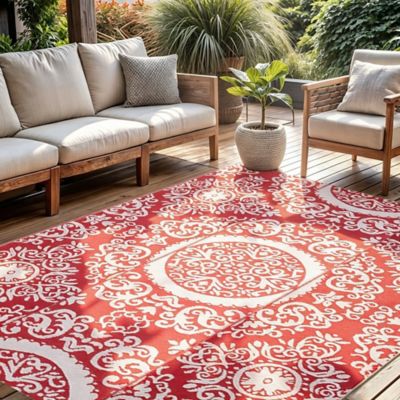
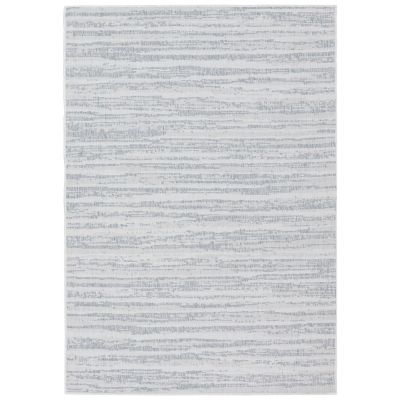
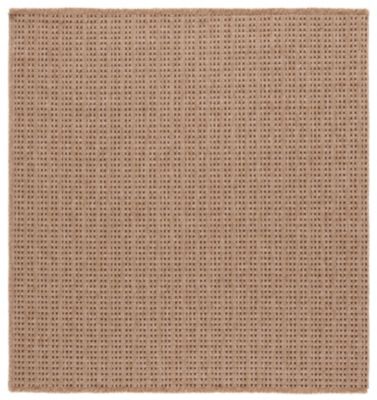
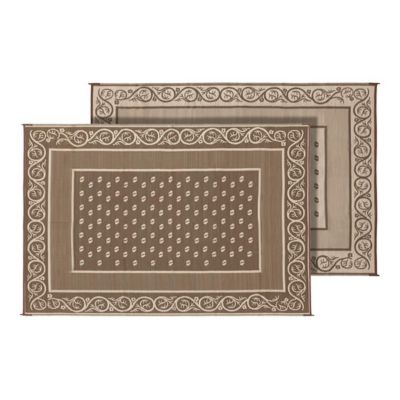
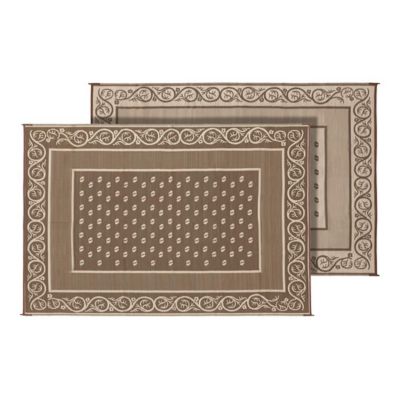
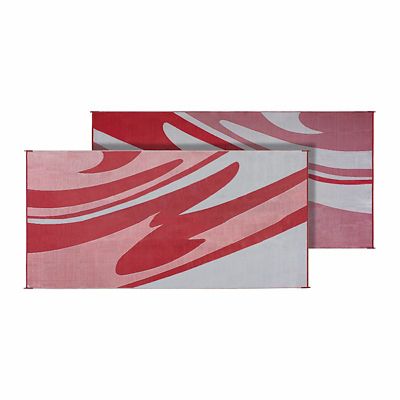
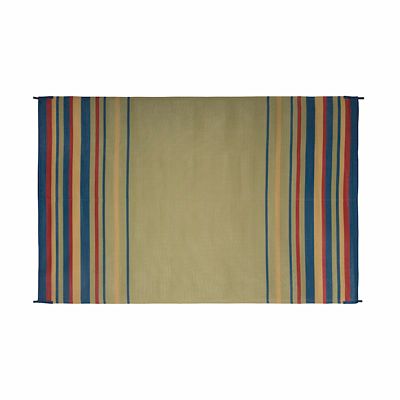
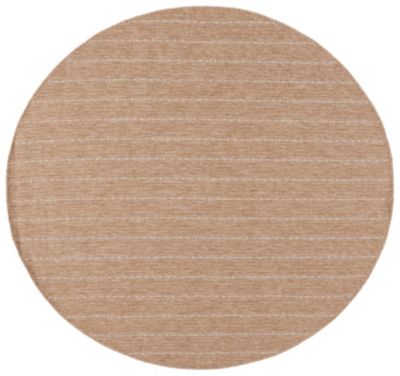
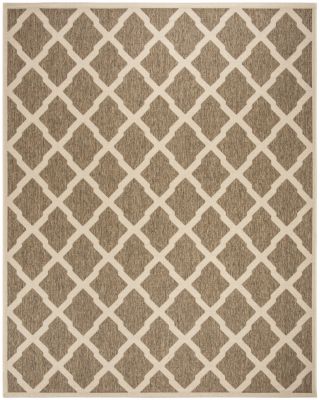
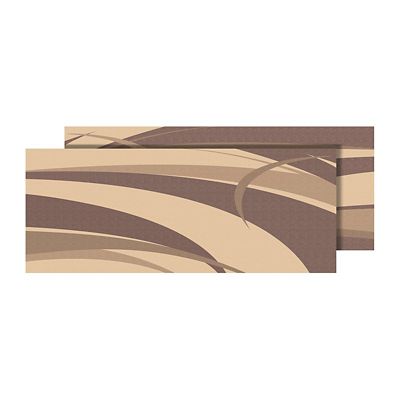
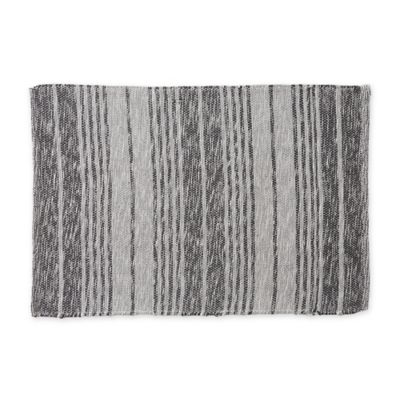
Outdoor rugs for camping give tents, travel trailers and RVs a more comfortable outdoor living space while helping keep loose dirt, sand and grass from getting tracked inside. Spread beneath a pair of camp chairs or beside the entry steps, a rug creates a landing spot for boots, a place to set down a tote and a clearer boundary between the campsite and the area where everyone gathers. That little bit of separation makes a difference when kids are moving between the picnic table and the camper or someone is carrying supper out through the door. Camping rugs range from open-weave mats that let fine debris sift through to more closely woven surfaces that feel smoother underfoot. Neither style levels uneven ground, but both can make a reasonably flat campsite feel more settled. Size matters as much as the weave. A small mat can serve the tent entrance, while a larger rectangular rug can bring chairs and a side table together beneath an RV awning. The most practical fit leaves room for doors to swing, steps to open and people to walk without catching a toe on an edge. Furniture also sits better when all its feet rest on the same surface rather than straddling a rug border. For tent camping, the rug generally belongs outside the entrance rather than beneath the tent, where it cannot take the place of a properly fitted footprint. At an RV site, its footprint should stay within the assigned space and clear of neighboring paths. A rug that looks roomy at home may feel crowded once the cooler, folding chairs and entry steps are in position. Matching the rug’s dimensions to that actual arrangement helps keep the campsite useful instead of filling every open inch. It also leaves an unobstructed route for hauling gear back to the truck when it is time to pack.
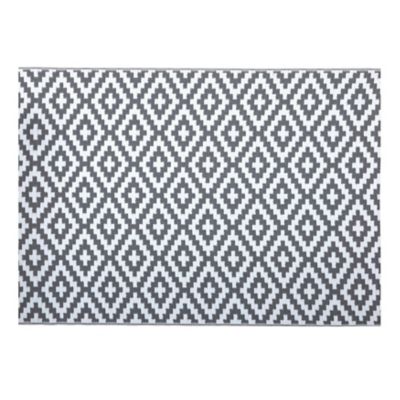
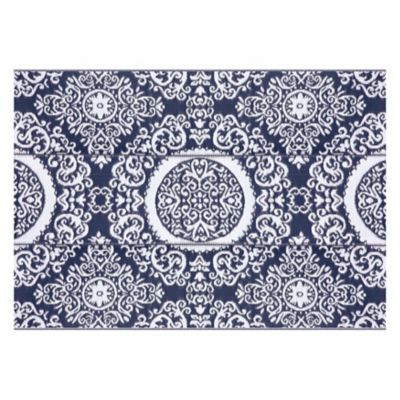
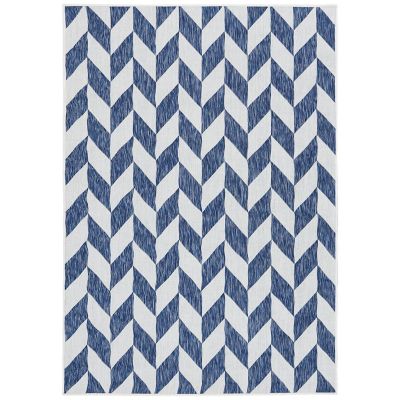
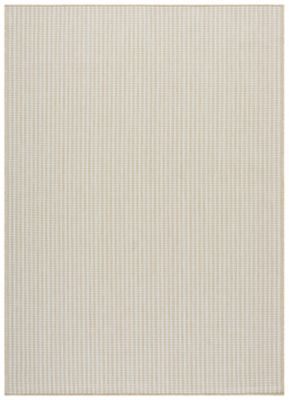
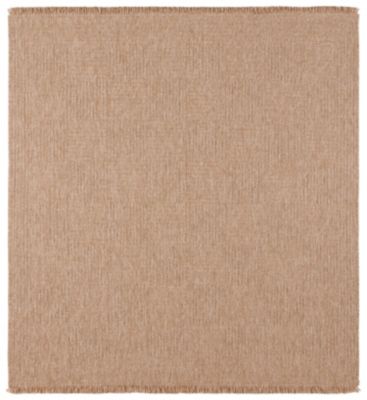
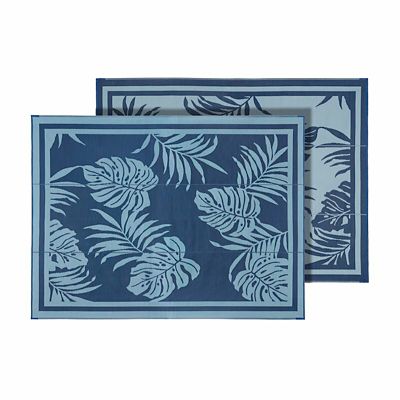
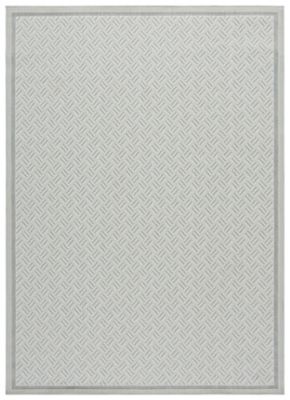
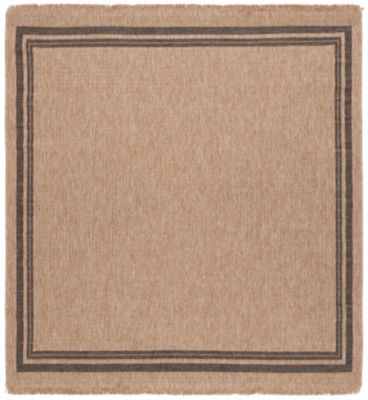
Material and construction shape how an outdoor camping rug feels, packs and handles everyday campsite traffic. Polypropylene is common in camping mats because the fiber absorbs little water and is generally easy to rinse clean. Woven plastic constructions can be lightweight and fold into manageable bundles, making them a practical match for campers who carry everything between the vehicle and the site. Some outdoor rugs have a fabric-like polyester surface, while others combine several materials or include a separate backing. The whole construction matters: a low-absorbency face does not necessarily mean the backing drains freely or the rug dries quickly. Open weaves allow more material to pass through; tighter weaves provide a more continuous surface for bare feet and chair legs but may hold grit on top until it is swept away. A low-profile surface is often easier to brush clean than a deep pile, and reinforced borders can help limit fraying around busy entryways. Reversible construction may provide two usable faces, though care requirements and ground-contact suitability still depend on the rug. Colors and patterns have a practical side, too. A mixed pattern can make scattered grit less noticeable between cleanups, while a clearly visible border makes the edge easier to spot against the ground. For campers with dogs, a surface that releases hair and allows for easy sweeping can matter more than a plush feel. Families may appreciate enough room for a small play area beside the chairs, with adult supervision and a check for sharp objects underneath. Packed size deserves a look alongside open dimensions, especially when storage has to share space with fishing tackle, camp cookware and bedding. Foldable mats can tuck into a storage compartment, while rolled rugs need a longer opening. For someone who regularly takes a camper to the lake or spends weekends at a campground, a well-sized outdoor rug can also make a thoughtful gift.
Care is usually straightforward, but the right routine depends on the rug’s materials and care label. Loose dirt is easier to manage before it works into the weave, so a shake, sweep or gentle brushing can go a long way after a trip. For rugs approved for rinsing, clean water may be enough to lift ordinary campsite soil; a mild cleaning solution may be appropriate when the manufacturer allows it. Strong cleaners, stiff scrubbing and pressure washing can damage some fibers, coatings or borders. Cleaning should happen away from streams and lakes, with wash water handled according to campground rules. A rug needs to dry fully on both sides before it goes into a bag or storage compartment, since trapped moisture can lead to odors and mildew. Back at the campsite, anchoring options deserve the same attention as the surface itself. Corner loops and grommets can help secure compatible mats where stakes are permitted, but stake heads and tie-downs should stay out of footpaths. On a hard surface, any pad or grip layer needs to suit both the rug and the surface beneath it. Grass-covered sites call for a check of campground rules, too; even an open weave can affect the ground when it stays covered, and no camping mat is suitable for every site. Keeping rugs clear of fire rings, grills and hot cooking equipment helps protect them from sparks and heat damage. Occasional checks for curled corners, pulled threads and worn attachment points make it easier to catch small problems before the next outing. The same attention to fit, drainage and easy cleanup carries over to the
Outdoor Rugs For Porches collection for spaces closer to home. Whether the setting is a tent doorway or a trailer patio, the appeal is simple: a defined place to kick off boots, pull up a chair and enjoy camp without bringing quite so much of the ground inside.