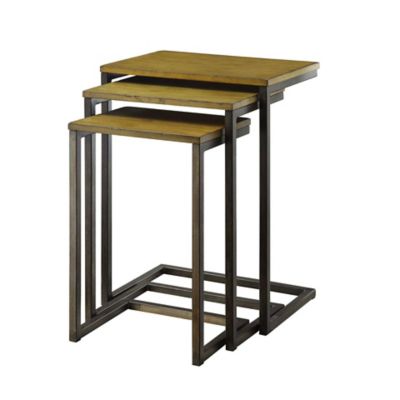
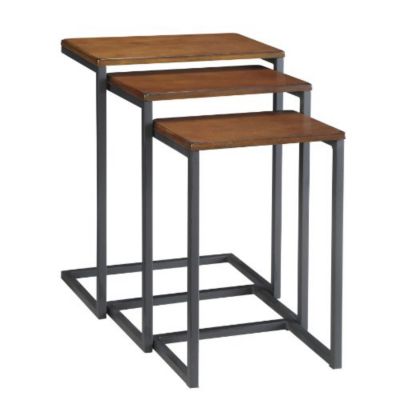
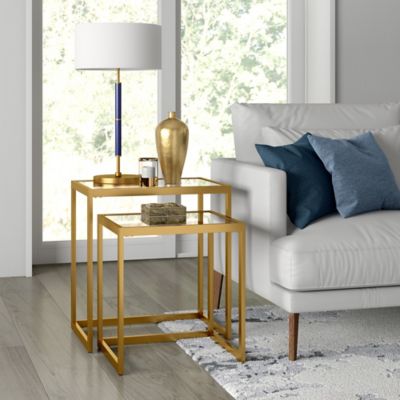
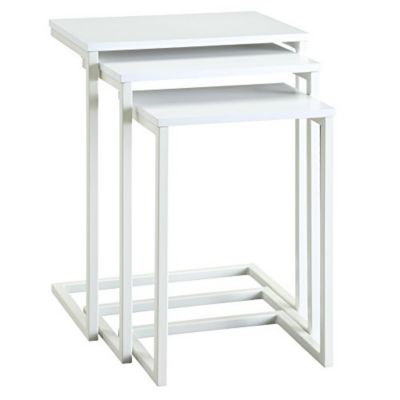
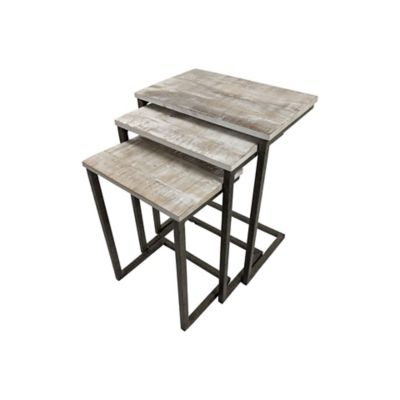
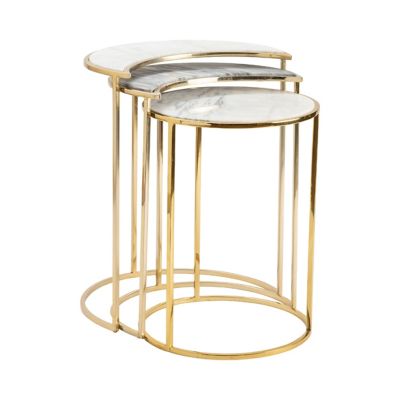
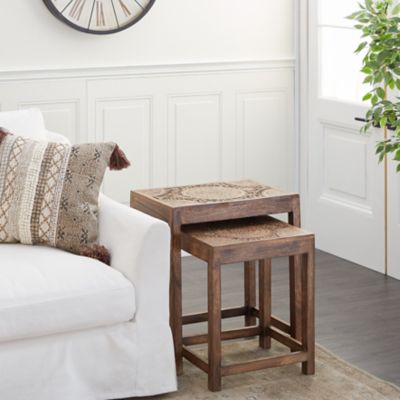
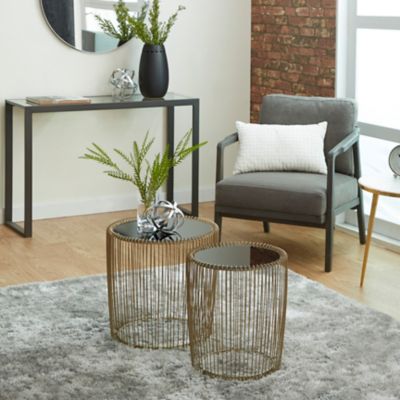
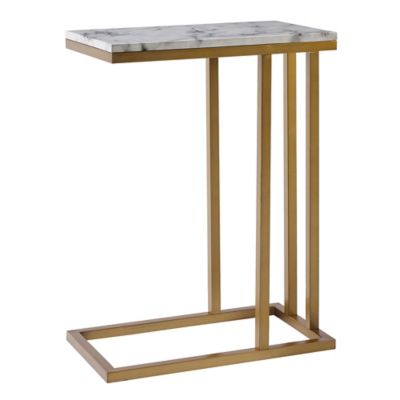
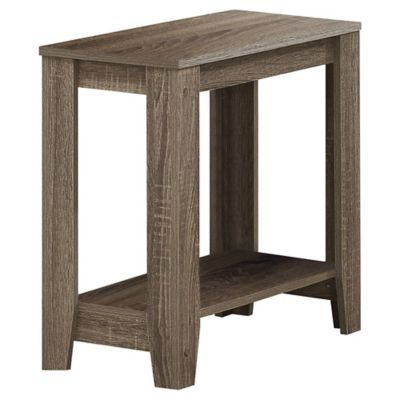
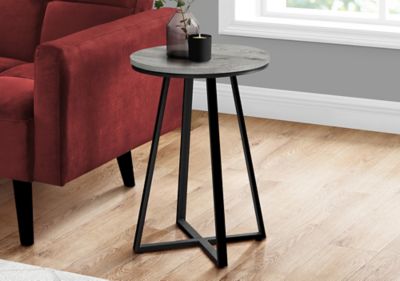
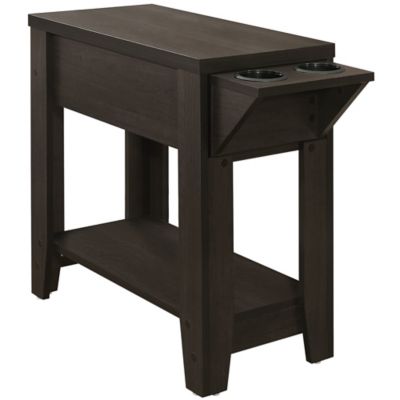
Nesting side tables bring a little breathing room to a busy living room, giving you extra tabletop space without keeping every surface spread out all day. Their graduated sizes let smaller tables tuck beneath larger ones, so a compact arrangement can open up when company stops by or someone needs a spot for a drink. Beside a deep sofa, a pair of armchairs, or a favorite recliner, they keep the everyday things close: a reading lamp, a pair of glasses, the remote, and that book with a folded corner marking the page. The appeal is practical, but the shape and finish play a part, too. Straight legs and simple tops settle easily into a farmhouse living room, while curved frames or rounded edges can soften a room full of substantial wood furniture. A matching set creates a pulled-together look even when the tables sit apart. Depending on the design, the smaller table might spend most days beside another chair, then slide back beneath its partner when the floor needs clearing. That flexibility suits a modest house, a cabin sitting area, or a family room that handles everything from quiet reading to a full evening of conversation. Round tops can make tight seating arrangements feel less crowded, while square and rectangular tops often line up neatly with sofa arms and room corners. Neither shape needs a lot of fuss to feel at home. A lamp on the larger surface and a clear smaller table ready for a coffee cup can be plenty. For households where furniture has to earn its place, nesting side tables offer a sensible balance between a small footprint and room to spread out. They also make it easier to give guests a place to set things down without bringing a larger coffee table into a narrow seating area.
Materials give nesting side tables much of their character, and they also affect how the tables handle daily life. Solid wood brings visible grain and natural variation, with tones that can sit comfortably alongside plank floors, leather seating, or a well-loved rocking chair. Wood veneer offers a real-wood surface over a supporting core, while engineered wood can provide an even appearance and a broad range of finishes. With either construction, edges, joints, and the underside deserve attention along with the tabletop. Metal frames can lend a lighter, more open look, especially when slender legs leave the floor visible underneath. A painted or powder-coated finish changes the appearance and helps protect the metal, though chips and scratches still call for care according to the maker’s directions. Glass tops keep a small corner from looking visually crowded, but fingerprints and cup rings tend to show, and the edges need thoughtful placement around active children or pets. Stone surfaces add weight and texture; their care needs depend on the particular material and finish. Across these choices, daily upkeep usually starts with a soft cloth and prompt attention to spills. Coasters help separate drink moisture from the tabletop, and a protective pad beneath a lamp can keep its base from rubbing against the finish. Harsh cleaners and abrasive scrubbers can harm some surfaces, so the care label matters more than a one-size-fits-all cleaning routine. Construction matters just as much as appearance: snug connections, level feet, and a frame that sits squarely help a table feel steady when someone reaches for a glass. A lower stretcher may add support, but its position can affect how closely the tables tuck together. Tabletops and frames also need enough clearance to slide past one another without scraping. Those small details make a difference when the tables move in and out often rather than staying arranged the same way every day.
A good fit starts with the furniture already in the room, not just the open patch of floor beside it. The tallest nesting table generally feels most convenient when its top sits near the height of the adjacent chair or sofa arm, keeping a drink within easy reach. A lower companion can work nicely near a low seat, but a deep couch arm may make that same surface awkward to reach. The nested dimensions tell only part of the story; the spread-out arrangement needs room for feet, chair movement, and a clear path through the space. In a narrow room, shoppers comparing
End Tables for Small Spaces may find that nesting designs offer welcome flexibility, provided the smaller pieces have somewhere useful to go. Base shape deserves a look, too. Legs that flare beyond the tabletop can catch a passing foot, and a thick rug may change how evenly a lightweight table sits. Floor protectors suited to the flooring can help limit scuffs when tables are repositioned. Weight ratings matter for lamps, stacked books, and other heavier belongings; a side table is not a seat or a step stool. If a lamp stays on the larger table, its cord needs a route that will not catch the smaller frame as it slides underneath. Homes with young children may benefit from rounded corners and a steady stance, while pet owners will want to consider wagging tails, narrow walkways, and anything breakable near an edge. For a housewarming gift or someone furnishing a first place, a nesting set can be a thoughtful choice when the room measurements and preferred finishes are known. It provides useful surfaces without committing the recipient to a large piece of furniture. The best match feels easy to live with: enough tabletop for ordinary routines, a finish that suits the home, and a nesting arrangement that leaves room to move.