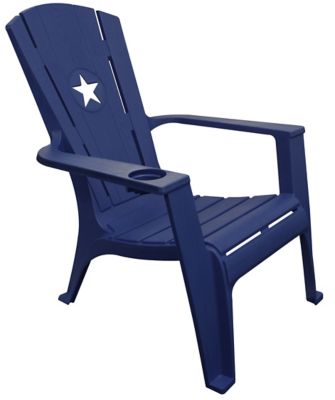
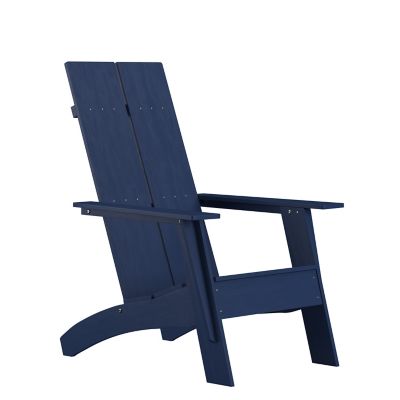
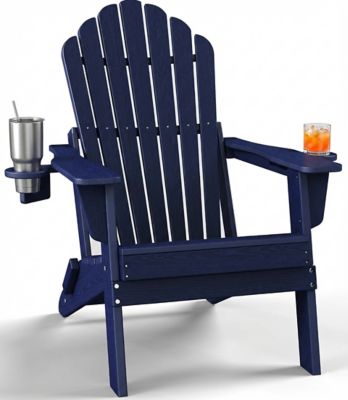
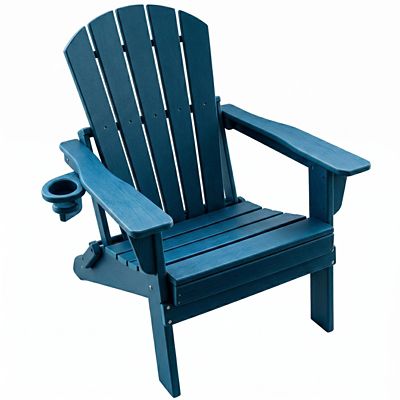
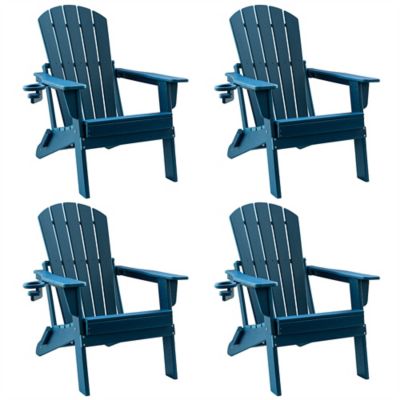
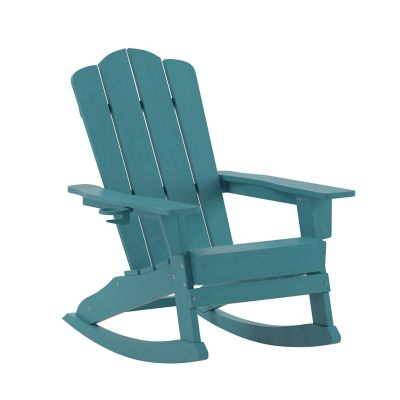
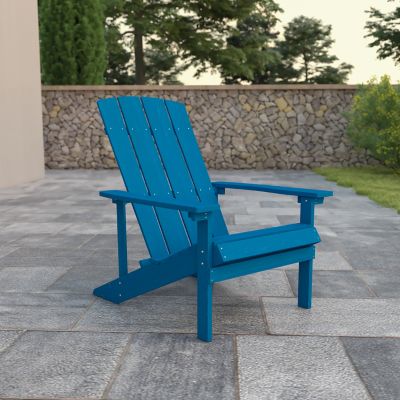
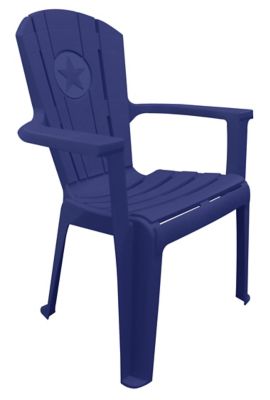
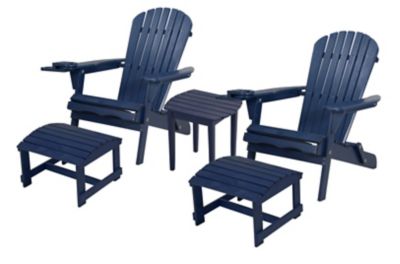
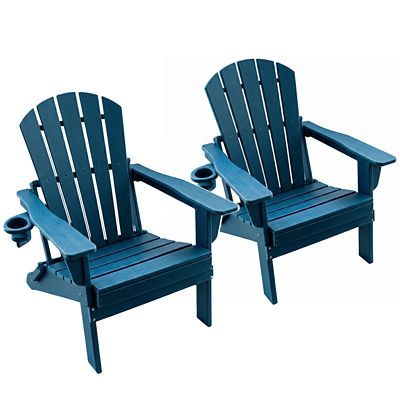
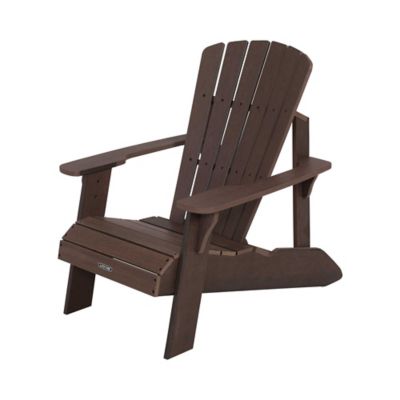
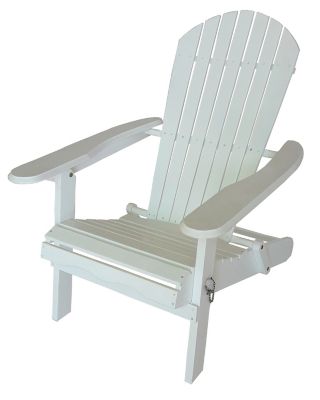
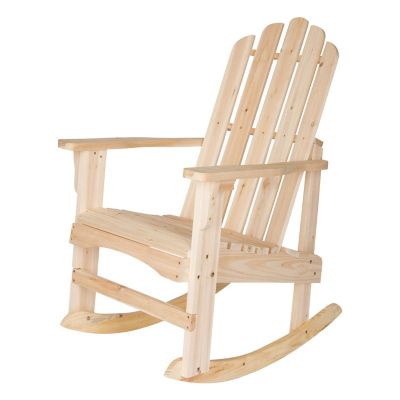
Navy blue Adirondack chairs bring the low, laid-back seat and broad arms of a classic porch chair together with a deep blue that feels right at home beside painted siding, bare wood or a stone patio. The high back gives you somewhere to lean after chores, and the wide arms leave room to rest your elbows with a cup of coffee in hand. High-density polyethylene (HDPE) and painted or stained wood are two common material choices. HDPE doesn’t absorb much moisture and won’t splinter, and when the navy color runs through the plastic rather than sitting on the surface, small nicks tend to be less noticeable. A solid HDPE chair can have some heft to it, which suits a spot where the furniture mostly stays put. Wood has a different feel: The grain may show through a blue stain, while a solid navy paint gives the chair a more even color and can often be touched up as the finish wears. Naturally moisture-resistant woods such as cedar still benefit from care at the joints and along exposed edges. Whatever the material, the thickness of the slats, the way the legs are braced and the hardware holding the frame together all matter to how the chair holds up. Navy itself can range from an inky blue that looks nearly black in deep shade to a clearer blue that stands out against a light porch rail. A smooth finish gives the color a clean, even look, while a grain pattern lets the light catch the slats a little differently. Two navy chairs don’t have to match the siding or the cushions to look like they belong. On a porch with honey-colored boards and a plain wood railing, the blue is often all the contrast the space needs.
The familiar Adirondack shape leaves plenty of room for differences in fit. A deeply angled seat gives you more of that settled-in feel, while a higher seat with less slope generally makes it easier to stand back up. That difference matters if the chair is mostly for long visits on the porch or if it’s where you sit for a minute to pull on boots before heading out again. Seat height at the front edge tells only part of the story; the low point farther back is where your weight settles. The width between the arms is a better measure of sitting room than the outside width, since those broad armrests can add several inches without giving you any extra space in the seat. For a tighter porch, the full depth matters just as much. An angled back can take up more room than it appears to from the front, especially if there’s a wall behind it and people need to pass in front without turning sideways. On an open patio, a pair angled toward each other can make conversation easy without putting both chairs squarely in the path to the steps. A lighter or folding frame makes sense when the seating moves between the porch and the yard, while a fixed frame fits a spot where the chair can stay set up. For a roomier seat or a higher stated weight limit,
Heavy Duty Adirondack Chairs are worth a look. Frame weight and weight capacity are separate things, though: A chair can be heavy to carry without being rated to support more, so the stated capacity is the better number to go by. Wherever the chair lands, firm, level footing under all four legs helps keep it steady when someone leans on the arms to get up.
Most navy blue Adirondack chairs don’t take much fuss to keep clean, but the right care depends on the surface. Dust and pollen show up more plainly on a deep blue seat than on a lighter one, particularly across the flat arms where they tend to settle. A soft cloth and mild soap are often enough for HDPE, and a soft brush can lift dirt out of a textured finish or from between the slats. Painted wood does better with a gentle wipe than with a soaking, especially around seams and screw holes where moisture can linger. A small chip in a painted arm or along the front edge of the seat is easier to deal with before more of the finish starts to lift. On either kind of frame, an occasional look at the fasteners is worthwhile, especially if the chair gets dragged from one spot to another or starts to wiggle when someone sits down. Grit under the feet can also mark painted porch boards, so lifting the chair instead of dragging it can spare both surfaces. Back slats and the angle of the seat do most of the work for comfort, but a thin cushion can soften the seat without taking away much room between the arms. A thick cushion changes the sitting height and how your back meets the chair, which is worth keeping in mind if the chair already sits high for the person who’ll spend the most time in it. A navy Adirondack chair can make a fitting housewarming gift for someone who finally has a front porch to sit on, particularly when there’s room beside it for a second seat down the line. It’s just as much at home by a garden gate where a neighbor stops to talk, or off to one side of the back steps where there’s a place to sit without blocking the way. The best fit is a chair that’s easy to settle into, easy to get back out of and right at home in the spot where folks naturally pull up a seat.