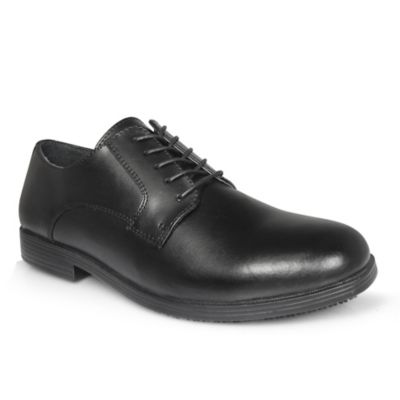
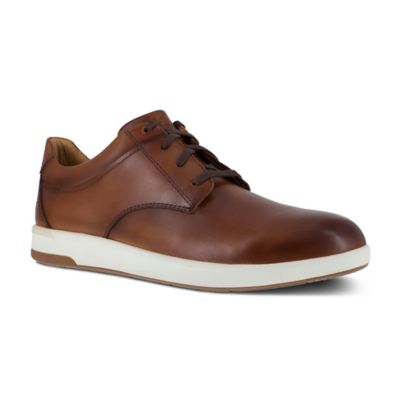
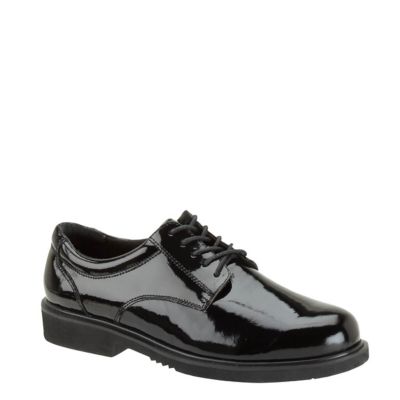
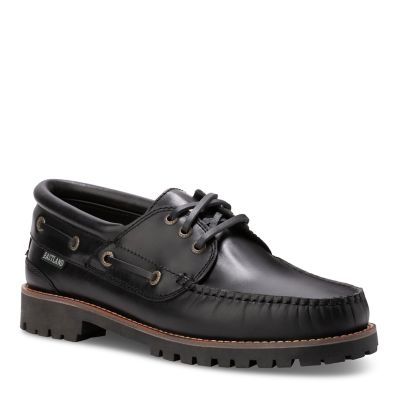
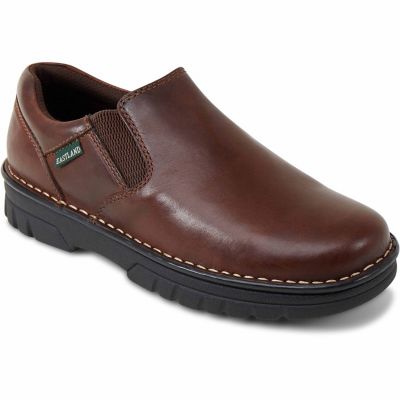
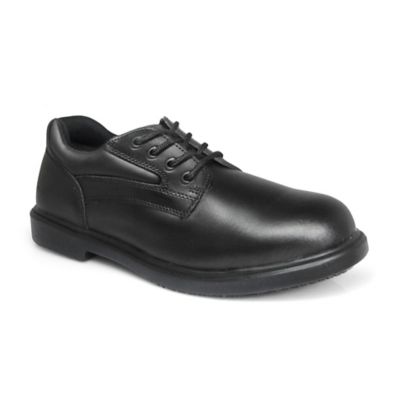
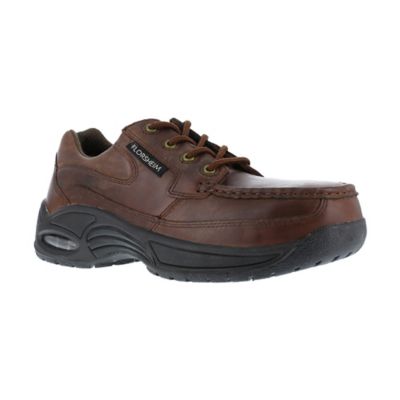
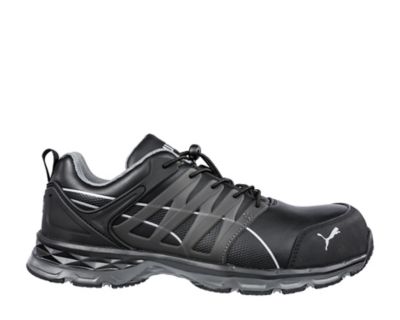
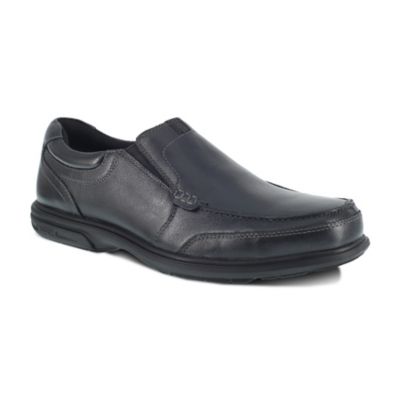
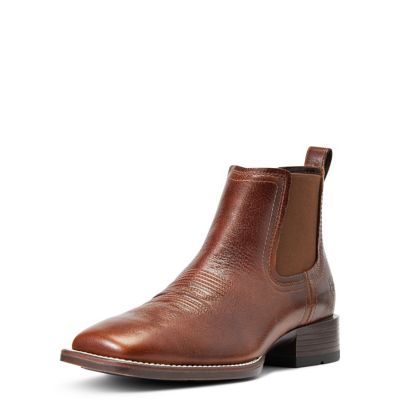
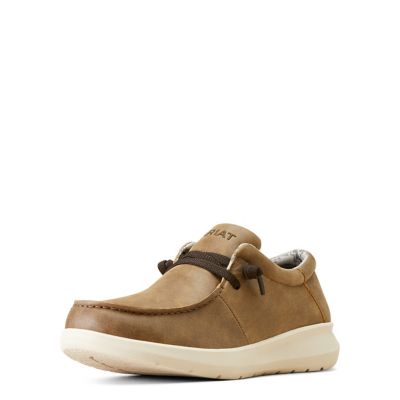
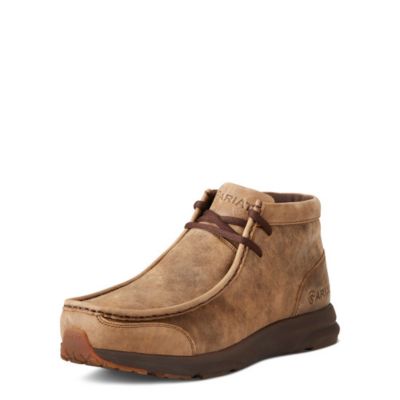
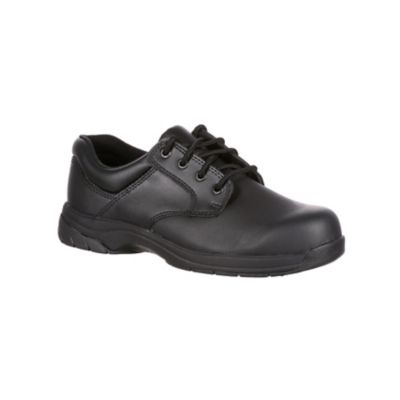
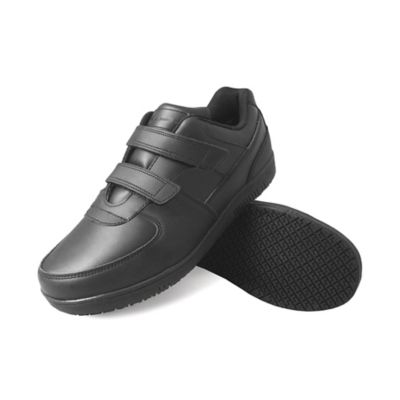
Men's work dress shoes bring together a professional look, everyday comfort, and features suited to the job at hand. They make sense for men whose workday includes a front desk, sales floor, office, or customer meeting, especially when a polished appearance is part of the dress code. A pair that looks right with slacks can also work with chinos or neat, dark jeans where workplace rules allow. Common dress-shoe styles include lace-up oxfords, derbies, and loafers, each with a different feel on the foot and a slightly different level of formality. Oxfords have a tidy, close-laced appearance that suits more formal settings, while the open lacing on derbies allows more adjustment across the instep. Loafers offer a slip-on shape without laces to tie, though a secure heel and properly fitted instep still matter. Plain toes keep the look simple, while cap toes and subtle stitching add detail without drawing much attention. Black often pairs easily with charcoal or black trousers, and brown shades work well with navy, tan, and many everyday work clothes. The right shape also depends on how the day unfolds. Someone handling paperwork in a farm office may want a different balance of flexibility and support than someone walking between a reception desk, meeting rooms, and a showroom. A low, broad heel and a stable sole can feel more planted than a narrow heel, particularly during long stretches of standing. A shoe that bends comfortably near the ball of the foot can make repeated steps feel less stiff, while a structured heel helps hold the foot in place. Dress shoes intended for work should match both the appearance expected by the employer and the amount of movement the role involves. Looking sharp matters, but a shoe earns its place in the daily routine by feeling comfortable through ordinary tasks, from the first walk across the office to the last round of closing duties.
Fit plays a big part in how men's work dress shoes feel after several hours, and the size printed inside is only a starting point. Foot shape, toe-box depth, instep height, and width all affect the way a shoe sits. Toes need room to rest naturally without pressing against the front or crowding together, while the midfoot should feel held rather than squeezed. A heel that lifts excessively can cause rubbing, and a shoe that pinches across the forefoot should not be counted on to stretch enough to solve the problem. Leather may soften with wear, but it will not turn an undersized shoe into the right fit. Trying shoes with the socks normally worn to work gives a better sense of the space available. Men who wear orthotics also need enough interior depth, and removable footbeds can make room for those inserts when the shoe's design allows. Underfoot cushioning can take some of the harsh feel out of hard floors, while support through the arch and heel can help the shoe feel steady. Softness alone does not tell the whole story; an overly loose or unstable fit can still leave feet working harder than necessary. Job-specific safety needs deserve just as much attention as comfort. A rubber outsole does not automatically mean a shoe has documented slip resistance, and tread appearance alone does not establish performance on slick surfaces. Manufacturer information about slip testing and intended floor conditions matters in workplaces where spills are part of the job. Even slip-resistant footwear cannot prevent every slip, so floor care and safe work habits still count. For work behind a service counter or out on a dining-room floor, explore
Mens Restaurant Work Shoes with the same attention to fit, appearance, and employer requirements. Where protective toes or other safety features are required, the shoe's stated ratings must match the workplace rules. A dressy appearance by itself does not establish protection, and ordinary office footwear is not a substitute for required safety footwear.
Materials and construction affect appearance, upkeep, and how well work dress shoes stand up to repeated wear. Smooth leather offers a traditional finish and can often be brushed, conditioned, and polished according to the maker's directions. It also develops creases where the foot bends, which is a normal part of wearing leather shoes. Synthetic uppers can offer a consistent finish and straightforward wipe-down care, though cleaning methods and breathability vary by material. Suede and nubuck have a softer, textured surface that generally calls for a suitable brush and material-specific cleaner rather than ordinary shoe polish. Inside the shoe, lining texture, seams, and footbed shape can make a noticeable difference, especially around the heel and across the toes. Breathable linings and moisture-managing socks can help keep feet more comfortable through a busy shift, but no single material makes every shoe feel the same. Construction matters, too. Secure stitching, firmly attached soles, and reinforced areas around the heel and lace openings help a pair handle the repeated bending and pulling of daily wear. Some shoes have soles that a repair shop may be able to replace; others are built as a single assembly and are less suited to that kind of repair. Basic care helps preserve both appearance and function. Removing surface dirt before it settles into seams, following the recommended cleaning method, and letting shoes air out between wears can keep everyday buildup in check. Direct heat can harm leather, adhesives, and other components, so air drying away from a heat source is generally the better choice. Shoe trees can help leather shoes hold their shape, while a shoehorn helps keep the heel counter from being crushed during dressing. Worn tread, a separating sole, or a collapsed heel deserves attention even when the uppers still look presentable. Men's work dress shoes can also make a practical gift for a dad, partner, or someone starting a new job, provided the size, fit preferences, and workplace dress requirements are known. A pair that suits the recipient's actual routine will have more purpose than one chosen for looks alone.