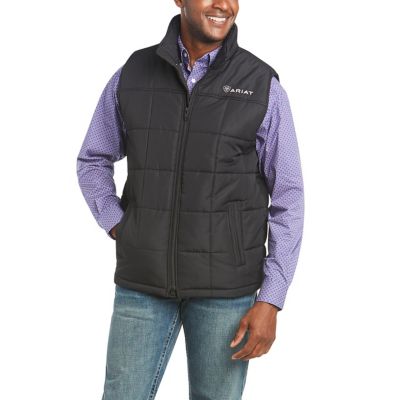
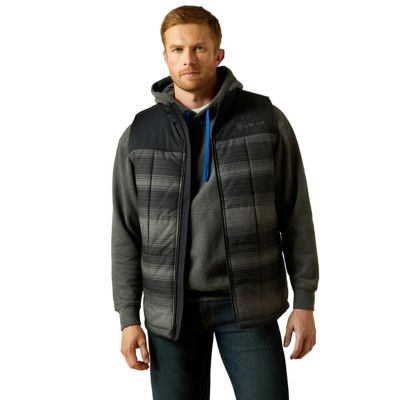
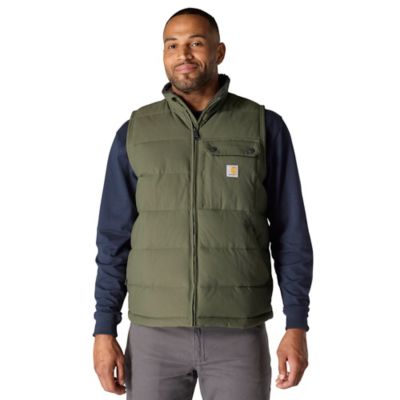
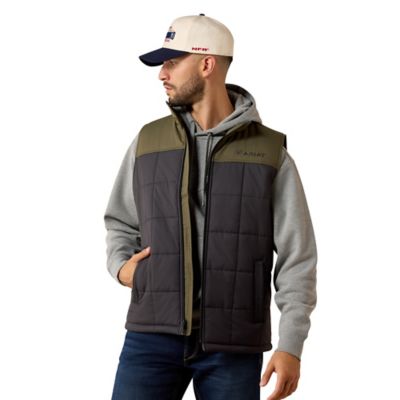
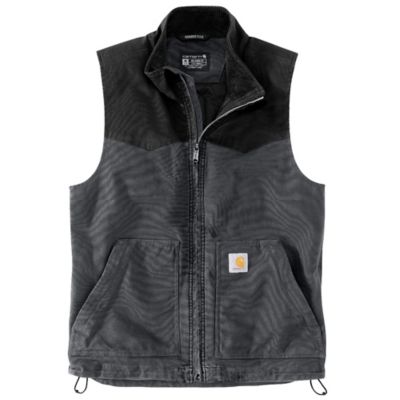
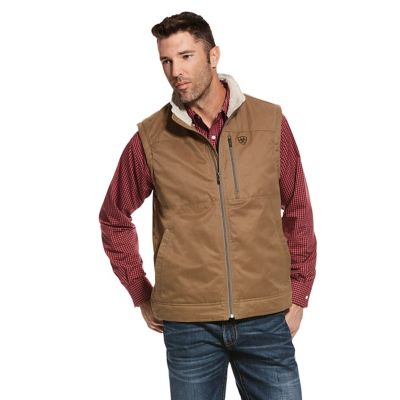
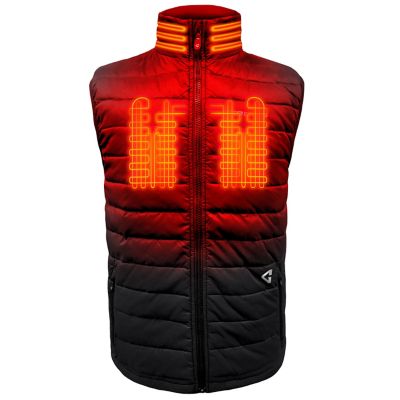
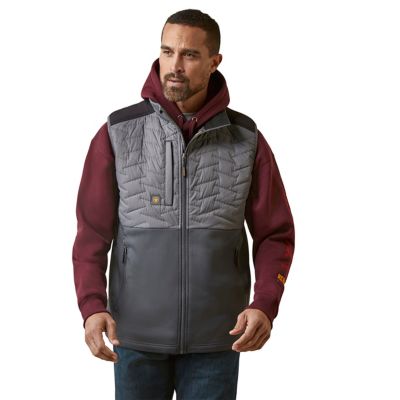
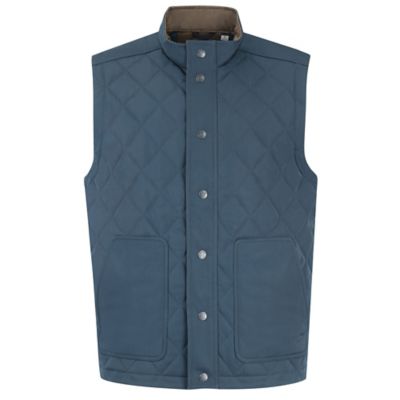
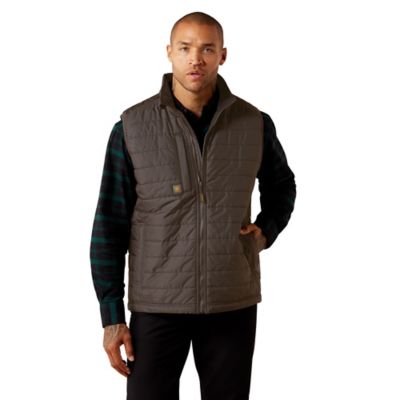
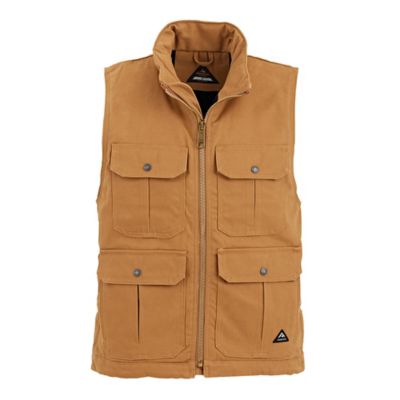
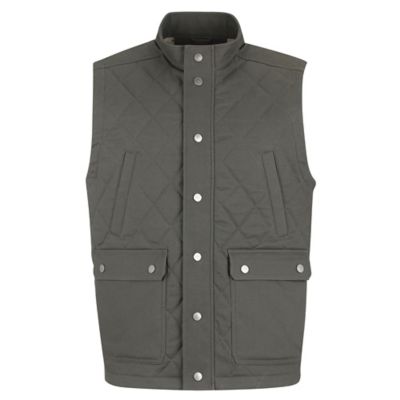
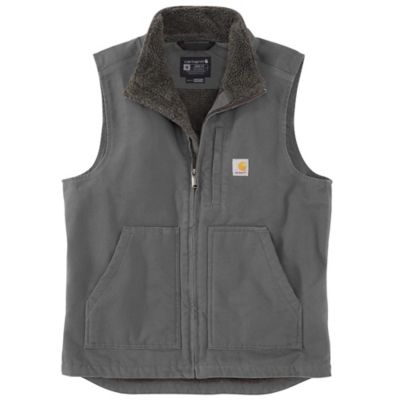
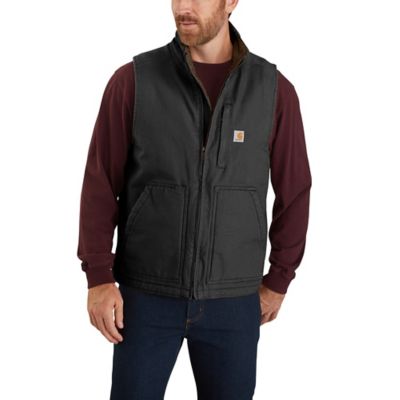
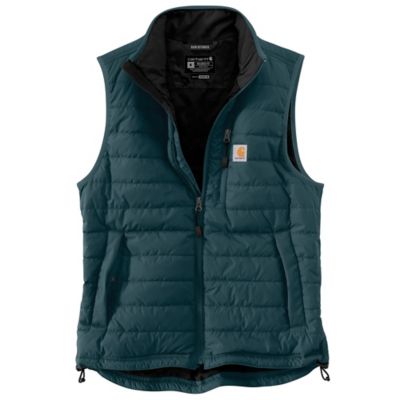
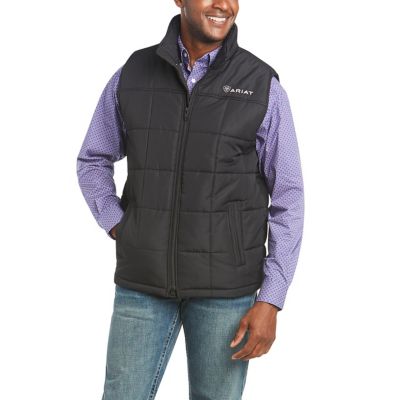
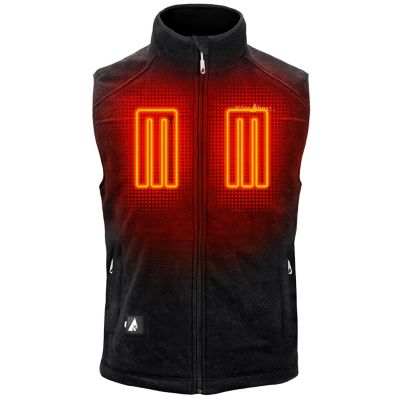
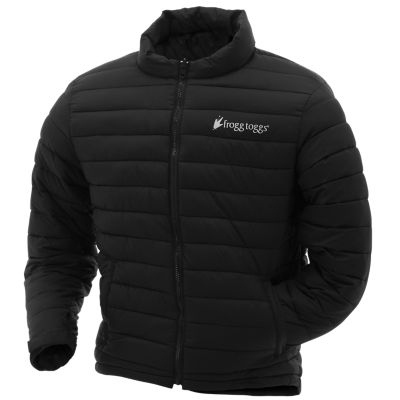
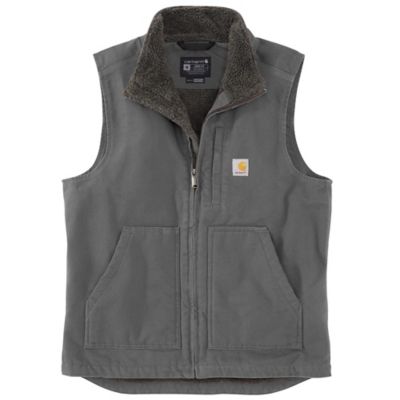
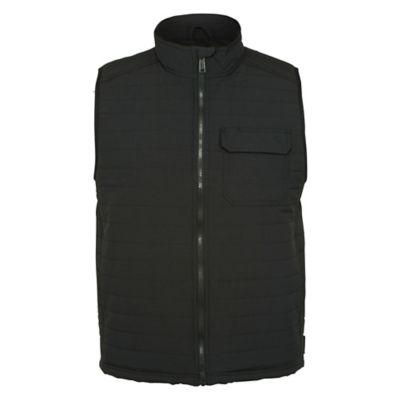
Men's insulated vests keep your core warm while leaving your arms free to move, making them a practical layer for chores, outdoor work and everyday wear. That sleeveless design comes in handy when you're lifting feed bags, reaching across a workbench or climbing into a pickup. Insulation around the chest and back helps hold body heat close without adding another full layer around your elbows and shoulders. The right amount of warmth depends on the work ahead: steady fence repair calls for a different balance than standing at a gate waiting for a delivery. Shell fabric makes a difference, too. Cotton duck and canvas have a sturdy feel suited to repeated contact with rough lumber, tool handles and barn walls. Nylon and polyester shells often offer a lighter feel and a smoother surface that slips beneath a coat. Some fabrics have water-repellent finishes that help light moisture bead up, but that doesn't make every insulated vest waterproof. The fill inside matters just as much as the outer fabric. Down provides warmth with little weight and packs down well, though its insulating ability drops when it gets wet. Synthetic insulation generally retains more warmth when damp and can be a practical choice around chores that involve splashes, mist or wet equipment. Fleece adds soft warmth with a less puffy feel, either as a lining or as part of the vest's insulating construction. Quilted stitching helps keep fill distributed across the garment instead of letting it settle into one area. A thick-looking vest isn't automatically the warmest choice; fill type, construction, wind resistance and fit all affect how it feels outside. For a man moving between a chilly barn, an open yard and a truck cab, a vest offers a middle ground between a shirt alone and a full coat. It can stay on through changing tasks without sleeves getting in the way, provided the insulation matches the level of activity and the conditions.
Fit is especially important with men's insulated vests because they often sit between other layers. A vest worn over a flannel shirt needs a different amount of room than one pulled over a heavyweight sweatshirt. Shoulder seams should sit comfortably, and the chest should allow a full reach without the front pulling tight. Armholes need enough clearance for movement without leaving wide gaps that let warmth escape. An overly roomy fit can catch on corners and bunch beneath a jacket, while a close fit that compresses the insulation can reduce its loft. Length deserves a look as well. A hem that covers the beltline helps keep the lower back covered when bending to latch a trailer or scoop grain. A longer back hem can add coverage without putting extra fabric across the front of the lap when seated. Standing collars protect the neck from drafts, while softer collar linings can feel better against bare skin. Full-length zippers make ventilation simple when a job gets your heart rate up; storm flaps offer another barrier against wind along the closure. A two-way zipper, when included, can open from the bottom to give more room while sitting or bending. Pockets are worth considering beyond their number. Hand pockets provide a place to warm fingers between tasks, chest pockets keep small essentials within reach, and secure interior pockets can help keep a phone from slipping out when leaning over. Pocket placement matters if the vest will sit beneath a coat or above a tool belt. Reinforced pocket edges, firmly attached closures and well-finished seams are useful details in clothing that sees regular work. Smooth linings help the vest slide over shirts without dragging the sleeves upward, while brushed linings add a softer feel. For walking the property, tending livestock or making a trip into town, the most comfortable choice is one that lets you reach, sit and bend without constant tugging at the hem.
Regular care helps an insulated vest keep its shape, warmth and work-ready feel. The care label is the place to check before washing, since canvas shells, down fill and synthetic insulation don't all call for the same treatment. Closing zippers and emptying pockets before cleaning helps prevent snags and keeps bits of hay, grit and hardware out of the wash. Small marks may only need spot cleaning, depending on the fabric and the manufacturer's directions. When machine washing is permitted, the recommended cycle and detergent matter, especially for down or fabrics with water-repellent treatments. Fabric softener can interfere with some performance finishes, so it belongs out of the routine unless the label permits it. Drying deserves equal attention: insulation needs to dry fully before storage, and down may need careful, label-approved tumble drying to restore its loft. Too much heat can damage certain shells, fills and trims. Hanging a clean, dry vest in a closet or storing it loosely helps avoid keeping the insulation compressed for long stretches. Checking loose stitching and worn pocket corners early can keep a small repair from turning into a larger tear. These everyday details matter for men who wear the same layer through morning feeding, afternoon errands and weekend projects. A vest can also make a practical gift for a farmer, rancher, tradesman or anyone who prefers warmth without full sleeves. Knowing the recipient's usual shirt size is helpful, but chest measurements and the layers worn underneath give a better sense of fit than size alone. Fabric preference matters, too: someone who likes the substantial feel of canvas may want something different from a walker who values a light, packable layer. For another look at sleeveless layering, explore
Men's Thermal Vests. Whether the job involves hauling supplies or checking a fence line, comfortable core coverage and unrestricted arm movement are what make an insulated vest earn its place by the door.