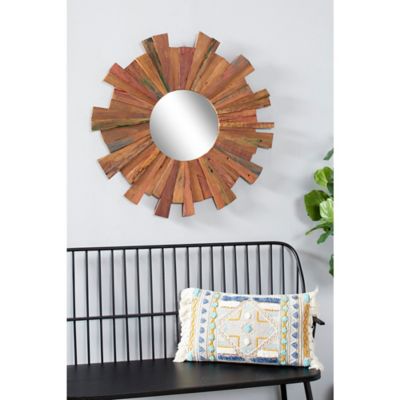
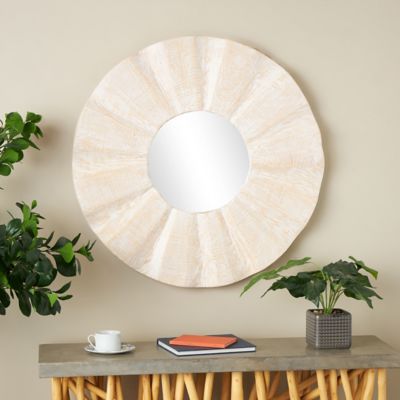
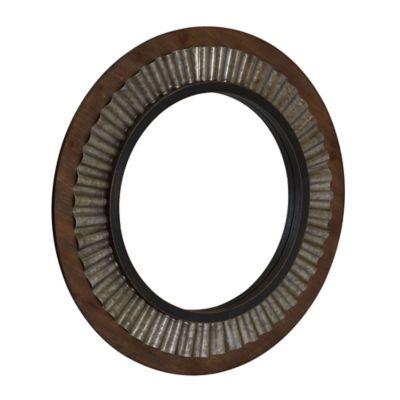
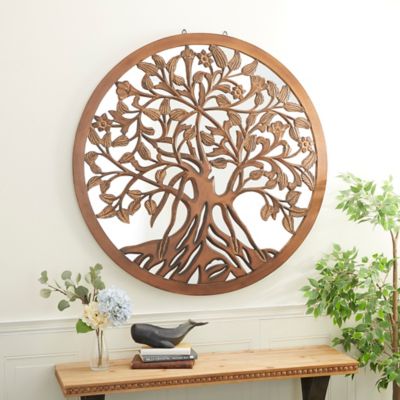
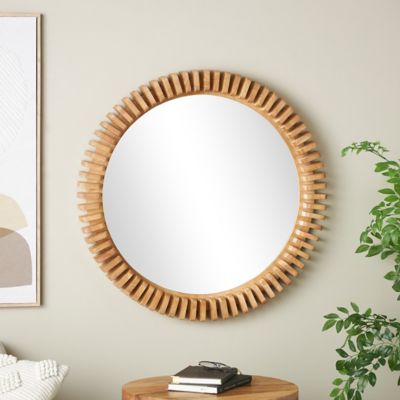
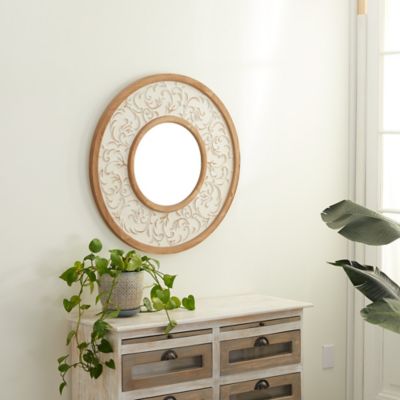
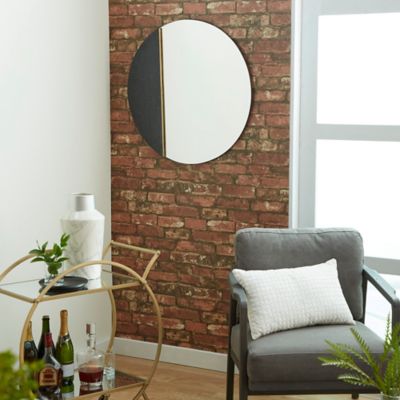
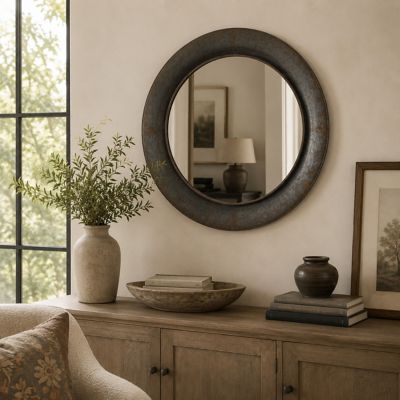
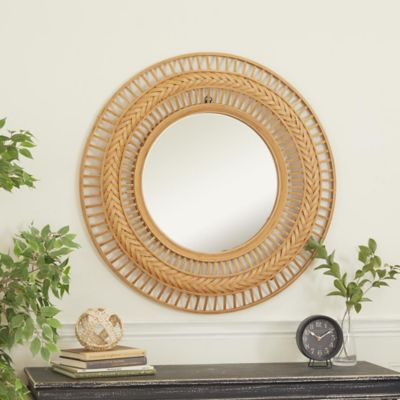
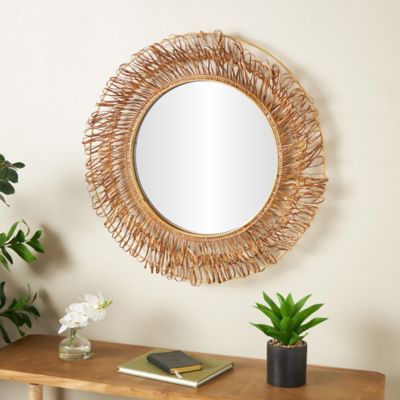
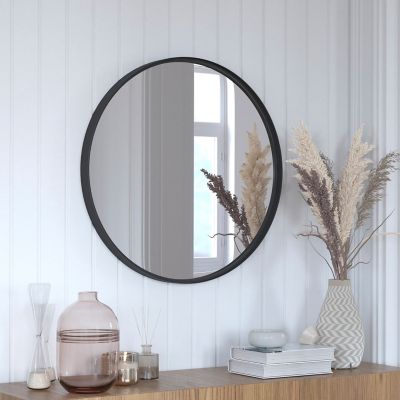
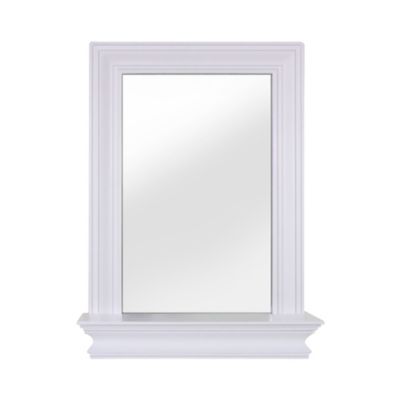
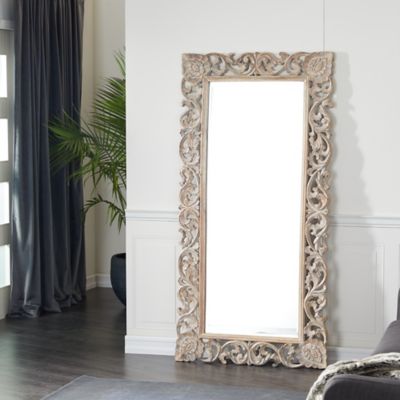
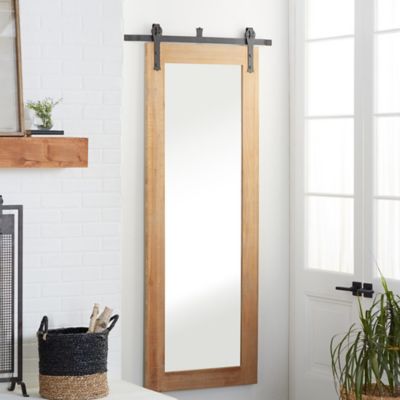
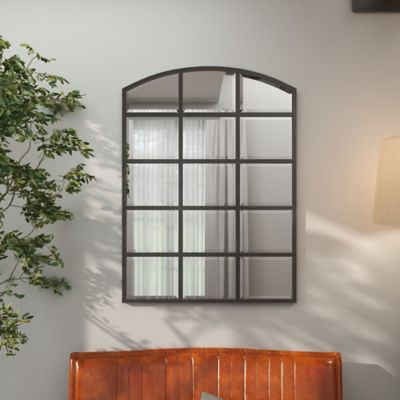
Large round wood mirrors bring a little warmth and a clear focal point to rooms where most of the lines run straight. Above a long entryway table, the curved frame breaks up the shape of the furniture below it. Over a bedroom dresser, it gives the wall some presence without the sharp corners of another rectangular piece. Wood makes that big circle feel right at home beside plank flooring, painted cabinets, woven baskets, or a well-loved bench near the back door. The frame itself has a lot to do with the overall look. A broad profile puts more emphasis on the wood, while a slim rim leaves more room for the reflection. Oak often shows a pronounced grain, pine can bring visible knots and a more relaxed character, and walnut tends toward deeper brown tones. The stain and finish matter just as much as the wood species, so the actual appearance can range from pale and understated to dark and substantial. Solid wood frames and frames built with wood veneer over an engineered core have different construction details worth considering. Solid wood naturally responds to changes in indoor humidity, while a veneer provides a real wood surface over a supporting base. Neither description alone tells the whole story; the frame joints, backing, finish, and hanging hardware all contribute to how a mirror holds up in everyday life. Some frames have smooth, even surfaces, while others feature wire-brushed grain, intentional distressing, or a weathered appearance. Those details can help a mirror settle into an old farmhouse or add some texture to a newer home. Matching every wood tone in the room is not necessary, either. A lighter frame can stand apart from a dark sideboard, and a brown frame can tie together a painted dresser and a wood floor without making the whole room feel like a matching set.
Size changes how a round mirror works in a room, and the outside frame measurement is only part of the picture. A thick border takes up more wall space while leaving a smaller reflective area than a narrow frame with the same overall diameter. That difference matters when the mirror needs to serve a practical purpose, such as checking a shirt collar before heading out, rather than simply filling an open wall. Above a console or dresser, a mirror generally feels settled when the furniture below it is wider than the frame. Enough open wall around the circle keeps the arrangement from looking squeezed between shelves, door trim, or light fixtures. In an entryway, the hanging height needs to work for the people walking past it, not just for the table underneath. A bedroom mirror may need to clear a tall lamp, while a mirror over a bathroom vanity needs room between the faucet and the lighting. Bathroom placement also calls for checking whether the frame, finish, and backing are intended for that environment. Wood is not automatically suited to repeated splashes or lingering moisture just because it looks good above a sink. When considering
Large Round Mirrors for Walls, wood frames offer an easy way to soften the look of metal fixtures, painted furniture, and straight-lined cabinetry. What appears in the glass matters, too. A mirror across from a window can bring more of the outdoor view into the room, while one facing an open doorway may reflect the next room instead of the space around it. A spot opposite a bare wall creates a much quieter effect than one facing a busy coat rack. In a narrow hallway, a large round shape can add a sense of depth without taking up floor space. Above a fireplace, clearance from heat and the requirements of the fireplace and mirror both deserve attention before placement is settled.
A large wood-framed mirror is also a substantial piece to hang, even when its shape looks light and simple. The frame, glass, and backing all add weight, so the mounting method needs to suit both the mirror and the wall. Factory-installed hangers, D-rings, cleats, and other mounting systems have their own requirements; the instructions supplied with the mirror should determine the hardware and arrangement. Drywall, plaster, brick, and wood walls do not all take the same fasteners, and the load rating needs to cover the full weight of the piece. A wide mirror can be awkward to lift alone, making a second set of hands helpful for keeping the frame level and protecting the glass. Placement around children and pets deserves the same care, especially near a bench or cabinet that might invite climbing. Everyday upkeep is usually straightforward, but a little attention protects both the reflection and the wood surrounding it. A soft, dry cloth lifts dust from the frame without grinding grit into the finish. For the glass, cleaner applied to a cloth rather than sprayed along the frame helps keep liquid from collecting at the edges or reaching the backing. Harsh abrasives and soaking-wet cloths can damage finishes, so the maker’s care directions are the best reference for any deeper cleaning. Steady indoor conditions and some distance from direct heat help limit stress on wood joints and finishes over time. In a busy entry, keeping bags, keys, and furniture corners from knocking against the lower edge can prevent marks that ordinary cleaning will not remove. For a housewarming or wedding gift, a large round wood mirror can be a thoughtful choice when the recipient’s wall space and preferred wood tones are known. It has a practical place in everyday routines, yet the grain, frame shape, and finish give it enough character to make a room feel more put together. Whether it hangs beside the front door or over a bedroom dresser, the best fit balances a clear reflection, sensible proportions, and a wood finish that feels at home.