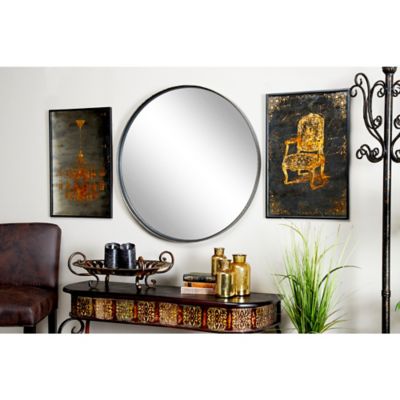
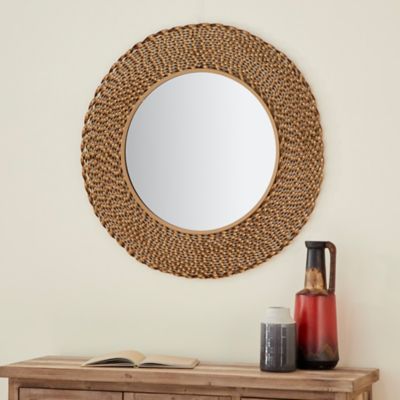
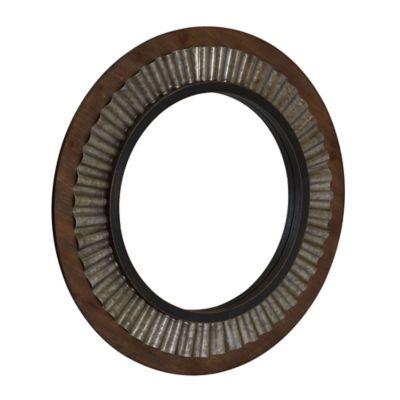
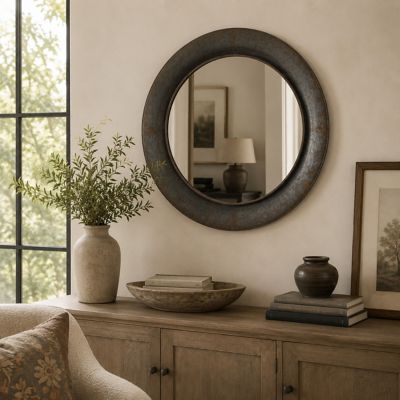
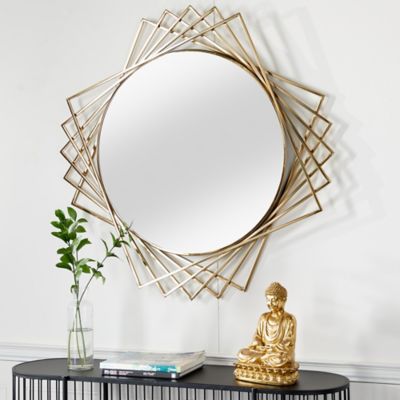
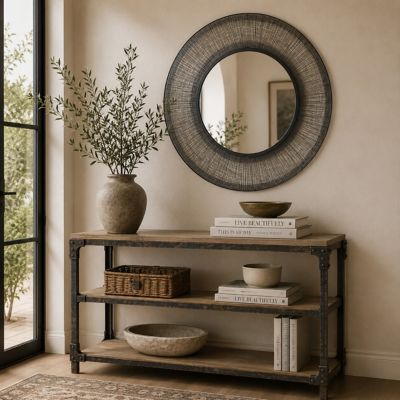
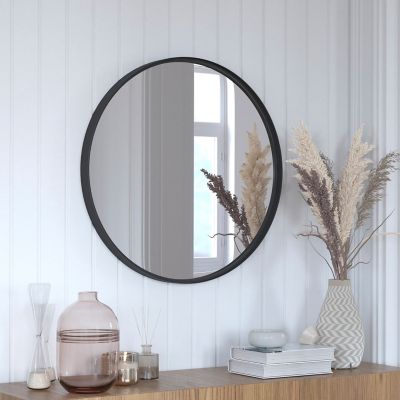
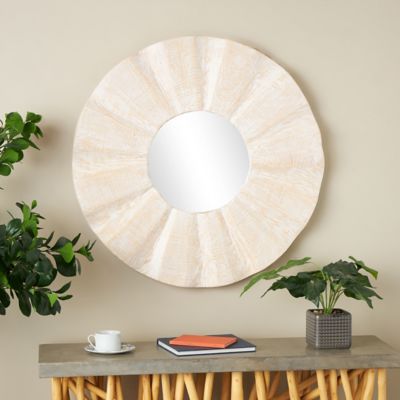
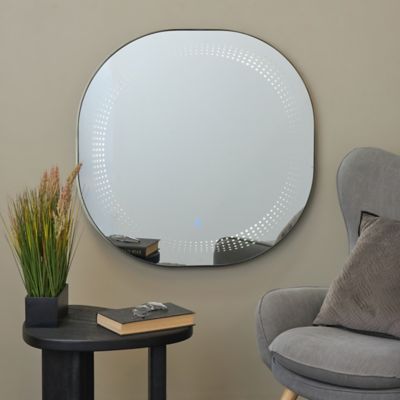
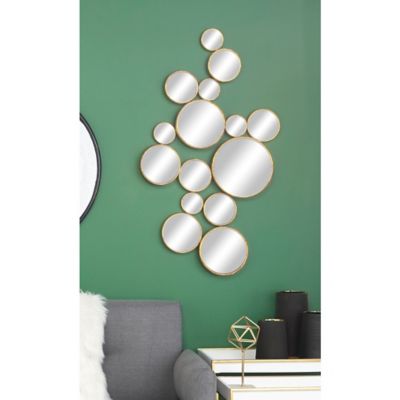
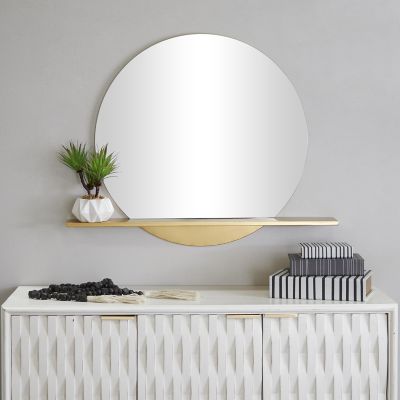
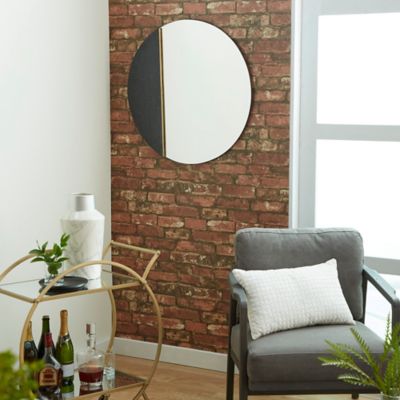
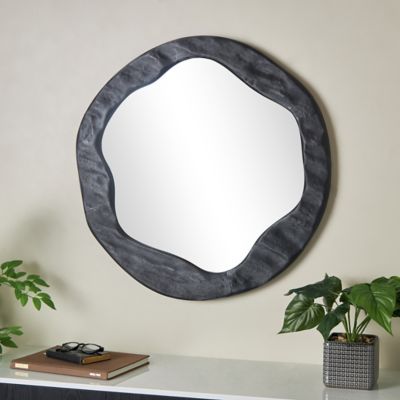
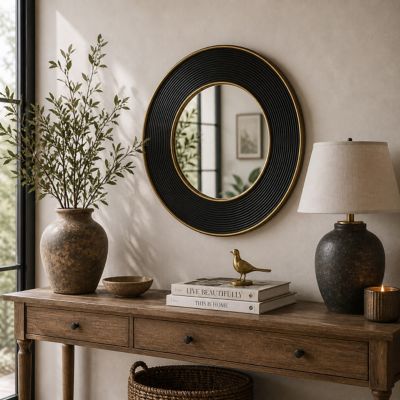
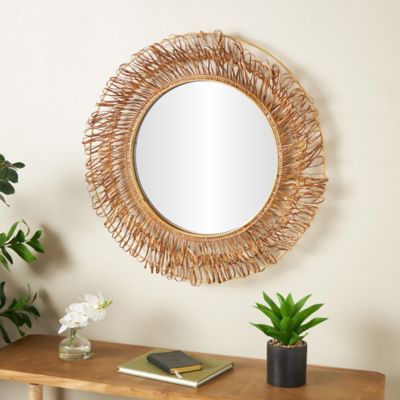
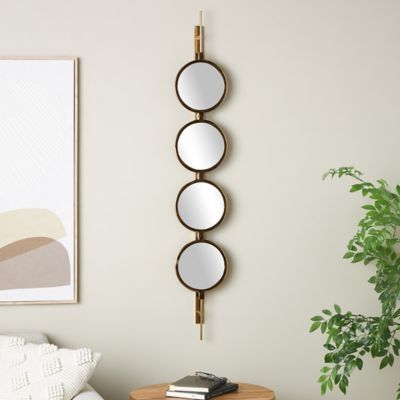
Large round mirrors for walls create a focal point above a console, mantel or bathroom vanity while giving a room another way to catch the light. Common large sizes measure around 30 to 48 inches in diameter, with oversized options reaching 60 inches or more. The outside diameter, including the frame, determines how much wall space a mirror needs, while the exposed glass determines the size of the reflection. A circular shape softens the straight lines of doorways, cabinets and long tables without making a room feel fussy. That balance works just as well in a farmhouse entry as it does over a bedroom dresser or beside a dining table. In a narrow hallway, reflected light and an open sightline can make the space feel less closed in, although a mirror won’t replace a lamp where more lighting is needed. Placement also shapes what becomes part of the room: a reflection of a window, wood beams or a favorite piece of furniture gives the glass something pleasant to frame. Over furniture, a mirror that is narrower than the piece below it generally feels balanced. Around two-thirds to three-quarters of the furniture’s width is a common proportion, with room on either side for lamps or other everyday belongings. A thick frame adds visual weight, so two mirrors with the same outside diameter may feel quite different on the wall. Height matters, too. An entry mirror serves a practical purpose when people of different heights can check their reflection before heading out the door. Above a vanity, the glass needs to work with the faucet, backsplash and light fixtures rather than crowd them. A single broad circle can anchor a wide vanity, while separate round mirrors give each sink its own space. In either arrangement, nearby shelves, outlets and cabinet doors remain part of the fit, not just the open wall itself.
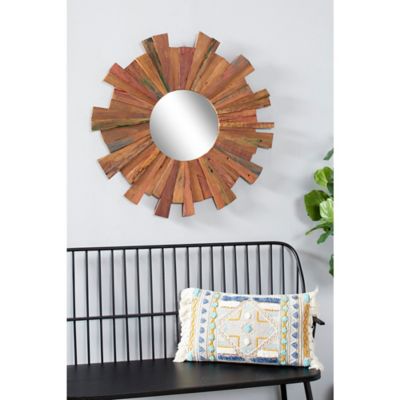
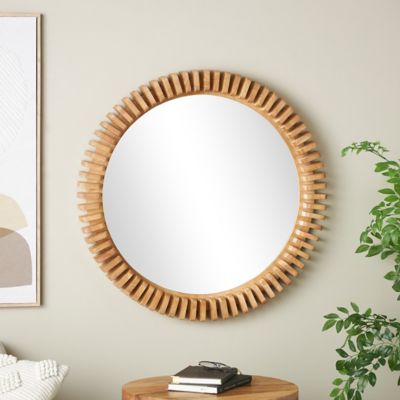
Frame material sets much of the tone for a large circular mirror. Wood brings grain, texture and warmth to rooms with painted cabinets, woven baskets or a sturdy oak table. For spaces that lean toward timber finishes,
Large Round Wood Mirrors pair naturally with everything from pale pine furniture to darker stained pieces. A close match isn’t always necessary; a lighter frame can stand out against a dark wall, and a deeper brown can give a plain white wall more definition. The finish matters as much as the wood species, especially where a frame might encounter damp hands or splashes. Metal frames offer a different feel, with narrow edges that keep attention on the glass or broader profiles that give the circle a stronger outline. Black finishes sit comfortably alongside iron hardware, while warmer metal tones can tie in with faucets and cabinet pulls. Frame depth changes the view from the side, which is worth considering in a hallway where people pass close to the wall. A shallow profile stays tucked in; a deeper rim creates more shadow around the glass. Neither material alone tells the whole story about strength or upkeep. Sound joints, a securely fitted backing and firmly attached hanging points all contribute to how a mirror holds up in everyday surroundings. Glass should provide a clear reflection without distracting ripples, especially across a broad surface where distortion is easier to notice. Bathrooms call for closer attention to the manufacturer’s stated room suitability because repeated moisture exposure can affect some frame finishes and mirror backings. A mirror intended for a dry bedroom isn’t automatically suited to a steamy bathroom. Likewise, an indoor wall mirror belongs indoors unless its specifications expressly allow another setting. The right material and finish should suit the room’s daily demands as well as its appearance.
A large wall mirror also needs a secure place to hang, particularly in a busy entry where coats, bags and work boots come and go. Weight varies with the diameter, glass thickness, frame and backing, so size alone isn’t enough to judge the mounting requirements. The mirror’s listed weight, hanging system and installation directions determine the support it needs. Drywall, plaster, masonry and wood walls call for different fasteners, and a general-purpose picture hook isn’t automatically suitable for a heavy mirror. Fastening into structural framing where specified, or using anchors rated for the wall material and load, helps keep the installation sound. Hanging hardware supplied with a mirror still needs to match the wall it will attach to. Wider pieces can be awkward to lift even when their weight seems manageable, making a second person helpful for positioning the glass without bumping the frame against a countertop. Once mounted, enough clearance around the mirror helps protect its edges from swinging doors and nearby furniture. Routine care is straightforward when it follows the finish requirements. A soft, lint-free cloth lifts dust from the frame, while a glass cleaner approved by the manufacturer handles fingerprints on the reflective surface. Applying cleaner to the cloth rather than spraying the mirror directly helps keep liquid away from the edges and backing. Abrasive pads and harsh cleaners can scratch glass or damage a finish, and wood or metal frames may need different care from the glass they surround. In a bathroom, ventilation and prompt attention to splashes help limit lingering moisture. For a gift, a large round mirror can be a thoughtful choice for someone settling into a new house or finishing a bedroom, provided the wall measurements and preferred finish are known. It’s a substantial piece that earns its place through daily use, whether that means straightening a collar by the front door, checking a hair ribbon before school or bringing a brighter reflection to a favorite gathering space.