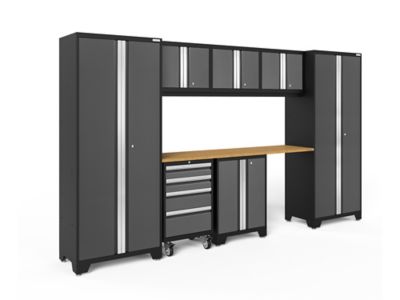
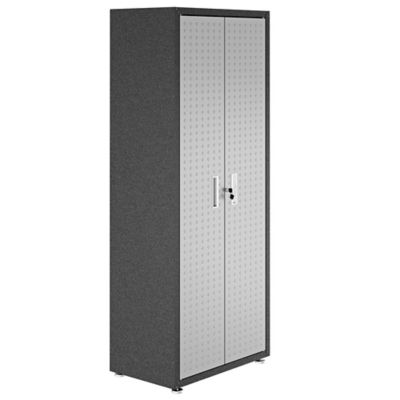
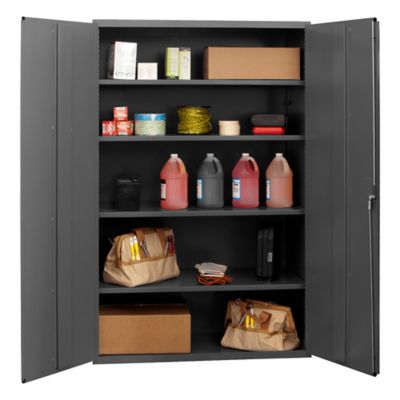
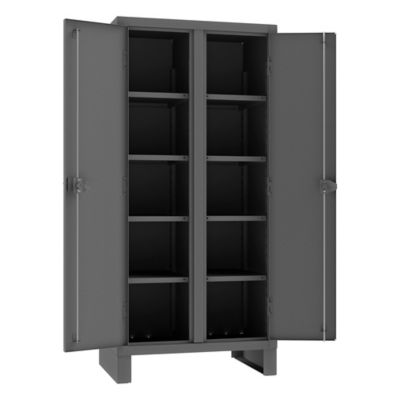
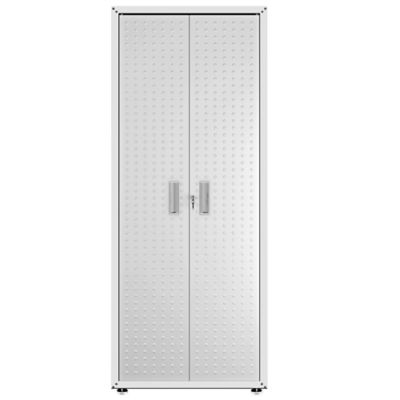
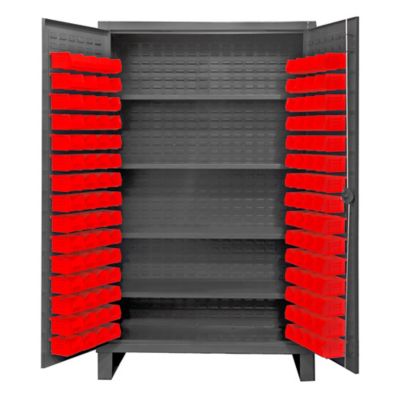
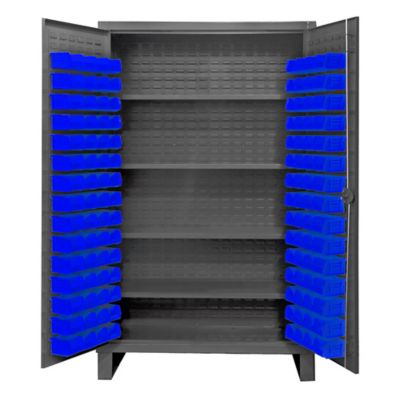
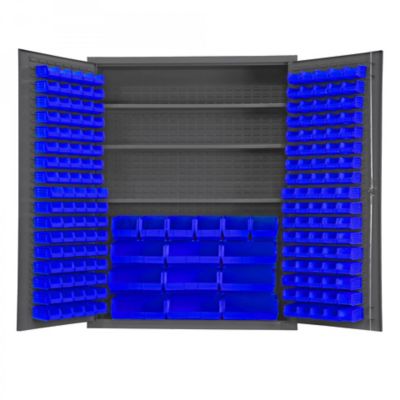
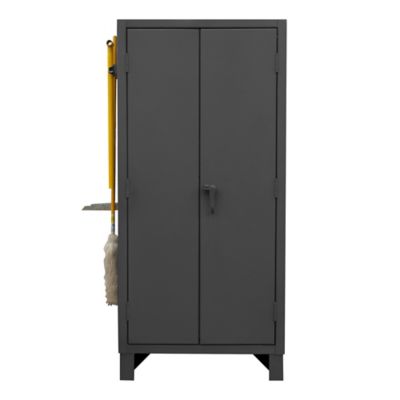
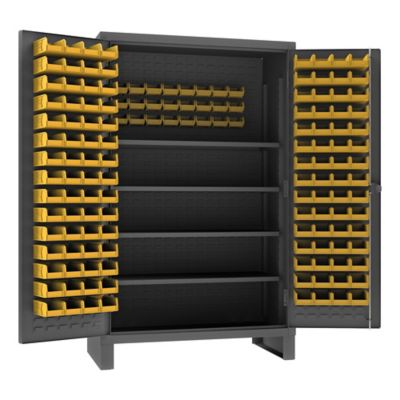
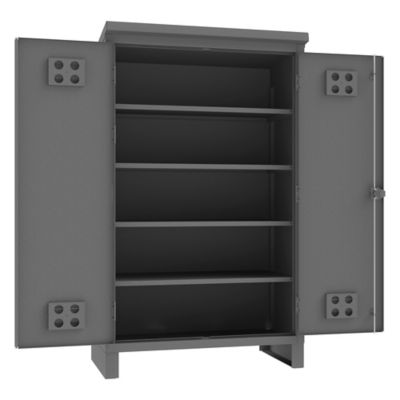
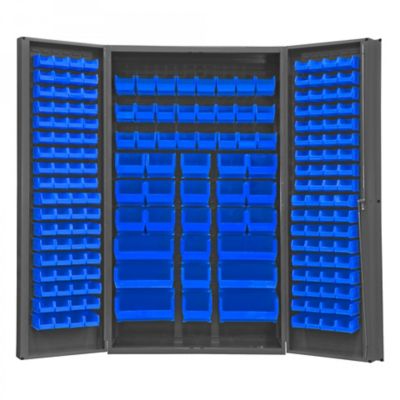
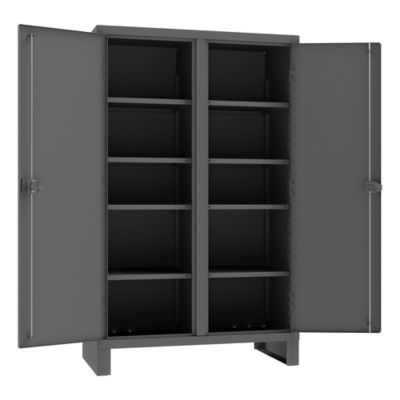
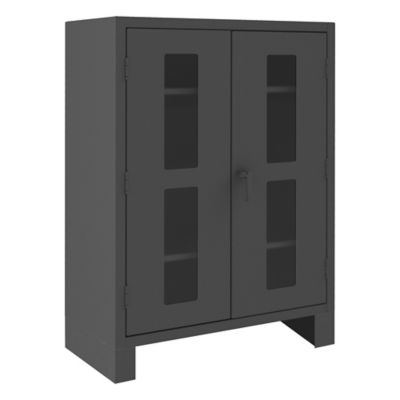
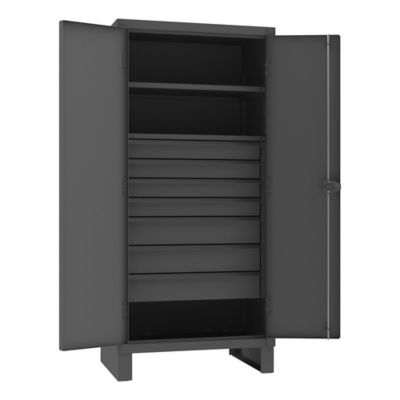
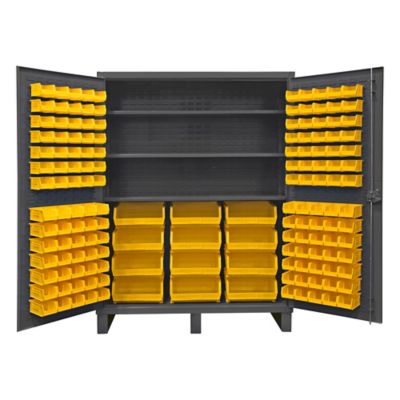
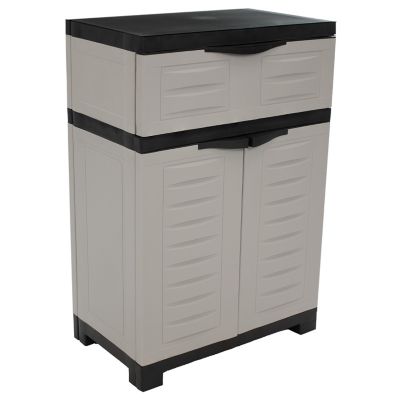
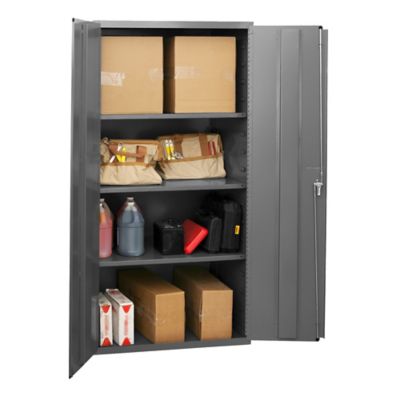
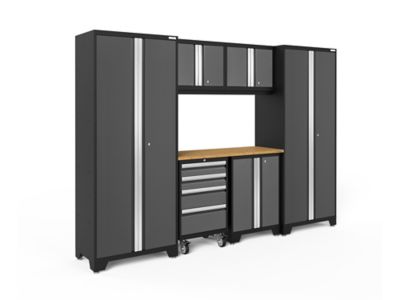
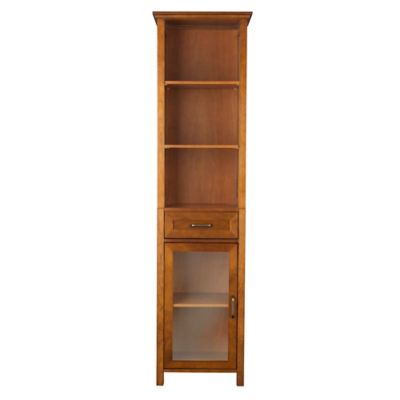
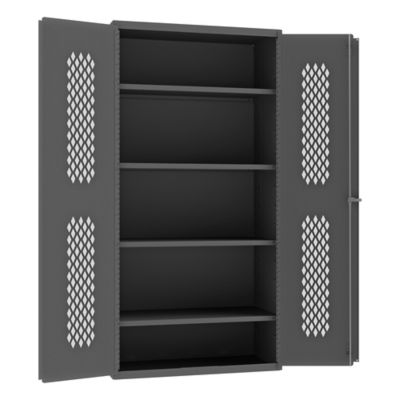
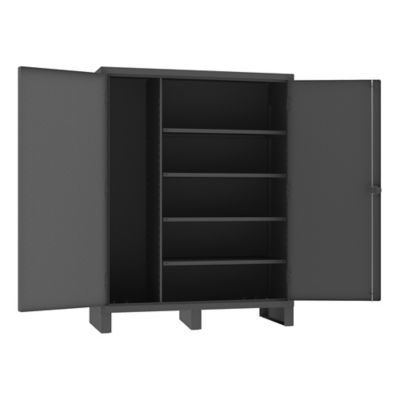
Large metal storage cabinets provide enclosed storage for tools, equipment, and everyday supplies in garages, farm shops, utility rooms, and maintenance areas. Their main advantage is simple: a tall, roomy cabinet puts a lot of gear in one place without leaving everything out on open shelving. Steel construction gives the cabinet a sturdy frame, while doors help limit dust buildup and keep the workspace looking less cluttered. Locking models add a measure of access control for shared spaces, though a standard storage cabinet is not a safe or a substitute for storage equipment rated for hazardous materials. These cabinets make sense for homeowners with a crowded garage, property owners keeping repair supplies together, and crews that need a central spot for shared equipment. Behind the doors, adjustable shelves can make room for anything from shallow hardware bins to taller tool cases. Full-height compartments suit longer equipment, while divided interiors can separate small supplies from larger gear. The most useful layout depends on what needs a home: a shelf packed with fasteners has different support needs than one holding gloves, towels, and empty containers. A cabinet beside a workbench can keep repair essentials within reach, while one near a utility sink can hold cleaning supplies in their original, labeled containers. For a farm shop, separate sections can help keep animal-care supplies apart from maintenance materials. Enclosed storage also makes cleanup easier because there are fewer loose objects scattered across work surfaces. Instead of hunting through several corners of the garage for a tool case or a spare part, everything has a designated place. That everyday convenience is what makes a large cabinet useful well beyond its size: it helps turn a busy work area into a space where the next job can get started with less searching.
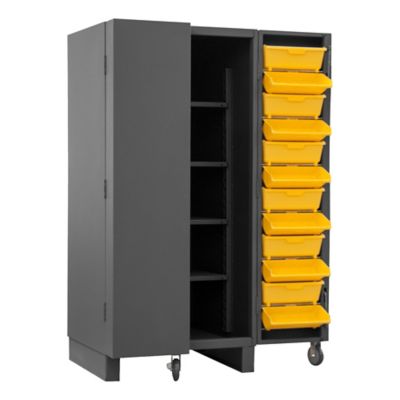
The right fit involves more than the cabinet’s outside width and height. Interior depth determines whether larger cases and containers sit fully on a shelf, and the door opening affects how easily those pieces slide in and out. A cabinet can have plenty of total space yet still be awkward for a wide toolbox if a center divider or narrow opening gets in the way. Room around the cabinet matters, too, especially where open doors could block a walkway, bench drawer, or parked vehicle. Handles, hinges, and the space needed to turn a key all deserve a little breathing room. Delivery access is another practical consideration for a large metal cabinet, particularly when stairs, tight doorways, or a narrow shop entrance stand between the unloading area and its final spot. Steel thickness, frame design, shelf supports, and door reinforcement all contribute to how a cabinet handles daily work. Gauge numbers alone do not tell the whole story; lower gauge numbers generally indicate thicker steel, but construction and load ratings matter alongside that measurement. Shelf capacity usually refers to an evenly distributed load, not the same weight concentrated beneath one heavy piece of equipment. The cabinet’s total load rating may also differ from the combined ratings of its individual shelves. Fixed cabinets suit a dedicated storage spot, while models with casters can support workspaces that need occasional rearranging, provided the floor and load stay within the manufacturer’s limits. Locking casters help hold a mobile cabinet in position, but they do not replace any required tip-restraint measures. Finish is another practical choice. Painted and powder-coated surfaces offer different looks, and resistance to scratches or corrosion depends on the coating and how it is maintained. For a darker finish that pairs easily with workbenches and tool storage,
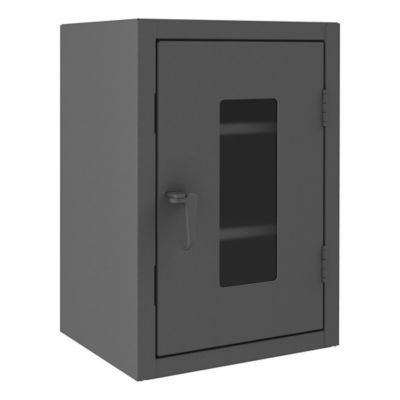
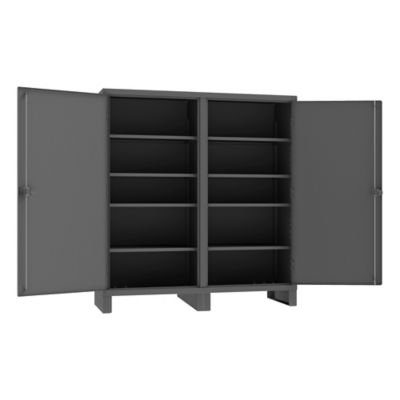
Black Metal Storage Cabinets offer another way to keep the workspace looking coordinated without making color the main reason for the purchase.
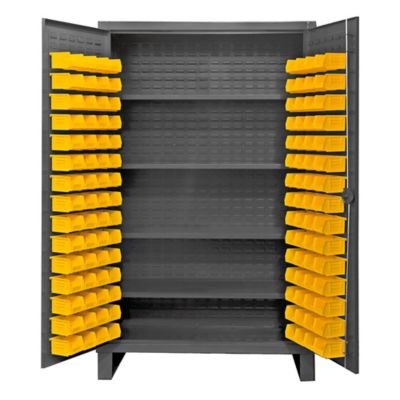
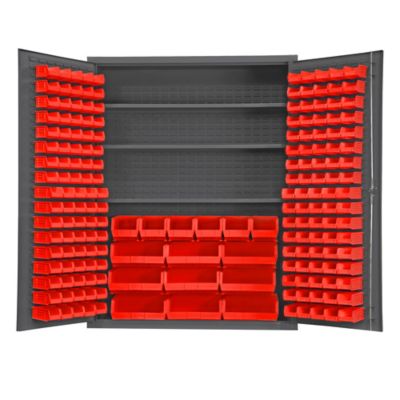
Day-to-day usefulness comes from a cabinet that is easy to load, easy to open, and simple to keep organized. Heavy equipment belongs on lower shelves to help keep the center of gravity down, while lighter supplies can fill the upper spaces. Frequently needed gear is easier to reach near waist level, especially when a repair job means making several trips between the cabinet and the bench. Small bins and clear shelf labels can keep loose hardware from spreading across an entire shelf, and leaving a little room around containers makes them easier to lift without scraping knuckles or knocking neighboring supplies loose. Door-mounted storage, when included and rated for the load, can hold smaller essentials without taking over shelf space. Shelves and hooks should carry only what their supports are designed to hold, and extra holes or attachments can affect the cabinet’s strength or finish. A level, solid floor helps doors line up and latches engage properly; wall anchoring or other tip restraints should follow the manufacturer’s directions. In a household or shared shop, keeping track of cabinet keys and controlling access can be just as important as deciding where the cabinet stands. Cleaning is generally straightforward: a soft cloth and a mild cleaner suited to the finish can remove grime without scouring the surface. Thorough drying helps protect seams and shelf corners, where trapped moisture can encourage rust. Coating damage deserves attention before corrosion spreads, with any touch-up work matched to the manufacturer’s recommendations. Hinges, latches, shelf clips, and caster hardware also benefit from periodic checks, especially in a cabinet opened throughout the workday. Chemicals, fuels, and other regulated materials need storage that meets their labels and applicable safety requirements rather than an ordinary locking cabinet. For everyday tools, parts, and supplies, though, a well-fitted metal cabinet brings welcome order to a hard-working space. There is room for the gear that earns its keep, a clear place to return it, and more open bench space for the job at hand.