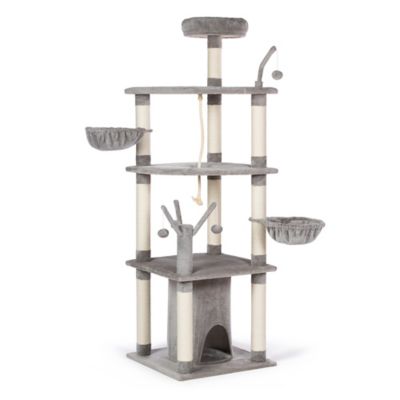
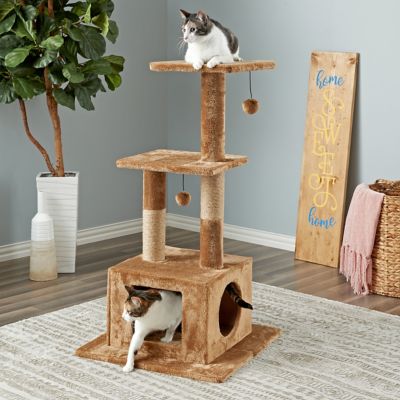
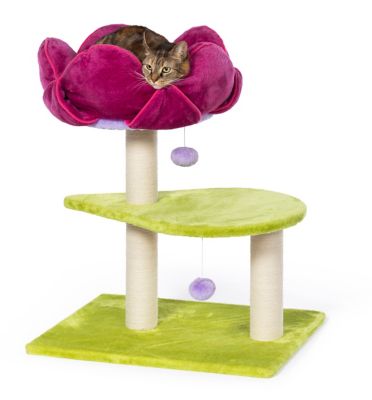
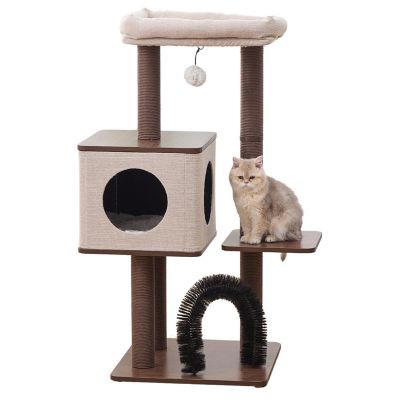
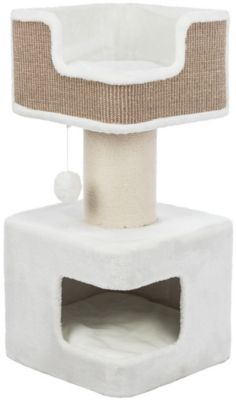
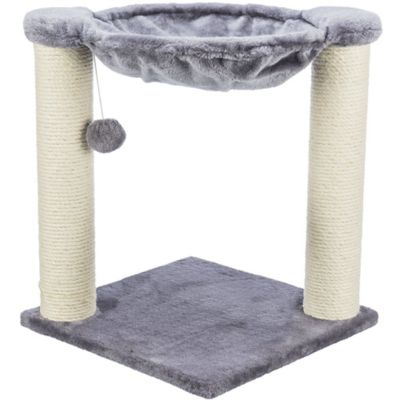
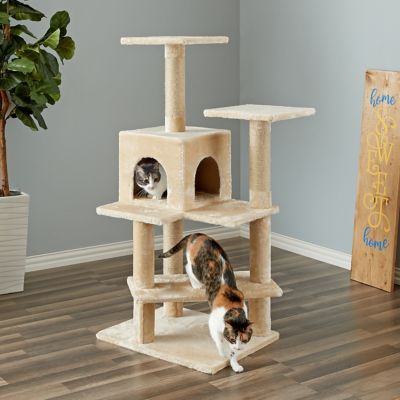
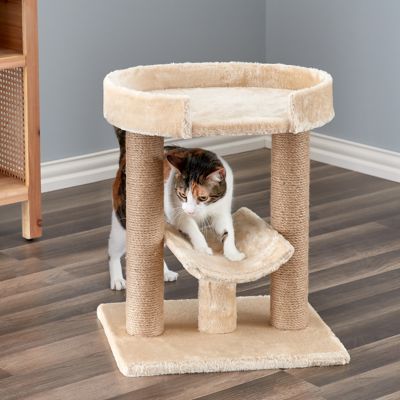
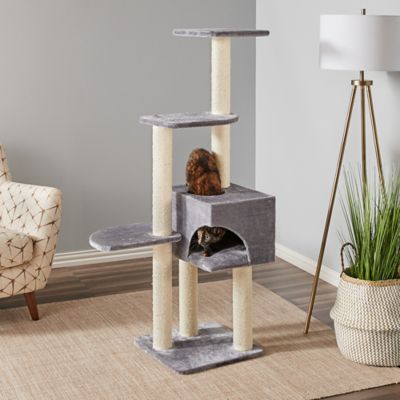
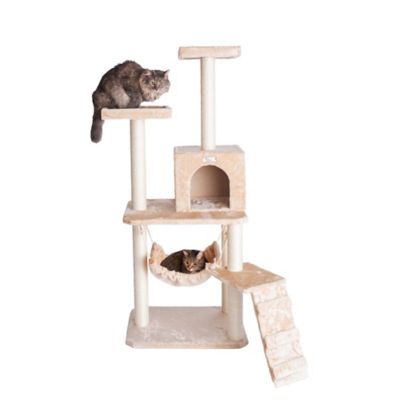
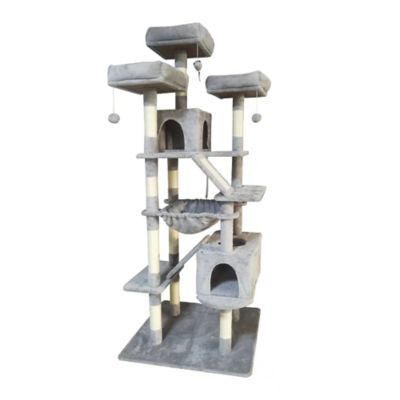
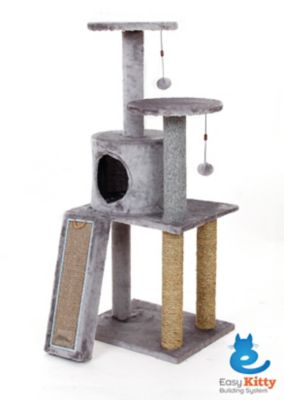
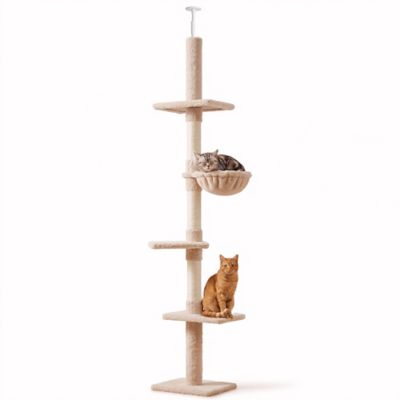
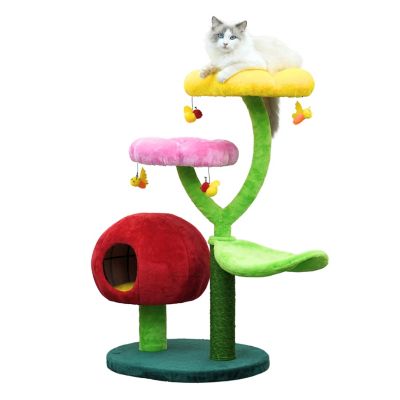
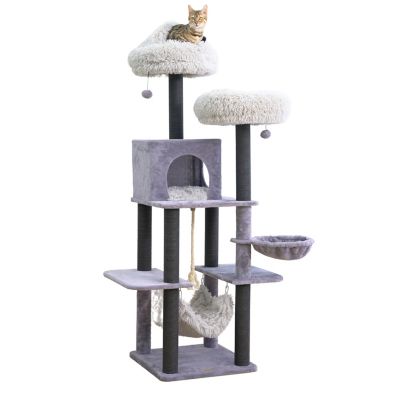
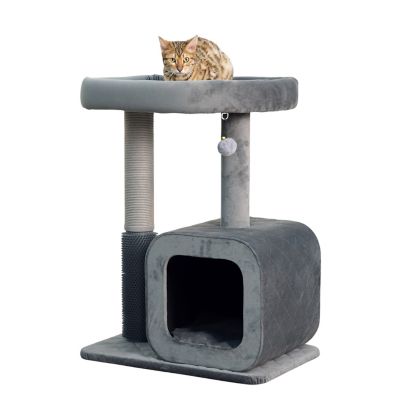
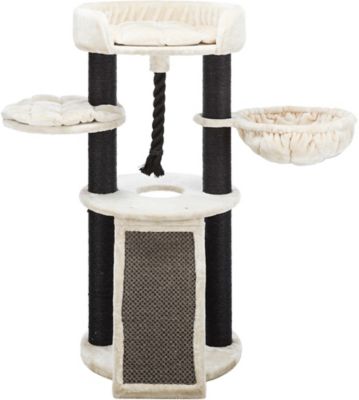
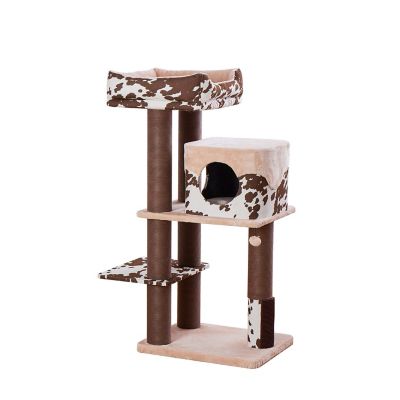
A jute cat tree brings scratching space, climbing room, and a resting spot together in one piece of cat furniture. Its defining feature is jute, a plant-based fiber commonly twisted into rope and wrapped around support posts or scratching sections. That coarse, fibrous surface gives claws something to catch, helping cats stretch their bodies, work off energy, and shed the outer layers of their claws through normal scratching. For a cat that heads straight for the sofa arm after a nap, a well-placed scratching post offers another place to follow that instinct. Jute has a natural tan color that fits easily alongside wood furniture, woven baskets, and everyday living room furnishings without drawing much attention. The rope is only part of the construction, though. A jute cat tree may also include wood or engineered-wood panels, fabric-covered platforms, padded beds, and enclosed cubbies. Some designs keep things simple with a scratchable post and a single perch, while others combine several levels with hideaways and places to lounge. The amount of jute coverage matters as much as the overall height: a tall tower with short wrapped sections offers a different scratching experience than a straight post with room for a full-body stretch. Cats that like to reach high generally need an uninterrupted scratching section long enough to extend their front legs comfortably. Cats that favor rugs or other flat surfaces may still want a horizontal scratcher alongside their tree. Although jute itself is a biodegradable natural fiber, a complete cat tree can contain adhesives, hardware, synthetic upholstery, and other materials, so the whole structure should not be treated as compostable. Natural fiber also does not mean edible; loose rope and strands belong out of reach rather than in a cat’s mouth. The appeal is straightforward: a textured scratching surface paired with places to climb, settle down, and watch the household go about its day.
The right fit depends on the cat, the room, and how the tree will earn its keep. A broad perch gives a big adult cat space to turn around and stretch out, while a deep-sided bed can suit a cat that sleeps curled into a tight ball. Platform measurements and stated weight limits tell more than a photo alone, especially when a fluffy coat makes a cat look smaller or larger than its actual frame. Enclosed resting spaces need openings wide enough for easy entry and enough interior room to change position without squeezing. For an older cat or one with limited mobility, closely spaced steps and lower resting platforms can make the route up less demanding. Young climbers benefit from manageable heights and an easy way back down;
Cat Trees For Kittens is a related category for households considering smaller-scale climbing spaces. An active adult may get more out of staggered platforms that create a clear climbing path, rather than a stack of beds that are awkward to reach. In a home with several cats, separated lounging spots and more than one scratching section give each animal room to choose its own place. An open route down is helpful when one cat would rather avoid passing another at close quarters. Stability deserves just as much attention as height. A broad, substantial base, sound connections, and any manufacturer-specified wall attachment help support a tree through climbing and scratching, but no base shape alone guarantees that a tower cannot tip. The floor underneath should be level, and the full footprint includes beds or platforms that extend beyond the base. A quiet corner near family activity can suit a social cat, while a perch beside a securely closed window offers a view without putting the tree in a busy walkway. Keeping clearance around doors, curtains, blind cords, and nearby shelving helps make the climbing area a sensible part of the room instead of an obstacle everyone has to step around.
Everyday wear on a jute cat tree depends on rope thickness, how tightly the wrapping is secured, the underlying structure, and the enthusiasm of the cat doing the scratching. A determined scratcher may rough up a favorite section well before the beds or platforms show much wear. Some surface fuzz is expected as claws work across natural fibers, but unraveling rope, exposed fasteners, loose posts, and damaged platforms call for attention. Replacement posts or scratching sections can extend the working life of designs that support them; compatibility needs to match the manufacturer’s specifications rather than just looking close. Rewrapping is an option only where the construction and care directions allow it, with all attachments secured and inaccessible to claws and teeth. Cleaning also varies by material. Jute generally does best with dry debris removal and minimal moisture, since soaking natural rope can affect its shape and leave moisture trapped beneath the wrapping. A vacuum attachment or soft brush can lift shed hair and bits of fiber, while fabric beds may permit spot cleaning or, when labeled accordingly, removal for washing. Any cleaned area should dry completely before the cat returns to it. Hardware checks are worth making part of that routine, particularly on a tall tree that gets a running leap from across the room. For households with a new cat, placement often matters more than extra features. A scratching section near a favorite sleeping spot gives that first long stretch somewhere to land, and a perch within sight of the couch lets a companionable cat stay close without sharing a lap. Treats or calm play near the base can help build interest without forcing a cat onto the structure. Hanging toys may add entertainment, but cords and attachments need regular inspection and use according to their safety directions. As a gift for someone welcoming a cat, a jute cat tree makes the most sense when its footprint, climbing layout, and cleaning needs suit the home. A steady place to scratch, a comfortable spot to rest, and room to move naturally are the features that make it part of a cat’s daily rounds.