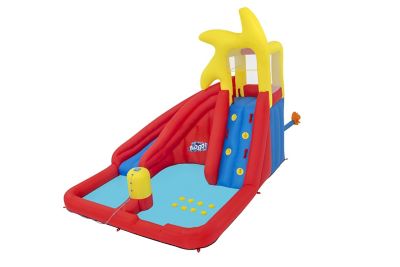
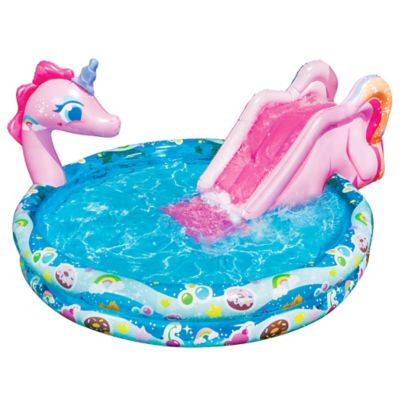
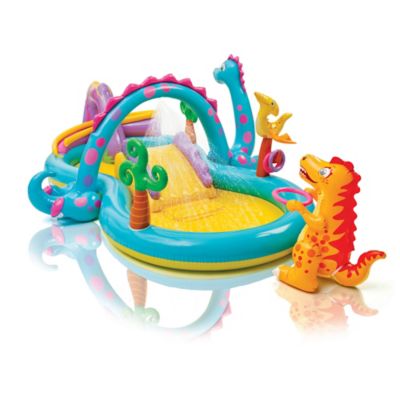
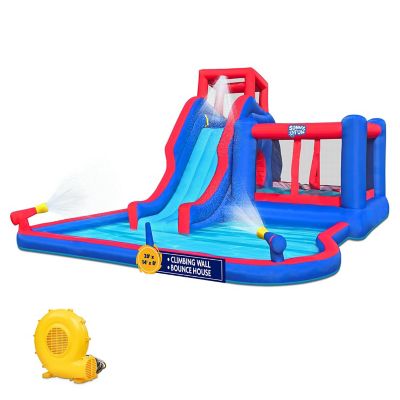
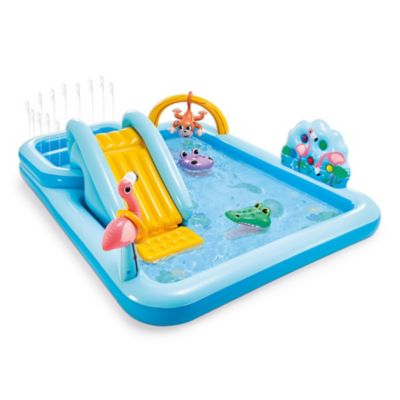
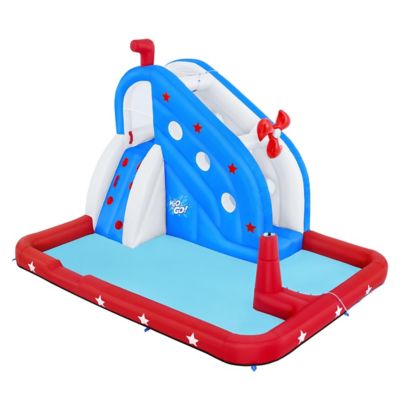
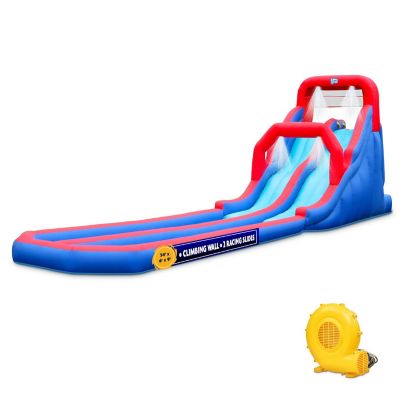
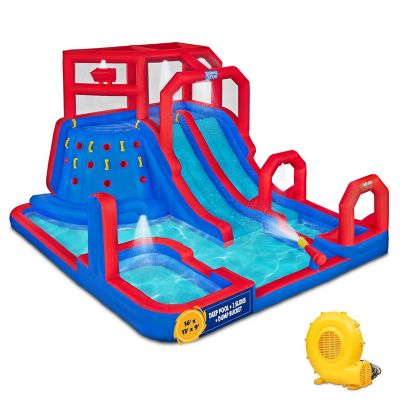
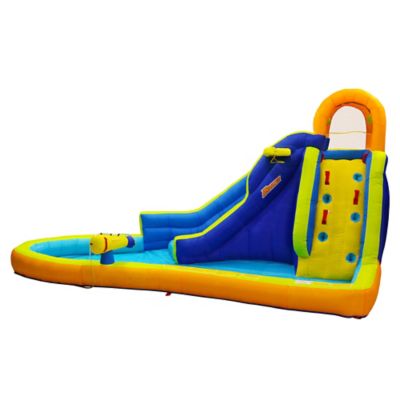
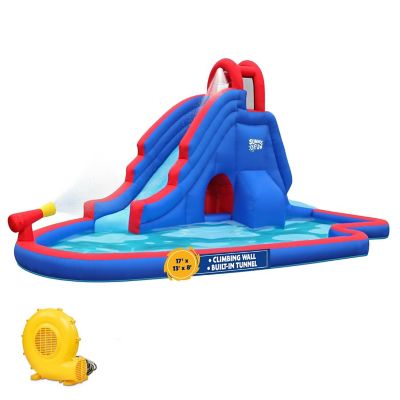
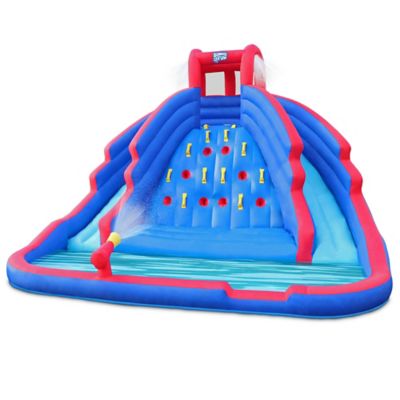
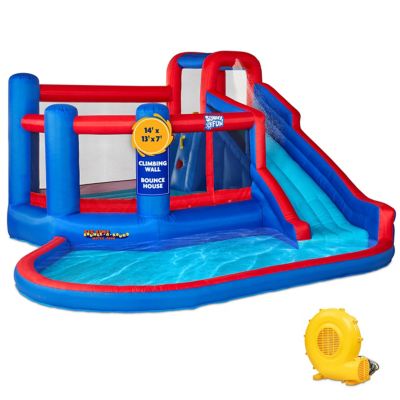
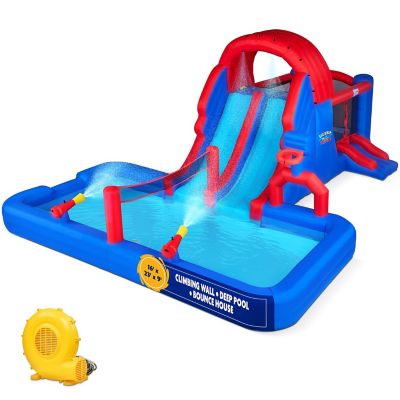
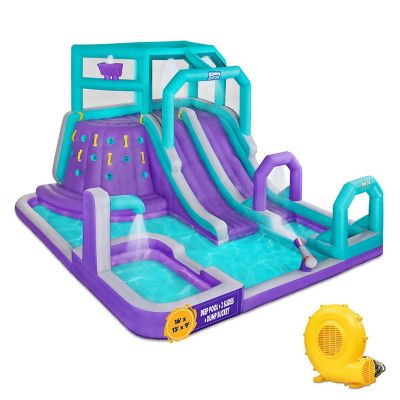
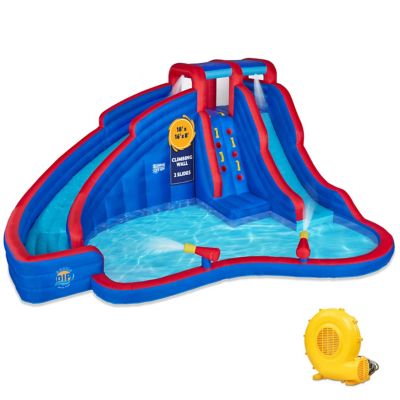
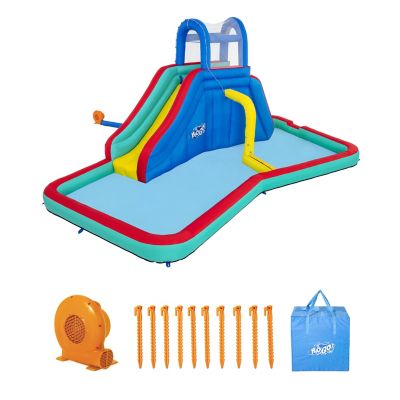
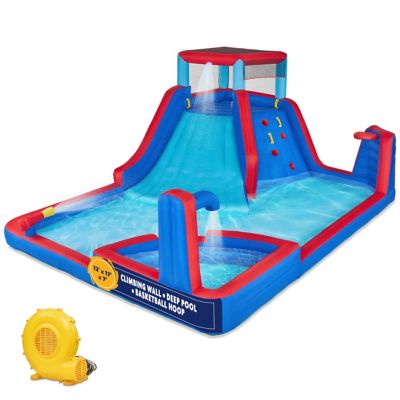
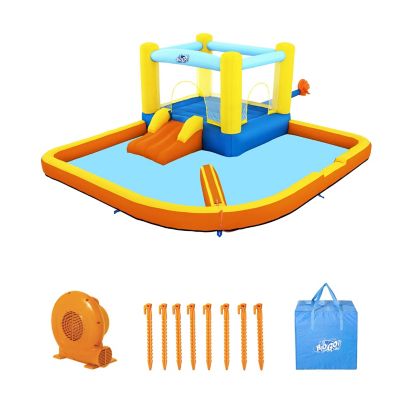
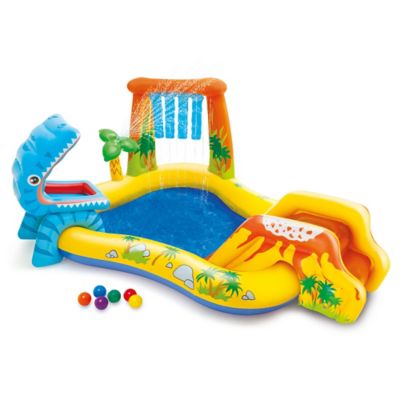
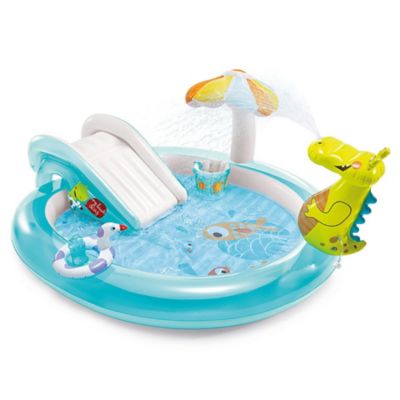
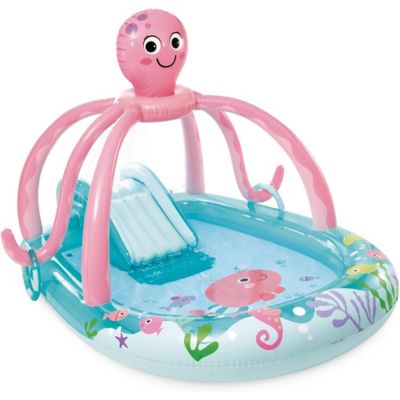
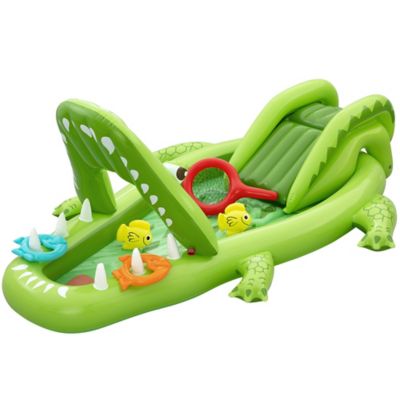
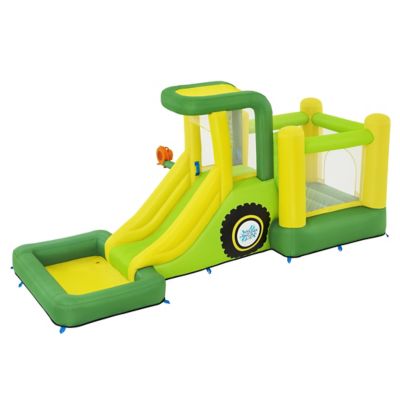
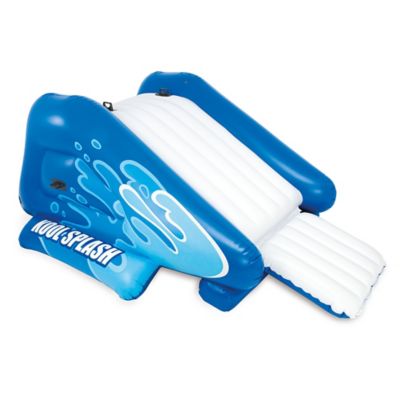
Inflatable pools with slides bring a shallow splash area and a slide together in one backyard play space. They range from compact splash centers for younger children to larger inflatable water-play structures with climbing sections, spray features, and room for more activity. Some hold air after inflation, while others require a compatible blower to run throughout play. That difference affects setup, placement, and the equipment needed before anyone takes a turn. The pool section may be a small landing basin rather than a space for swimming, so water depth and intended use matter just as much as overall size. For families planning an afternoon outside, the appeal is easy to picture: a short climb, a splash at the bottom, and another turn while an adult watches nearby. Smaller layouts can suit children who prefer gentle water play, while taller structures may be intended for older children who meet the listed requirements. Age recommendations, individual weight limits, total weight limits, and the number of children permitted at once help establish which design fits the family. A larger footprint does not automatically mean adults can join in or several children can slide together. Pool dimensions also tell only part of the story. The complete setup needs space for the slide entrance, landing area, any blower and air tube, and the clearances specified by the manufacturer. A roomy patch of lawn can feel smaller once those pieces are in place. Measuring the full area before choosing helps keep the play space away from fences, branches, buildings, and other obstacles. For birthday gatherings or visits from the grandkids, matching the layout to the children matters more than choosing the tallest slide. A clearly arranged entrance and landing area makes it easier for the supervising adult to see what is happening and help children take turns without crowding the bottom.
Materials and construction vary across inflatable pools with slides, and those differences shape how each design handles everyday play and care. Air-retaining pools often feature vinyl or PVC chambers, while larger continuous-air structures may feature coated synthetic fabric and reinforced stitching. Sealed chambers depend on closed valves and intact seams to hold their shape; continuous-air structures depend on the blower and may release some air through their seams as part of normal operation. The instructions for the particular design explain what is expected. Slide supports, attachment points, climbing grips, and seams all deserve attention because they take repeated movement as children climb and slide. An inflatable floor can feel softer underfoot, but it does not replace the required ground preparation or make a hard surface suitable. Setup generally calls for level ground cleared of stones, sticks, and other sharp debris, with a ground cover when the manufacturer specifies one. A sloping yard can let water collect unevenly and affect how the structure sits. The water connection matters, too: some designs include sprayers that connect to a garden hose, while others simply have a fillable basin. Checking hose reach and the recommended water level helps keep the setup practical without stretching a hose across a busy walkway. For blower-powered structures, the electrical supply, ground-fault protection, cord placement, and protection from water must follow the equipment instructions. Even with a shallow basin, children need close, constant adult supervision; young children and weak swimmers should remain within arm’s reach. Inflatable sides, climbing handles, and slide walls are play features, not substitutes for supervision or flotation equipment. Feet-first sliding, a clear landing area, and the specified rider limits help keep play within the design’s intended use. Soap and other slippery additives do not belong on a slide unless the manufacturer specifically permits them. The right fit is a setup that matches both the children’s abilities and the space where they will play.
Care between splash sessions has a big effect on how an inflatable pool with a slide holds up over time. Grass clippings, sandy feet, and small bits of yard debris can collect in the basin or rub against the material, so keeping the surrounding area tidy helps limit extra cleanup. A quick check before each session can catch a loose valve cap, a damaged seam, a slipping anchor, or a worn climbing attachment before children get in. Anchoring requirements vary, and every specified anchor point needs attention; water in the basin is not a replacement for proper anchoring. Wind limits also matter, particularly with taller inflatable structures, and play needs to stop whenever conditions fall outside the manufacturer’s directions. Small pools without a filtration system generally need draining after each play session, followed by cleaning according to the care instructions. Drainage should lead away from buildings, electrical equipment, and places where it could create slippery footing or standing water. Before packing anything away, the pool, slide folds, and underside need time to dry completely. Trapped moisture can encourage mildew and unpleasant odors, especially when a folded pool sits in storage between stretches of warm-weather play. Gentle cleaning methods and approved repair materials help avoid further damage; a tear near a structural seam or attachment point may require more than a simple patch. Dry storage away from sharp tools and chewing animals helps protect the material until the next setup. For a child’s birthday gift or a shared family present, it is worth checking with the adults who will handle inflation, water, supervision, and storage. For backyard play without a water basin,
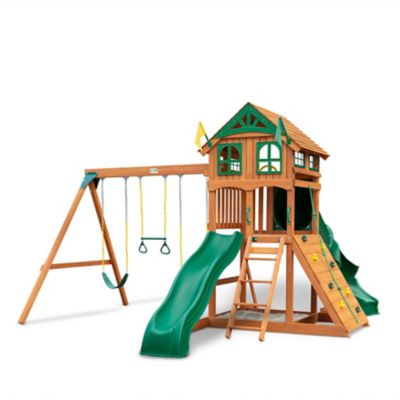
playsets with slides offer a different option. Inflatable pools with slides suit families looking for a splash-centered activity, with the best match depending on the children, the yard, and the hands-on care each design requires.