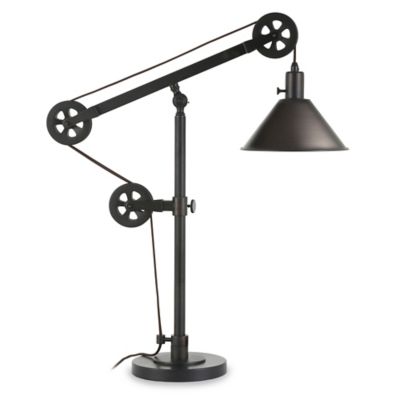
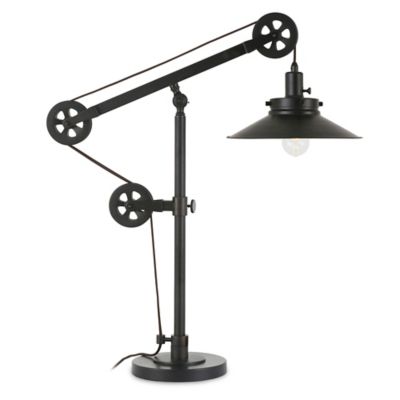
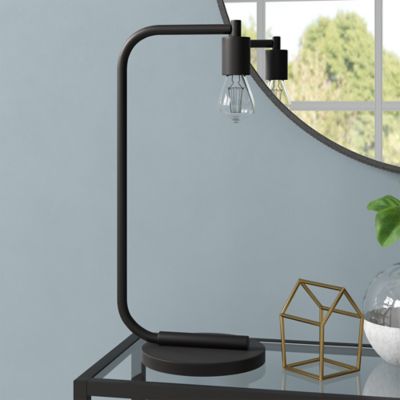
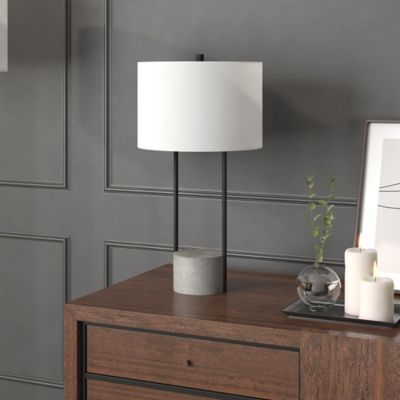
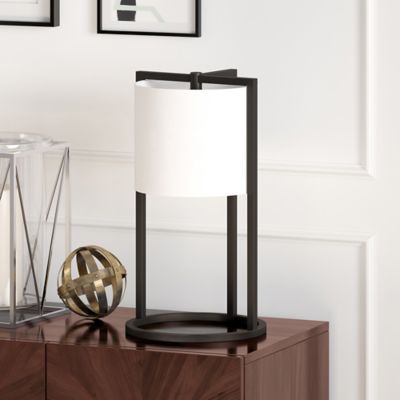
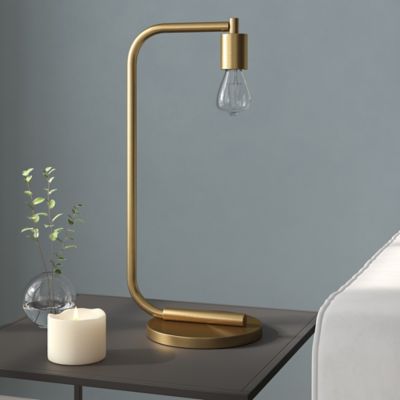
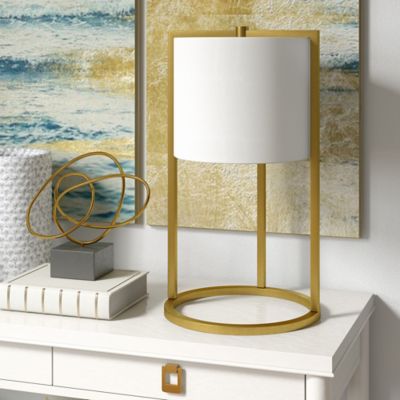
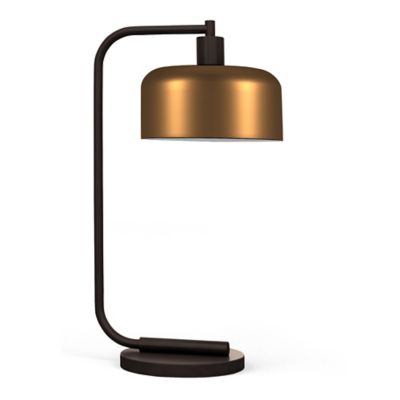
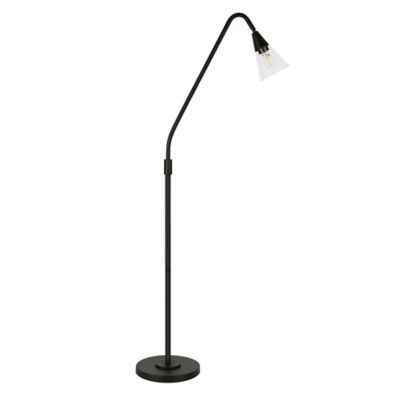
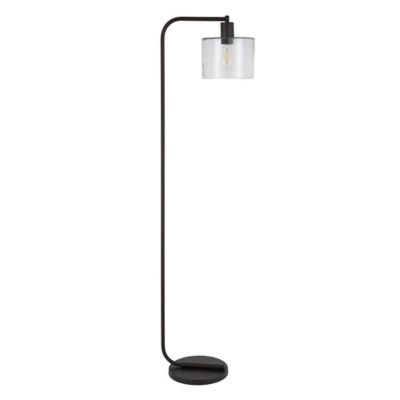
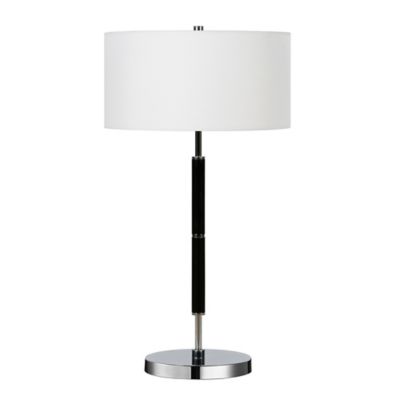
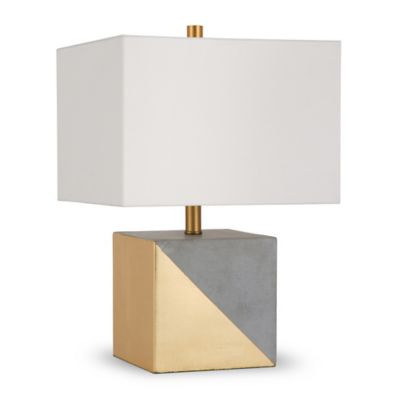
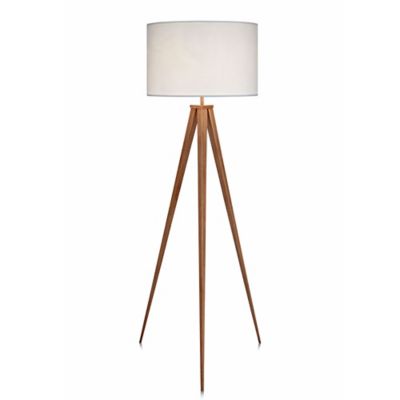
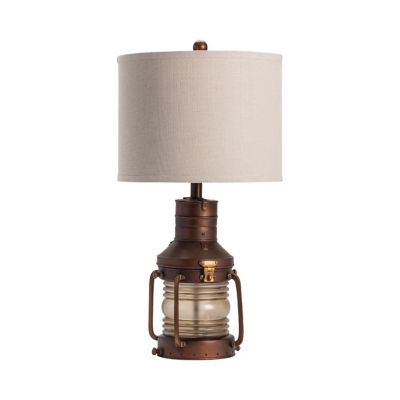
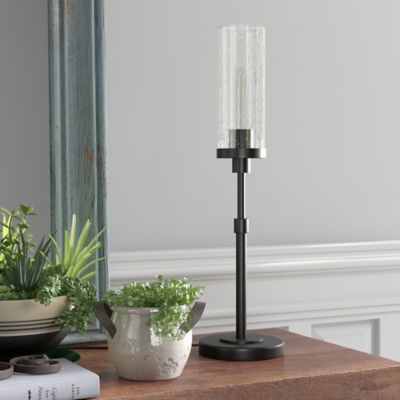
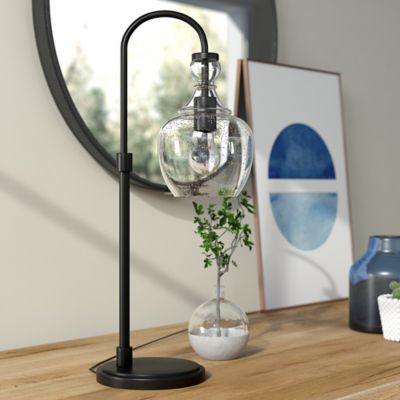
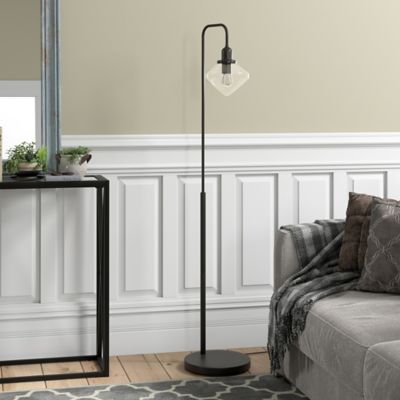
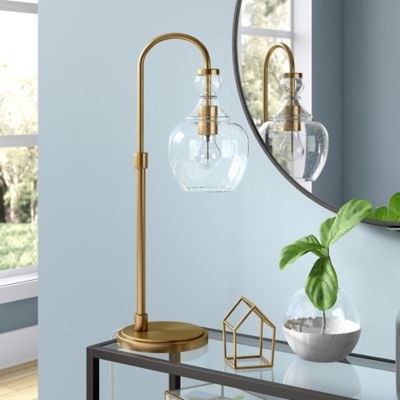
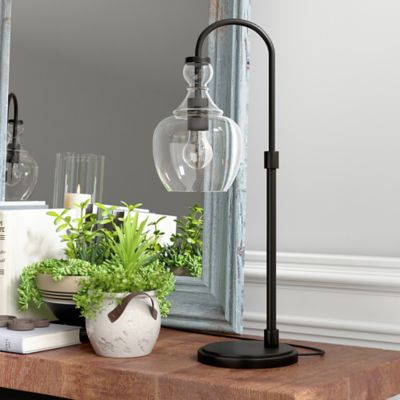
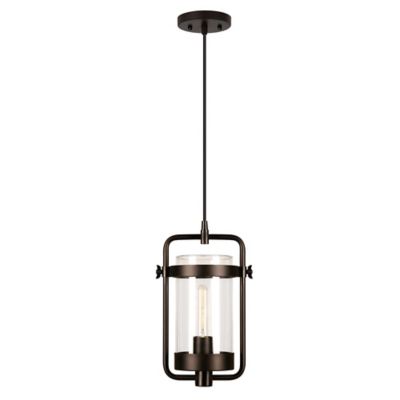
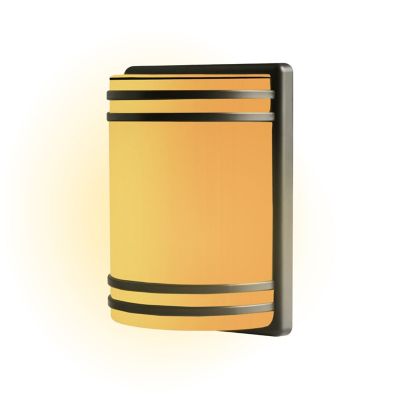
Industrial style table lamps bring the plainspoken look of workshop lighting into the house, with visible hardware, straightforward shapes and materials that look right at home beside a wood table or leather chair. Their roots are in practical factory and workroom fixtures, where metal shades, sturdy supports and accessible switches served a clear purpose. That influence shows up in iron pipe frames, steel cages, jointed arms and broad metal shades that direct light onto the surface below. Blackened finishes, brushed metal, concrete and wood give these lamps their familiar character without requiring a whole room to follow the same style. A pipe-shaped frame can add interest to a simple bedside setup, while a metal task lamp feels natural on a desk where bills, notebooks and the family calendar share space. Cage table lamps leave much of the bulb visible, creating an open silhouette; clear glass shades offer a similar effect with a more enclosed outline. Seeded glass adds texture, though it does not hide a bright bulb as effectively as an opaque shade. Concrete bases bring weight and a muted, earthy appearance, while wood bases soften the look of dark metal. Surface treatments matter, too: a smooth painted finish feels different from a brushed or intentionally distressed surface, and those differences become more noticeable at arm’s length. Industrial lighting can lean spare and simple or take on a more mechanical look with pipe fittings and exposed fasteners. The best match depends on what surrounds it. Against a busy wood grain, a clean metal frame keeps the tabletop from looking crowded. Beside a plain upholstered chair, a cage or lantern-shaped lamp gives the corner a little more presence. For spaces that favor wood texture and softer lines alongside metal,
Modern Rustic Table Lamps offer a related look. Both styles fit comfortably into farmhouse living rooms, country homes and everyday gathering spaces without needing everything else in the room to match.
Size and light direction make a bigger difference in daily use than a lamp’s appearance alone. An industrial table lamp should fit the full surface it sits on, including room for its shade, cord and anything nearby. A narrow base may leave space for a water glass on a nightstand, but a wide shade can still crowd the bed or bump against the wall. On a desk, an adjustable arm lets the light reach across paperwork without forcing the base into the middle of the workspace. Check the lamp’s reach as well as its height, since an extended arm needs clearance and a stable support. A weighted base helps resist tipping, but the table itself needs to be steady, and the cord should stay out of walking paths. For reading beside a chair, a shaded bulb generally feels easier on the eyes when the lamp is positioned so the bright source is not directly in the seated reader’s line of sight. Exposed filament bulbs emphasize the industrial look, making them well suited to accent lighting, though their visible glow may be distracting beside a computer screen. Bulb brightness is measured in lumens, while color temperature, expressed in kelvins, describes whether the light looks warmer or cooler. Around 2700K produces a warm appearance; higher values look progressively whiter. Edison-style LED bulbs provide the visible-filament look with lower energy consumption than comparable incandescent bulbs, but socket type, bulb dimensions and the fixture’s maximum wattage still need to match. Dimming also requires compatible components; a dimmable bulb alone does not make a lamp dimmable. Some designs include rotary dimmers, touch controls, USB ports or built-in outlets. Those features can simplify a bedside or desk setup, but charging connections differ in output and device compatibility. Check whether a charging port works with the light switched off, and keep the lamp connected to power as directed. An easy-to-reach switch is especially helpful behind a chair, where reaching under a shade several times a day gets old fast.
Materials and construction help determine how an industrial table lamp handles everyday life. Metal frames suit the style well, but a substantial appearance does not tell the whole story: secure joints, a steady base and a shade that stays in position matter just as much. Adjustable lamps benefit from arms and pivots that hold their setting without drooping over an open book. Glass shades need enough breathing room to avoid knocks from cabinet doors, elbows or a swinging bag. A wire cage may reduce direct contact with a bulb, but it does not make the fixture shatterproof or safe to grab while hot. Felt or other protective pads beneath a base can help prevent scratches on a finished tabletop; check that the pads stay clean and properly attached. Care is usually straightforward when it follows the fixture’s instructions. Unplug the lamp and let the bulb cool before cleaning, then lift away dust with a soft, dry cloth. Avoid spraying cleaner directly onto sockets, switches, charging ports or joints. Wood, concrete and coated metal may require different cleaning methods, so a finish-specific approach is better than treating every surface alike. Keep indoor-rated lamps inside and away from damp locations unless their electrical rating permits that placement. A rugged workshop appearance is a style choice, not proof that a lamp belongs in a barn aisle, wash area or active work zone. Inside the house, these lamps serve all sorts of routines: reading in a favorite chair, sorting receipts at a small desk or adding a pool of light to an entry table. A pair can balance a bedroom, while a single lamp can anchor a side table without taking over the room. They can also make thoughtful housewarming gifts for someone who likes visible hardware, wood furniture and practical furnishings. Knowing the recipient’s tabletop size, preferred switch style and intended use helps turn a good-looking gift into something that earns its place every day.