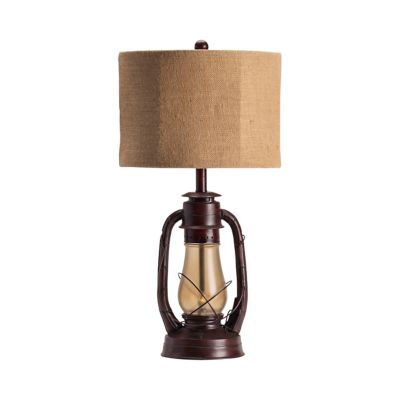
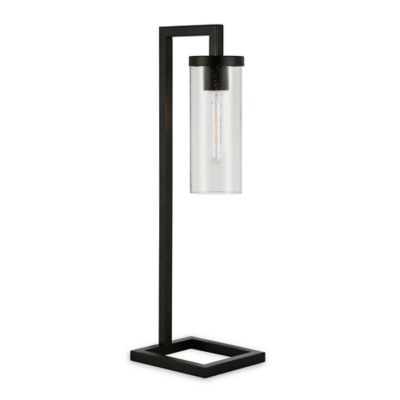
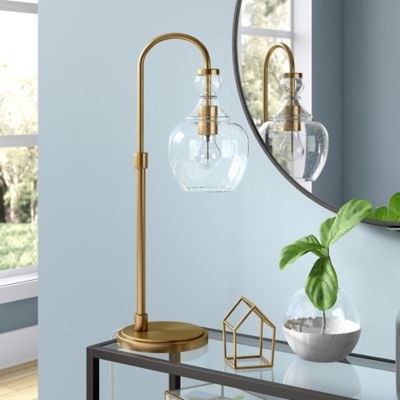
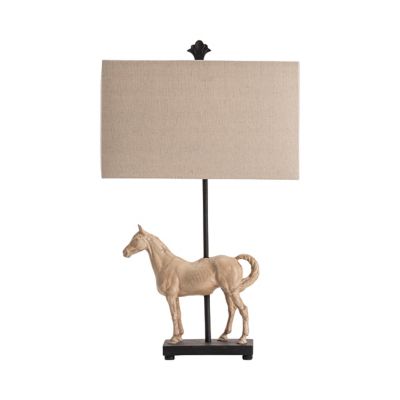
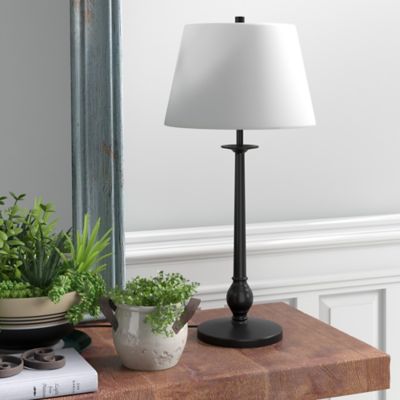
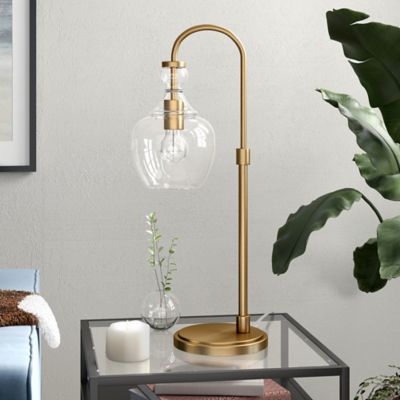
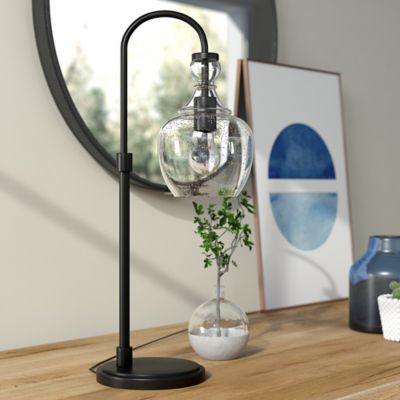
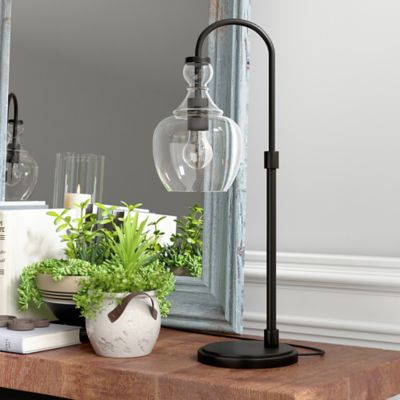
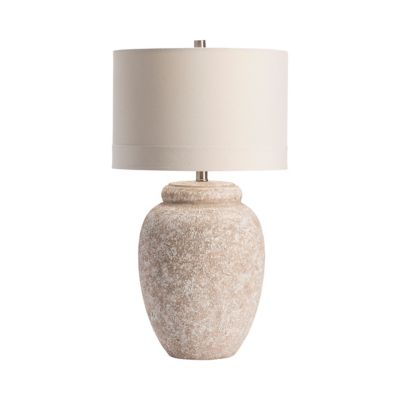
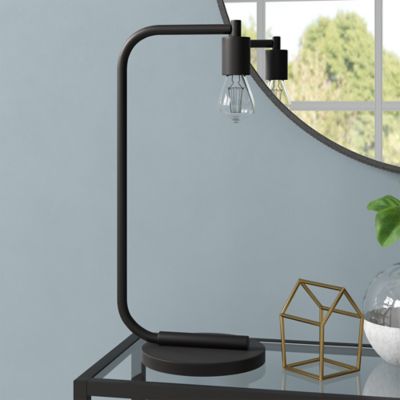
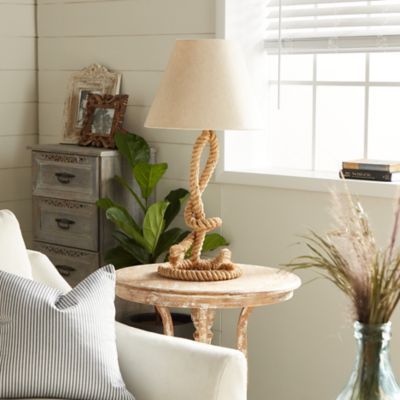
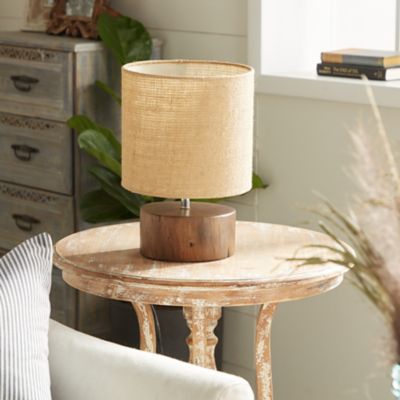
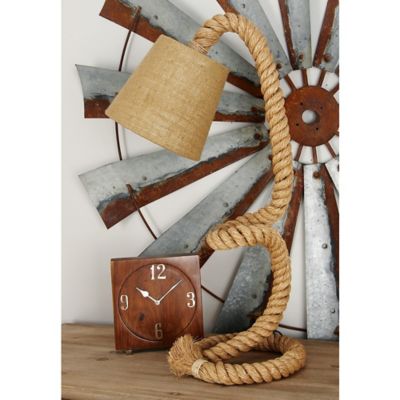
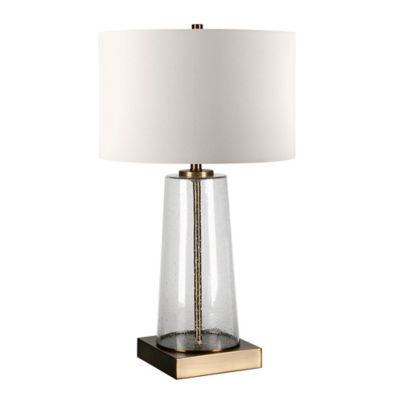
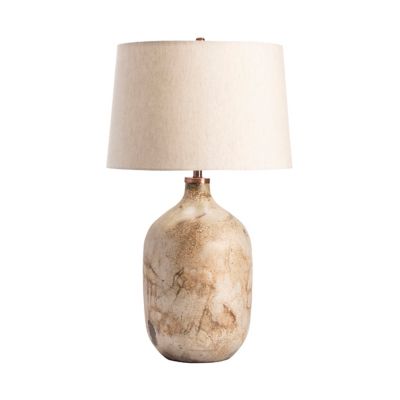
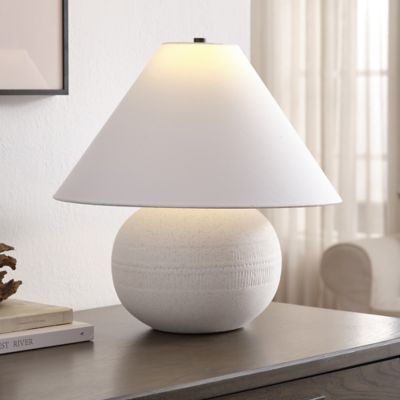
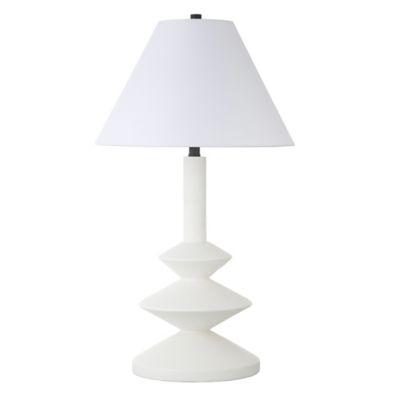
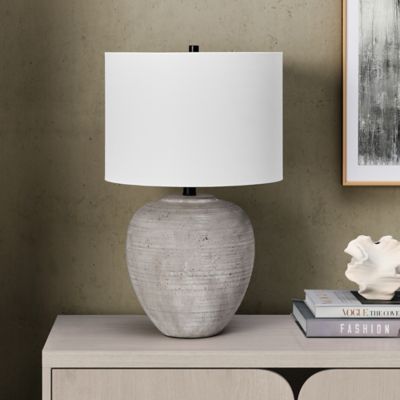
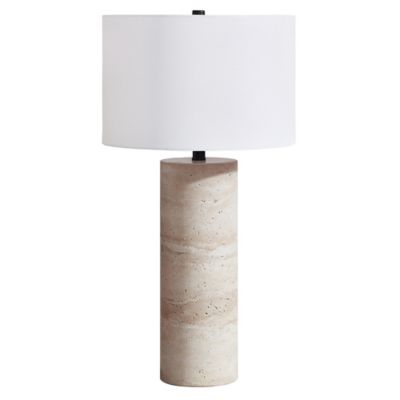
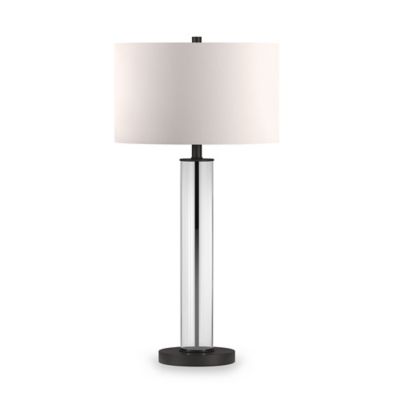
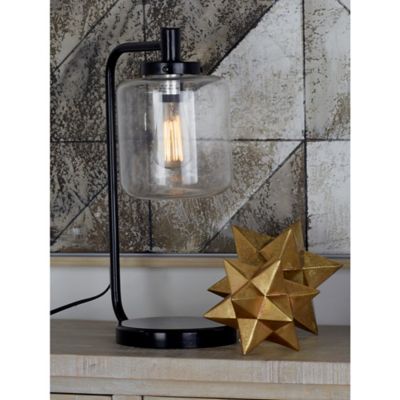
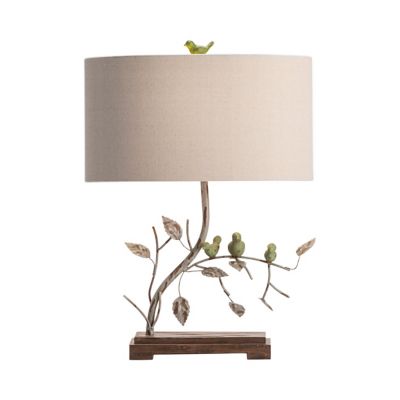
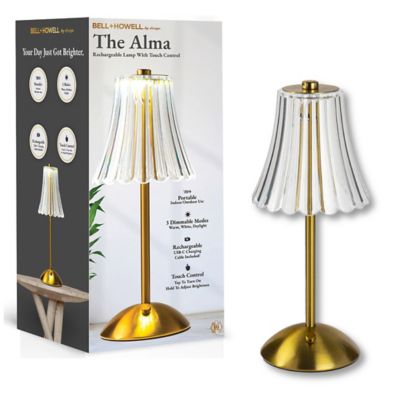
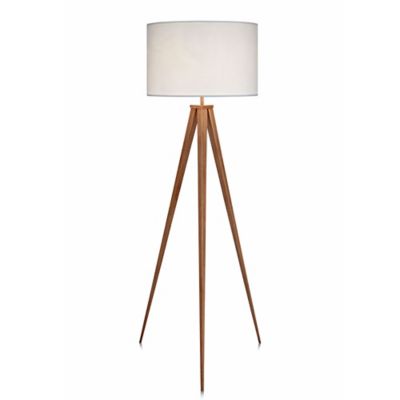
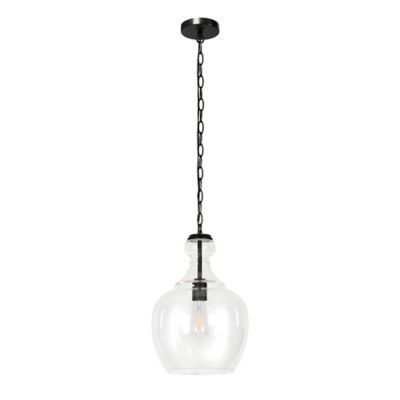
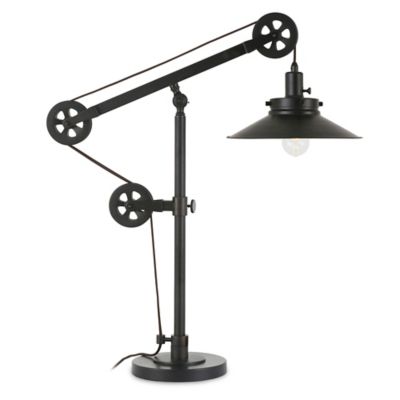
Farmhouse style table lamps bring together country-inspired materials, simple shapes, and practical light for the places where folks settle in at home. The look often pairs a wood, ceramic, glass, metal, or wood-look resin base with a neutral fabric shade, giving a room texture without making it feel crowded. A turned base can echo the shape of a porch spindle, while a rounded ceramic base feels right beside a sturdy oak end table. Distressed finishes, visible wood grain, ribbed surfaces, and seeded glass add character in different ways. Cream, oatmeal, soft gray, brown, and muted black fit comfortably alongside painted furniture, woven baskets, and well-loved quilts. These lamps can lean toward a traditional country look or a cleaner, simpler farmhouse feel, depending on their proportions and finishes. A slender metal base with a plain drum shade has a lighter visual presence than a broad, urn-shaped base topped with a tapered shade. Neither needs a room full of matching furniture to look at home. Repeating one detail, such as a warm wood tone or dark metal finish, often does enough to tie things together. Shade material makes a difference, too: linen and linen-look fabrics bring a soft texture, while burlap has a coarser weave and a more rustic appearance. The amount of light that passes through depends on the fabric, lining, and shade construction, not just its color. A pale shade generally helps spread light around a seating area; a denser shade can direct more light through its upper and lower openings. For a living room with a reading chair, a bedroom with painted nightstands, or an entry table that holds the day's mail, farmhouse table lamps offer a familiar look with a useful purpose. Their appeal comes from that balance: enough detail to give the room personality, with lighting that fits everyday routines. A lamp beside a family photograph or a stack of books can make a corner feel settled without taking over the whole tabletop.
The right fit starts with the table and the way the light will serve the room. Overall height matters, but so do the width of the base, the widest part of the shade, and the space needed for a cord. On a narrow nightstand, a broad shade can crowd a water glass or reach beyond the table's edge even when the base fits easily. Beside a deep armchair, a lamp that looks substantial on its own may still sit too low to put light comfortably across an open book. A useful starting point is to place the bottom edge of the shade near seated eye level, then check that the bulb stays out of direct view from the usual sitting position. Bedside placement deserves the same attention from both sitting and reclining positions. For reading, the goal is enough light on the page without a bare bulb shining into someone's eyes. For a hallway console, a softer pool of light may matter more than concentrated task lighting. Bulb choice helps shape that result. Lumens describe brightness, while color temperature describes whether the light appears warmer or cooler; around 2700K to 3000K commonly suits the warm appearance associated with farmhouse rooms. Always match the bulb base and type to the fixture's requirements, and stay within its stated wattage limit. Dimming, three-way operation, touch controls, and charging ports are features to check in the lamp's specifications rather than assume from its appearance. A dimmable bulb also needs a compatible lamp control to work properly. Switch placement can make an everyday difference, especially behind a tall headboard or beside a chair where reaching under the shade is awkward. Paired lamps can give a long console or two nightstands a balanced look, while different bases can still sit comfortably together when their heights, shades, or finishes share a common thread. Where living and dining spaces connect, coordinating table lamps with
farmhouse style dining room lighting can carry those same materials and tones across the room without requiring every fixture to match.
Materials influence more than appearance; they also affect weight, upkeep, and how a lamp handles the occasional bump. Solid wood and wood-look resin can share similar shapes, but their weight and care requirements may differ, so the material description is worth a close look. Ceramic bases bring a substantial appearance and can have smooth, ribbed, or textured surfaces, though they need protection from knocks that could cause chips or cracks. Clear and seeded glass let more of the surroundings show through, making a base feel less visually heavy, but fingerprints and dust may be easier to see. Metal bases range from slim frames to fuller shapes, with finishes that may need gentle cleaning to avoid scratches. Stability depends on the entire design, including the base footprint, weight distribution, shade size, and the surface beneath it. A level table away from busy walkways is especially important in homes with children or pets. Cords belong clear of foot traffic and places where they can snag, and a lamp should not sit where its shade brushes a curtain or hangs into a passageway. For routine care, unplug the lamp and let the bulb cool before cleaning. A soft, dry cloth is a sensible starting point for many bases, while fabric shades may benefit from gentle dusting or a soft brush attachment if the care instructions allow it. Avoid soaking shades, spraying cleaner toward sockets, or scrubbing a textured finish without checking the manufacturer's directions. A farmhouse table lamp can also make a thoughtful housewarming or wedding gift when its size, finish, and controls suit the recipient's home. Neutral shades and straightforward shapes are easier to work into an existing room than a large base with a strong pattern. Whether it lights a guest-room nightstand, a desk for household paperwork, or the end table beside a favorite chair, the best fit leaves room for daily life while putting a comfortable glow where it belongs.