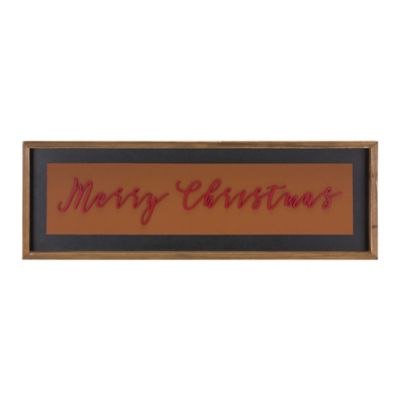
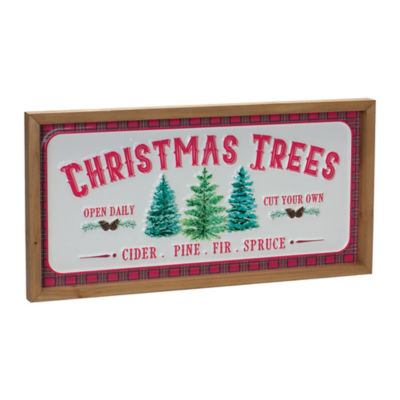
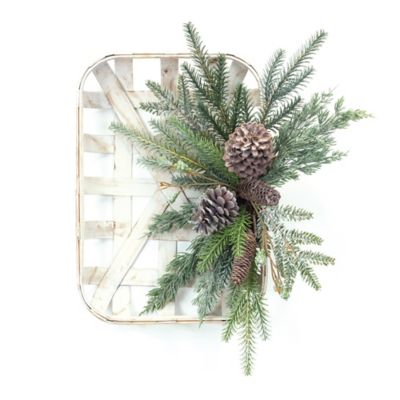
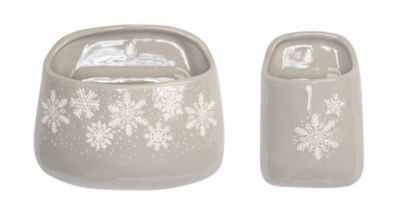
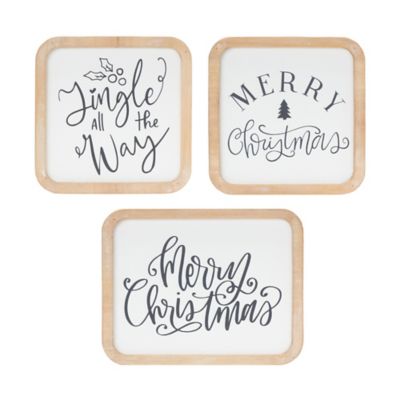
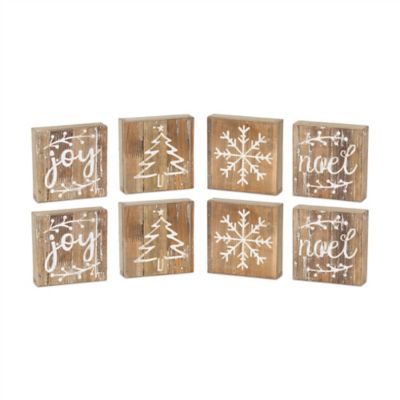
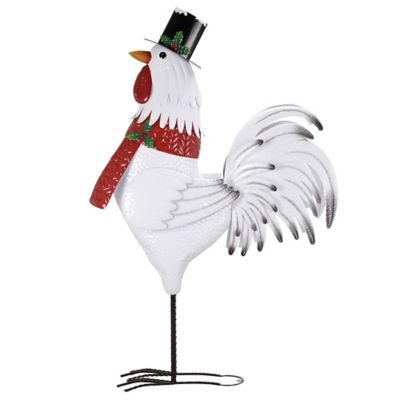
Indoor Christmas wall decorations bring holiday color, familiar scenes, and a little Christmas cheer to spaces where a tree or tabletop display might not fit. Common styles include wooden signs with seasonal greetings, printed canvas scenes, metal wall accents, fabric banners, wreaths, and wall-mounted trees made with branches or greenery. Lighted canvas art can add small points of light to a snowy farmhouse scene or a Christmas tree image, while an unlit wood plaque brings a quieter touch above a bench or beside a doorway. Branch trees arranged flat against a wall offer the outline of a Christmas tree without taking up much floor space, making them a practical fit for smaller homes, narrow rooms, and gathering spaces that need open walking paths. Materials help set the tone. Wood grain, weathered-looking finishes, pinecones, and plaid suit a farmhouse setting, while smooth metal, simple lettering, and restrained colors work well in rooms with cleaner lines. Canvas brings softer texture to a wall, and fabric hangings can carry color across a wide stretch without the weight of a large framed piece. Red, green, cream, and natural brown feel right at home beside wood furniture, though a quieter mix of white and soft metallic tones can sit comfortably with everyday furnishings, too. A greeting near the entry welcomes family coming in from chores, while a woodland scene above a dining-room sideboard gives Christmas supper a fitting backdrop. Matching every piece is not necessary; repeating a color or material helps different accents feel connected. A red ribbon on a wreath, a touch of red in a canvas scene, and a plaid banner can tie a room together without covering every wall. The result can be cheerful and full or simple and easygoing, depending on the space and how much of the everyday room stays in view.
Size, weight, and placement matter just as much as the design of indoor Christmas wall decorations. A broad wall above a sofa can carry a larger focal piece, while the strip of wall beside a pantry door calls for something narrower. The listed dimensions are especially helpful for branch trees, layered signs, and wreaths, since these shapes may extend farther from the wall than a flat print. Leaving room around a hanging piece keeps it from crowding door trim, light switches, curtains, or furniture. In a hallway, a shallow profile helps preserve clearance for people carrying laundry baskets, feed-store purchases, or a tray headed to the kitchen. Above an entry bench, there should be enough space that coats and hats do not brush the lower edge. The hanging hardware and the wall surface also need to suit the piece’s weight. A small fabric banner and a heavy framed scene place very different demands on a hook, and drywall, paneling, brick, and tile each call for suitable mounting methods. Removable hooks have weight limits and surface requirements, so their suitability depends on more than the size of the accent. Lighted wall art adds another consideration: the location of its power source. Battery-operated designs can keep cords out of sight, but the battery compartment still needs to be reachable. Plug-in styles need a nearby outlet and a cord path that stays clear of walkways, door hinges, and places where pets might chew. Indoor-rated lighting belongs in protected indoor spaces, not on an exposed porch simply because the colors match the porch display. Around a mantel, clearance from fireplace heat matters for canvas, fabric, wood, and artificial greenery. Loose ribbons, dangling branches, and small removable parts also deserve extra attention in homes with young children or curious animals. These practical details help a holiday display fit the way the household lives, whether the room hosts a large family meal or serves as the everyday spot for boots, backpacks, and coats.
Care and storage play a big part in how Christmas wall accents hold up from one celebration to the next. Wood and engineered-wood pieces generally benefit from gentle dusting and protection from excess moisture, while printed canvas needs care that protects both the image and the frame. Metal accents may have painted or coated finishes that can scratch against other pieces in a storage tote. Fabric banners and felt hangings vary in their cleaning needs; a care label determines whether a piece can be washed, spot-cleaned, or only brushed free of dust. Raised lettering, attached greenery, pinecones, and layered details can catch on packing material, so wrapping pieces separately helps protect those features. A flat sign stores differently from a wreath or branch tree, which needs enough room to avoid bending or crushing. Lighted designs also need attention to cords, switches, and battery compartments before storage, with battery removal handled according to the maker’s directions. A dry, protected storage spot is a better match for these indoor pieces than a damp shed or a place where boxes get stacked under heavy equipment. Beyond upkeep, the right wall accents depend on who spends time in the room. A family with small children may enjoy bright colors and familiar Christmas characters, while a household that favors a quieter display may lean toward greenery, simple greetings, or a winter landscape. Holiday hosts can use wall space to carry the Christmas theme without taking serving space away from food and drinks. Related
Christmas hanging accents can connect a wall display with doors, windows, and other spots around the house. These pieces can also make thoughtful gifts for someone settling into a first home, a family that enjoys bringing out Christmas favorites each year, or a host who likes a welcoming entryway. For gifting, manageable dimensions, straightforward hanging hardware, and colors that work with the recipient’s home make the piece easier to enjoy. Whether the setting is a farmhouse kitchen or a small living room, a well-placed Christmas accent brings the celebration into view without getting in the way of daily life.