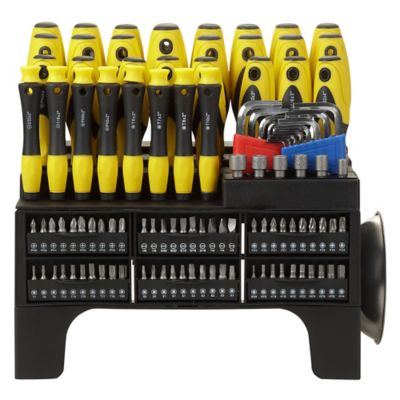
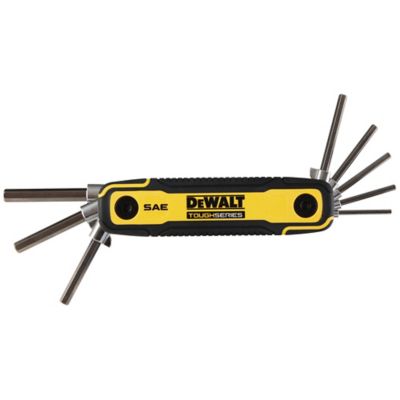
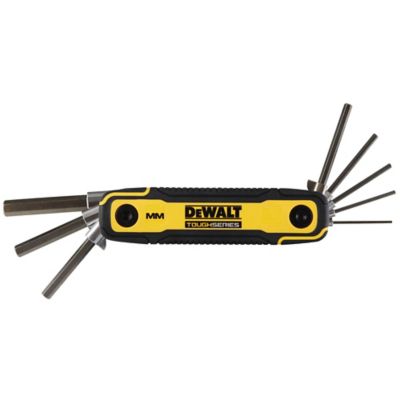
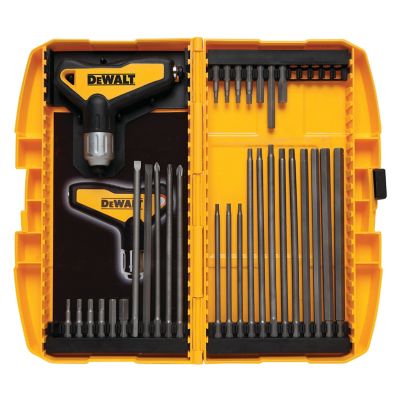
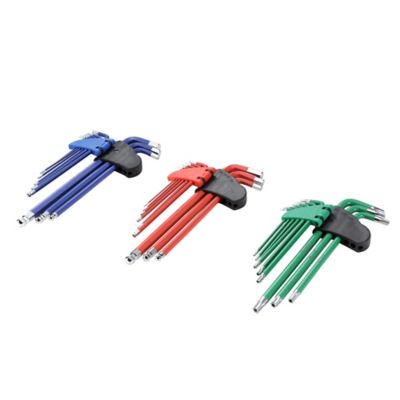
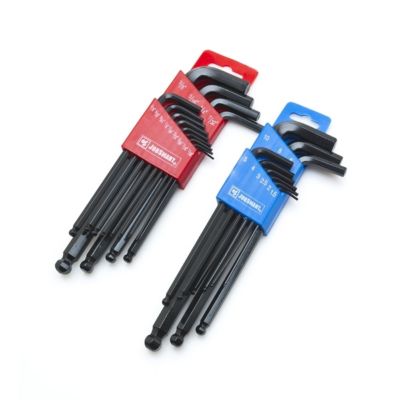
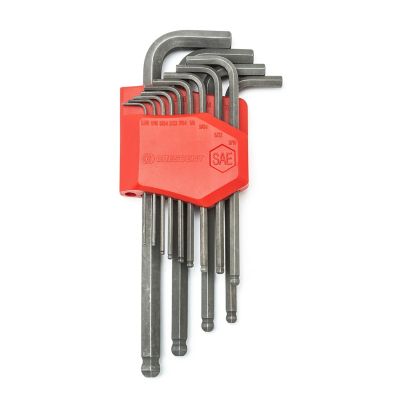
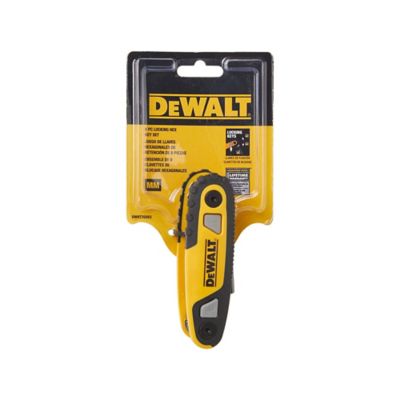
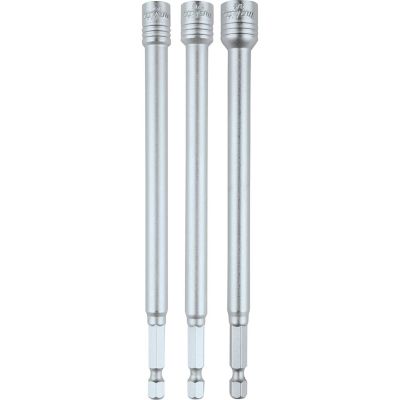
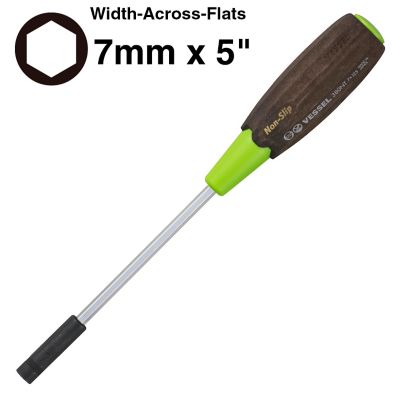
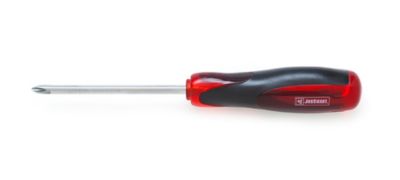
Hex screwdrivers bring a familiar handle-and-shaft design to screws with a six-sided socket recessed into the head. The working tip fits inside that socket, giving you a straightforward way to turn fasteners on machinery covers, bicycles, furniture, shop fixtures, and smaller mechanical assemblies. Unlike a hex nut driver, which fits around an external hexagonal nut or bolt head, a hex screwdriver engages the recess inside the fastener. That distinction matters when matching a tool to the hardware on your workbench. Often called Allen screwdrivers, these tools serve the same general fastener type as L-shaped hex keys, but their screwdriver-style handles can feel more comfortable for repeated turns and longer assembly jobs. They suit the homeowner putting together a work table, the bike rider adjusting an accessory mount, and the farm equipment owner handling light maintenance around the shed. Fit starts with the measurement system: metric hex screwdrivers and SAE hex screwdrivers are separate groups, and a close-looking size is not necessarily a proper match. Common metric sizes include 1.5 mm, 2 mm, 2.5 mm, and 3 mm, while fractional-inch examples include 5/64 inch, 3/32 inch, and 1/8 inch. The right tip seats fully with little side-to-side movement, helping keep the socket edges from rounding over. Smaller sizes suit delicate fasteners, while larger sizes belong with larger socket openings; the screw head’s outside diameter alone does not tell you which tip fits. Clear size markings make a difference when several similar-looking tools are spread across the bench. For a household with both imported equipment and older inch-sized hardware, having both measurement systems keeps the work moving without forcing a near match. A hex screwdriver set keeps related sizes together, while an individual driver can fill a gap in a toolbox or provide a dedicated tool for an often-adjusted fitting. Either approach puts the emphasis where it belongs: a sound fit between the tip and the screw.
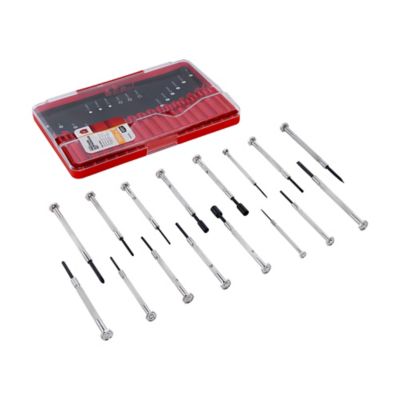
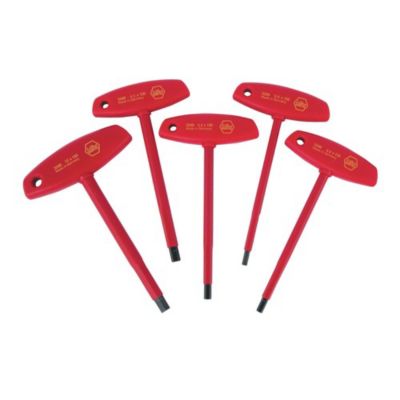
Handle style, shaft length, and tip shape give hex screwdrivers different strengths around the house, garage, and barn. A full-size straight handle provides a comfortable grip for everyday assembly and maintenance, with hard handles offering a firm feel and cushioned surfaces helping with repeated turning. Grip shape matters as much as handle size, especially when working with cold hands or gloves during the cooler months. T-handle hex drivers provide a broader grip and more turning leverage, which can help with larger fasteners when the equipment’s fastening requirements allow it. Extra leverage also makes restraint important on small screws, soft metals, and plastic housings. Precision hex screwdrivers take a different approach, pairing slim shafts with smaller handles for controlled adjustments on electronics, hobby equipment, and compact mechanisms. Some have a rotating end cap that rests against the palm or fingertip while the handle turns beneath it. For other compact fasteners around the bench,
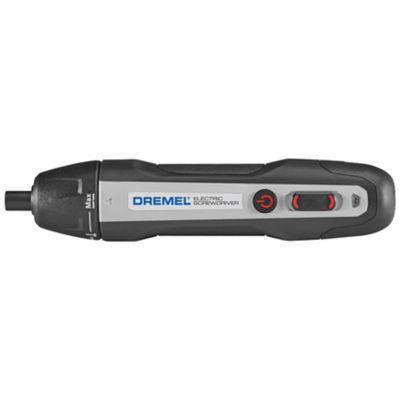
Small Screwdrivers are a related tool category for close-up tasks. Fixed-shaft hex screwdrivers keep the tip and shaft together as one working tool, while multi-bit hex screwdrivers let one handle accept several interchangeable sizes. A bit holder adds width near the working end, so clearance can matter just as much as reach when a screw sits down inside a narrow opening. Longer shafts can reach recessed hardware; shorter designs fit spaces where a long handle would bump into a nearby frame or panel. Straight hex tips are suited to full engagement when the shaft lines up with the screw. Ball-end hex tips allow angled access within the tool’s stated limits, helpful when a bracket prevents a straight approach. Their smaller contact area makes them better suited to running screws in or out than to breaking tight fasteners loose or applying final tightening force. A straight tip is generally the better choice for those higher-load moments. On bicycle parts, machinery components, and other assemblies with specified torque values, final tightening belongs to an appropriate torque tool rather than guesswork by handle feel.
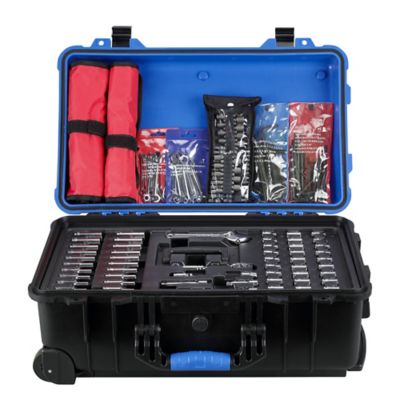
Materials and construction affect how a hex screwdriver holds up through regular work. Hardened steel shafts and tips resist twisting and wear, with alloy steels such as chrome vanadium or tool steels appearing across the category. Heat treatment and tip geometry matter alongside the steel designation because a tip needs both strength and a close fit against the socket walls. Protective finishes can help limit corrosion, but even coated tools benefit from a dry home between jobs. A screwdriver left on a damp shed shelf or tucked into a wet toolbox can develop rust, particularly where the finish has worn thin. Wiping away moisture, grit, and oily residue after a project helps keep the shaft clean and the grip comfortable to hold. Handle materials vary, and strong solvents can damage some plastics and grip coverings, making the manufacturer’s care directions worth keeping with the tool. A fitted tray, rack, or roll keeps sizes separated and protects smaller tips from getting knocked around beneath heavier tools. Tip condition deserves attention, too: rounded corners, chips, or a bent shaft can make a good-fitting size slip and damage the fastener. Dirt packed into a screw socket can prevent full seating even when the driver itself is in good shape. That comes up often on equipment that spends its days around dust, grass clippings, or muddy boots. For a mower cover, a shop stool, or a bicycle attachment, the intended job should shape the tool choice rather than simply reaching for the longest handle. Manual hex screwdrivers are not substitutes for pry bars, punches, insulated electrical tools, or impact-rated driving accessories. Equipment maintenance also calls for shutting down and securing the machine according to its instructions before reaching near moving parts. As a practical gift, a well-organized assortment can suit a new homeowner, a hands-on hobbyist, or someone setting up a garage workbench, especially when the sizes match the equipment they maintain. From a quick adjustment beside the shed to an evening assembling furniture indoors, the right hex screwdriver makes small fastening jobs feel less fiddly and keeps attention on the work at hand.