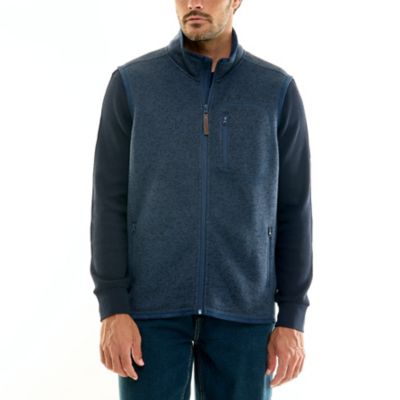
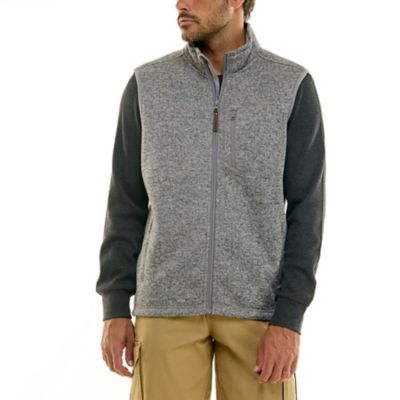
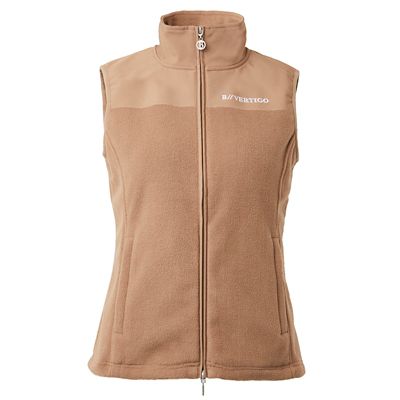
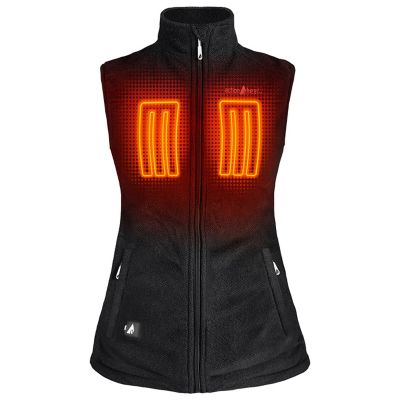
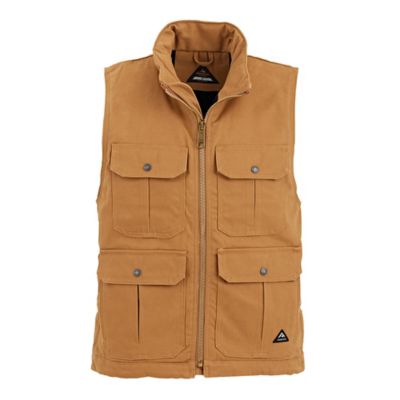
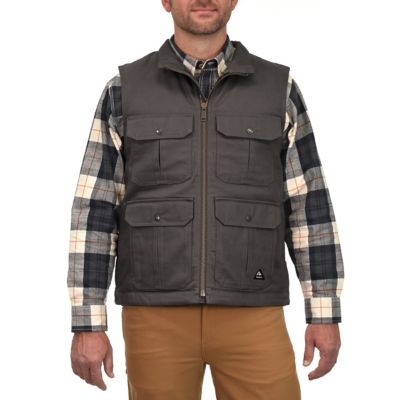
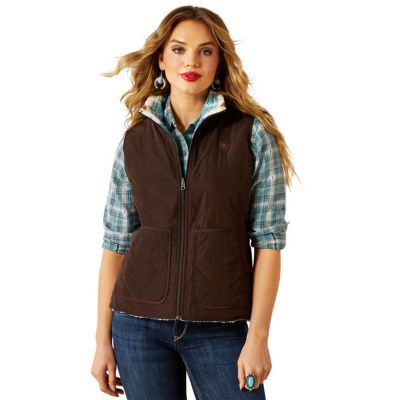
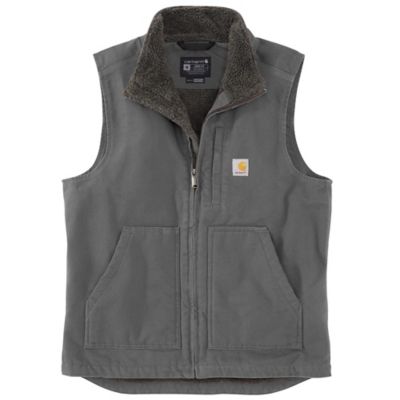
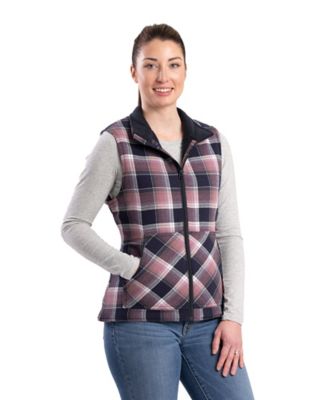
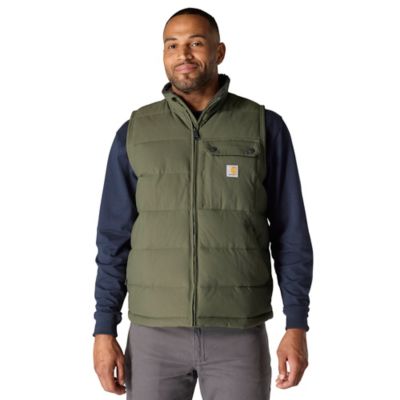
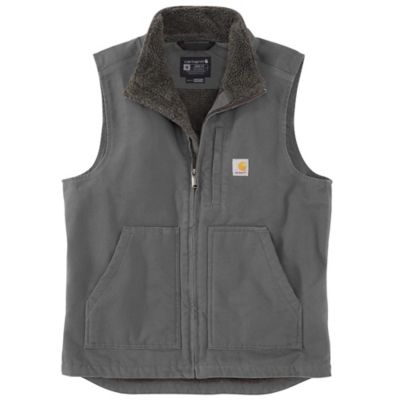
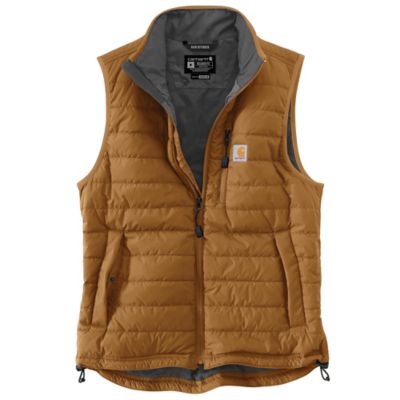
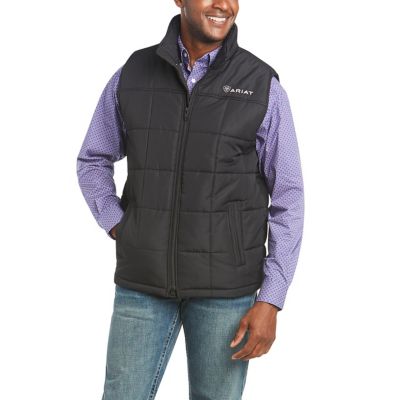
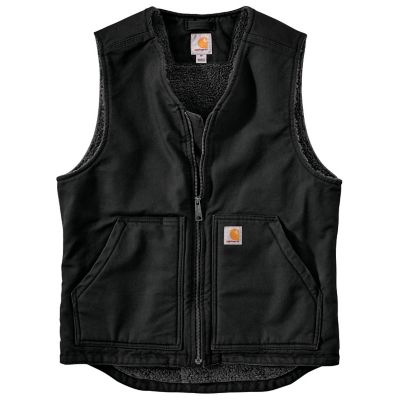
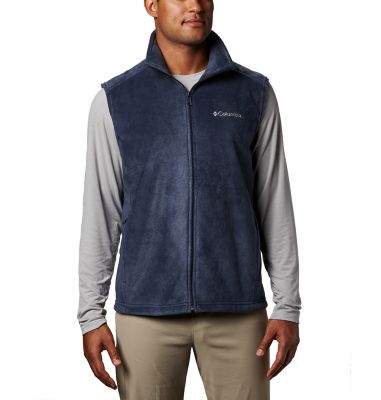
Fleece vests add warmth around the chest and back while leaving the arms free, making them a practical layer for chores, trail walks, and everyday trips into town. Their soft, raised fibers hold pockets of air close to the body, helping slow heat loss without the weight of a heavy jacket. That balance suits jobs where sitting still and moving around happen in the same stretch of time, such as riding out to check a fence, walking the line, and climbing back into the truck. The sleeveless shape leaves room to reach for a gate latch, carry a feed bucket, or swing a rake without another set of sleeves getting in the way. Many fleece fabrics are made from polyester, including recycled polyester in some garments, though fiber blends and fabric construction vary. Smooth-faced fleece can slide comfortably beneath a coat, while brushed fleece has the familiar soft surface often associated with this layer. Loftier pile and sherpa-style textures trap air within their raised fibers and have a fuller feel. Fabric weight matters, too: lightweight fleece offers modest insulation for active wear, while heavier fleece generally adds warmth and takes up more space beneath an outer layer. Thickness alone does not tell the whole story, since the knit, lining, and overall construction also affect comfort. Breathability lets some heat and moisture escape during movement, but ordinary fleece does not block wind or keep out steady rain the way a purpose-built shell can. Across an open pasture, a breeze may pass through an unlined fleece vest even when the fabric feels substantial. Beneath a wind-resistant or waterproof outer layer, that same vest can serve as useful insulation. For a walk along a sheltered path or a morning spent moving between the barn and house, fleece over a long-sleeve shirt may be enough. The appeal is straightforward: a little more warmth where it helps, with less fabric around the shoulders, elbows, and wrists.
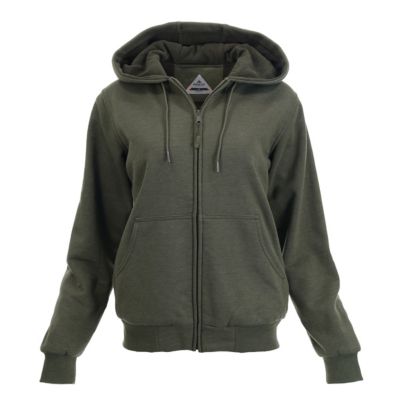
The fit of a fleece vest makes a noticeable difference in how comfortably it works with the rest of an outfit. A close fit can sit neatly under a work coat, but the chest and shoulders still need enough room for reaching, bending, and taking a full breath. A roomier cut accommodates a flannel shirt or sweatshirt, provided the armholes do not stand so far away from the body that warmth escapes easily. Shoulder seams should rest comfortably without pulling toward the neck, and the front should close without stretching across the chest. Length deserves attention when much of the day involves climbing steps, leaning over a workbench, or sitting behind the wheel. A hem that covers the waistband during movement helps prevent gaps, while excessive length can bunch at the lap. Shaped cuts, straight cuts, and extended sizes give different body types room to find a comfortable match; garment measurements are more useful than assuming every size label fits alike. Details that seem small on a hanger can matter plenty over a full day. A stand collar offers extra coverage at the neck, and a soft zipper guard can keep the top of the closure from rubbing under the chin. A full front zipper makes it easy to release heat after hauling supplies or walking uphill. Hand pockets give cold fingers a place to rest, while zippered pockets help keep keys from slipping out when bending or getting in and out of a vehicle. Pocket depth and placement matter when carrying a phone, particularly if a seat belt or backpack strap crosses the same area. For everyday outfits, fleece pairs easily with jeans, work pants, henleys, and button-front shirts. A vest favors arm freedom;
fleece hood jackets offer sleeve and head coverage for those who prefer a more enclosing layer. Neither shape replaces protective workwear, and loose fabric should stay clear of moving equipment, sparks, and open flame.
With regular wear, fleece benefits from care that protects its surface and keeps it comfortable against other layers. The garment label is the starting point because linings, trim, stretch fibers, and water-repellent treatments can call for different handling. Many polyester fleece garments allow machine washing, often with cool water and a gentle cycle, but the label should settle the choice of settings. Fastening zippers and turning the vest inside out can reduce snagging and surface friction in the wash. Washing fleece separately from lint-shedding towels helps keep stray fibers from collecting in the pile. Fabric softener may interfere with moisture management or certain finishes, so leaving it out is generally a sensible choice unless the care directions say otherwise. Air drying or a low-heat dryer setting, when permitted, helps avoid the damage that high heat can cause to synthetic fibers. A vest should be fully dry before it goes back into a closet or stays tucked behind a truck seat. Repeated rubbing from backpack straps, seat belts, and rough work surfaces can create small pills, especially in high-contact areas. An anti-pill finish may help limit that change, though no soft fleece surface is immune to wear. Secure stitching, neatly finished edges, and a zipper that runs smoothly are useful signs to consider when choosing a layer for frequent rotation. Fleece is well suited to general chores and casual outdoor activity, but brush, sharp wire, and abrasive surfaces can catch or wear its fibers; tougher outerwear may make more sense for those tasks. Its easy layering also makes a fleece vest a thoughtful gift for someone who enjoys campground walks, tending animals, gardening, or spending time on the porch. The best match comes from knowing the recipient’s usual size, preferred fit, and whether the vest will go over a shirt or beneath a coat. Simple colors and practical pockets can make it an easy part of a familiar outfit, ready for the kind of day that starts with a short chore and turns into several.