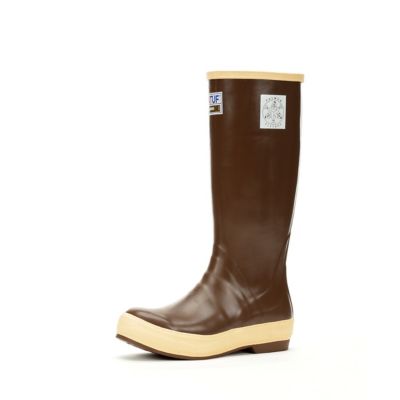
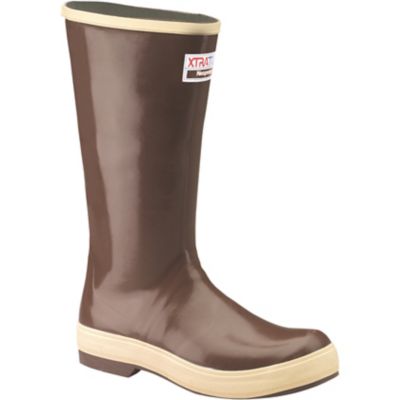
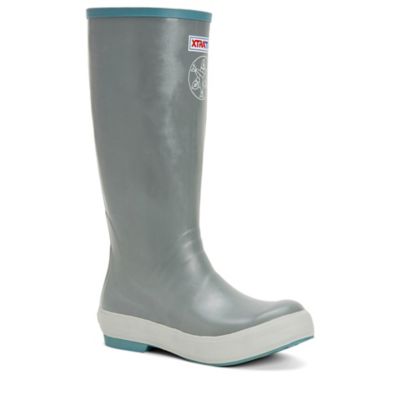
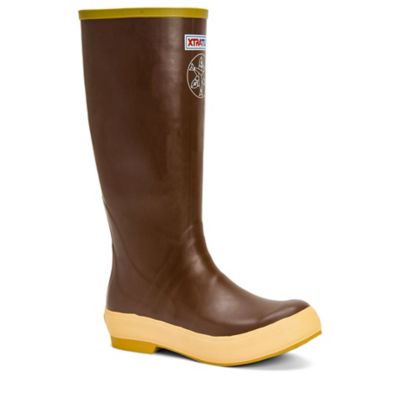
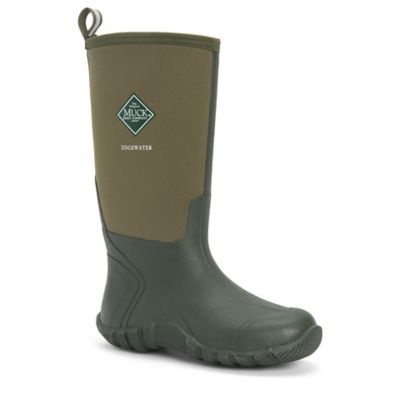
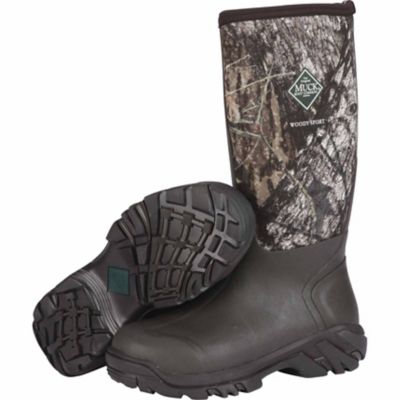
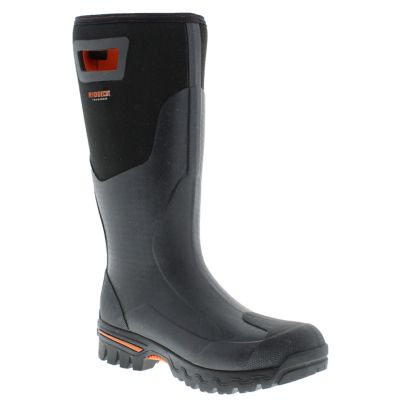
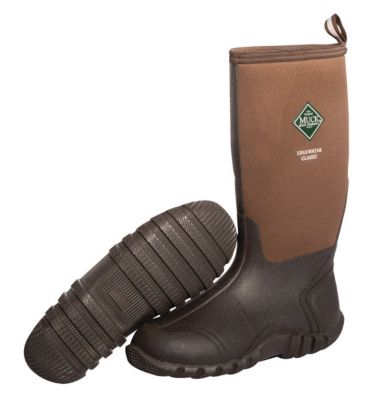
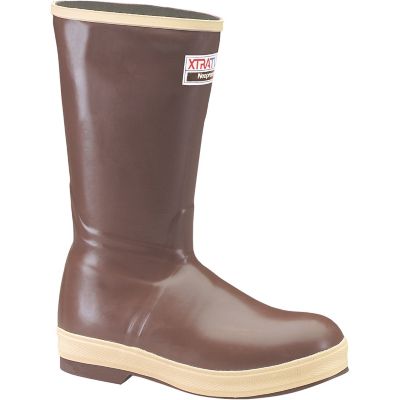
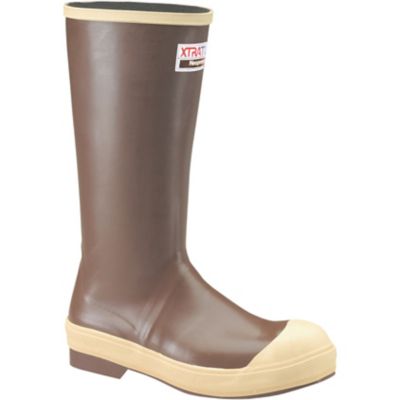
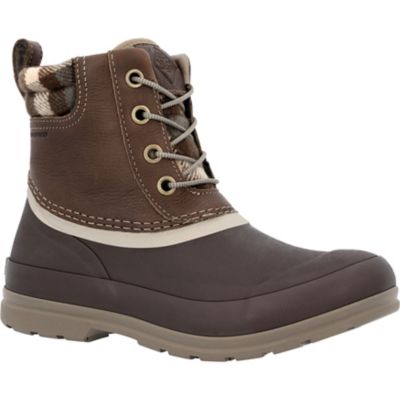
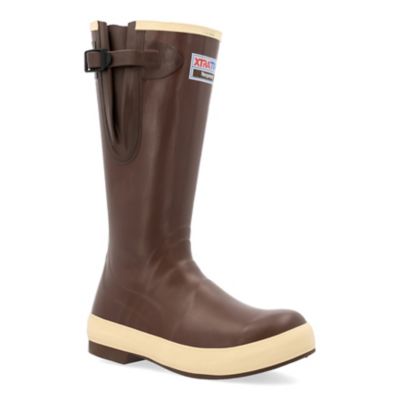
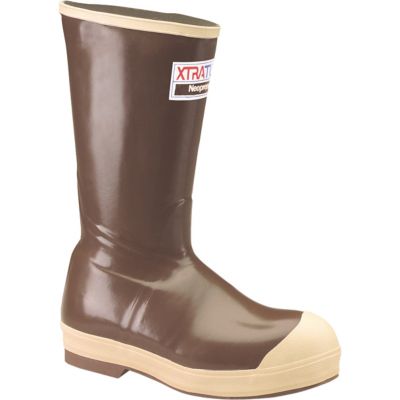
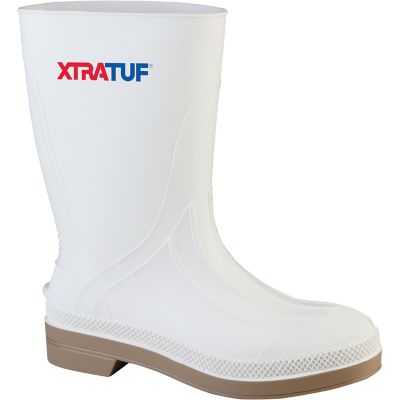
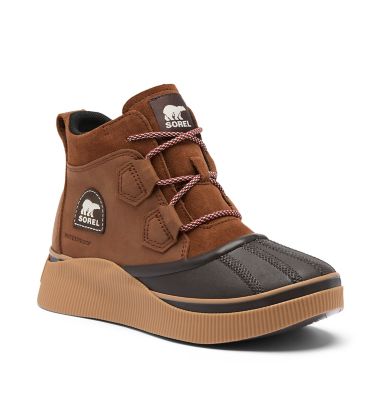
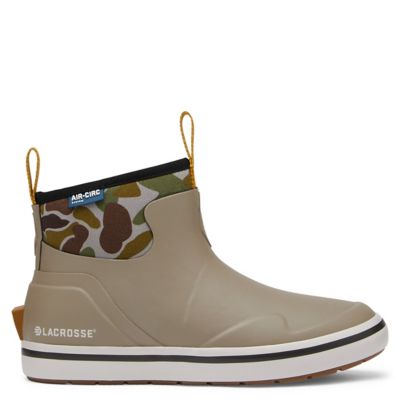
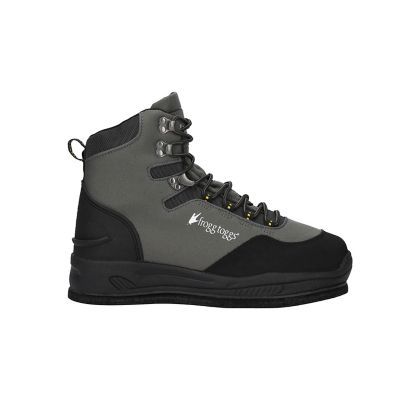
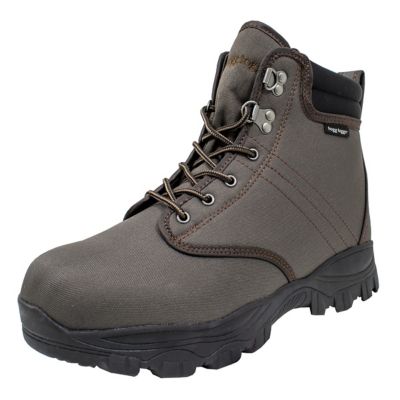
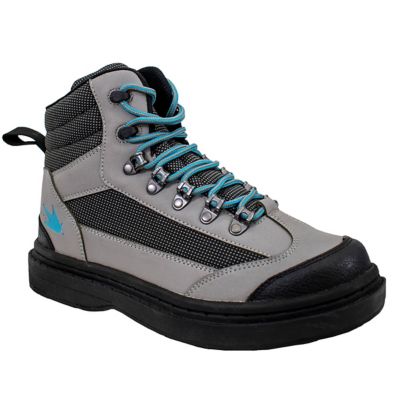
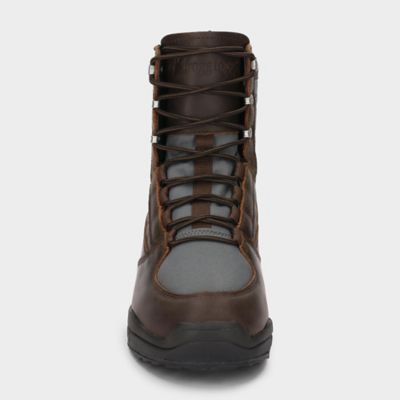
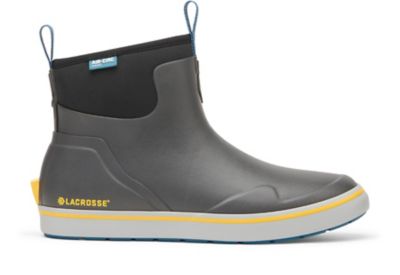
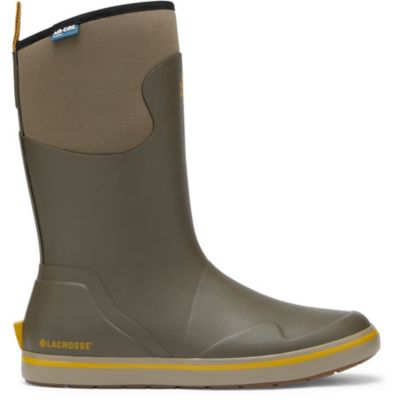
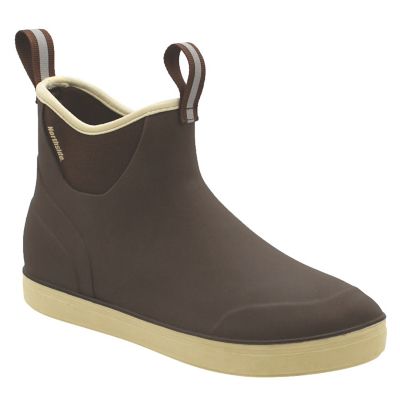
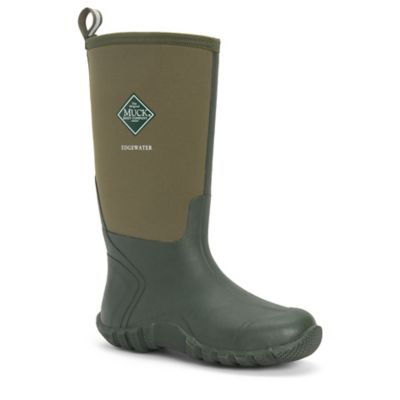
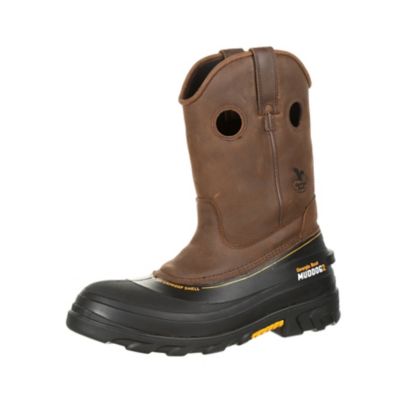
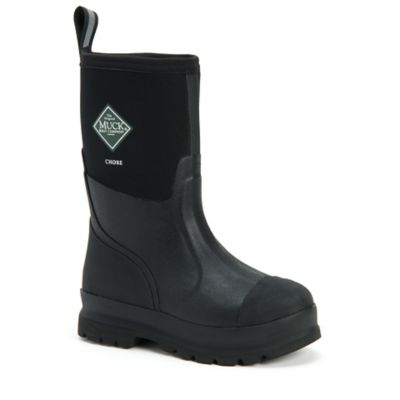
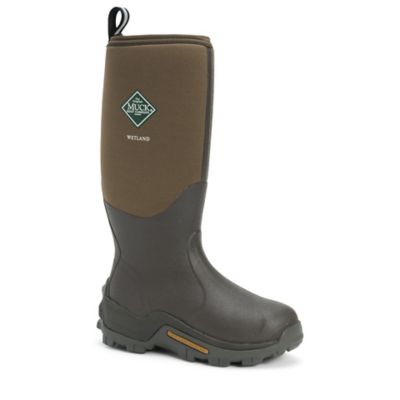
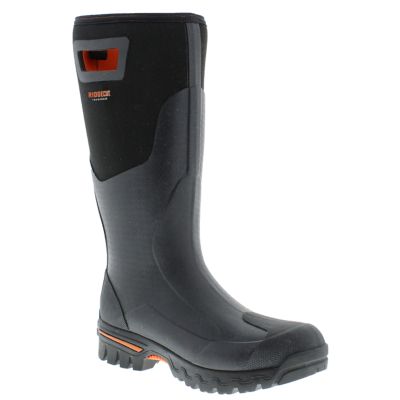
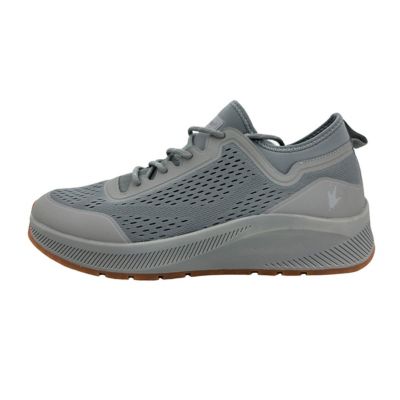
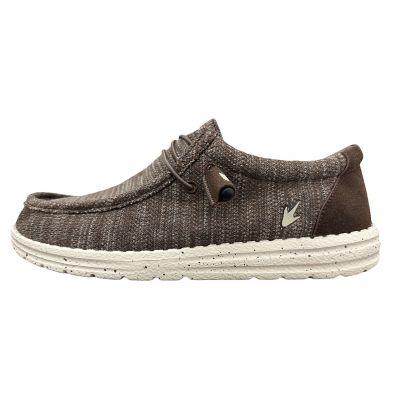
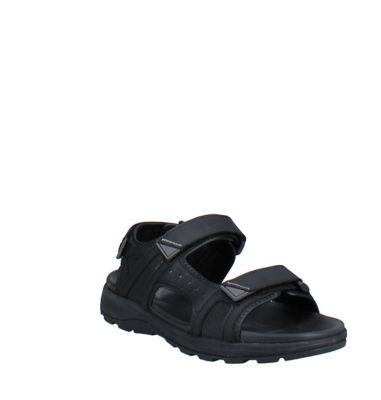
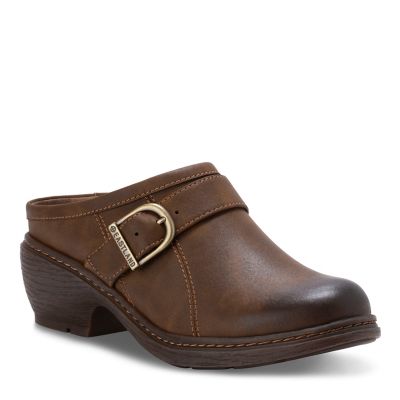
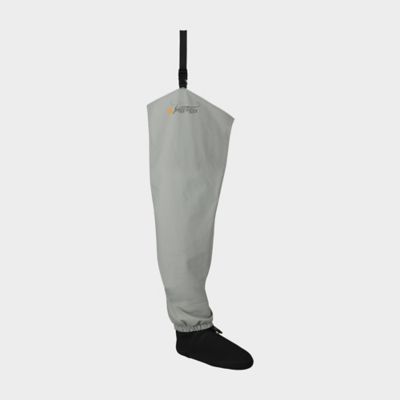
Fisherman aesthetic boots take their shape from the footwear worn on fishing boats and around working docks: rounded toes, sturdy soles and uppers without much fuss. The look runs from short pull-on deck boots to mid-calf utility boots and tall rubber rain boots. What ties them together is that plain, practical shape. Some sit close to the foot with a low sole and a simple pull tab, while others have a wide shaft and a thick sole that stand out beneath a pair of jeans. Matte black, olive and brown keep close to the workwear roots of the look. A lighter upper with a dark sole makes the shape stand out a bit more, especially with straight-leg denim. An ankle boot leaves room for a cuff and goes well with a striped shirt or a canvas chore coat. Mid-calf boots give wide-leg pants some weight at the hem without taking over the whole outfit. With tall boots, slim jeans can tuck in without bunching, and a loose skirt lets the whole shaft show. A cable-knit sweater adds texture without making the outfit look like it belongs on a boat. The same boot shape looks just as at home with a flannel and jeans for a drive into town as it does with a sweater and wide-leg pants for supper out. A short pair in a subdued color gives a nod to deck footwear without much change to what’s already in the closet. Tall boots with a broad shaft make more of a statement even when the rest of the outfit is plain. For that same coastal workwear look beyond boots,
Fisherman Aesthetic Footwear carries the theme into other shoe shapes and silhouettes.
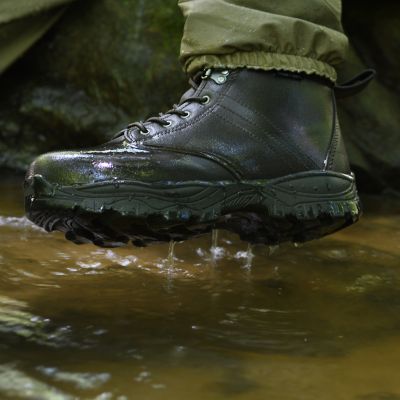
The fisherman look doesn’t tell the whole story about what a boot can handle. A molded rubber upper is easy to rinse after a morning spent walking the bank or hauling buckets, and waterproof construction matters if the route takes you through standing water. A boot with a rubber sole and a leather or synthetic upper may look the part without keeping water out at the seams. Leather can soften and crease with wear, while synthetic uppers can give the boot a similar finish with a lighter feel, depending on how the rest of the boot is built. Linings make a difference, too. A lined shaft puts a softer layer between the upper and your leg, while a removable footbed can come out to air after a full day on your feet. Height is worth matching to the job. An ankle-height deck boot leaves more room to bend when you kneel to sort tackle or step up into a truck. A taller shaft gives your shins more coverage around splash and muck, but it can feel in the way when you’re sitting or squatting often. Underfoot, tread designed for a wet deck serves a different purpose from deep, widely spaced lugs that can shed mud. A thick sole might be there mainly for the look, so for time on a boat, check that the outsole is designed for traction on wet deck surfaces. A nonmarking sole can help keep scuffs off the deck, but that feature alone doesn’t tell you how well it grips. For dry sidewalks and everyday errands, a sole that flexes at the ball of the foot may matter more than an aggressive tread. It’s also worth considering how the heel meets the sole. A broad, low heel gives the boot a grounded workwear shape, while a thicker platform puts more emphasis on the profile. Two pairs can look nearly alike from above and feel quite different after a long walk.
Fit comes down to more than the number on the box, especially with a pull-on boot that has no laces to draw in the heel. A little heel movement can be normal in a pull-on shape, but the foot shouldn’t slide forward or make the toes grip to hold the boot in place. Trying boots with the socks you’d normally wear makes it easier to tell whether there’s room to wiggle your toes without the foot swimming inside. The top edge of a mid-calf or tall shaft should leave room to sit and bend without pressing into your leg. If you like to tuck in jeans, the extra fabric needs room, too. How a pair wears over time depends in part on where it goes and how it’s cared for afterward. Sand and dried mud can work into the tread and collect along the edge where the upper joins the sole. A soft brush can lift loose grit, and a fresh-water rinse can clear salt off rubber after a trip to the coast. Leather is better off with the cleaning and conditioning suited to its finish rather than a soak. Letting boots air out away from direct heat is a good habit, especially if the lining is damp. Over time, keep an eye on the flex points near the toes and on tread that’s worn smooth, particularly if those boots still see time on wet boards. As a gift, fisherman-style boots can suit someone who spends their free time casting from the bank, works near the water or just likes the look of a plain boot with denim. Knowing what the person does in their boots helps narrow the choice: someone who walks a long way to a fishing spot may care more about how the sole bends, while someone who likes the tall profile may care most about how the shaft sits over jeans. Foot length is only part of getting the fit right, so a sense of the person’s usual boot width and preferred shaft height goes a long way.