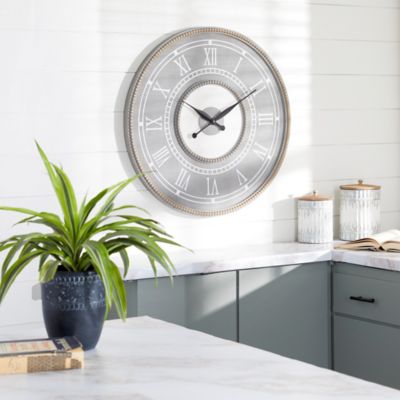
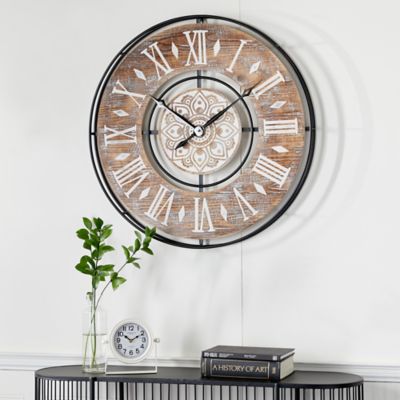
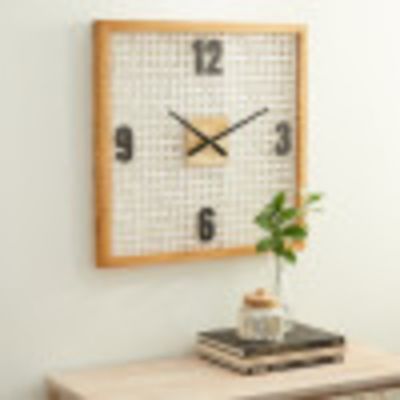
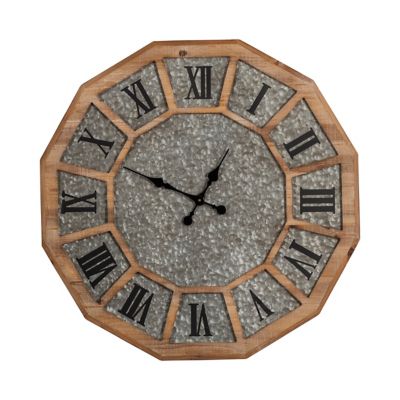
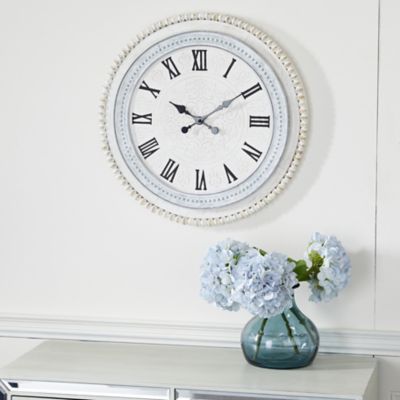
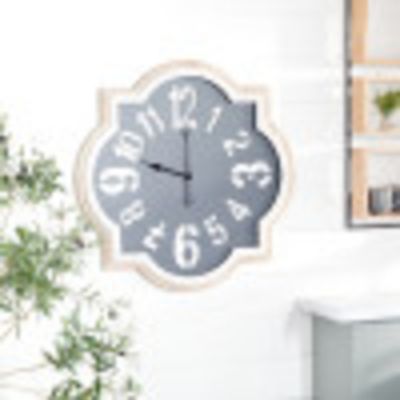
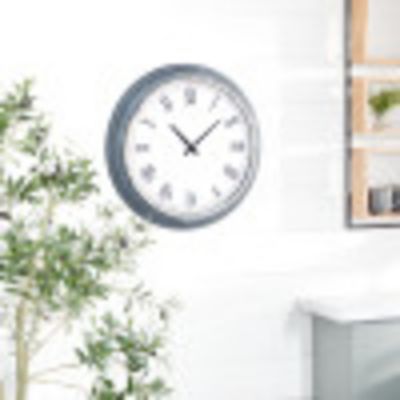
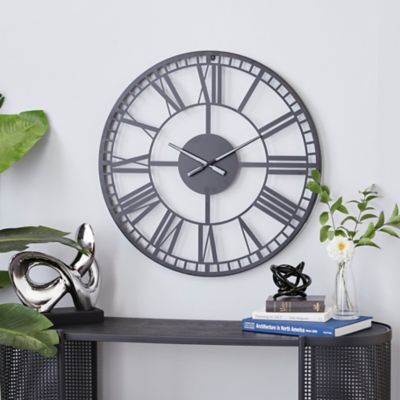
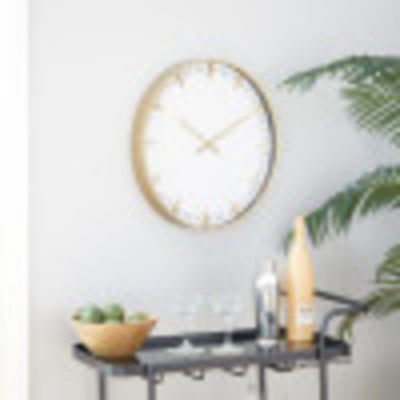
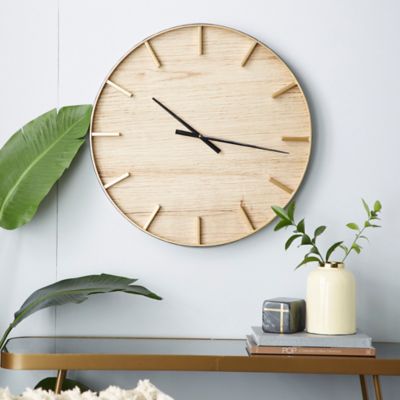
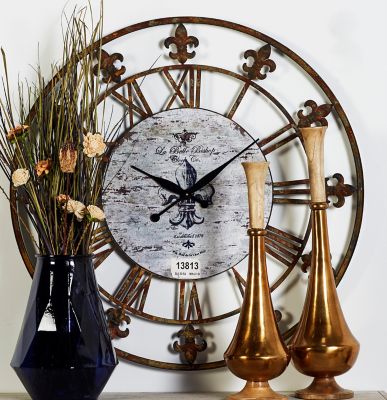
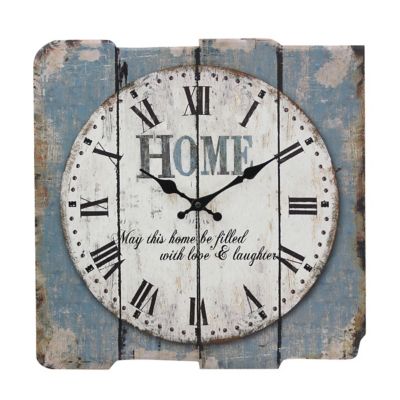
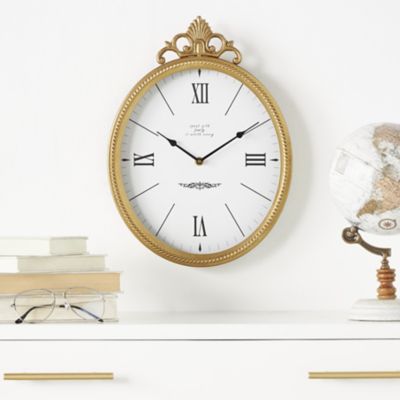
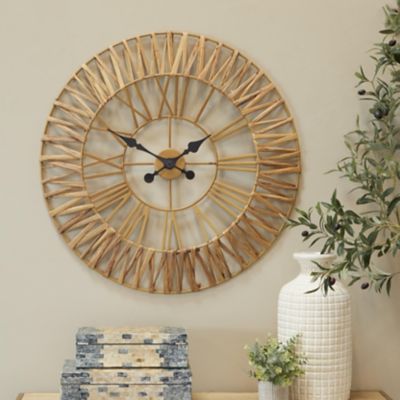
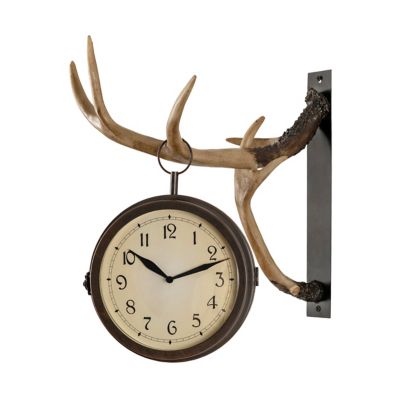
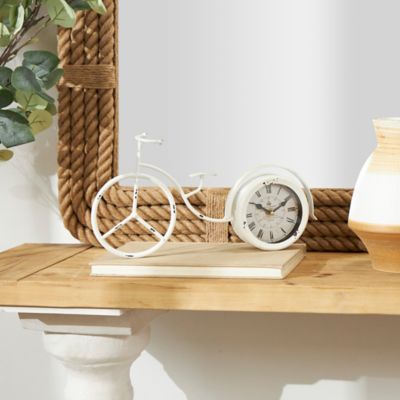
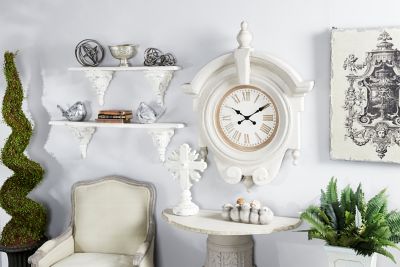
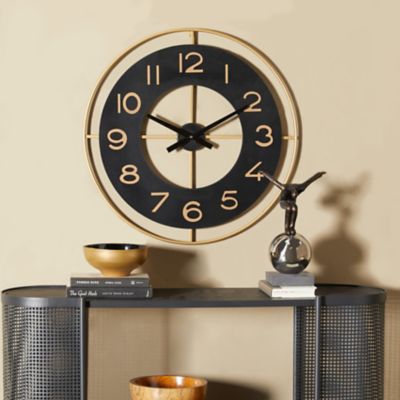
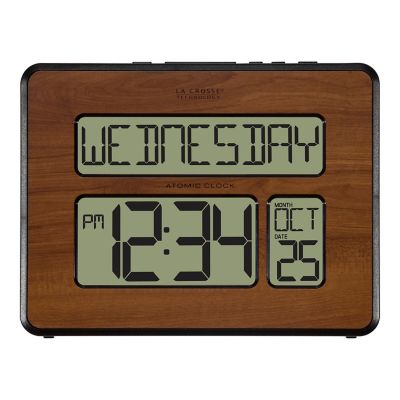
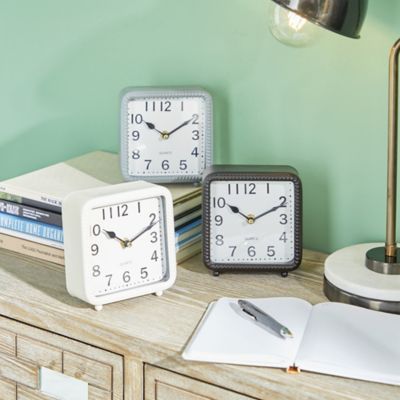
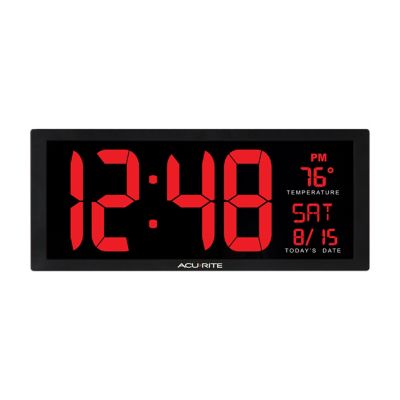
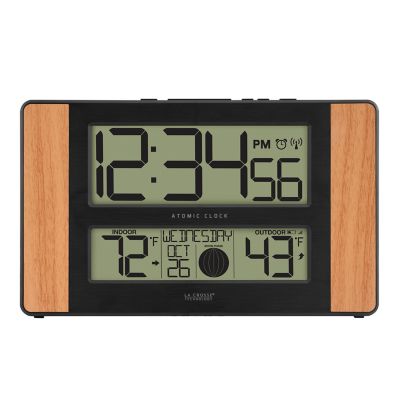
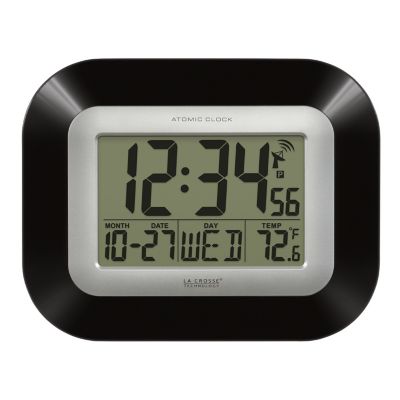
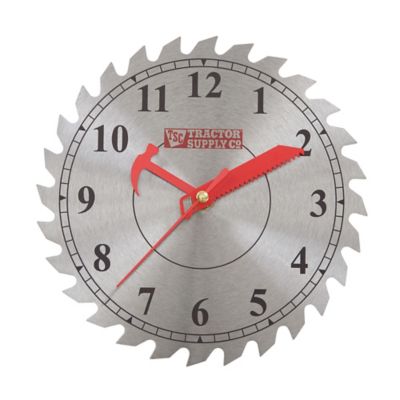
Farmhouse style wall clocks bring easy-to-read timekeeping and a relaxed country feel to kitchens, living rooms, dining areas, and entryways. Their character often comes from wood tones, painted finishes, simple metalwork, and clock faces that look right alongside a sturdy kitchen table or a well-loved cupboard. Some lean toward the look of an old general store, with bold numbers and a broad frame, while others have a lighter touch, pairing a pale face with slim hands and a narrow rim. Wood adds visible grain and warmth; metal brings crisp edges and a little contrast against shiplap, beadboard, or painted drywall. Engineered wood and wood-look surfaces can carry a similar appearance, though their construction and care needs differ from solid wood. Distressed paint, plank patterns, and weathered-looking finishes give farmhouse wall clocks their familiar, lived-in character without requiring the rest of a room to follow a matching theme. Size makes just as much difference as finish. A large wall clock can anchor an open stretch above a sideboard or fill the space over a fireplace mantel, provided the placement follows any clearance requirements. A smaller clock fits more comfortably between kitchen cabinets, beside a pantry door, or among framed family photographs. The best proportions leave breathing room around the frame rather than crowding nearby shelves or trim. Face size alone does not tell the whole story, either. Thick hands and clear numbers may be easier to spot from across the kitchen than a larger face with faint markings. Dark numerals on a light background offer strong contrast, while Roman numerals and open-face designs bring a different visual rhythm. An open design also lets the wall color show through, making the background part of the clock’s appearance. In a room with patterned wallpaper or busy wood grain, a solid clock face can keep the time from getting lost in the surroundings.
The everyday usefulness of a farmhouse wall clock depends on more than its appearance. Movement type, power source, sound, and hanging requirements all affect how comfortably it fits into a home. Battery-powered quartz movements keep cords out of sight, which suits walls above furniture or away from an outlet. Battery size and quantity vary, and an accessible battery compartment makes changes simpler, especially on a larger clock. Some movements advance with a noticeable tick, while others have a sweeping hand or are described as quiet-running. Sound matters most in bedrooms, reading corners, and rooms where a clock hangs near a favorite chair; even a faint tick can stand out when the television is off and the house settles down. A kitchen clock has a different job, keeping time in view while bread dough rests, supper cooks, or the family gets ready to head out the door. Clear minute markings can be handy there, while a broad, uncluttered face may be all that is needed in a living room. Mounting deserves the same attention as the face. The clock’s weight, hanger design, and wall surface determine the proper fastener, and heavier frames may call for a wall stud or an appropriately rated anchor. A firm mounting point helps prevent shifting when doors close or people move through a narrow hallway. Glass-covered faces keep dust away from the hands but may catch reflections from a window or overhead light. Open faces avoid that glass reflection, though their exposed parts need a gentle touch during cleaning. Routine care generally means light dusting with a soft cloth and following the maker’s directions for the frame and face. Spraying cleaner onto a cloth rather than directly at the clock helps keep liquid away from seams and the movement. Wood and engineered wood also benefit from placement away from sink spray and cooking splashes. Frame construction, secure joints, and a sound hanging bracket contribute to how well a clock holds up through routine cleaning and battery changes.
Farmhouse wall clocks work best when they connect with details already in the room rather than compete with every piece around them. A black metal frame can pick up the finish of cabinet pulls, a curtain rod, or a nearby light fixture. A warm wood frame can sit comfortably near oak furniture without matching every board, while an off-white face can soften a wall lined with darker shelves. Repeating one or two colors is often enough to make the space feel pulled together. Pairing a clock with
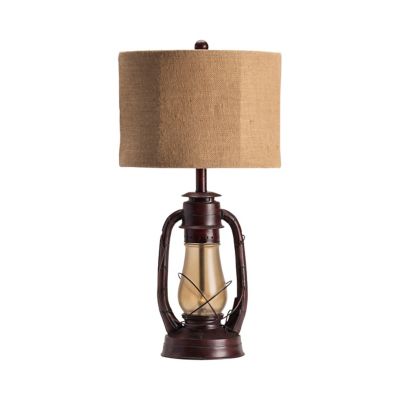
Farmhouse Style Table Lamps can carry that same mix of practical function and country character from the wall to a console or end table. The clock supplies a clear focal point, and the lamp adds light where someone reads the mail, checks a recipe, or settles in with a book. Furniture placement helps establish the balance: a broad frame has enough presence above a substantial bench or buffet, while a modest clock feels more at home over a narrow cabinet. In an entryway, a visible face makes it easy to check the time before heading to school, work, or the feed store. In a dining room, the same clock becomes part of the backdrop for everyday meals and family visits. A home office or hobby room can benefit from a wall clock that keeps time within sight without taking up desk space. These clocks also make thoughtful housewarming or wedding gifts for people who enjoy country-inspired rooms, particularly when the finish suits the furniture they already own. For gift giving, manageable weight, straightforward mounting, and readable numbers can matter more than an elaborate face. Whether the room centers on painted cabinets, natural wood, or simple metal accents, a farmhouse style wall clock can add character while handling a plain, useful job: keeping the day in view.