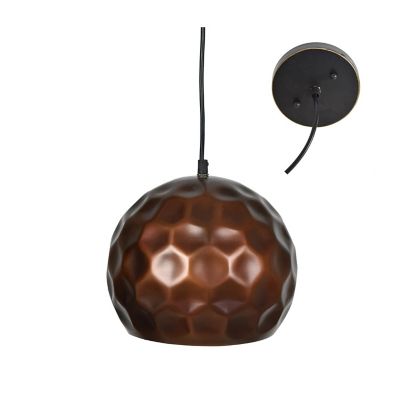
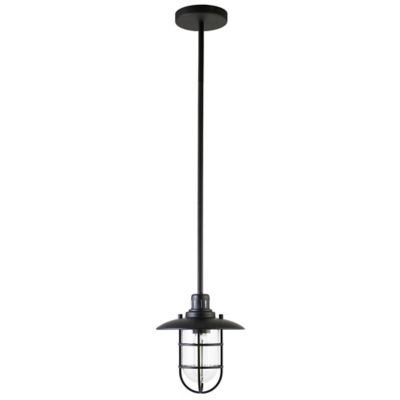
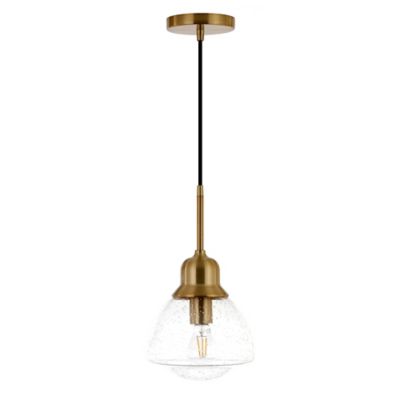
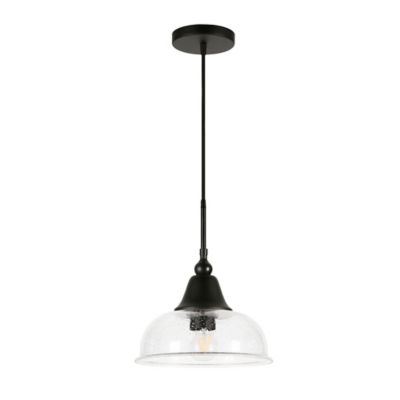
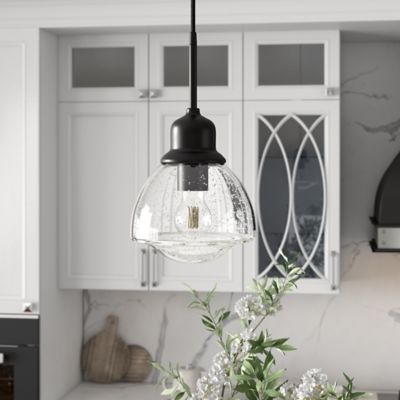
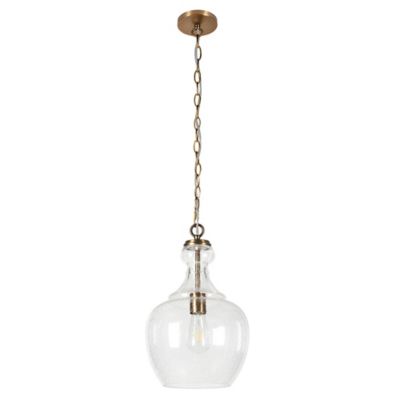
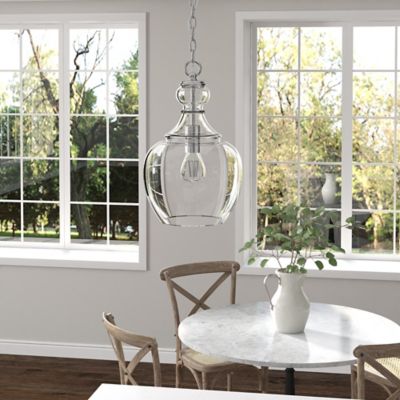
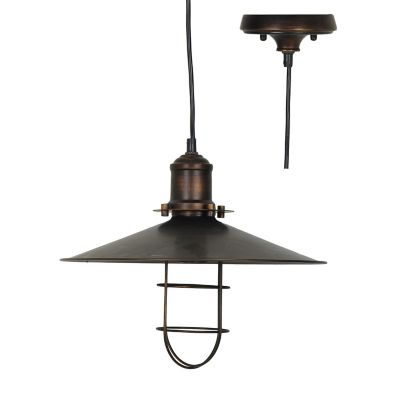
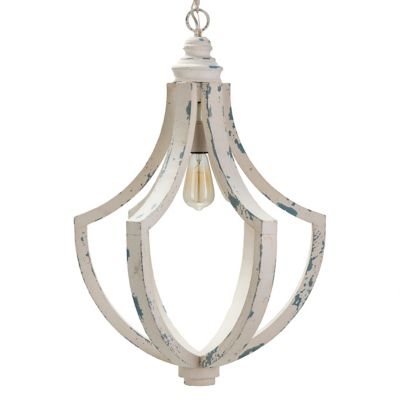
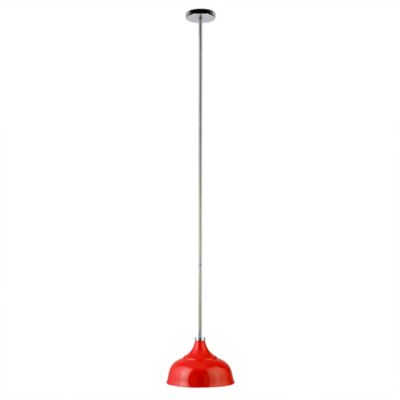
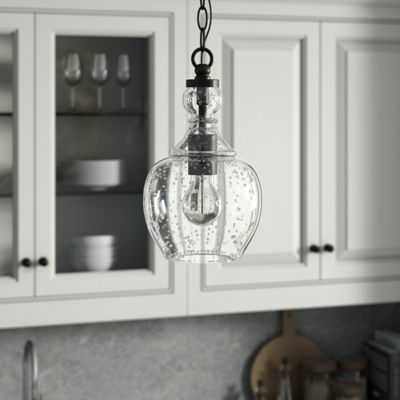
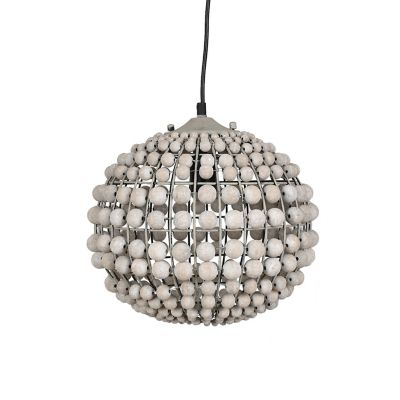
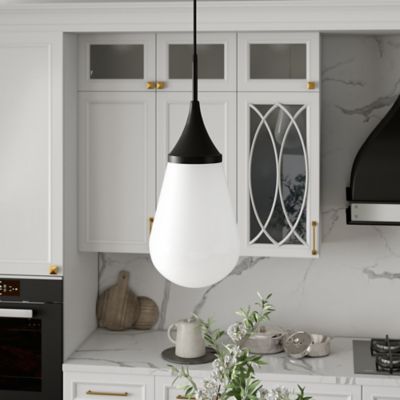
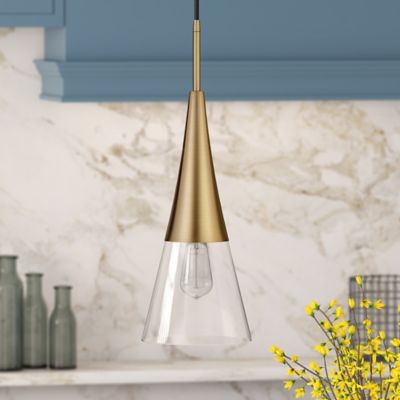
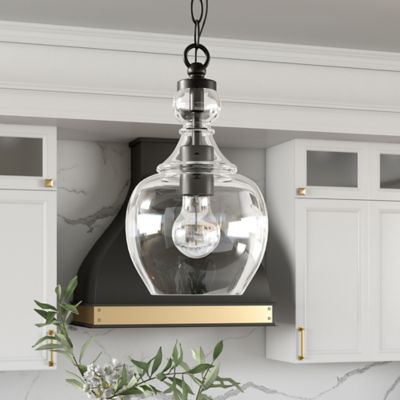
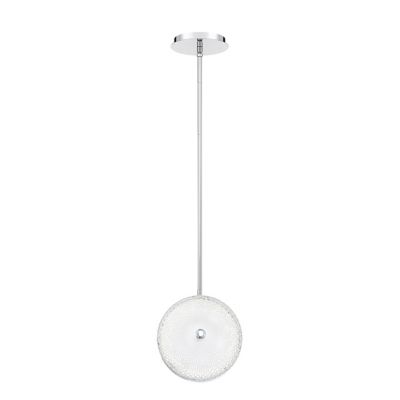
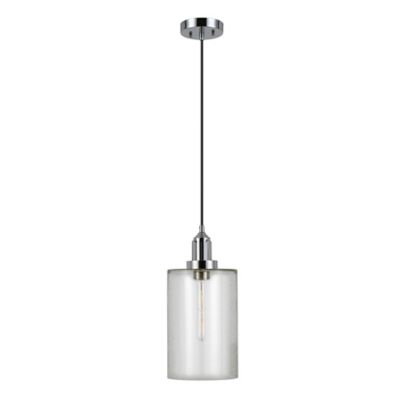
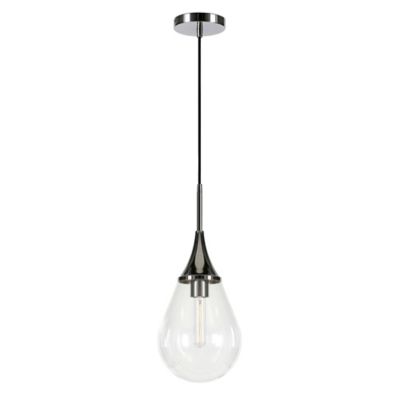
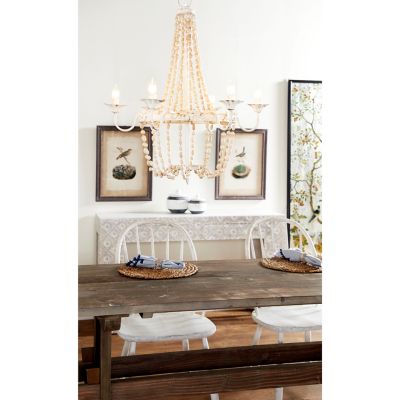
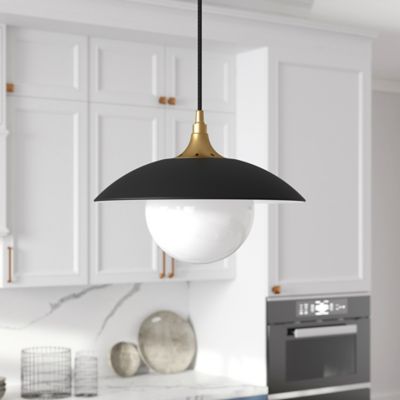
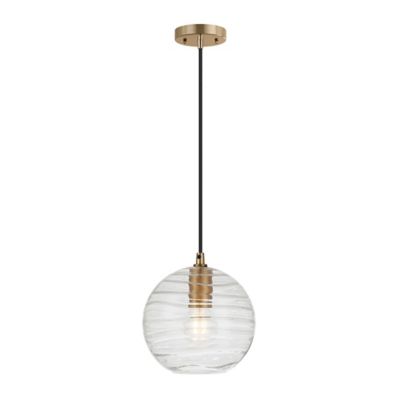
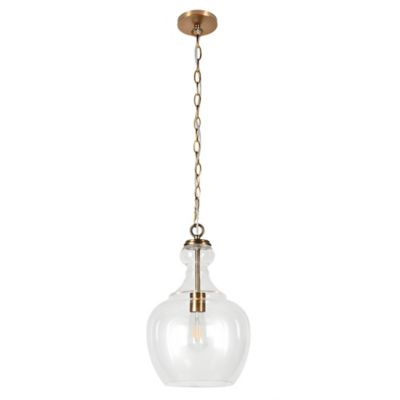
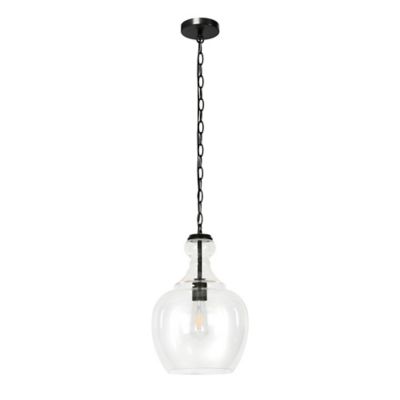
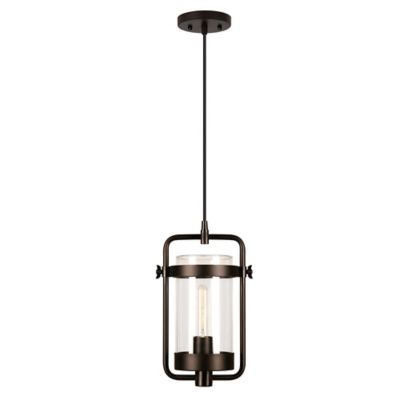
Farmhouse kitchen pendant lights bring focused overhead lighting and a down-to-earth look to islands, sinks, breakfast bars, and dining nooks. The style pairs familiar shapes with materials such as steel, glass, and wood accents, making it a natural fit for kitchens with painted cabinets, butcher-block counters, apron-front sinks, or open shelving. Metal dome shades direct most of their light downward, giving a chopping board or mixing bowl a clear pool of light. Open lantern frames have a lighter, airier presence, while glass globes and schoolhouse shapes spread light beyond the counter. Clear glass shows off the bulb and keeps sightlines open; seeded glass adds texture without completely hiding the light source. Milk glass and frosted shades soften the appearance of the bulb, which can make a seat at the island more comfortable when the fixture hangs near eye level. Matte black provides a strong outline against light cabinets, galvanized finishes lean toward a working-farm look, and brass or bronze tones bring warmth alongside wood grain. These finishes do not have to match every cabinet pull or faucet exactly. A shared dark tone, warm undertone, or simple shape can help the kitchen feel pulled together without making every surface look alike. Wood accents add another layer of texture, though their finish and care requirements deserve attention in a room where cooking leaves grease and moisture behind. Smooth metal shades and simple glass panels generally have fewer corners to wipe than detailed cages or open frameworks. Shade construction matters, too: a broad metal dome feels more substantial overhead, while a narrow glass cylinder takes up less visual space. The right balance depends on the room rather than the farmhouse label alone. In a kitchen where bread gets kneaded, lunch boxes get packed, and neighbors settle in for coffee, a pendant should feel at home with both the work and the gathering.
Size and placement help farmhouse kitchen pendant lights look settled rather than squeezed into the room. A broad island can carry larger shades or a coordinated row, while a small sink area often calls for a more compact fixture that leaves room around a window, cabinet door, or open shelf. Shade diameter matters just as much as fixture count. Several wide shades crowded together can block views across the kitchen, while very small pendants may look lost above a deep counter. Measuring the full fixture, including its frame, canopy, and any projecting hardware, gives a better picture than judging by the shade alone. Over an island or prep station,
Kitchen Counter Pendant Lights can bring that same farmhouse character to a hard-working stretch of workspace. A common starting point is to position the bottom of a pendant about 30 to 36 inches above the countertop, then account for the fixture’s shape, the room’s ceiling height, and the people standing or sitting nearby. That range is not a substitute for the manufacturer’s installation requirements. A tall lantern may need a different arrangement than a shallow dome, and a fixture over an open walkway needs appropriate head clearance rather than countertop spacing. Adjustable chains, cords, and downrods offer different ways to set the hanging height, but each design has its own limits. Sloped ceilings also require a compatible mounting system; not every canopy or downrod can accommodate an angle. Existing electrical-box locations influence spacing, especially when the goal is an evenly balanced row. A qualified electrician can check box support, wiring, and installation requirements before a heavier fixture goes up. The finished arrangement should leave a comfortable view toward the table or living area, keep cabinet doors clear, and place light where hands are working instead of casting a shadow behind the person at the counter.
Bulbs and shades work together, so the farmhouse look is only part of the decision. Warm-white light in the 2700K to 3000K range often suits wood cabinets, painted finishes, and relaxed gathering spaces, while brightness should match the work happening below. Lumens describe light output more directly than wattage, especially with LED bulbs. Many household pendants take an E26 medium-base bulb, but socket type, bulb dimensions, and the fixture’s maximum rating still need to match the manufacturer’s specifications. An LED bulb’s actual wattage must stay within the fixture’s rating, and enclosed shades require bulbs approved for that setting. Clear shades put the bulb in plain view, making its shape and brightness part of the overall appearance. A visible filament can complement a lantern frame, while a frosted bulb may feel easier on the eyes in an open cage. Dimming can shift the same island from supper prep to a quieter place for conversation, provided the fixture, bulb, and dimmer are compatible. Pendants also work best as part of the kitchen’s overall lighting rather than carrying every job themselves. Ceiling fixtures provide general light, under-cabinet lighting reaches the back of the counter, and pendants add useful light over open work surfaces. That combination helps when a deep shade concentrates its beam in one spot. Everyday care keeps the finish and light output looking their best: power should be off and bulbs cool before cleaning, with the fixture’s care directions guiding which cloths and cleaners are appropriate. A soft, lightly dampened cloth often handles fingerprints and cooking film, while abrasive pads can scratch glass or damage painted and plated finishes. Removable glass may make cleaning easier, but it should only be taken apart as directed. For locations exposed to moisture, the fixture’s location rating must suit the installation. Thoughtful sizing, compatible bulbs, and manageable upkeep give farmhouse pendants a practical place in a kitchen that has plenty to do beyond looking good.