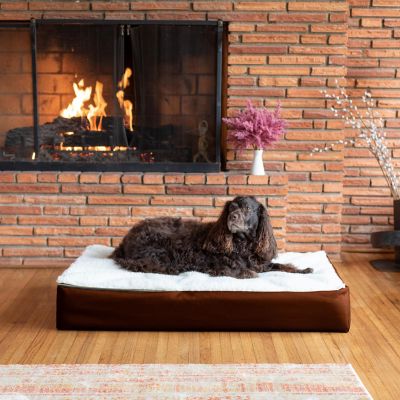
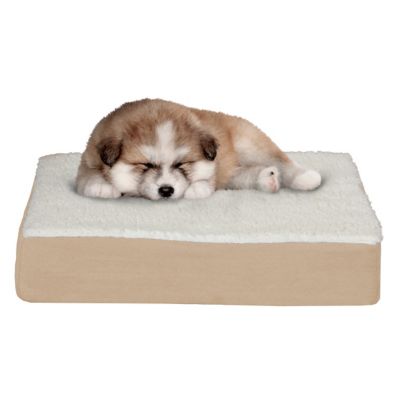
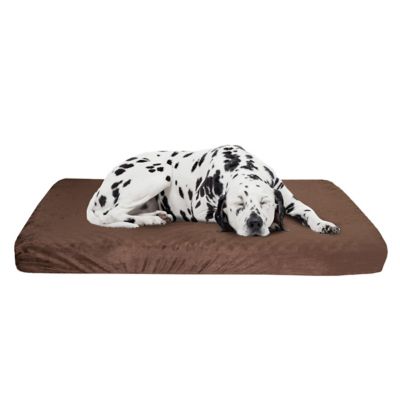
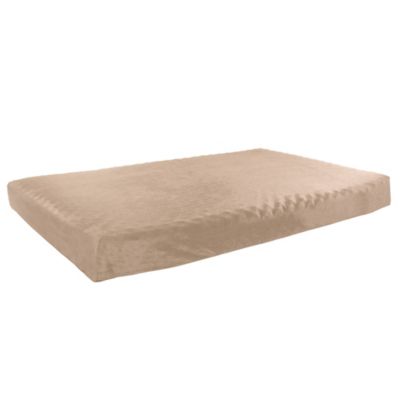
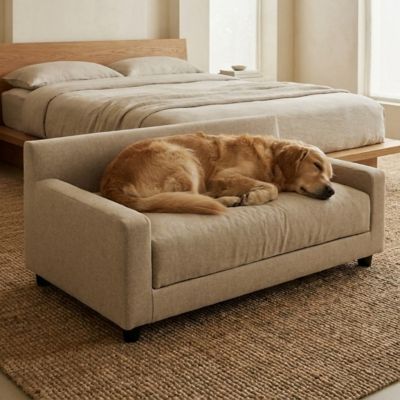
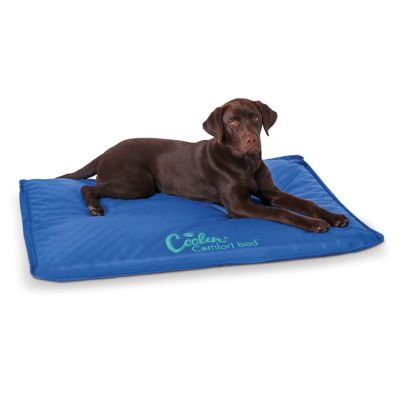
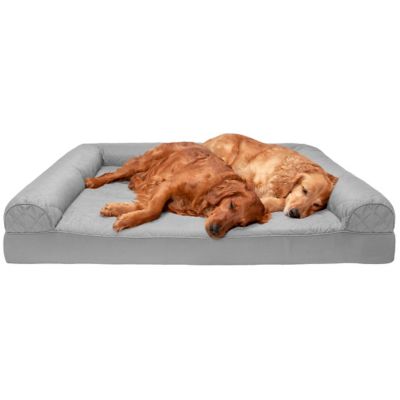
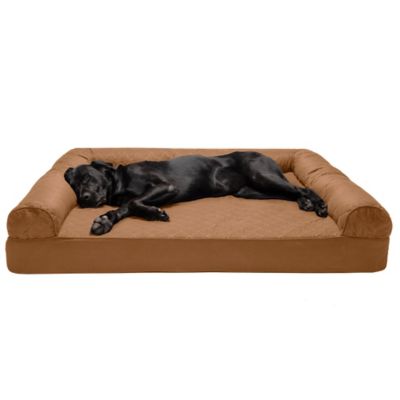
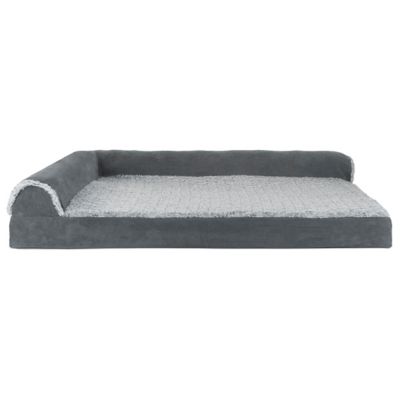
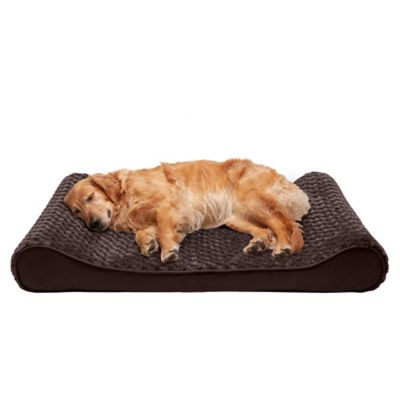
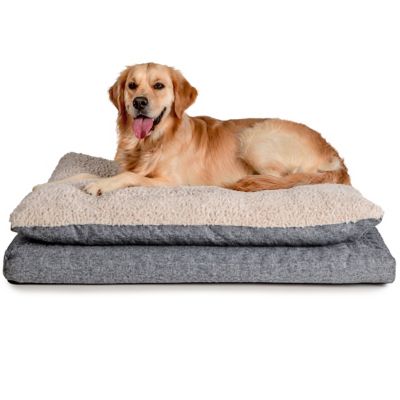
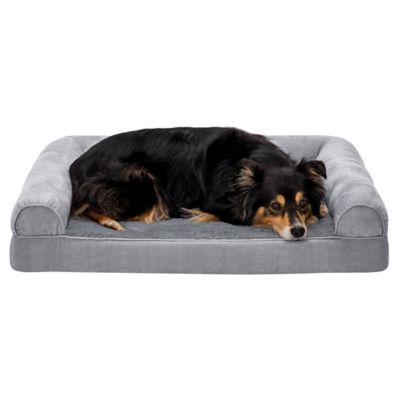
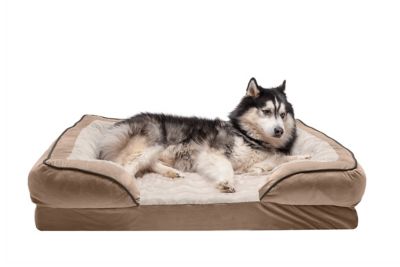
A dog bed for hip dysplasia gives a dog a cushioned place to settle without resting sore hips directly against a hard floor. Hip dysplasia involves a hip joint that does not fit or function as it should, and the resulting discomfort can make lying down, shifting position, and getting back up harder. A supportive bed cannot correct the condition or replace veterinary care, but it can be part of a more comfortable daily routine. Orthopedic dog beds with a substantial foam core are worth considering because they can spread body weight across a broader surface and cushion pressure points around the hips and shoulders. Memory foam contours under a dog’s weight, while a firmer support layer beneath it helps keep the body from sinking straight through to the floor. High-density foam can also provide a steadier resting surface than loose filling that gathers in corners or flattens beneath heavier areas. Foam density, firmness, and thickness are different features, though, so a thick-looking bed does not automatically offer the right support. The important combination is enough cushioning for comfort and enough structure to keep the dog from bottoming out. A heavy shepherd stretching out after a short walk needs a different amount of support than a small terrier curling up beside a chair. Beds labeled orthopedic vary in construction, making the foam description and recommended weight range more helpful than the label alone. Solid foam cores, layered designs, and contoured surfaces each have different feels; the best match depends on the dog’s size, resting habits, and ease of movement. An overly soft bed can leave a dog struggling to push up, while a very firm surface may offer too little cushioning over bony areas. For a dog managing hip discomfort, a steady, supportive sleeping spot belongs alongside a veterinarian’s recommendations for activity, weight management, and treatment—not in place of them.
Fit includes more than whether all four paws land on the cushion. A dog bed for hip dysplasia should have enough usable sleeping space for the dog to lie on either side, stretch out, and change position without hanging the hips over an edge. The outside measurements can be misleading on beds with thick bolsters, since raised sides take up part of the interior. Comparing the sleeping area with the space a dog occupies while stretched out gives a better sense of fit than breed alone. Households with bigger dogs can also browse
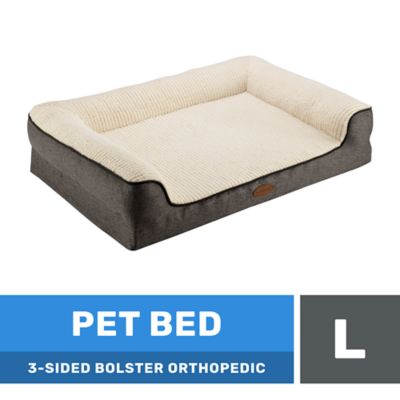
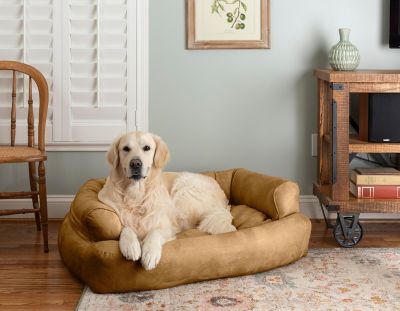
Dog Beds For Large Dogs for bed shapes and dimensions suited to longer bodies and broader frames. A flat mattress-style bed leaves several sides open, which can suit a dog that approaches slowly or needs room to reposition. A bolster bed offers a place to rest the head and may appeal to a dog that likes leaning against an edge, provided the entrance does not require a high step. A lower entry point can make access easier, but low profile should not mean a thin pad that compresses against the floor. The useful balance is a manageable step-in height with enough support beneath the dog’s weight. Raised cot-style beds have a different feel from foam mattresses, and their height and fabric tension may not suit every dog with limited mobility. Placement matters, too. Beside the family’s usual sitting spot, a bed can let a dog stay close without climbing onto furniture. In a farmhouse kitchen or near a back-room doorway, it needs enough clear space that the dog is not stepping around boots, chair legs, or another pet to reach it. A nonslip bottom can help reduce sliding on smooth flooring, though the surrounding walking surface also needs traction. An easy approach and a bed that stays put help make settling down less of a chore.
Everyday care deserves as much attention as the cushion, especially when a dog spends long stretches resting in the same spot. A removable, machine-washable cover makes it easier to deal with shed hair, paw dirt, drool, and the occasional accident without trying to clean an entire foam mattress. A waterproof inner liner adds a separate barrier between moisture and the foam, while a water-resistant outer fabric may only slow absorption; the two descriptions do not mean the same thing. Seams, closures, and liner coverage all affect how well that barrier works. Foam often requires spot cleaning rather than machine washing, so the care instructions for the cover, liner, and core should be checked separately. Letting each washable layer dry fully before reassembly helps prevent trapped moisture. For large beds, cover size and washing-machine capacity matter as well—a cover that comes off easily still needs room to move during cleaning. Tightly woven fabrics, reinforced seams, and protected zippers are practical features for beds that see frequent washing or a little pawing before naptime. Soft fleece or plush surfaces offer a different feel from smoother woven covers, but any surface should allow the dog to shift position without bunching underneath. No fabric bed is chew-proof, and exposed foam or loose pieces mean it is time to take the bed out of service until it can be repaired or replaced. Over time, a lasting hollow under the hips, compressed edges, or filling that no longer springs back can signal a loss of support, even when the cover still looks fine. A washable spare cover can keep the familiar resting spot in service on laundry day. These practical details matter for older companions, younger dogs diagnosed with hip dysplasia, and dogs whose veterinarian recommends a more supportive place to rest. Whether the bed sits beside a recliner or in a quiet bedroom corner, the goal stays simple: room to stretch, cushioning that holds up under the dog’s weight, easy access, and a clean surface for everyday rest.