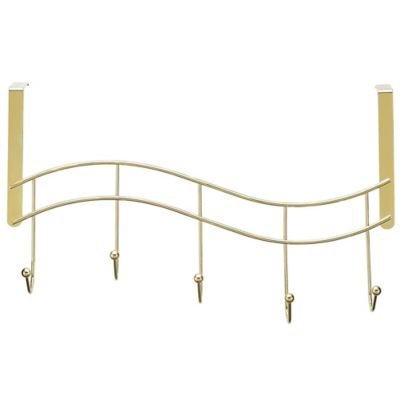
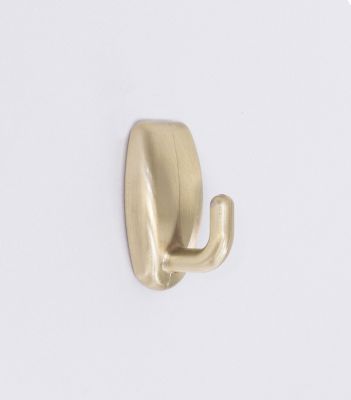
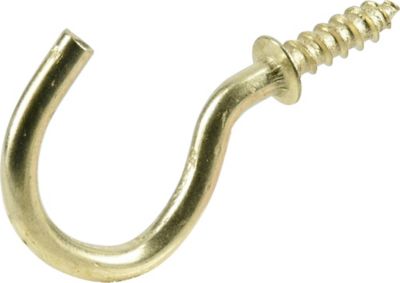
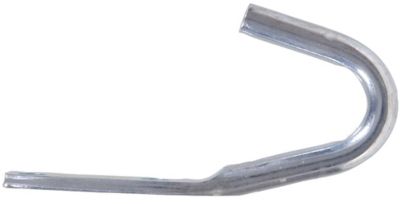
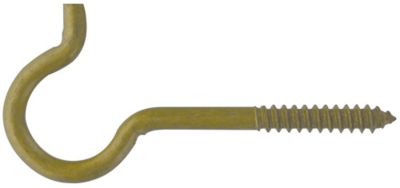
Brass hooks bring a warm metal finish to everyday storage, giving coats, hats, towels, and small household essentials a place within easy reach. The category includes screw-in cup hooks, single wall hooks, double coat hooks, and multi-hook racks, with shapes suited to everything from a kitchen shelf to a busy entryway. Brass is an alloy of copper and zinc, but a brass-colored hook is not always solid brass. Some hooks have a brass finish over another metal, so the material description matters when comparing appearance, care requirements, and suitability for a particular space. Solid brass can develop a darker surface patina over time, while plated or coated finishes may retain their original appearance differently. Polished brass has a bright, reflective look; brushed and satin finishes have a softer sheen that can sit comfortably alongside wood cabinets, painted trim, or a simple board mounted by the back door. An aged brass finish offers deeper tones without the bright shine. Beyond color, the shape of the hook makes a practical difference. A broad, rounded end gives a jacket collar or bag strap more surface to rest on, while a small curved hook fits lighter objects with narrow loops or handles. A double hook adds another hanging point without taking up much more wall space, though the total weight still needs to stay within the stated rating. Longer projections leave more room for thick straps and layered garments, but they also extend farther into a walkway. In a tight mudroom or beside a doorway, that extra reach is worth considering. For a kitchen coffee corner, the opening and curve need to accommodate a mug handle without forcing it into place. In a bathroom, a towel needs enough clearance from the wall to hang freely. Those small fit details help brass hooks earn their place as working hardware rather than simply another finishing touch. Matching the scale of the hook to the object and the space keeps the arrangement useful without making a small wall feel crowded.
A hook’s holding strength depends on the entire installation, not just the metal or the size of its curved end. The hook body, mounting plate, screws, anchors, and wall material all play a part. A substantial-looking brass hook does not automatically have a high weight rating, and a small mounting plate can place considerable force on its fasteners when a loaded bag hangs several inches from the wall. Manufacturer load limits and mounting requirements provide a better basis for comparison than appearance alone. In an entryway where a work jacket, shoulder bag, and hat tend to land together, separate hanging points can make more sense than piling everything onto one hook. Mounting into suitable solid backing can provide a stronger attachment than fastening to wallboard alone, while hollow-wall installations call for anchors appropriate to both the wall and the expected load. Included screws are not necessarily suitable for every surface, particularly masonry, tile, or thin paneling. Screw-in hooks also depend on adequate thread engagement in sound material; a narrow shelf edge may not provide the same support as a solid wood rail. Around the house, spacing matters almost as much as strength. Hooks set too close together can leave sleeves tangled, towels bunched, and straps caught behind one another. A row beside the back door needs room for the widest belongings that will hang there, not merely equal gaps between mounting plates. Lower mounting positions can give children a reachable place for their hats and school bags, provided the installation is secure and the location does not create a snagging hazard. In a tack room or workshop, hooks can organize lightweight straps, aprons, and other belongings within their stated capacity, but ordinary storage hooks are not substitutes for lifting hardware, overhead supports, or animal-restraint equipment. Open hooks also allow belongings to lift off easily, which is handy for daily access but less suitable where a closed or locking connection is necessary. Choosing the right configuration keeps the purpose clear: easy storage for an appropriate load in a sensible location.
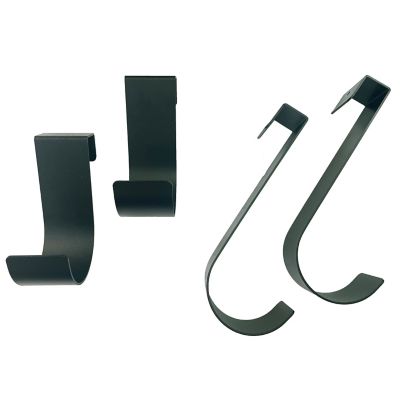
Care requirements vary with the base metal and surface finish, making the finish description worth a close look before choosing brass hooks for a bathroom, laundry area, or frequently handled entryway. Brass does not form the red rust associated with iron, but it can tarnish, discolor, or corrode under certain conditions. Brass-plated steel may also develop rust if its protective finish is damaged and moisture reaches the metal beneath it. Solid brass is not automatically suitable for every damp or outdoor location, either; the manufacturer’s intended-use information remains important. For routine cleaning, a soft cloth and a mild cleaner approved for the finish are often enough to remove fingerprints and ordinary household grime. Abrasive pads and harsh cleaners can scratch a polished surface or wear through a plated layer. Brass polish is not appropriate for every brass-colored finish, especially lacquered, plated, or intentionally darkened surfaces, because it may remove the very appearance the hook was chosen for. Some owners prefer the gradual mellowing of unlacquered brass, while others favor a more consistent finish with less visible change. Neither look needs to compete with the rest of the room. Brass can echo a cabinet pull, lamp base, or door handle without every metal surface matching exactly. Against dark-stained wood, its golden tone stands out; against pale paint, it adds a warmer detail without requiring a large piece of hardware. For a darker contrast on the same wall or in an adjoining space,
Black Hooks offer another direction for coordinating storage hardware. A few well-placed hooks can make a landing spot feel settled: a cap beside the door, an apron near the pantry, or a hand towel beside the sink. They can also be a thoughtful housewarming gift for someone setting up a farmhouse kitchen or organizing a first home, especially when the finish suits the space. The best fit comes down to practical details—suitable materials, comfortable spacing, secure mounting, and a shape that holds everyday belongings without a struggle.