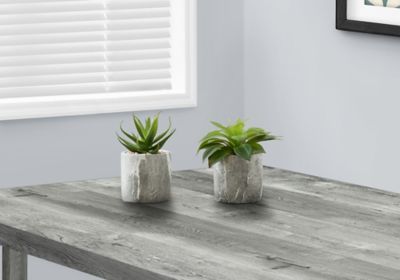
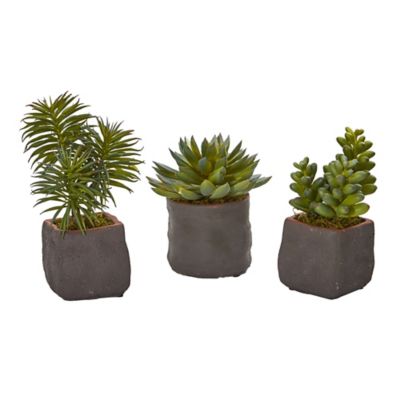
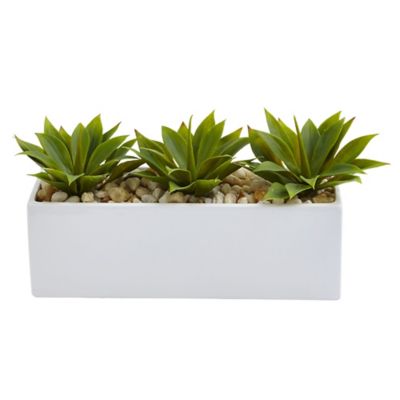
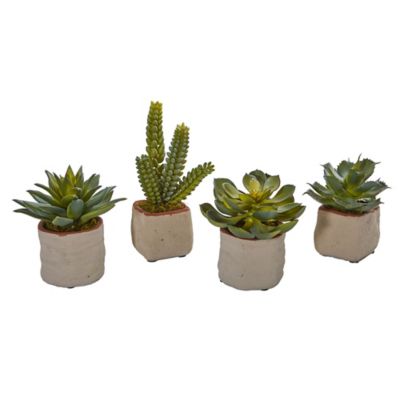
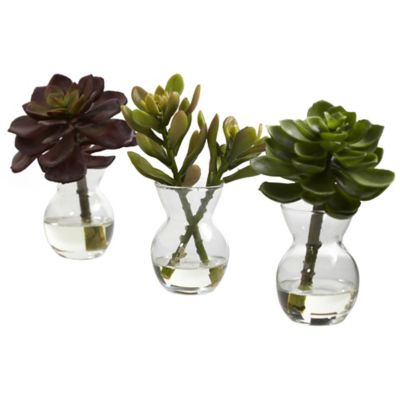
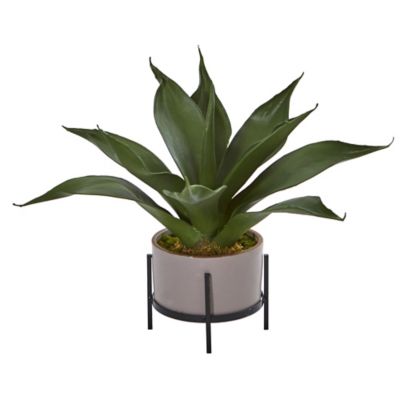
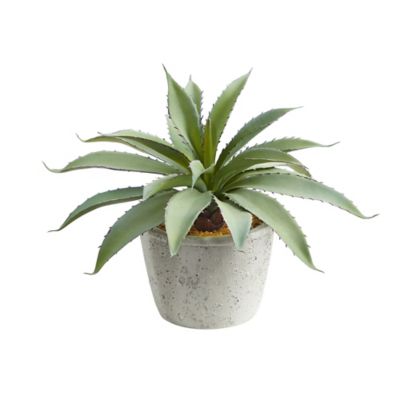
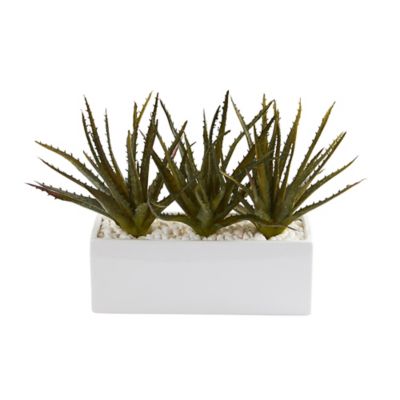
Artificial desk succulents bring a little green to the spot where bills get sorted, schoolwork gets finished, or the day’s farm records get entered. Their compact shapes suit places where a full-size plant would crowd the work surface, while their sculpted leaves add interest without watering, pruning, or repotting. A low cluster of rounded leaves has a different feel from a taller arrangement with narrow, pointed foliage, so shape matters just as much as color. Soft green, blue-green, and deeper green tones can blend into a quiet workspace, while leaves with subtle red or purple edging bring a little more contrast. The container helps set the tone, too. A plain ceramic pot feels at home beside a desk lamp and a stack of notebooks, while a cement-look container pairs nicely with wood shelving or a metal filing cabinet. Woven textures and earthy finishes can soften a hardworking office without making it feel fussy. On a small desk, the full spread of the leaves matters more than the width of the pot alone. Foliage that reaches beyond the container needs room beside a monitor, pencil cup, or charging station. Height also makes a difference when an arrangement sits below a shelf or near the edge of a screen. A lower profile keeps sightlines clear across a shared worktable, while a little extra height can fill an empty corner behind everyday supplies. The best fit leaves plenty of elbow room for writing, opening a ledger, or setting down a coffee mug. One small arrangement can give a busy surface a finished look without competing with the things that need to stay within reach. For a larger desk, a grouped arrangement can provide the same touch of green with a broader footprint, especially when it sits away from the main work area. That balance between plant shape, container size, and open space helps artificial desk succulents feel like part of the room rather than one more thing to work around.
Materials and construction make a difference in how artificial desk succulents look and handle everyday life. Molded plastic leaves can have thick, rounded edges that echo the fleshy foliage of living succulents, while painted shading and textured surfaces add depth. A matte finish tends to look softer under a desk lamp than a glossy surface, though either can suit the surrounding furnishings. Containers may be ceramic, resin, plastic, cement, or metal, with each material bringing a different weight and feel. Ceramic and cement containers can provide heft, but their edges may chip if knocked against a hard surface. Lighter plastic or resin pots are easier to move when the desktop needs clearing, though a narrow base may be easier to tip. A steady container is especially helpful near a keyboard, on a shallow shelf, or anywhere a passing sleeve might brush the leaves. The bottom deserves attention as well: a rough base can mark finished wood, while a suitable protective pad can help separate the two surfaces. Some arrangements have a stone-look or soil-look top layer, and that finish may be secured in place or include loose material. Loose stones and small parts need to stay beyond the reach of children and pets, and artificial foliage is not meant for chewing. Care is generally straightforward, with dust being the main thing that changes the appearance over time. A soft, dry cloth or gentle brush can reach between the leaves without flattening their shape. Damp cleaning should follow the care directions, since painted details, adhesives, and container finishes do not all respond the same way to moisture. There is no need to mist the leaves or pour water into the pot. An indoor arrangement also belongs away from sink splashes and other wet work areas unless its care information says otherwise. Long stretches of direct sunlight can fade some materials, so a spot with indirect light can help preserve the leaf color and finish.
Artificial desk succulents make sense for more than a traditional home office. A kitchen writing nook, a small desk in a bedroom, a front counter, or the office beside a workshop can all benefit from greenery that does not depend on a plant-care routine. They also work in rooms without a convenient window, where a living succulent might struggle to get enough light. For someone who splits time between paperwork and chores outside, an artificial arrangement stays ready to enjoy even when the desk sits untouched for a stretch. Students can tuck a compact pot beside textbooks, and someone settling into a first office can add a personal touch without giving up much working room. In a shared space, a contained arrangement keeps the plant element in one spot, with no watering spills or potting soil to manage. A single pot is easy to shift when a project spreads across the table, while several small arrangements can tie separate work areas together. Matching containers give a tidy, coordinated feel; different shapes in similar colors keep things relaxed without looking scattered. As gifts, artificial desk succulents suit new jobs, graduations, and a move into a new home, particularly for recipients who enjoy the look of plants but would rather skip their upkeep. They also fit naturally among
Artificial Plant Housewarming Gifts when a small, easy-to-place present feels right. A neutral container leaves the recipient room to decide whether it belongs on a desk, bookshelf, or entry table. For a more personal fit, the pot’s finish can echo furniture or colors already in the room. The appeal is simple: a small patch of green that brings some life to a practical space without adding another chore to the day.