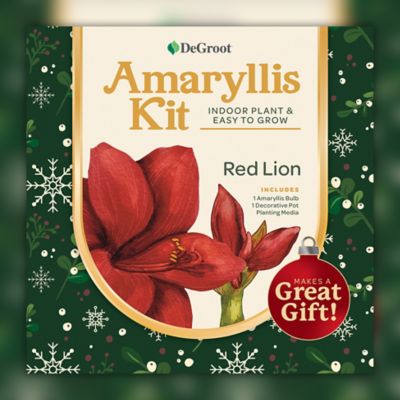
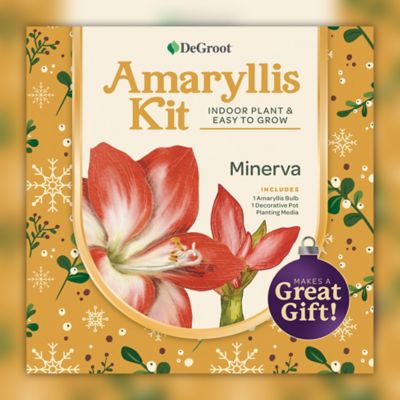
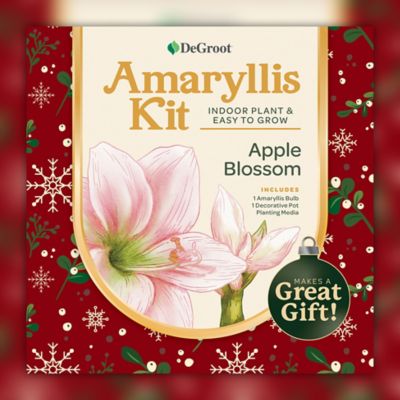
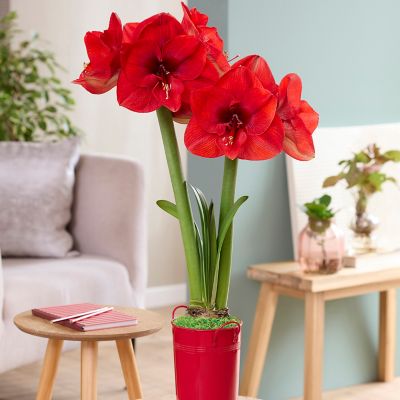
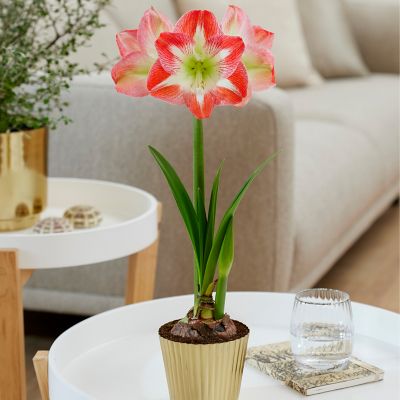
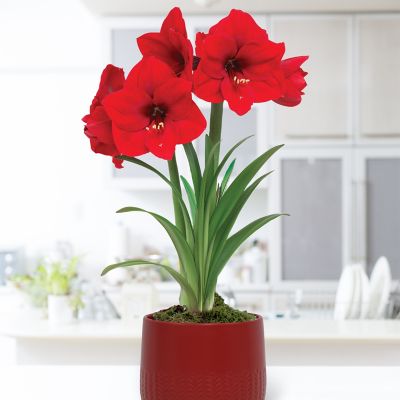
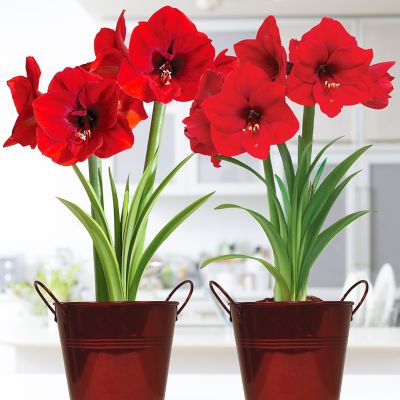
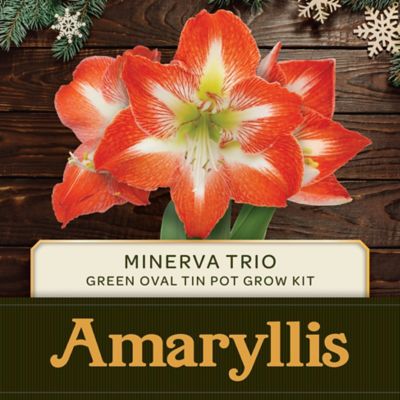
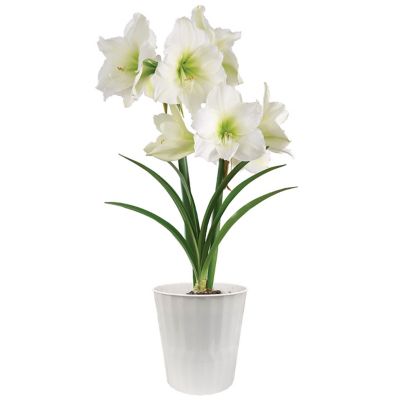
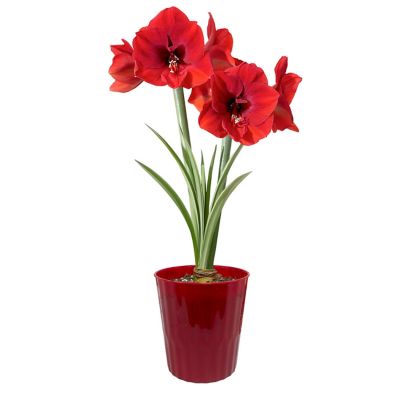
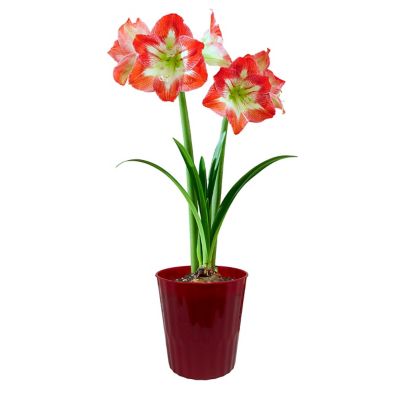
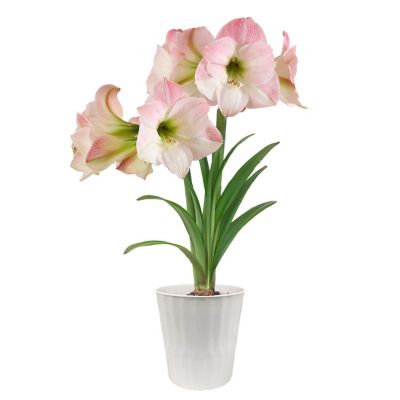
Amaryllis holiday plant gifts bring big, trumpet-shaped flowers to a windowsill, entry table, or dining room without taking up much floor space. Their tall flower stalks and broad blooms make a cheerful Christmas gift, with colors ranging from deep red and snowy white to pink, coral, and striped combinations. Some have single flowers with an open shape, while double-flowered types carry extra layers of petals. They make a thoughtful choice for a neighbor, a holiday host, a teacher, or someone who enjoys tending plants between trips out to the garden. For a gardener spending more time indoors through winter, watching a thick green shoot rise from a bulb can be nearly as enjoyable as the flowers themselves. Different gift formats offer different experiences. A potted amaryllis gives the recipient a plant to set out and tend, while a growing kit may bring together a bulb, a container, and planting medium for someone who enjoys getting a plant started. A bare bulb suits a recipient who already has pots and a favorite sunny spot. Wax-coated bulbs offer another kind of presentation, drawing on stored reserves to grow without conventional potting; their care differs from soil-grown plants, so the accompanying directions matter. Flowering time also deserves a little thought when picking a holiday plant gift. Many amaryllis bulbs bloom about six to ten weeks after planting indoors, but the variety, growing conditions, and stage of growth all affect that schedule. A bulb with a flower stalk already showing is further along than a dormant bulb, though neither promises flowers on a particular holiday. An unopened bud can make the gift feel like something still to come, with the recipient getting to watch each stage unfold. Multiple flower stalks may extend the display, and larger bulbs often have more stored energy for growth and flowering. Bulb size is commonly measured by circumference, so that measurement is different from the width of the pot or the eventual height of the plant.
The container makes a difference in both appearance and everyday care. Amaryllis can grow quite tall, and a sturdy, well-balanced pot helps support the plant as its flowers open. Depending on the variety, flower stalks may reach roughly 12 to 24 inches or more, so a low shelf tucked beneath a cabinet may not leave enough room. A table near a bright window often makes a better home than a narrow ledge where a tall stalk could get bumped. Clay and ceramic containers offer some weight at the base, while plastic growing pots are lighter and can sit inside an outer container. Metal containers need a watertight liner when protecting furniture, but water still needs somewhere to drain away from the roots. A pot with drainage holes and a saucer makes that easier to manage. For a soil-grown bulb, a container about 1 to 2 inches wider than the bulb generally provides a snug fit without leaving a large amount of wet soil around it. The upper third of the bulb normally stays above the potting mix, with the roots below and the neck clear of standing moisture. Loose, well-draining potting mix supports root growth better than dense soil that stays soggy. Watering needs change as the plant grows: a newly planted bulb generally needs restrained watering, while an actively growing plant needs more regular moisture. Allowing the surface of the mix to dry slightly between waterings helps avoid keeping the roots constantly wet. Bright, indirect light and ordinary indoor temperatures suit most indoor amaryllis, with a spot away from heating vents, fireplaces, and cold drafts helping limit stress. Turning the pot occasionally can encourage straighter growth when the light comes from one side. Taller stems may benefit from a support, especially when several large flowers open together. Once the blooms appear, a slightly cooler location away from strong heat can help them last longer. These practical details make a plant gift easier to live with, whether it lands on a farmhouse kitchen table or beside a well-lit office window.
A good match between the plant and its recipient matters more than an elaborate presentation. Someone who enjoys regular watering and watching new leaves develop may appreciate a soil-grown bulb with the potential for another flowering season. Someone who travels often may prefer a format with fewer ongoing care tasks, provided its instructions fit their routine. Wax-coated bulbs generally need no added water unless their directions say otherwise, and many are intended for a single flowering display rather than long-term growing. Soil-grown amaryllis offers a longer project: after the flowers fade, the green leaves keep gathering energy for the bulb. Continued light, suitable watering, and feeding during active growth can help replenish those reserves. Many bulbs can flower again after appropriate care and a rest period, although repeat blooming takes time and is not guaranteed. That makes them a fitting gift for a patient plant keeper rather than someone expecting fresh flowers on demand. For holiday gatherings, the plant’s height is worth considering alongside its color. A tall flowering amaryllis looks at home on a sideboard, where its blooms remain easy to see without blocking conversation across the dinner table. A smaller container can brighten a desk or kitchen counter, as long as it has enough light and room to grow. For more seasonal plant choices to pair with a holiday display,
Plants for Christmas Decorations offers a related place to browse. Gift wrapping should leave the plant protected without trapping water around the pot, and any outer sleeve should come off before watering. Amaryllis also needs thoughtful placement around a busy household: all parts are toxic if eaten, especially the bulb. Keep plants away from children, cats, dogs, and other animals, including horses, and never leave loose bulbs where animals can reach them. With a suitable spot and care that matches the bulb’s format, an amaryllis gift brings color, anticipation, and a small growing project that can carry well beyond the holiday gathering.