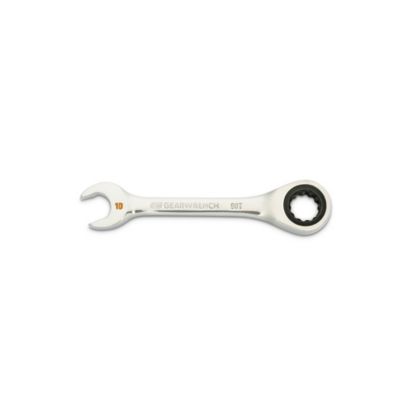
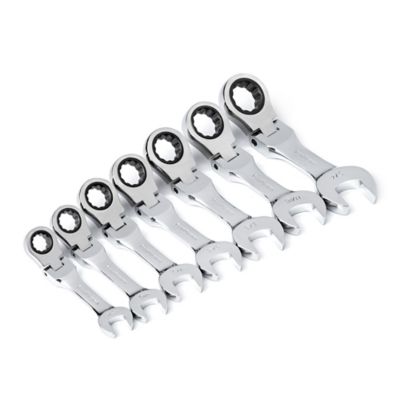
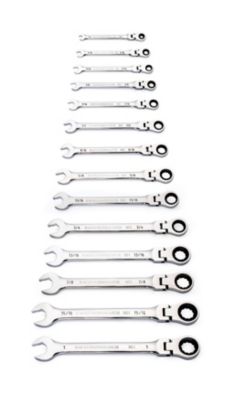
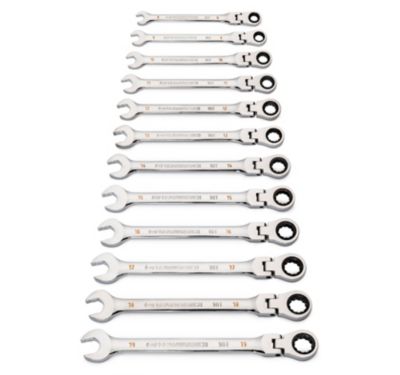
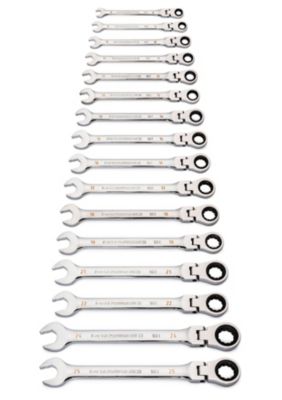
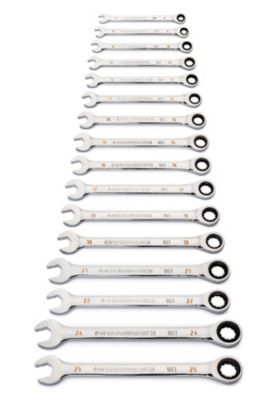
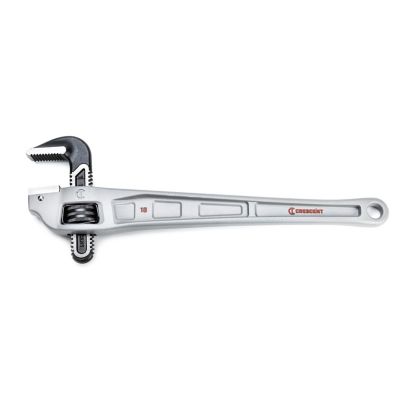
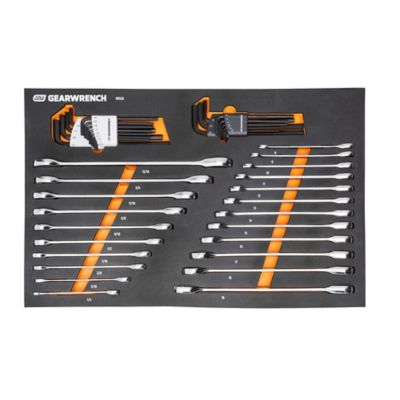
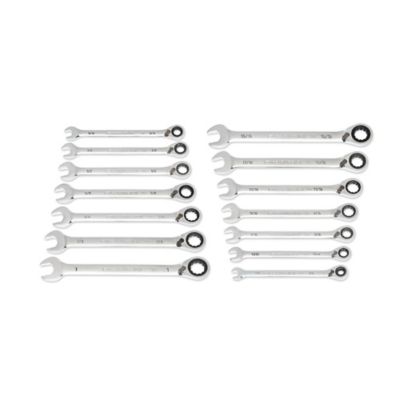
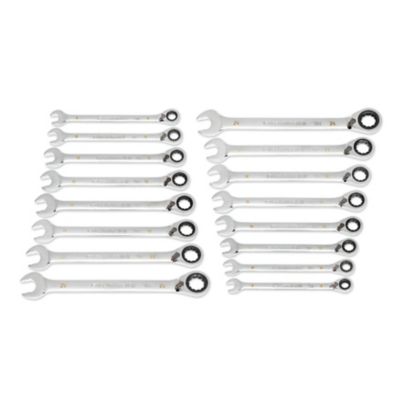
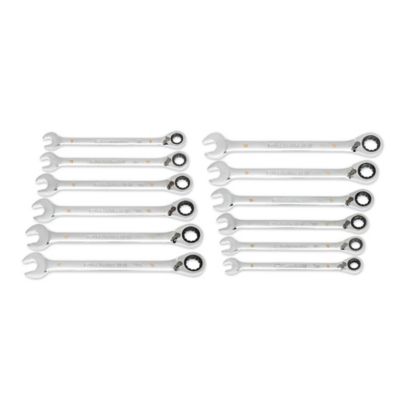
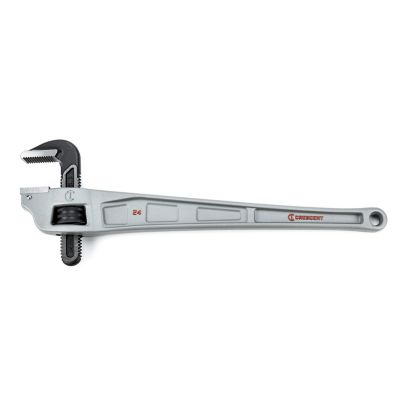
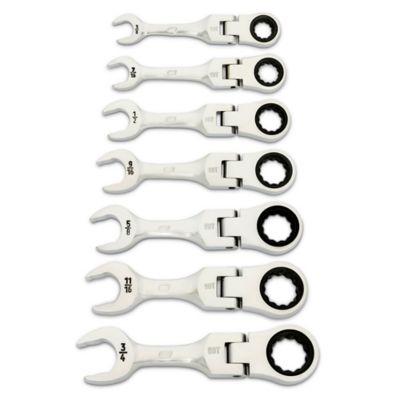
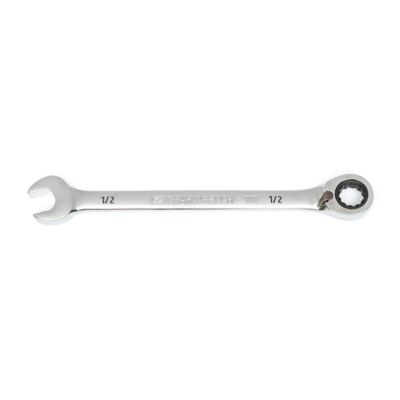
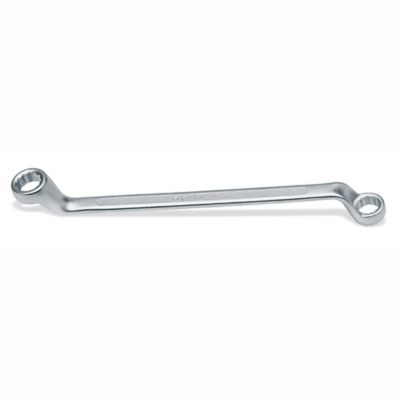
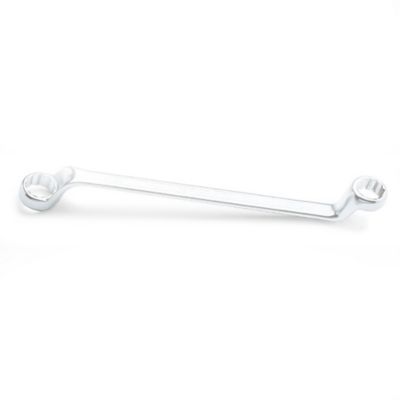
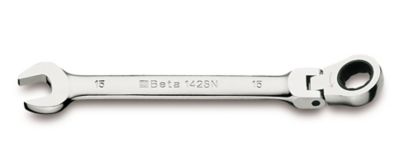
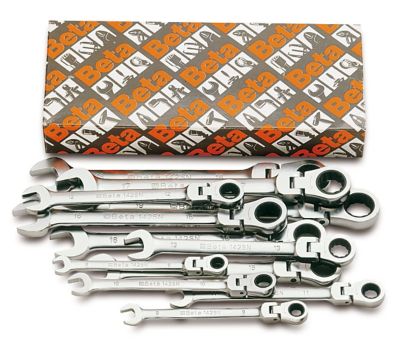
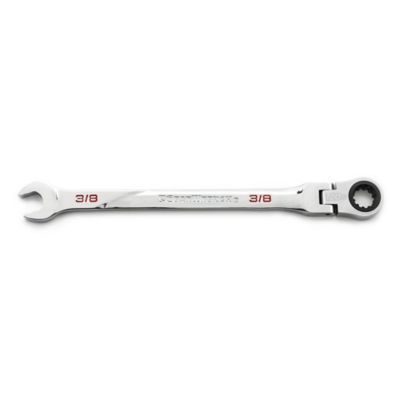
A straight wrench can run out of room long before a nut or bolt comes loose. Around a tractor’s engine bay, behind a mower bracket, or beneath a shop sink, nearby parts can block the handle even when the fastener itself is easy to see. A 90-degree wrench addresses that kind of clearance problem with a right-angle bend or head orientation that changes how the tool reaches the fastener. The term can describe several specialty wrench shapes, so the bend, working end, and intended application matter more than the name alone. It is also worth separating 90-degree wrenches from 90-tooth ratcheting wrenches: degrees describe an angle, while teeth describe the ratchet mechanism. A 90-tooth ratcheting wrench has a nominal four-degree swing arc, meaning its mechanism can engage again after a small handle movement. That does not mean its head sits at a right angle. An angled wrench creates clearance through its shape; a fine-tooth ratcheting wrench allows repeated turns with less handle travel. Some designs combine an offset or movable head with a ratcheting mechanism, but those features are not interchangeable. For folks maintaining equipment around a farm, working on a pickup, or handling repairs in the garage, the practical difference shows up where space gets tight. A bent wrench may reach around an obstruction that stops a straight tool, while a ratcheting end may help turn a nut between closely spaced parts. Neither shape solves every access problem. The head still needs enough room to seat fully, and the handle needs a workable path without pressing against wiring, hoses, or neighboring fittings. Those details make 90-degree wrenches a task-specific addition to a toolbox rather than a replacement for everyday combination wrenches. Their value is in bringing the working end into position where a more familiar wrench shape cannot comfortably reach.
Fit starts with the fastener, not the bend in the handle. SAE and metric sizes are separate systems, and a near match can leave enough play to damage the corners of a nut or bolt. The marked size, opening style, and head dimensions all deserve attention, especially on older machinery where replacement parts may sit beside original hardware. An open end approaches a fastener from the side, which helps when a threaded rod or attached line prevents access from above. A box end surrounds the fastener and needs a clear path over it. A flare-nut opening allows access around a line while enclosing more of the fitting than a typical open-end wrench, making that style relevant to certain plumbing, fuel, brake, and hydraulic connections. The correct choice still depends on the fitting and the equipment maker’s requirements. Head thickness can be just as important as wrench size: a tool may fit the nut but not the gap between the nut and a bracket. Offset depth determines where the handle sits after the head engages, while handle length affects reach and leverage. A longer handle can put a fastener within reach, but it can also crowd nearby components or make excessive force easier to apply. Where overall length is the main concern,
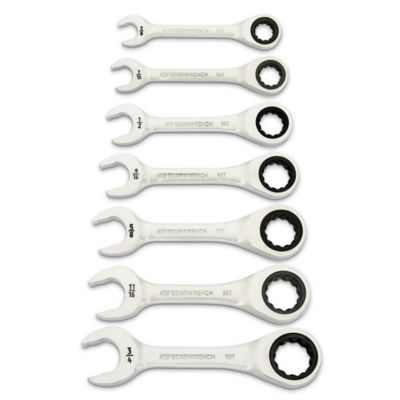
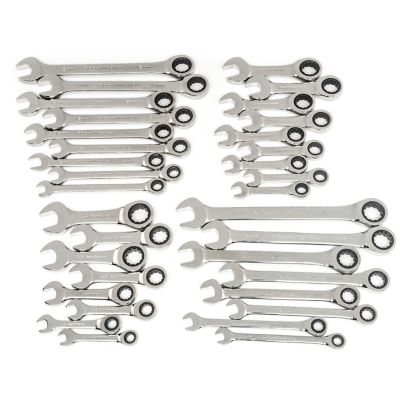
Compact Wrenches offer another category to consider alongside right-angle and offset shapes. Materials and construction help explain how a wrench holds up to regular shop work. Forged alloy steel, including chrome vanadium steel in many hand wrenches, is common because it can balance strength and toughness when properly manufactured and heat-treated. Chrome plating helps resist corrosion and makes oily residue easier to wipe away, while other finishes have their own maintenance needs. Smooth edges, readable size markings, and a comfortable beam matter during repeated work, particularly when fingers are cold or space forces an awkward grip. For ratcheting styles, head size, reversing method, and clearance for any direction switch add another layer to the fit.
Day-to-day usefulness comes down to how well the wrench suits the work already happening around the place. A mower owner may need clearance near a crowded mounting bracket, while someone tending livestock equipment may encounter nuts tucked behind guards or frame members. A person repairing a vehicle may care more about head thickness and swing room than extra handle length. These are different jobs, even when each calls for working around a corner, and an angled wrench is most helpful when its geometry matches the obstruction. Where a specified tightening torque matters, an ordinary hand wrench does not measure it; the proper torque tool and any required attachment correction remain part of the job. Specialty shapes also do not make extra force harmless. An extension pipe, a hammer blow, or an impact tool can overload a wrench that was not designed for that treatment. Equipment should be shut down and secured against movement before work begins, and pressure-bearing systems need the appropriate service precautions. Care afterward is straightforward but important in a working shop. Dirt and metal grit should come off before a wrench goes back into its tray, and moisture should not stay trapped against the steel. Fertilizer dust, road salt, and damp storage can encourage corrosion, even on plated tools. A wipe-down after work and dry storage help protect the finish, while ratcheting mechanisms benefit from care that follows the manufacturer’s directions rather than an indiscriminate solvent soak. Cracks, spreading jaws, chipped working edges, or a ratchet that skips are reasons to take the tool out of service. An organized rack or roll also makes missing sizes easier to spot before the next repair starts. For a gift, 90-degree wrenches make the most sense for someone whose projects already involve confined spaces, with sizes and working-end styles matched to their equipment. Whether the toolbox rides in a truck or stays beside a barn workbench, a well-matched wrench earns its place by reaching the fastener cleanly and leaving enough room to work.