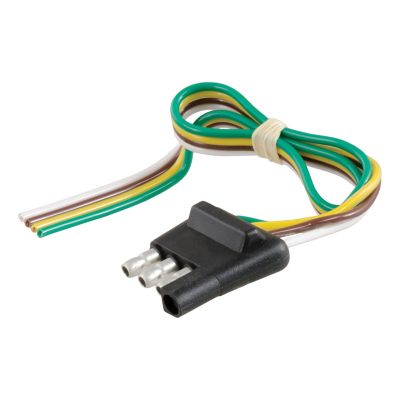
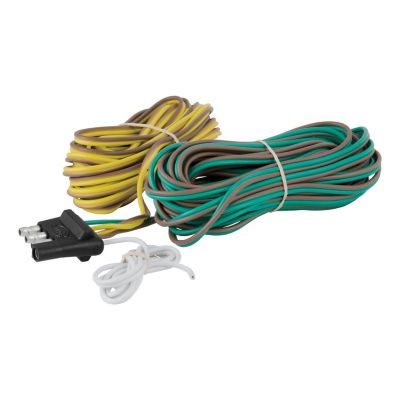
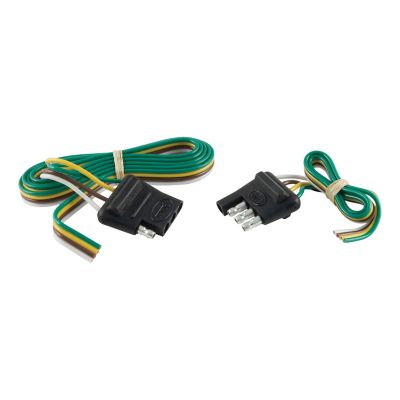
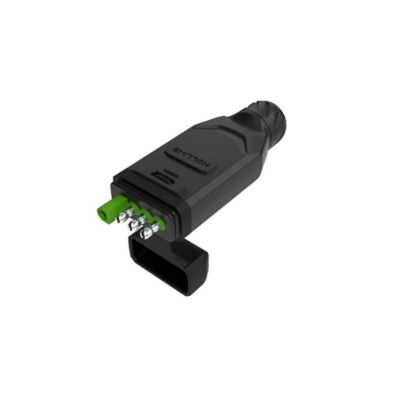
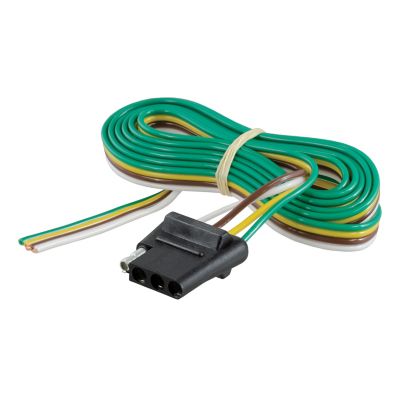
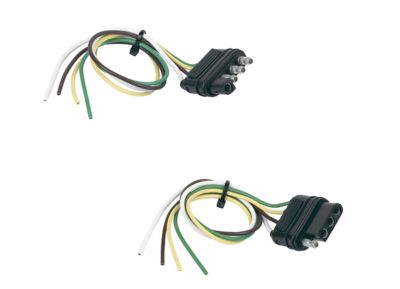
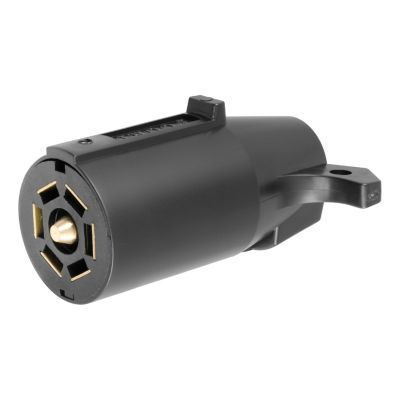
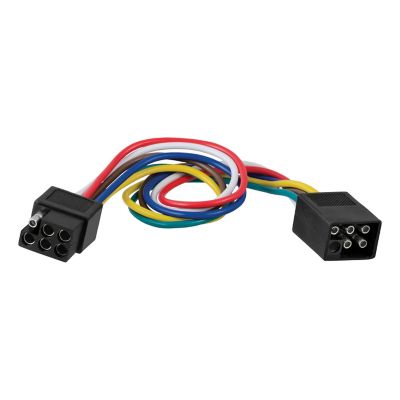
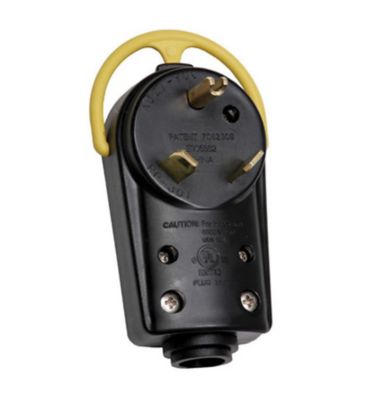
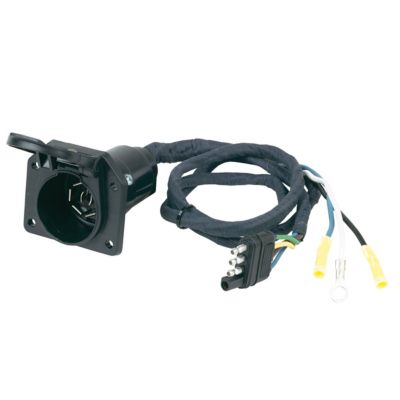
4-way flat trailer connectors carry the basic lighting connections between a tow vehicle and a trailer in a compact, side-by-side plug. The four connections serve a ground return, tail and running lights, the left turn signal and brake light, and the right turn signal and brake light. In a typical trailer wiring color scheme, white is ground, brown supplies tail and running lights, yellow serves the left turn and brake light, and green serves the right turn and brake light. The brown circuit can also supply marker and license plate lights when those lights are part of the trailer’s wiring. Wire colors on the vehicle side can vary, so the wiring diagram and circuit function matter more than color alone. This setup is common on small utility trailers, boat trailers and other light trailers whose electrical needs stop at basic road lighting. It suits plenty of everyday hauling, from taking a mower across town to bringing fencing supplies back to the farm. The flat shape makes the connection easy to recognize, while the compact plug fits neatly near a hitch without a large socket assembly. A 4-way connection does not provide separate circuits for electric trailer brakes, battery charging, auxiliary power or reverse lights. Those needs call for a connector and wiring system with the appropriate additional circuits. Trailer size alone does not determine the right connection; the trailer’s lights, braking equipment and other electrical requirements do. Matching the plug to both the tow vehicle and the trailer helps keep a simple hauling setup simple. A four-position plug may look like a straightforward part, but its job reaches every light connected to those circuits. Clear turn signals, visible running lights and working brake lights help other drivers see a trailer’s width and understand what the driver intends to do, whether the load is a garden tractor or an empty utility trailer headed home.
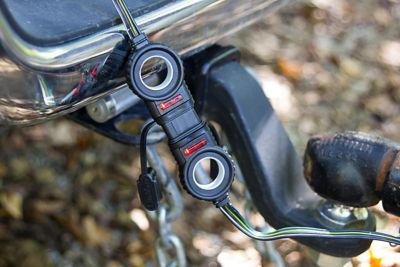
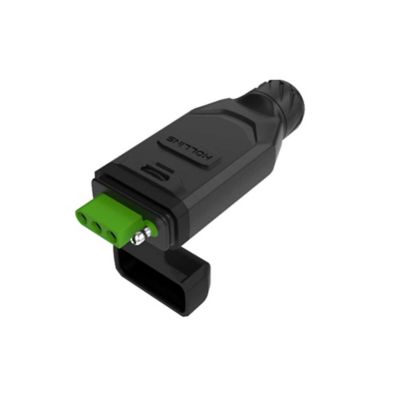
Fit involves more than finding two plugs with four positions. Vehicle-side and trailer-side connectors have complementary contact layouts, and the replacement end needs to match the side being repaired. Some connections attach to an existing vehicle wiring provision, while others form part of a harness with leads for the trailer’s lighting circuits. Lead length, wire gauge, circuit capacity and the method of attachment all affect how well a connector fits the job. A short lead may leave the wiring tight during a turn, while an overly long one can drag or catch near the coupler. Enough slack for turns, without loose wiring hanging near the road, is the practical balance. Copper conductors carry current through the harness, and some wiring designs have tinned conductors to help resist corrosion. Flexible insulation and molded rubber or plastic housings help protect the connection from abrasion and routine handling. A broad grip can make plugging in and disconnecting less awkward, especially when the connection sits close to the hitch. Covers and caps help shield disconnected contacts from dirt and road splash, although a cap alone does not make an entire wiring system waterproof. For boat trailers, protection at splices, connections and light assemblies matters alongside the connector itself. Wiring routed away from sharp frame edges, moving suspension parts and exhaust components has less exposure to damage. Loom, grommets and suitable supports can help protect the run along a trailer frame. Grounding deserves equal attention: where the design calls for a frame ground, the connection needs clean, bare metal and secure attachment rather than paint or a loose fastener between the terminal and frame. A sound ground path matters just as much as the wires carrying power to the lamps. These details help distinguish a connector that merely mates with the plug from a wiring arrangement that suits repeated hitching, hauling and unhitching.
The amount of wiring that needs attention helps narrow the choice between a replacement connector and a more complete harness. An otherwise sound trailer may only need a new end after a plug gets pinched beneath the coupler or a lead pulls loose. Cracked insulation, several old splices or damage farther down the frame can point toward a broader wiring replacement. For projects involving more than the plug,
Trailer Light Wiring Kits bring the surrounding wiring needs into the same planning process. Compatibility also extends to the tow vehicle’s lighting system. Some vehicles have separate stop and turn circuits that require a suitable converter to supply the combined stop-and-turn functions of a standard 4-way trailer connection. Others require a vehicle-specific harness or powered module, with electrical limits that still apply even when the plug fits. LED and incandescent trailer lamps can place different demands on the system, making the vehicle and wiring manufacturer’s specifications important when matching components. An adapter from a properly wired larger vehicle socket can supply the four basic trailer functions, but it cannot add electric brake control or other missing circuits to a four-wire trailer connection. For everyday care, clean contacts, intact insulation and a protected resting place for the disconnected plug help limit corrosion and physical damage. Pulling on the connector housing rather than the wires also keeps strain off the wire entries. Dim lamps, flickering signals or several lights acting strangely together can indicate a ground or wiring problem rather than a bad plug alone. For farmers, property owners, boat owners and anyone who regularly pulls a small trailer, the best match is a connector suited to the existing electrical system, the wiring route and the work ahead. A lighting check before each trip remains part of getting hitched up, even when the connector looks sound and seats firmly.