[Halloween](https://www.tractorsupply.com/tsc/catalog/halloween)[Pet](https://www.tractorsupply.com/tsc/category/pet)[Lawn & Garden](https://www.tractorsupply.com/tsc/category/lawn-garden)[Truck & Automotive](https://www.tractorsupply.com/tsc/catalog/truck-automotive)[Sporting Goods](https://www.tractorsupply.com/tsc/category/sporting-goods)[Horse](https://www.tractorsupply.com/tsc/category/horse)[Farm & Ranch](https://www.tractorsupply.com/tsc/category/farm-ranch)[Clothing](https://www.tractorsupply.com/tsc/category/clothing)[Livestock](https://www.tractorsupply.com/tsc/catalog/livestock)[Pet & Animal Pharmacy](https://www.tractorsupply.com/tsc/category/pet-animal-pharmacy)[Tools](https://www.tractorsupply.com/tsc/category/tools)[Poultry](https://www.tractorsupply.com/tsc/category/poultry)[Fencing & Gates](https://www.tractorsupply.com/tsc/category/fencing-gates)[Home Improvement](https://www.tractorsupply.com/tsc/category/home-improvement)[Outdoor Living](https://www.tractorsupply.com/tsc/category/outdoor-living)[Heating & Cooling](https://www.tractorsupply.com/tsc/category/heating-cooling)[Home Decor & Furniture](https://www.tractorsupply.com/tsc/category/home-decor-furniture)[Outdoor Power Equipment](https://www.tractorsupply.com/tsc/category/outdoor-power-equipment)[Trailers & Towing](https://www.tractorsupply.com/tsc/category/trailers-towing)[Boots & Shoes](https://www.tractorsupply.com/tsc/category/boots-shoes)[Wild Birds & Wildlife](https://www.tractorsupply.com/tsc/category/wild-birds-wildlife)[Toys](https://www.tractorsupply.com/tsc/category/toys)[Gift Cards](https://www.tractorsupply.com/tsc/catalog/gift-cards-3074457345616710669-1)[Services](https://www.tractorsupply.com/tsc/services) [Propane Refill](https://www.tractorsupply.com/tsc/services/propane-refill-Franklin-TN-37069-2314)[Trailer Rental](https://www.tractorsupply.com/tsc/services/trailer-rental)[Garden Center](https://www.tractorsupply.com/tsc/services/garden-center-Franklin-TN-37069-2314)[Feed Center](https://www.tractorsupply.com/tsc/services/feed-center-Franklin-TN-37069-2314)[Same Day Delivery](https://www.tractorsupply.com/tsc/services/same-day-delivery)[PetVet Clinic](https://www.tractorsupply.com/tsc/services/petvet)[Pet Wash](https://www.tractorsupply.com/tsc/services/pet-wash)[Grooming at Petsense](https://www.tractorsupply.com/tsc/services/grooming-at-petsense)[Dog Training at Petsense](https://www.petsense.com/pages/training)[Tractor Supply Rx](https://www.tractorsupply.com/tsc/category/pet-animal-pharmacy)[Pet Insurance](https://quote.petted.com/quote/ref=tractor?cm_sp=Navi-_-Pet%20L1-_-Insurance)[Wag!](https://wagwalking.com/partners/tractor-supply?isIntSrch=written)
"Savings and Offers"
[Weekly Ad](https://www.tractorsupply.com/tsc/cms/digital-flyer)[Sale](https://www.tractorsupply.com/tsc/sale)[Clearance](https://www.tractorsupply.com/tsc/clearance)
"More Options"
[Weekly Ad](https://www.tractorsupply.com/tsc/cms/digital-flyer)[What's New](https://www.tractorsupply.com/tsc/whatsnew)[Tractor Supply App](https://www.tractorsupply.com/tsc/cms/app)[Earn Rewards with Neighbor's Club](https://www.tractorsupply.com/tsc/cms/neighbors-club)[Hometown Heroes](https://www.tractorsupply.com/tsc/myaccount/herobenefits)[Life Out Here Blog](https://www.tractorsupply.com/tsc/cms/life-out-here)[TSC Exclusive Brands](https://www.tractorsupply.com/tsc/cms/exclusive-brands)[Top Brands](https://www.tractorsupply.com/tsc/brands)[Clearance Items](https://www.tractorsupply.com/tsc/clearance)[Battery Finder](https://tractorsupply.interstatebatteries.com/?cm_sp=Header-_-Shop-_-Battery_Finder)[Outdoor Power Equipment Parts Finder](http://www.ordertree.com/tsc/?cm_sp=Header-_-Shop-_-Parts_Finder)[Hitch Finder](https://www.reesetowpower.com/tractor-supply/?cm_sp=Header-_-Shop-_-Hitch_Finder)
Spend $49.99 to unlock Free Delivery on most orders
|
[Learn More](https://www.tractorsupply.com)
[Order status](https://www.tractorsupply.com/tsc/orders?orderlookuppage)[TSC Credit Cards](https://www.tractorsupply.com/tsc/cms/credit)[What’s new](https://www.tractorsupply.com/tsc/whatsnew)[Petsense](https://www.petsense.com/)[Weekly Ad](https://www.tractorsupply.com/tsc/cms/digital-flyer)
[](https://www.tractorsupply.com)
[](https://www.tractorsupply.com/)
Grassland (Franklin) TN
GRASSLAND (FRANKLIN) TN #2314
[2176 Hillsboro RD STE 122
Franklin, TN 37069](https://www.google.com/maps/search/?api=1&query=Tractor%20Supply%20Co.%201650%20Denmark%20RD%2CUnion%2CMO%2063084)
Open at 8:00 am
615-595-5700
Store Hours:
[Details](https://www.tractorsupply.com/tsc/store_Franklin-TN-37069_2314)
Grassland (Franklin) TN
Open till 9 pm
Deliver to
37027
Ask ScoutAI
Sign In / EnrollGet rewarded!
Sign In / EnrollGet rewarded!
[](https://www.tractorsupply.com/tsc/cart)
Ask ScoutAI
[Halloween](https://www.tractorsupply.com/tsc/catalog/halloween)
[Pet](https://www.tractorsupply.com/tsc/category/pet)
[Lawn & Garden](https://www.tractorsupply.com/tsc/category/lawn-garden)
[Truck & Automotive](https://www.tractorsupply.com/tsc/category/truck-automotive)
[Sporting Goods](https://www.tractorsupply.com/tsc/category/sporting-goods)
[Horse](https://www.tractorsupply.com/tsc/category/horse)
[Farm & Ranch](https://www.tractorsupply.com/tsc/category/farm-ranch)
[Clothing](https://www.tractorsupply.com/tsc/category/clothing)
[Livestock](https://www.tractorsupply.com/tsc/category/livestock)
[Pet & Animal Pharmacy](https://www.tractorsupply.com/tsc/category/pet-animal-pharmacy)
[Tools](https://www.tractorsupply.com/tsc/category/tools)
[Poultry](https://www.tractorsupply.com/tsc/category/poultry)
[Fencing & Gates](https://www.tractorsupply.com/tsc/category/fencing-gates)
[Home Improvement](https://www.tractorsupply.com/tsc/category/home-improvement)
[Outdoor Living](https://www.tractorsupply.com/tsc/category/outdoor-living)
[Heating & Cooling](https://www.tractorsupply.com/tsc/category/heating-cooling)
* * *
[Menu](https://www.tractorsupply.com)
Search
[Home](https://www.tractorsupply.com/)
Sign In
[Cart](https://www.tractorsupply.com/tsc/cart)
[__Deals to start the season off right -__ Shop now>](https://www.tractorsupply.com/tsc/cms/digital-flyer)
[](https://www.tractorsupply.com/tsc/cms/life-out-here)
* * *
CATEGORIES
Pets
- [Dogs](https://www.tractorsupply.com/tsc/cms/life-out-here/pet/dogs)
- [Cats](https://www.tractorsupply.com/tsc/cms/life-out-here/pet/cats)
- [All](https://www.tractorsupply.com/tsc/cms/life-out-here/pet)
The Barn
- [Horse](https://www.tractorsupply.com/tsc/cms/life-out-here/the-barn/horse)
- [Livestock](https://www.tractorsupply.com/tsc/cms/life-out-here/the-barn/livestock)
- [Goats & Sheep](https://www.tractorsupply.com/tsc/cms/life-out-here/the-barn/goats-and-sheep)
- [Pigs](https://www.tractorsupply.com/tsc/cms/life-out-here/the-barn/pigs)
- [All](https://www.tractorsupply.com/tsc/cms/life-out-here/the-barn)
The Coop
- [Start Your Flock](https://www.tractorsupply.com/tsc/cms/life-out-here/the-coop/start-your-flock)
- [Poultry Breeds](https://www.tractorsupply.com/tsc/cms/life-out-here/the-coop/poultry-breeds)
- [Coop Tips](https://www.tractorsupply.com/tsc/cms/life-out-here/the-coop/coop-tips)
- [Chick Care](https://www.tractorsupply.com/tsc/cms/life-out-here/the-coop/chick-care)
- [All](https://www.tractorsupply.com/tsc/cms/life-out-here/the-coop)
Garden
- [Gardening Tips](https://www.tractorsupply.com/tsc/cms/life-out-here/garden/gardening-tips)
- [Growing Guides](https://www.tractorsupply.com/tsc/cms/life-out-here/garden/growing-guides)
Home & Land
- [Fresh Recipes](https://www.tractorsupply.com/tsc/cms/life-out-here/garden-home-land/fresh-recipes)
- [Heating & Cooling](https://www.tractorsupply.com/tsc/cms/life-out-here/garden-home-land/heating-and-cooling)
- [Bees](https://www.tractorsupply.com/tsc/cms/life-out-here/garden-home-land/bees)
- [Lawn](https://www.tractorsupply.com/tsc/cms/life-out-here/garden-home-land/lawn)
- [Fencing](https://www.tractorsupply.com/tsc/cms/life-out-here/garden-home-land/fencing)
- [All](https://www.tractorsupply.com/tsc/cms/life-out-here/garden-home-land)
Tool Shop
- [The Garage](https://www.tractorsupply.com/tsc/cms/life-out-here/tool-shop/the-garage)
- [Tool Tips](https://www.tractorsupply.com/tsc/cms/life-out-here/tool-shop/tool-tips)
- [Stock Your Shop](https://www.tractorsupply.com/tsc/cms/life-out-here/tool-shop/stock-your-shop)
- [All](https://www.tractorsupply.com/tsc/cms/life-out-here/tool-shop)
Outdoor Life
- [Birding](https://www.tractorsupply.com/tsc/cms/life-out-here/outdoor-life/birding)
- [Recreation](https://www.tractorsupply.com/tsc/cms/life-out-here/outdoor-life/recreation)
- [Hunting](https://www.tractorsupply.com/tsc/cms/life-out-here/outdoor-life/hunting)
- [All](https://www.tractorsupply.com/tsc/cms/life-out-here/outdoor-life)
1. [Home](https://www.tractorsupply.com/tsc/cms/life-out-here)
2. [Tool Shop](https://www.tractorsupply.com/tsc/cms/life-out-here/tool-shop)
3. [Tool Tips](https://www.tractorsupply.com/tsc/cms/life-out-here/tool-shop/tool-tips)
4. How to Use a Knife Sharpener
# How to Use a Knife Sharpener
Mar 27, 2025[](https://www.tractorsupply.com)
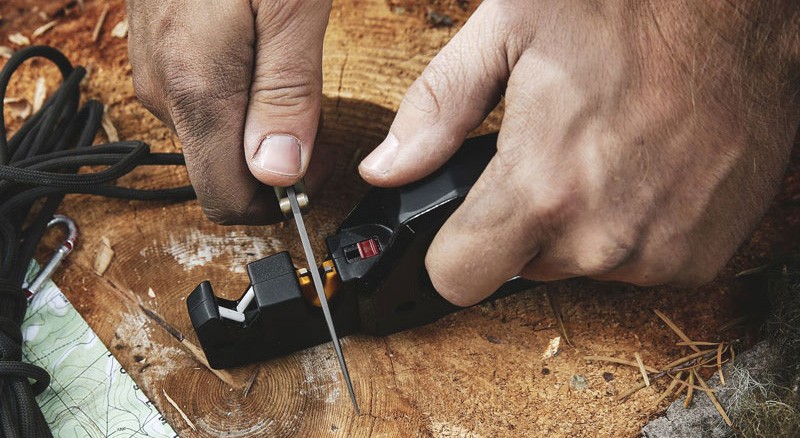
It’s no secret that a dull [knife](https://www.tractorsupply.com/tsc/catalog/knives) can turn a simple undertaking into a frustrating challenge. Therefore, a sharp blade is essential for performing various outdoor tasks efficiently and safely. That’s where a [knife sharpener](https://www.tractorsupply.com/tsc/catalog/knife-sharpeners) comes in, ensuring your blade retains its sharpness for whatever task you’re using it for. This detailed guide offers instructions and tips for anyone unfamiliar with using a knife sharpener, so you can maintain your blade like a pro.
### __Choose the Right Knife Sharpener Type__
First, you’ll need to figure out which type of knife sharpener you need. Just as there are various types of [knives](https://www.tractorsupply.com/tsc/catalog/knives-tools), there are also different types of sharpeners, including:
#### *Whetstones (Sharpening Stones)*
A whetstone, also known as a sharpening stone, is the most traditional and versatile tool for sharpening knives. This works by manually moving the blade across the stone at a specific angle. The abrasive surface of the stone removes metal from the blade, creating a sharper edge.
Sharpening stones are available in ranging grits, such as [coarse](https://www.tractorsupply.com/tsc/catalog/knife-sharpeners?filter=xw%257CCoarse) and [fine](https://www.tractorsupply.com/tsc/catalog/knife-sharpeners?filter=xw%257CFine), to accommodate various levels of dullness. Outdoor enthusiasts might prefer to use a whetstone because it offers the most control and precision when sharpening a blade. However, the process takes longer compared to other types of sharpeners.
#### *Manual Knife Sharpeners*
These compact, user-friendly devices are designed for quick sharpening. [Manual](https://www.tractorsupply.com/tsc/catalog/knife-sharpeners?filter=1uy%257CManual) knife sharpeners consist of abrasive materials, typically [diamond](https://www.tractorsupply.com/tsc/catalog/knife-sharpeners?filter=y3%257CDiamond) or [ceramic](https://www.tractorsupply.com/tsc/catalog/knife-sharpeners?filter=y3%257CCeramic), housed in a plastic body with a slot where you insert the knife.
To sharpen the knife, the user places the blade in the guide slot and draws it through, using a back-and-forth motion. Manual sharpeners are known for their ease of use, requiring little skill to operate. They are often relied on for regular maintenance, preventing the need for extensive refinement.
#### *Electric Knife Sharpener*
Electric knife sharpeners automate the sharpening process, using battery power, such as [12 volt](https://www.tractorsupply.com/tsc/catalog/knife-sharpeners?filter=1uy%257C12%2520Volt), or a standard electrical outlet. The motor-driven abrasive wheel or belt grinds down the blade to create a sharp edge. The process is generally much faster than other types of knife sharpeners, making an electric sharpener ideal for users who want quick results.
However, given their build, electric sharpeners tend to be bulkier, making them less portable than a manual option. Additionally, they can wear down blades more quickly than mechanical griding if the incorrect technique is used.
### __Instructions for Using a Knife Sharpener__
A quality knife with a sharp edge is an essential tool for outdoor adventures and activities. Tasks, such as food preparation, building shelters, cutting rope or processing firewood, demand precision. With a sharp knife, you can perform clean, controlled cuts with minimal effort. Using a dull knife will slow down the process, leading to you exerting more effort or using valuable resources.
While the goal of achieving a sharp blade is the same regardless of the sharpener type, the process varies. For the best results, follow these steps:
#### *Prepare the Sharpening Tool*
Before you begin, ensure that the sharpening device is properly prepared. If you are using a whetstone, soak it in water for up to 10 minutes before sharpening. When using a manual or electric sharpener, check to make certain they are clean and set up according to the manufacturer’s instructions.
#### *Set the Correct Angle*
The angle at which you sharpen your knife directly correlates to how sharp it becomes as a result. When sharpening a blade, a lower angle generally results in a sharper edge. For most outdoor knives, the ideal sharpening angle is 25 degrees per side. This ensures an optimal balance of sharpness and durability, which is needed for tasks that are common with outdoor activities. For jobs that require more durability, such as chopping wood, opt for a higher angle.
#### *Sharpen the Blade*
This step will vary the most, depending on the type of sharpener you’re using:
##### Sharpening With a Whetstone
If your knife’s blade is dull or has chips, begin with the coarse side of the stone. Place the blade at your desired angle, and using light pressure, perform a sweeping motion from the base to the tip to move the knife across the stone. Make sure to work both sides of the blade evenly. Once the edge is shaped, use the finer side of the stone to hone the edge for precision and smoothness.
##### Sharpening With a Manual Sharpener
Many manual pull-through sharpeners have multiple guide slots for different stages, such as a coarse slot for dull or damaged blades, as well as a fine slot for honing or polishing a sharpened blade. When using a manual sharpener, insert it into the coarse guide slot and gently pull the knife through from heel to tip with even pressure, while maintaining your preferred angle. Repeat this process on both sides of the blade until you’ve achieved the desired sharpness.
After using the coarse slot, position the knife into the fine slot for honing the edge and creating a smoother surface. Pull the knife through the fine slot, just as you did with the coarse slot.
##### Sharpening With an Electric Sharpener
Place the sharpener on a stable, flat surface and plug it into a reliable power source if necessary. Electric knife sharpeners typically have multiple settings, such as course, medium or fine. If the knife is very dull, start with the coarse slot and work your way up to fine.
Insert the knife into the appropriate slot facing down, gently pulling it through from heel to tip with light, even pressure, allowing the sharpener to do the work. Repeat this process two to four times on each side, depending on how sharp you want the blade to be. Switch to the next stage and repeat the process, but with fewer strokes, as the fine slot is for polishing and honing the edge.
#### *Test the Sharpness*
After you’ve completed the sharpening process, slice through an object, such as a piece of paper or a piece of rope, to test the results. A properly sharpened knife will be able to cut easily with minimal effort.
### __Tips for Maintaining Your Knives__
Maintaining the condition of your knife’s blade ensures the metal wears down evenly and gradually. This helps to prolong the lifespan of the blade. When left dull, a knife requires more frequent and intensive upkeep so that its structure isn’t compromised.
The proper maintenance of your knives is crucial and goes beyond sharpening. To keep your knife in top condition, clean it after each use. Wash the knife with warm water and mild [dish soap](https://www.tractorsupply.com/tsc/catalog/dish-soap) to remove any residue, dirt or food particles. Make sure to dry the knife completely to avoid rust, which is common for [high-carbon steel](https://www.tractorsupply.com/tsc/catalog/knives?filter=hz%257CCarbon%2520Steel) blades.
When not in use, your knife should always be stored properly. Use a protective case or sheath to prevent your knife from becoming damaged. Additionally, don’t leave your knife in a damp or humid environment, as moisture can cause rust or corrosion.
A knife’s handle is just as important as the blade and should be checked regularly for signs of damage, cracks or wear. If your knife has a [wooden handle](https://www.tractorsupply.com/tsc/catalog/knives?filter=kj%257CWood), routinely clean it and apply a small amount of wood oil or wax to prevent it from drying out.
### __Find Knife Sharpeners and Other Tools at Tractor Supply__
A knife with a sharp edge is imperative For Life Out Here, as it will enhance your efficiency and overall experience. By knowing how to use a knife sharpener, you ensure your tools are ready for any challenges you face out in the wilderness.
Whether you’re a seasoned outdoorsman with a plethora of adventures under your belt or someone looking to enjoy nature for the first time, quality gear matters. Our inventory includes a variety of outdoor essentials, such as knives, knife sharpeners and more. Visit your [local Tractor Supply store](https://www.tractorsupply.com/tsc/store-locator) today or shop online.
Get the top deals, latest trends and more
Sign up for emails from Tractor Supply today.
First Name*
First Name*
Last Name*
Last Name*
Email*
Email*
Sign Up
### Customer Support
- [Order Status](https://www.tractorsupply.com/tsc/orders?orderlookuppage)
- [Return Policy](https://www.tractorsupply.com/tsc/customer-solutions#ProductReturns)
- [Delivery Options](https://www.tractorsupply.com/tsc/customer-solutions#DeliveryOptions)
- [Tax Exemptions](https://www.tractorsupply.com/tsc/cms/policies-information/customer-solutions/tax-exemption)
- [Frequently Asked Questions](https://www.tractorsupply.com/tsc/customer-solutions#CustomerFAQ)
- [Contact Us](https://www.tractorsupply.com/tsc/customer-solutions#contact)
- [Recall Notices](https://www.tractorsupply.com/tsc/cms/policies-information/customer-solutions/recall-notices.html)
- Call:
(877) 718-6750
- [](https://www.tractorsupply.com)
Mon - Sat: 7am - 9pm CT
- [](https://www.tractorsupply.com)
Sun: 8am - 7pm CT
- [](https://www.tractorsupply.com)
Closed Christmas Day
### About Us
- [Who We Are](https://corporate.tractorsupply.com/company-overview/company-profile/default.aspx)
- [Investor Relations](https://ir.tractorsupply.com/CorporateProfile)
- [Stewardship](https://corporate.tractorsupply.com/stewardship/overview/default.aspx)
- [Community](https://ir.tractorsupply.com/Peer)
- [Military Support](https://www.tractorsupply.com/tsc/cms/military)
- [Product Catalog](https://www.tractorsupply.com/a/pt/index)
- [Tractor Supply Stores](https://www.tractorsupply.com/tsc/store-locator)
- [.Pharmacy Verified Website](https://tractorsupply.com/tsc/cms/accreditation)
### Work With Us
- [Careers](https://www.tractorsupply.careers/?utm_source=corpsite&utm_campaign=TSC_Shop&cm_sp=footer-_-tsc%20careers)
- [Sponsorship](https://www.tractorsupply.com/tsc/cms/policies-information/about-tsc/sponsorships)
- [Affiliate Program](https://www.tractorsupply.com/tsc/cms/policies-information/affiliate-program)
- [Potential Vendor Partners](https://www.tractorsupply.com/tsc/cms/policies-information/vendor-information/potential-vendor-partners)
- [Vendor Information](https://www.tractorsupply.com/tsc/cms/policies-information/vendor-information/vendor-center)
- [Tractor Supply Media Network](https://www.tractorsupplymedianetwork.com/)
### Neighbor's Club
- [About](https://www.tractorsupply.com/tsc/cms/neighbors-club)
- [Rewards](https://www.tractorsupply.com/AccountDashboardView?catalogId=10051&langId=&storeId=10151&topNav=nCOfferReward%3Fcm_sp%3Dfooter-_-navigation-_-Neighbors%20Club%20Member)
- [Hometown Heroes](https://www.tractorsupply.com/tsc/myaccount/herobenefits)
- [Frequently Asked Questions](https://www.tractorsupply.com/tsc/cms/neighbors-club-faq)
- [Terms & Conditions](https://www.tractorsupply.com/tsc/cms/neighbors-club-terms-and-conditions)
### Credit Center
- [TSC Credit Card](https://www.tractorsupply.com/tsc/cms/credit)
- [Klarna](https://www.tractorsupply.com/tsc/cms/klarna)
### Stay Connected
Connect & Share with the Tractor Supply Community.
- [](https://www.facebook.com/TractorSupplyCo?cm_sp=footer-_-social%20icons-_-facebook)
- [](https://www.pinterest.com/tractorsupplyco?cm_sp=footer-_-social%20icons-_-pinterest)
- [](https://instagram.com/tractorsupply?cm_sp=footer-_-social%20icons-_-instagram)
- [](https://www.youtube.com/user/TSCTractorSupply?cm_sp=footer-_-social%20icons-_-youtube)
- [](https://www.tiktok.com/@tractorsupply?cm_sp=footer-_-social%20icons-_-tiktok)
### Tractor Supply App
Shop on the go with the Tractor Supply App
[Learn More](https://www.tractorsupply.com/tsc/cms/app.html)
[](https://apps.apple.com/us/app/id1502197298)
[](https://play.google.com/store/apps/details?id=com.consumerapp_v1)
### Stay Connected
Connect & Share with the Tractor Supply Community.
- [](https://www.facebook.com/TractorSupplyCo?cm_sp=footer-_-social%20icons-_-facebook)
- [](https://www.pinterest.com/tractorsupplyco?cm_sp=footer-_-social%20icons-_-pinterest)
- [](https://instagram.com/tractorsupply?cm_sp=footer-_-social%20icons-_-instagram)
- [](https://www.youtube.com/user/TSCTractorSupply?cm_sp=footer-_-social%20icons-_-youtube)
- [](https://www.tiktok.com/@tractorsupply?cm_sp=footer-_-social%20icons-_-tiktok)
### Tractor Supply App
Shop on the go with the Tractor Supply App
[Learn More](https://www.tractorsupply.com/tsc/cms/app.html)
[](https://apps.apple.com/us/app/id1502197298)
[](https://play.google.com/store/apps/details?id=com.consumerapp_v1)
### Customer Support
- [Order Status](https://www.tractorsupply.com/tsc/orders?orderlookuppage)
- [Return Policy](https://www.tractorsupply.com/tsc/customer-solutions#ProductReturns)
- [Delivery Options](https://www.tractorsupply.com/tsc/customer-solutions#DeliveryOptions)
- [Tax Exemptions](https://www.tractorsupply.com/tsc/cms/policies-information/customer-solutions/tax-exemption)
- [Frequently Asked Questions](https://www.tractorsupply.com/tsc/customer-solutions#CustomerFAQ)
- [Contact Us](https://www.tractorsupply.com/tsc/customer-solutions#contact)
- [Recall Notices](https://www.tractorsupply.com/tsc/cms/policies-information/customer-solutions/recall-notices.html)
- [Call:](https://www.tractorsupply.com) [(877) 718-6750](tel:%28877%29%20718-6750)
- [](https://www.tractorsupply.com)
Mon - Sat: 7am - 9pm CT
- [](https://www.tractorsupply.com)
Sun: 8am - 7pm CT
- [](https://www.tractorsupply.com)
Closed Christmas Day
### About Us
- [Who We Are](https://corporate.tractorsupply.com/company-overview/company-profile/default.aspx)
- [Investor Relations](https://ir.tractorsupply.com/CorporateProfile)
- [Stewardship](https://corporate.tractorsupply.com/stewardship/overview/default.aspx)
- [Community](https://ir.tractorsupply.com/Peer)
- [Military Support](https://www.tractorsupply.com/tsc/cms/military)
- [Product Catalog](https://www.tractorsupply.com/a/pt/index)
- [Tractor Supply Stores](https://www.tractorsupply.com/tsc/store-locator)
- [.Pharmacy Verified Website](https://tractorsupply.com/tsc/cms/accreditation)
### Work With Us
- [Careers](https://www.tractorsupply.careers/?utm_source=corpsite&utm_campaign=TSC_Shop&cm_sp=footer-_-tsc%20careers)
- [Sponsorship](https://www.tractorsupply.com/tsc/cms/policies-information/about-tsc/sponsorships)
- [Affiliate Program](https://www.tractorsupply.com/tsc/cms/policies-information/affiliate-program)
- [Potential Vendor Partners](https://www.tractorsupply.com/tsc/cms/policies-information/vendor-information/potential-vendor-partners)
- [Vendor Information](https://www.tractorsupply.com/tsc/cms/policies-information/vendor-information/vendor-center)
- [Tractor Supply Media Network](https://www.tractorsupplymedianetwork.com/)
### Neighbor's Club
- [About](https://www.tractorsupply.com/tsc/cms/neighbors-club)
- [Rewards](https://www.tractorsupply.com/AccountDashboardView?catalogId=10051&langId=&storeId=10151&topNav=nCOfferReward%3Fcm_sp%3Dfooter-_-navigation-_-Neighbors%20Club%20Member)
- [Hometown Heroes](https://www.tractorsupply.com/tsc/myaccount/herobenefits)
- [Frequently Asked Questions](https://www.tractorsupply.com/tsc/cms/neighbors-club-faq)
- [Terms & Conditions](https://www.tractorsupply.com/tsc/cms/neighbors-club-terms-and-conditions)
### Credit Center
- [TSC Credit Card](https://www.tractorsupply.com/tsc/cms/credit)
- [Klarna](https://www.tractorsupply.com/tsc/cms/klarna)
### Stay Connected
Connect & Share with the Tractor Supply Community.
- [](https://www.facebook.com/TractorSupplyCo?cm_sp=footer-_-social%20icons-_-facebook)
- [](https://www.pinterest.com/tractorsupplyco?cm_sp=footer-_-social%20icons-_-pinterest)
- [](https://instagram.com/tractorsupply?cm_sp=footer-_-social%20icons-_-instagram)
- [](https://www.youtube.com/user/TSCTractorSupply?cm_sp=footer-_-social%20icons-_-youtube)
- [](https://www.tiktok.com/@tractorsupply?cm_sp=footer-_-social%20icons-_-tiktok)
### Tractor Supply App
Shop on the go with the Tractor Supply App
[Learn More](https://www.tractorsupply.com/tsc/cms/app.html)
- [](https://apps.apple.com/us/app/id1502197298)
- [](https://play.google.com/store/apps/details?id=com.consumerapp_v1)
- [Privacy policy](https://www.tractorsupply.com/tsc/cms/policies-information/customer-solutions/privacy-policy.html)
- [Your Privacy Choices](#)
- [Terms and Conditions](https://www.tractorsupply.com/tsc/cms/policies-information/customer-solutions/terms-and-conditions-of-use.html)
- [California Transparency Act](https://www.tractorsupply.com/tsc/cms/policies-information/about-tsc/california-transparency-act-of-2010.html)
- [Legal Notices](https://www.tractorsupply.com/tsc/cms/policies-information/customer-solutions/legal-notices.html)
- [Accessibility](https://www.tractorsupply.com/tsc/cms/accessibility.html)
- [Responsible Disclosure Statement](https://www.tractorsupply.com/tsc/cms/policies-information/customer-solutions/responsible-disclosure-statement.html)
- [Surprise (Balance) Medical Billing Disclosure](https://www.tractorsupply.com/tsc/cms/surprise-billing)
- [Transparency in Coverage](https://transparency-in-coverage.uhc.com/?cm_sp=footer-_-navigation-_-transparency%20coverage)
- [Human Rights Policy](https://www.tractorsupply.com/tsc/cms/human-rights-policy)
- [Vendor Code of Conduct](https://www.tractorsupply.com/tsc/cms/vendor-code-of-conduct)
- [California Notice of Collection](https://www.tractorsupply.com/tsc/cms/policies-information/customer-solutions/privacy-policy#_Toc189006423)
- [Privacy Requests](https://privacyportal.tractorsupply.com/)
© 2026, Tractor Supply Co. All Rights Reserved.