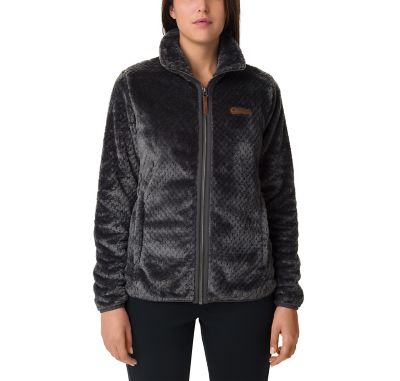
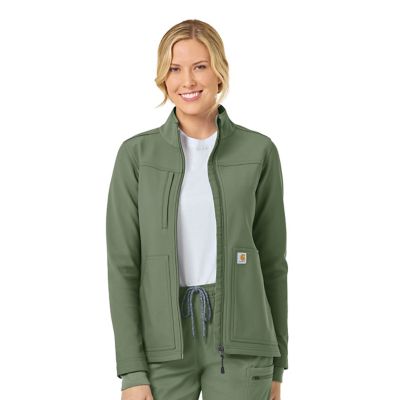
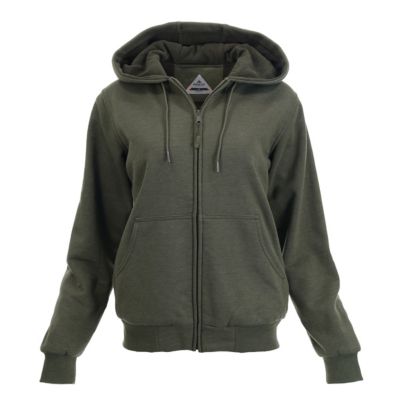
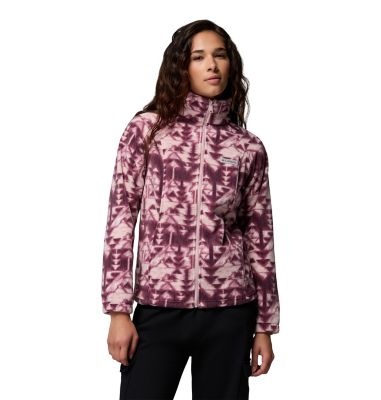
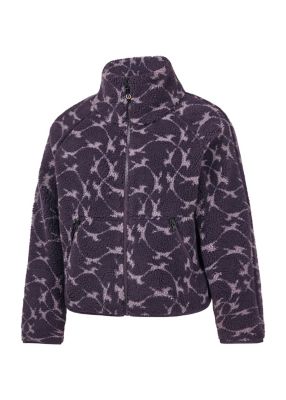
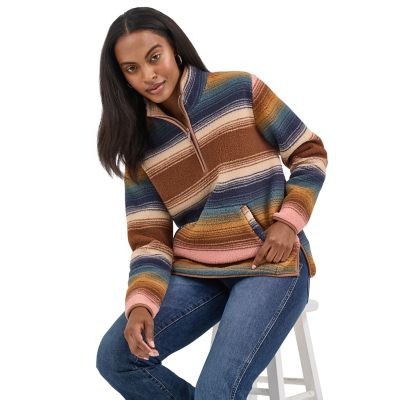
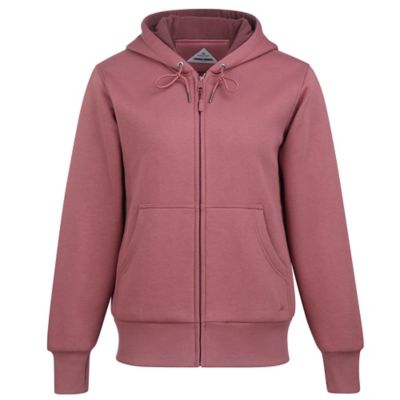
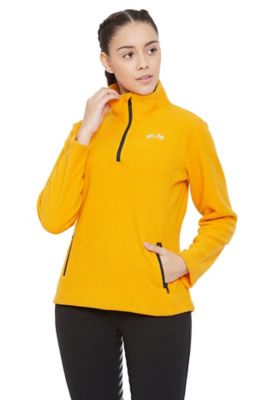
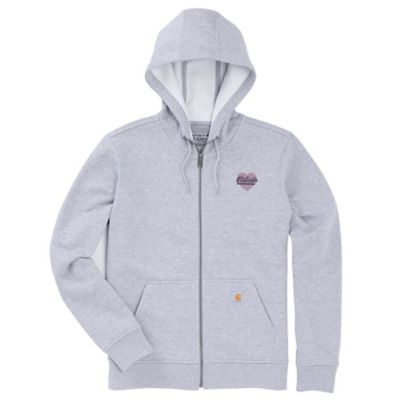
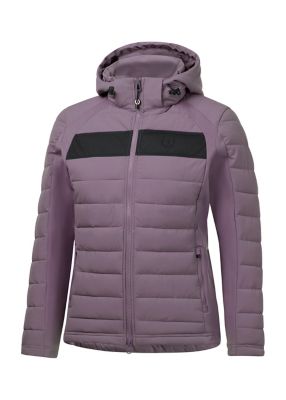
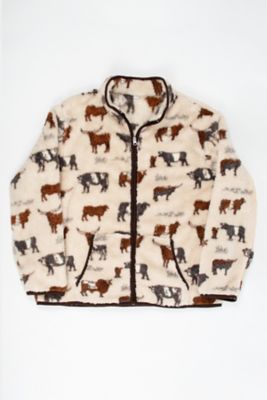
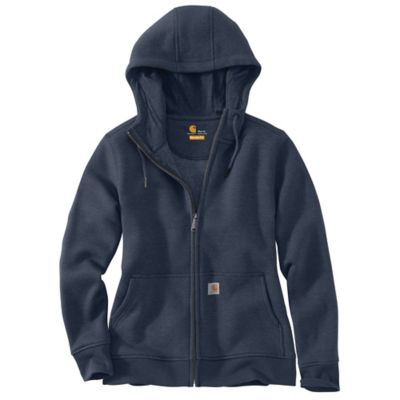
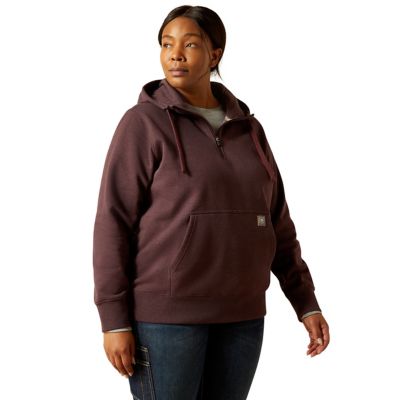
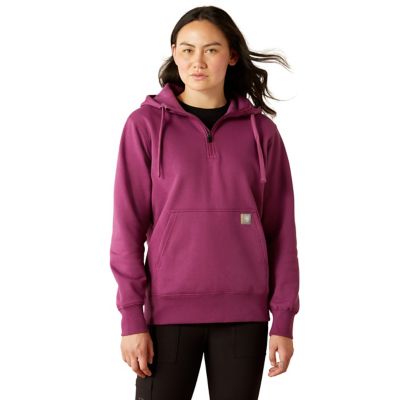
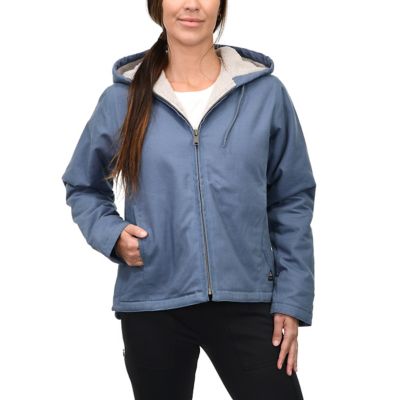
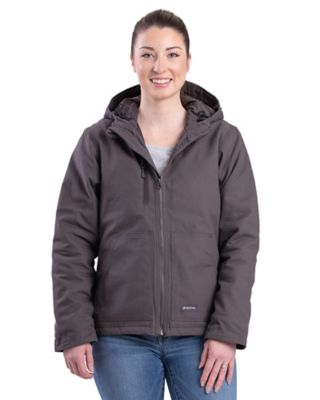
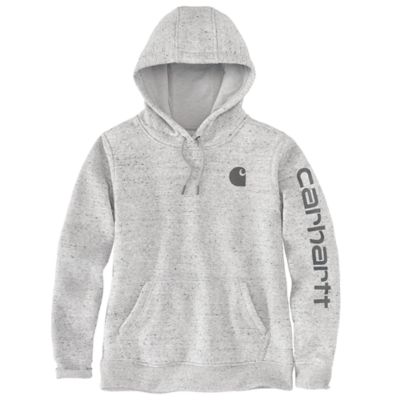
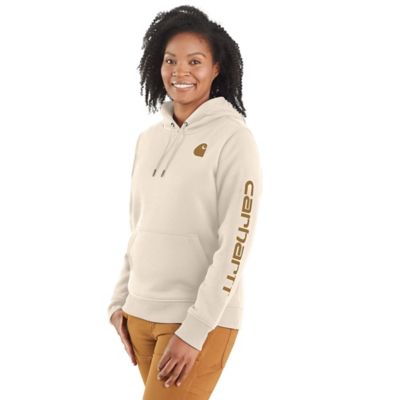
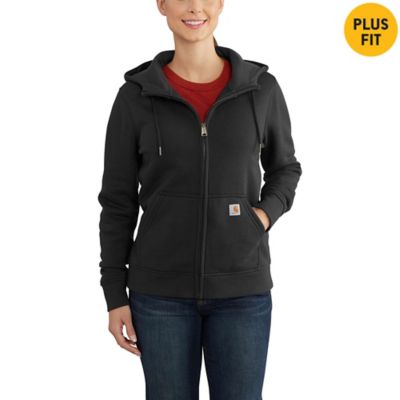
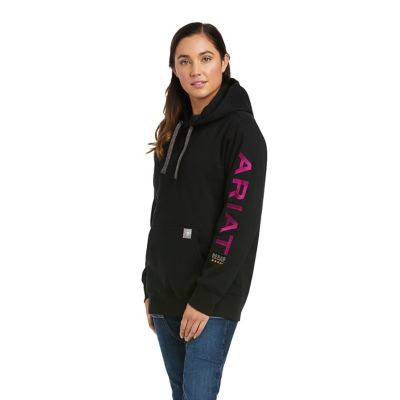
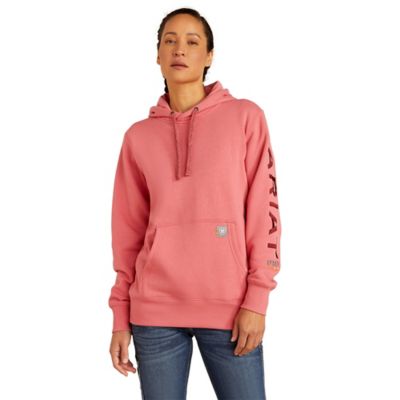
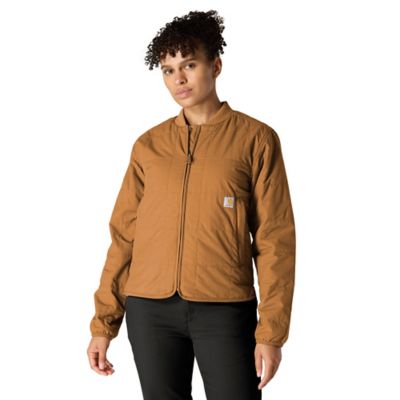
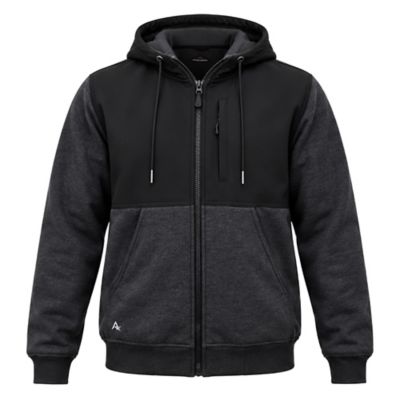
Women's zip-up fleece jackets are soft, insulating layers with a full-length front zipper that makes them easy to put on, take off, and wear open over a shirt. They suit the kind of day that moves between filling feed buckets, riding into town, and settling in on the porch. The zipper allows more control over coverage than a pullover, without having to tug a jacket over a cap or rearrange the shirt underneath. Fleece fabric holds pockets of air that help retain body warmth, while its weight and construction affect how substantial the jacket feels. Polyester is a common fiber, though blends vary, and the garment label gives the clearest picture of its makeup. Lightweight fleece generally takes up less room beneath a chore coat and packs easily into a tote. Midweight fleece offers a balance of insulation and flexibility for everyday layering, while heavier, high-pile fabrics feel fuller and may need more room beneath an outer jacket. A brushed surface feels soft against the hands and neck; a smooth outer face has a less fluffy appearance and can slide more easily beneath another layer. Sherpa-style textures add loft, though thickness alone does not tell the whole story about warmth. Fabric density, lining, fit, and the layers underneath all play a part. Standard fleece is generally breathable, but it is not a substitute for a rain shell, and an open fabric structure can let wind through. For exposed walks across a pasture or time beside an open barn door, a separate wind-blocking layer can make a noticeable difference. Within the
Womens Fleece Jacket category, full-zip construction offers a straightforward way to adjust coverage without changing the rest of an outfit. That flexibility makes fleece useful for both active stretches of the day and quieter moments when a little extra insulation feels welcome.
Fit makes a real difference in how a women's zip-up fleece jacket wears through a full day. A close fit sits neatly beneath a vest or coat, while a roomier cut leaves space for a flannel shirt or sweatshirt. Neither needs to feel restrictive across the shoulders when reaching for a gate latch or carrying a bag of feed. Enough room through the upper arms helps keep sleeves from pulling tight, and a hem that stays near the hips when the arms lift offers better coverage than one that rides up. Jacket length also affects comfort behind the wheel or in a saddle. A longer back hem can provide extra coverage when bending, while a shorter cut may bunch less when seated. Stretch in the fabric or side panels can help with movement, but the amount varies by construction. Sleeve openings matter, too: elastic binding holds cuffs close, while a straighter opening leaves more room over another sleeve. A stand collar covers the neck without the extra fabric of a hood, and a hood offers another coverage option when the task calls for it. Under a close-fitting coat, though, that same hood can feel crowded. Small details often earn their keep during ordinary chores. Zippered hand pockets help keep keys from slipping out when climbing into the truck, while open pockets make it easy to tuck hands away between tasks. An interior pocket can provide another place for small essentials, depending on its size and closure. Pocket placement deserves attention when a tool belt, vest, or coat will sit over the jacket. A zipper guard at the chin can reduce rubbing, and a fabric flap behind the zipper can keep the closure from resting directly against a shirt. Smooth zipper travel and firmly attached pocket openings also contribute to a jacket that feels comfortable and holds up to repeated wear, especially when it becomes the layer grabbed on the way out the door.
Fleece care is usually straightforward, but the care label takes priority because linings, trims, and fiber blends can call for different treatment. Many polyester fleece garments allow machine washing, often with cool water and a gentle cycle. Closing the front and pocket zippers before washing helps limit catching, while turning the jacket inside out can reduce rubbing on its outer surface. Washing fleece apart from rough fabrics and exposed hook-and-loop fasteners also helps protect the pile. Fabric softener may interfere with some performance finishes, and high heat can flatten or damage synthetic fibers, so drying directions deserve a close look. Air drying or low heat may be appropriate when the label allows it. Pilling can happen where fabric rubs against itself, a seat belt, or the straps of a bag; it does not necessarily mean the jacket has stopped providing insulation. A fabric-care tool suitable for the material may help tidy the surface, provided it does not pull at the pile. For long-term wear, neatly finished seams, secure stitching around pockets, and cuffs that keep their shape are worth attention. Fleece can catch on splintered wood or sharp fencing, so a tougher outer layer makes more sense for abrasive jobs. Away from those tasks, its soft feel and easy layering work well for dog walks, travel, errands, and everyday chores around the property. Color and texture help set the tone without changing the jacket's basic purpose: darker shades tend to make small marks less noticeable, while lighter shades show dust and dirt more readily. A fleece jacket can also make a thoughtful gift for someone who enjoys walking trails, caring for animals, or spending time outdoors. Familiar size, preferred jacket length, and whether she likes a hood are more helpful starting points than guessing from appearance alone. The best match feels comfortable over her usual shirts, gives her room to move, and fits naturally into the places her day takes her.