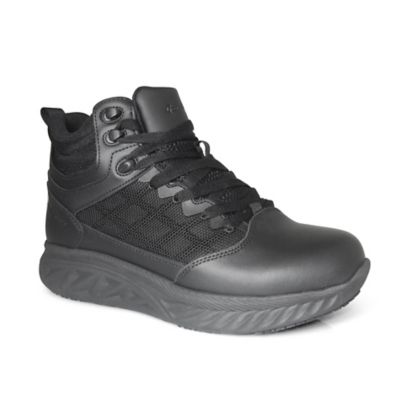
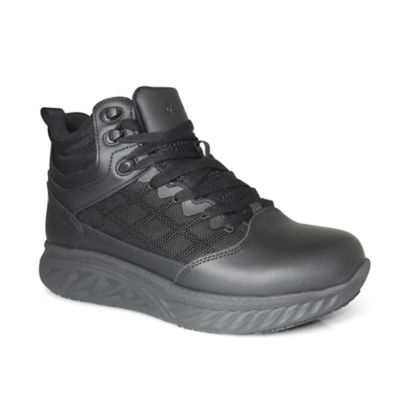
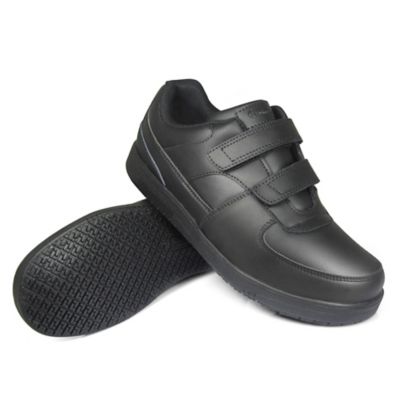
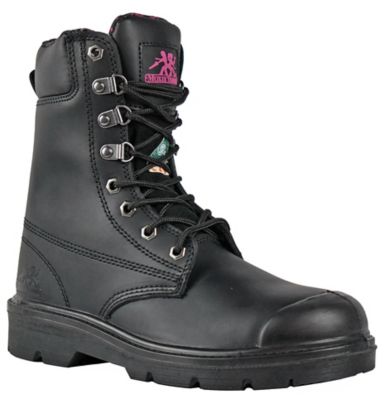
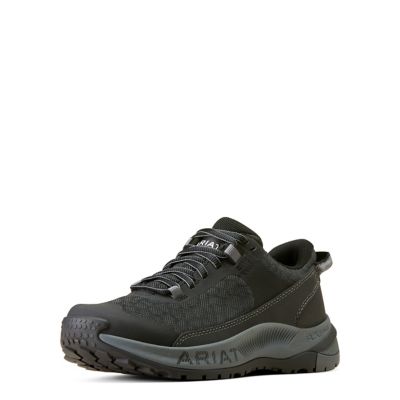
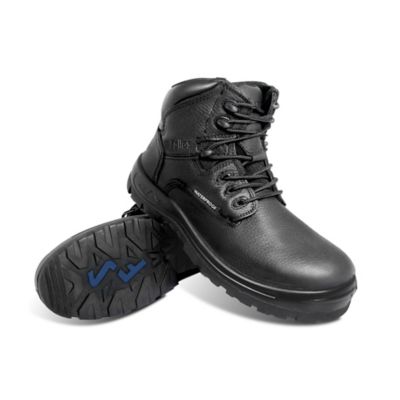
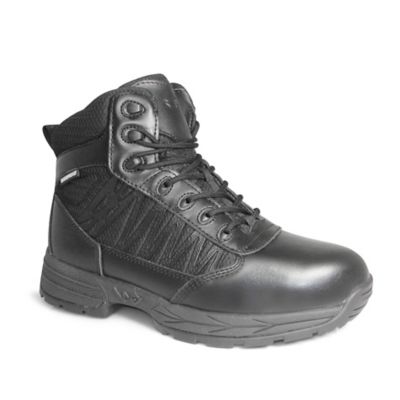
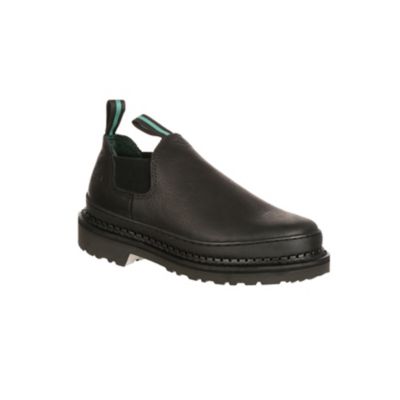
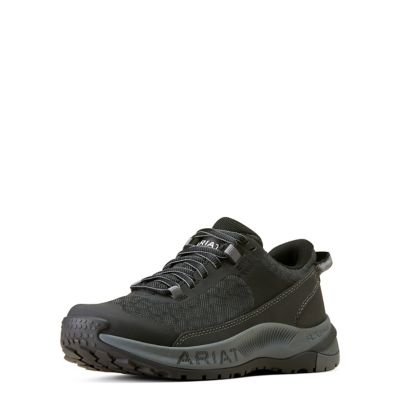
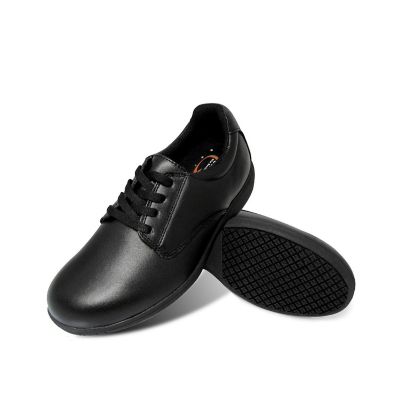
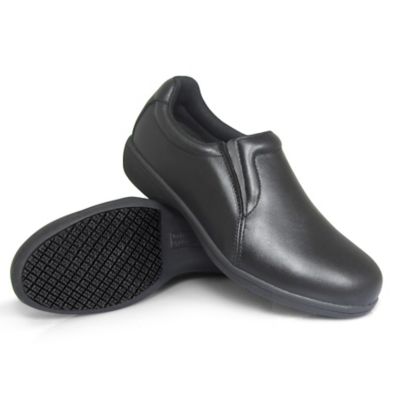
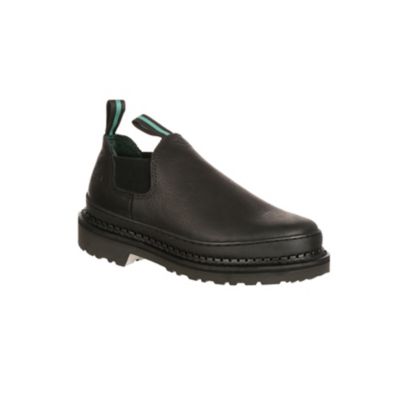
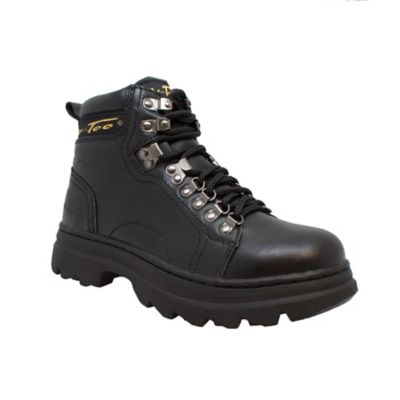
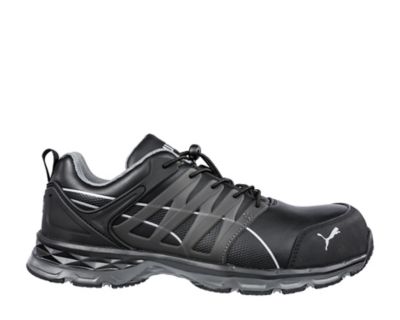
Women’s black leather work shoes combine a straightforward look with features that can help support long hours on the job, including cushioned footbeds, slip-resistant outsoles and protective toe options. They fit into plenty of working days, from serving breakfast at a busy diner to checking in patients, packing orders or keeping a farm office running. Black leather pairs easily with uniform pants, scrubs and work jeans, making it a practical choice when the dress code calls for a neat, closed-toe shoe. The right construction depends on what happens between clocking in and heading home. Someone standing at a service counter has different needs from someone moving cartons across a receiving floor, even if both spend most of the day on their feet. Leather uppers bring structure to the shoe and can soften with wear, while reinforced stitching and securely attached soles help handle repeated bending and walking. Full-grain leather retains the hide’s natural surface, while other leather finishes can offer a smoother, more uniform appearance. A smooth finish is often simpler to wipe down after an everyday spill than a heavily textured surface, though each pair’s care directions still matter. Leather alone does not make footwear waterproof, and seams, closures and any protective membrane affect how a shoe handles moisture. Lace-up designs let the wearer adjust tension across the instep, which can help keep the foot from sliding forward. Slip-on work shoes offer an easy on-and-off option, with stretch panels or shaped openings helping hold the foot in place. Loafers, service shoes and sneaker-shaped leather work shoes each bring a different feel, but a secure fit matters more than the silhouette. For work around equipment, laces should stay tied and tucked clear of moving parts, and any slip-on should hold firmly enough that the heel does not lift with every step. A low, stable profile can also make frequent turns and short trips between workstations feel more controlled.
Comfort in women’s black leather work shoes comes from the whole shoe, not simply a thick layer of cushioning. A supportive footbed, steady heel fit and enough room through the forefoot all contribute to how a pair feels after several hours on concrete or tile. Soft cushioning can ease the feel of repeated steps, while a more structured base may suit someone who wants less movement underfoot. Arch support should match the wearer’s needs rather than press sharply into the foot. Removable insoles can make room for a prescribed orthotic, provided the shoe has enough interior depth and the replacement does not crowd the toes or raise the heel out of position. Fit is worth checking with the socks normally worn at work, especially when uniform socks are thicker than everyday pairs. Toes need space to move without rubbing the front or sides, and the heel should stay settled without pinching. Leather may relax somewhat, but a painful fit is not something to count on breaking in. Outsoles deserve just as much attention as the upper. Slip-resistant work shoes are designed to improve traction, but their performance depends on the sole material, tread condition, floor surface and substances underfoot. A restaurant kitchen with greasy spots presents a different footing challenge from a clean hallway or a stockroom floor, and no shoe makes every surface slip-proof. Keeping tread channels clear helps the sole maintain contact with the floor. For jobs involving falling or rolling objects, safety-toe shoes may be appropriate when they meet the workplace’s required protection standard. Steel, alloy and composite toe caps differ in weight, shape and construction, so the listed specifications matter more than appearance. A black leather upper or reinforced-looking toe does not establish protective performance. Electrical hazard protection, static-dissipative properties and puncture resistance are separate features with different purposes; none should be assumed from a shoe’s style. Workplace requirements should set the starting point, with fit and support helping narrow the choice from there.
Regular care helps black leather work shoes keep their shape, finish and everyday usefulness. Loose dirt can be brushed away before it works into seams, and a soft cloth can lift light surface messes before they settle into the leather. For cleaning beyond a simple wipe-down, a leather-safe cleaner suited to the finish is a better match than harsh household products. Smooth leather may benefit from occasional conditioning, but the amount and formula should follow the footwear maker’s directions; too much product can leave residue or change the finish. A matching black shoe cream may help even out small scuffs on suitable leather, while coated or specialty finishes may need a different approach. Cleaning products belong on the surfaces specified by their labels, not across the outsole where residue could affect traction. Shoes that become damp from a spill or cleaning need time to air-dry away from direct heat. Pulling out removable insoles and loosening laces can help the inside dry more fully, and alternating between pairs gives each one a break between shifts. That routine also makes it easier to spot worn heel edges, separating seams or tread that has flattened in high-contact areas. Fresh insoles cannot restore a worn-out outsole, and shoes that no longer sit evenly may not provide the same steady base they once did. For someone comparing black styles with other leather options,
Women's Leather Shoes for Work offers a broader starting point. As a gift for someone beginning a job or replacing a well-worn pair, work shoes make the most sense when the recipient’s size, preferred fit and employer’s footwear rules are already known. The best match is the pair that suits the actual shift: steady at the counter, comfortable along the hallway and properly equipped for the tasks waiting on the floor.