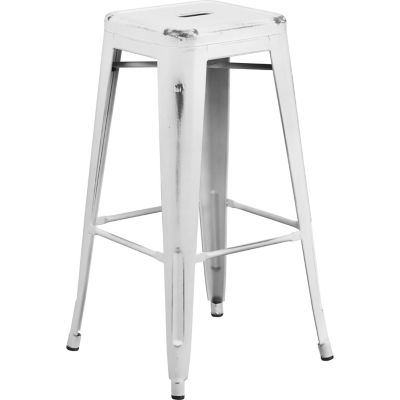
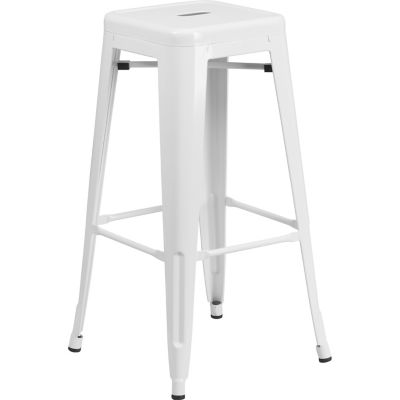
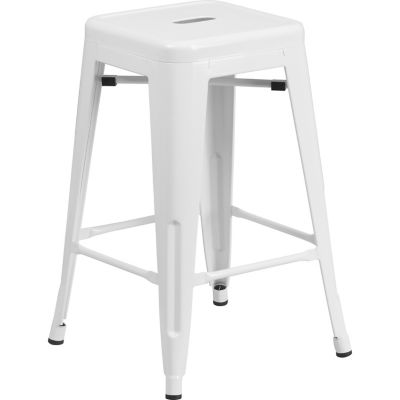
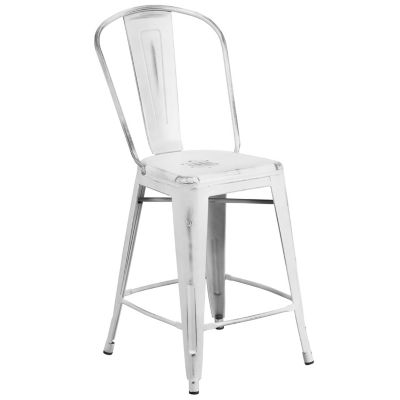
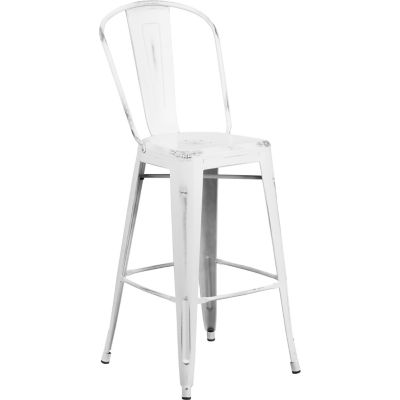
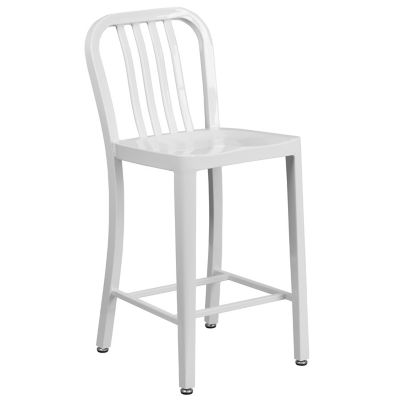
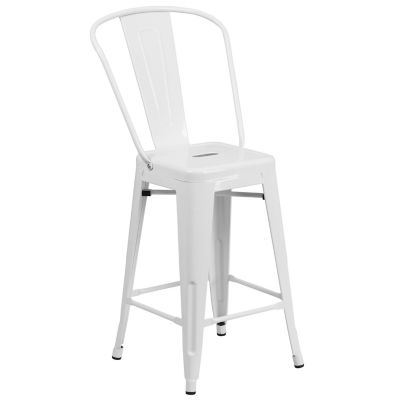
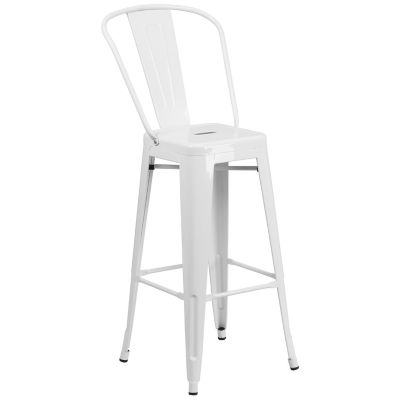
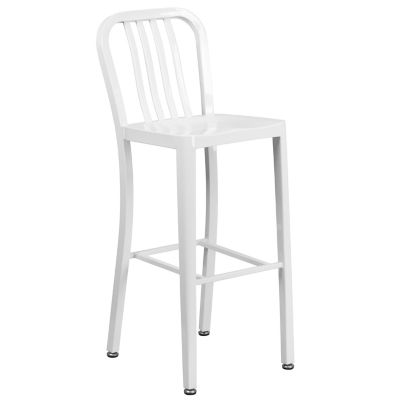
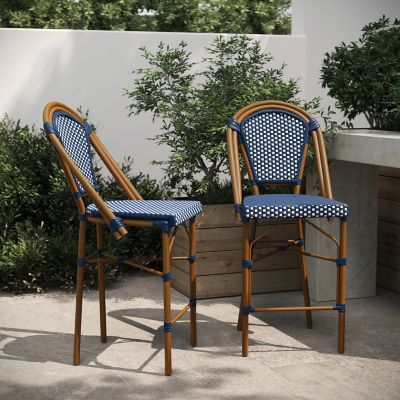
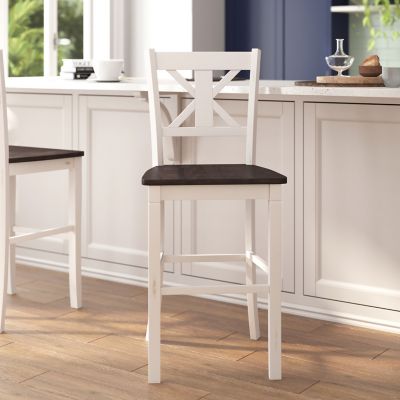
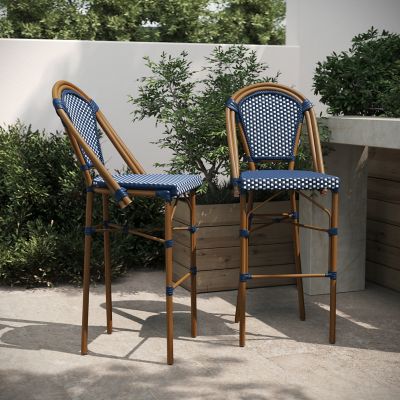
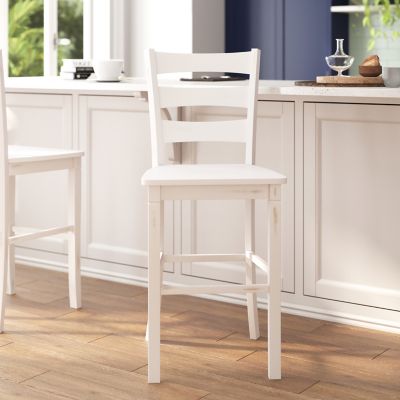
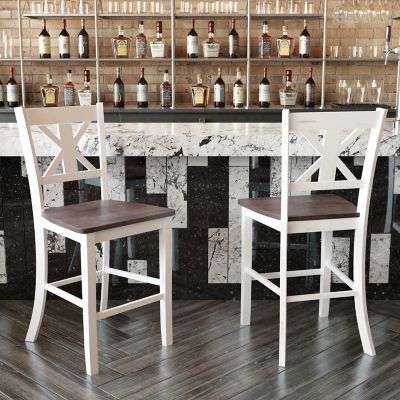
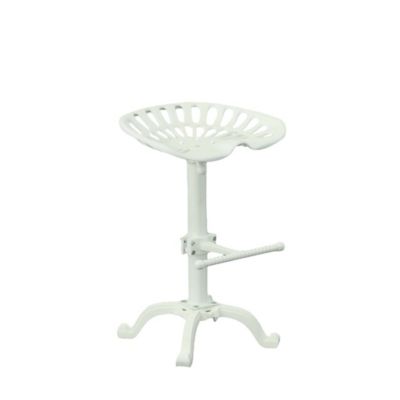
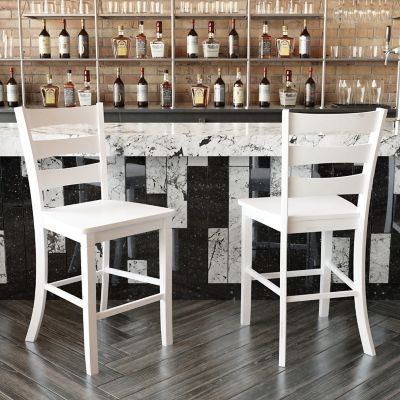
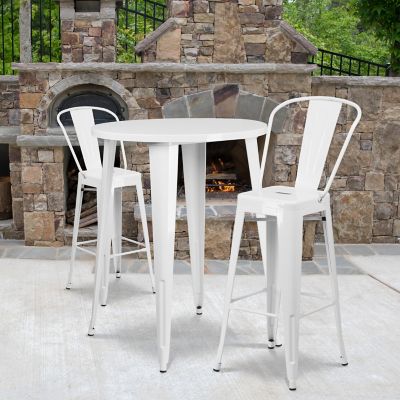
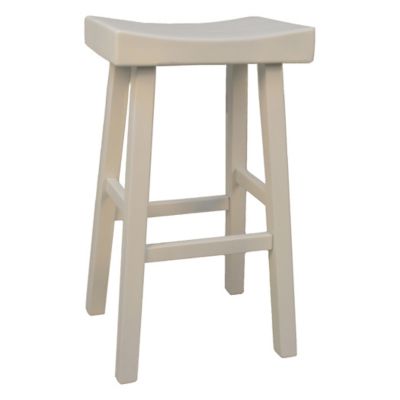
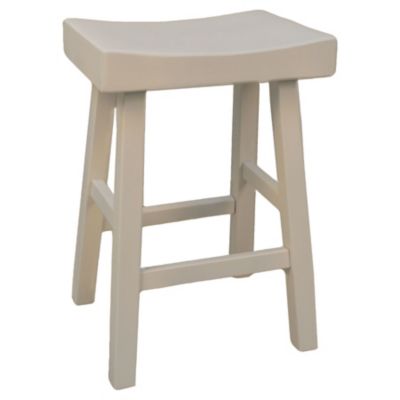
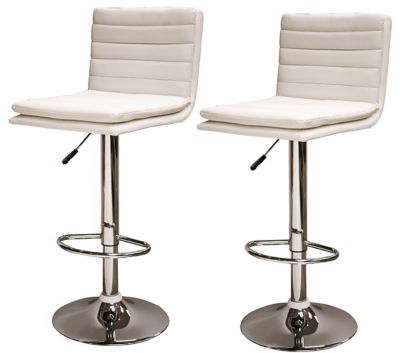
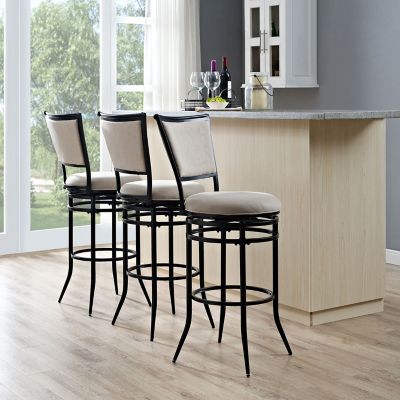
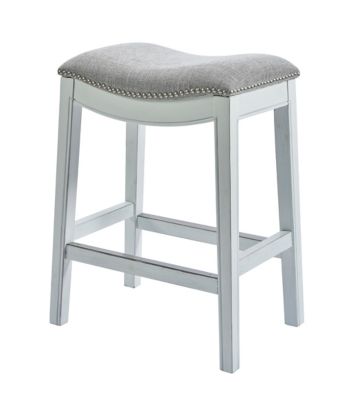
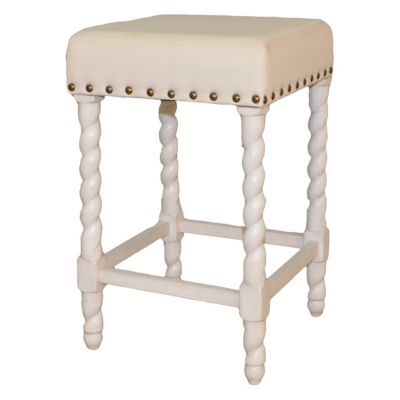
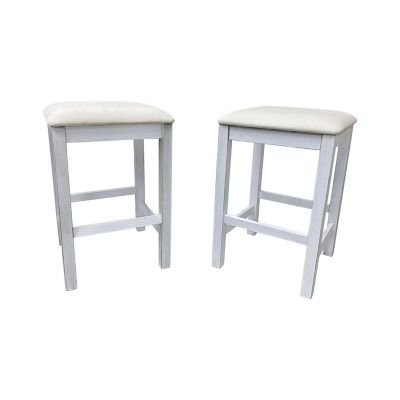
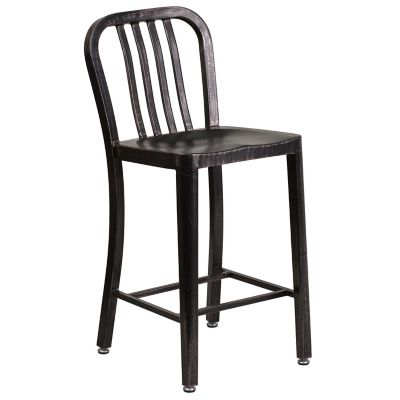
White counter height bar stools bring a light, easygoing look to the places where folks naturally gather, from a farmhouse kitchen island to a breakfast counter beside the family room. Their raised seats put everyday meals, coffee breaks, and conversation at a comfortable level without calling for a separate dining table. White also works well alongside the materials common in country homes: oak cabinets, butcher-block counters, stone surfaces, dark iron hardware, and painted beadboard. Against a darker island, a white stool creates a clear contrast; beside pale cabinetry, it helps the seating blend into the room. The shade matters more than it might seem. A bright white finish has a crisp appearance, while an ivory or soft off-white finish brings a gentler look next to warm wood tones. Comparing the finish with the counter and cabinets helps keep the seating from looking out of place, especially where several white surfaces meet. Shape adds another layer of character. Straight legs and a simple square seat suit an uncluttered kitchen, while turned legs, curved backs, and visible stretchers lend a familiar farmhouse feel. A white frame paired with a natural wood seat ties painted cabinetry and wood flooring together without making every surface match. Upholstered seats create a softer appearance and can make the counter feel more like a place to settle in than a quick stop between chores. These stools fit plenty of everyday routines: a couple sharing breakfast, guests keeping the cook company, or someone sorting the mail with a glass of tea close by. In an open kitchen, their appearance from the living area matters, too, since the backs and legs remain part of the room even when nobody is sitting down. A neatly proportioned stool can give that gathering spot a finished look while leaving the countertop itself clear for rolling dough, packing lunches, or spreading out a project.
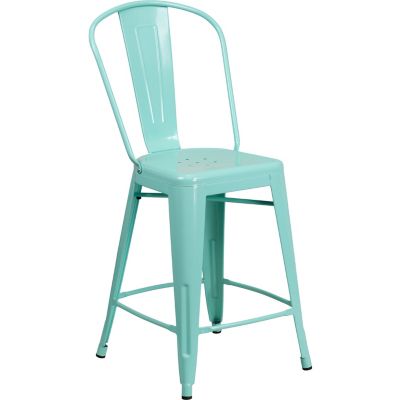
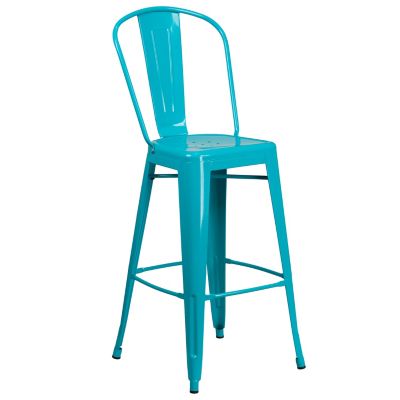
The right fit starts with the relationship between the seat and the counter, not simply the word “bar” in the name. Counter height seating generally has a seat about 24 to 27 inches from the floor and is intended for counters roughly 34 to 36 inches high. Taller bar-height seating belongs with taller surfaces, so the listed measurements matter more than a casual product description. Around 9 to 12 inches between the seat and the underside of the counter is a common starting point for legroom, though a thick countertop, support apron, or shallow overhang can change how comfortably a stool fits. Seat width and spacing deserve just as much attention. Allowing roughly 24 to 30 inches of counter length per person gives adults room for elbows and makes shared meals less cramped; broader seats and arms may call for more space. A generous seat can feel inviting, but it still needs enough room behind it for someone to walk past while another person is seated. Backed stools offer support for longer conversations, homework, or a leisurely breakfast, while lower-profile seating keeps sightlines open across the kitchen. For a compact island or a counter that doubles as a work surface,
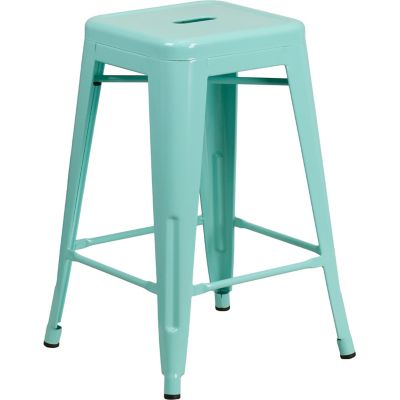
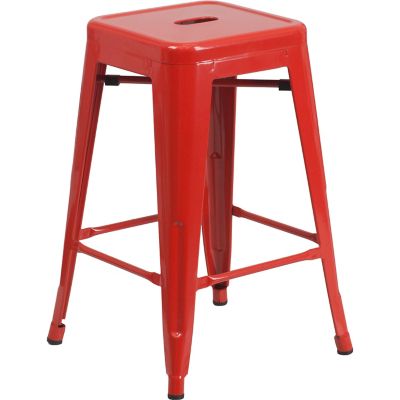
Backless Counter Height Stools can tuck beneath an adequate overhang and leave less furniture extending into the walkway. Swivel seating makes turning toward the room easier, although the rotating seat or back needs clearance from neighboring stools and cabinet edges. Arms provide another place to rest but can prevent a stool from sliding fully under the counter. Footrests are especially helpful on raised seating, giving feet somewhere to land rather than leaving legs dangling. For households with children, a steady stance and age-appropriate seating matter more than appearance alone; a counter stool is not a substitute for a proper child seat. Together, these details help the seating feel at home in the room rather than squeezed into an empty spot.
Materials and construction shape how white counter height bar stools feel through everyday use and how much attention they need afterward. Solid wood brings visible grain, familiar weight, and a look that pairs naturally with a country kitchen. Depending on the design, wood composites may form parts of a seat or frame, making the care directions worth checking before cleaning. Metal frames can have slimmer profiles, with welded or fastened joints contributing to the stool’s overall stability. Neither material tells the whole story on its own: tight connections, a balanced base, sound seat supports, and the stated weight capacity all matter. Crossbars may brace the legs as well as serve as footrests, but the stool still needs to sit level without rocking. On uneven floors, leveling feet can help when included in the design, while floor protectors suited to the flooring can limit scuffs and scraping sounds. A white finish makes crumbs and spills easy to spot, though shoe marks around the lower rails may also stand out. For many painted or coated surfaces, a soft cloth lightly dampened with mild soap and water is enough for routine wiping, followed by drying; the maker’s care directions should take priority. Harsh cleaners and abrasive pads can dull or scratch some finishes, and water left around joints can cause trouble over time. Upholstery brings its own trade-offs. Fabric feels soft against the legs, while some coated coverings wipe clean more readily after a splash of milk or a dropped spoonful of oatmeal. Removable cushions can simplify cleaning when their care labels permit washing. Footrests tend to catch grit from work shoes, making that lower section worth an occasional wipe before buildup scratches the finish. Periodic checks of bolts and other fasteners help keep everyday seating steady, particularly on stools that move around often. Indoor seating also belongs indoors unless its specifications say otherwise. With dimensions, construction, and care needs that suit the household, white counter height bar stools can become a comfortable part of the kitchen’s daily rhythm, ready for a quick sandwich or a good long visit.