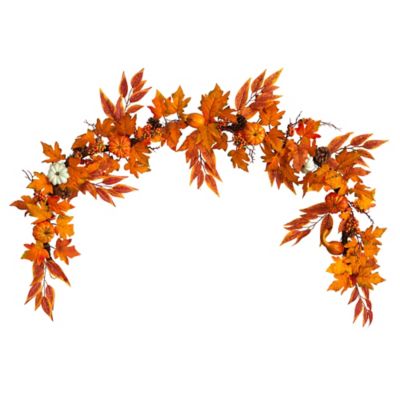
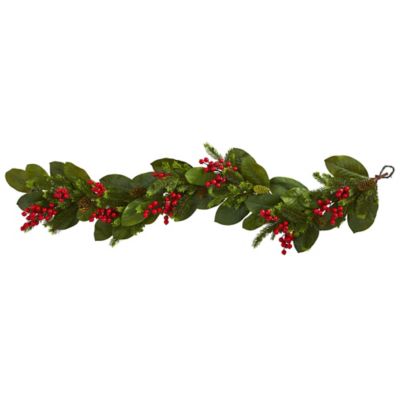
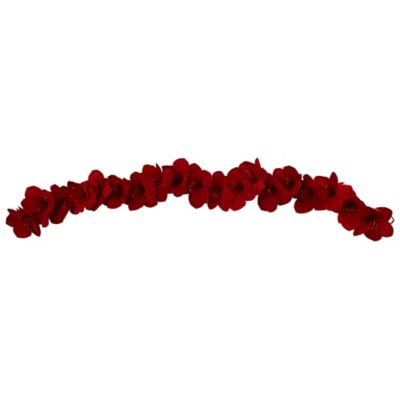
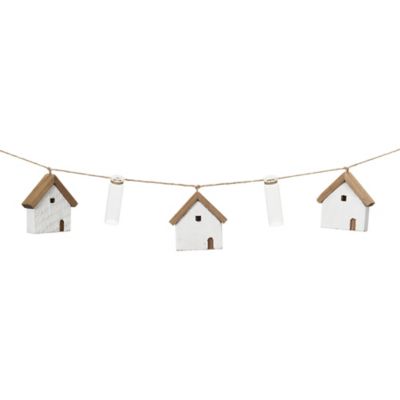
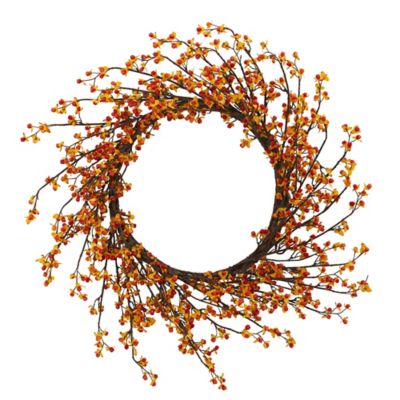
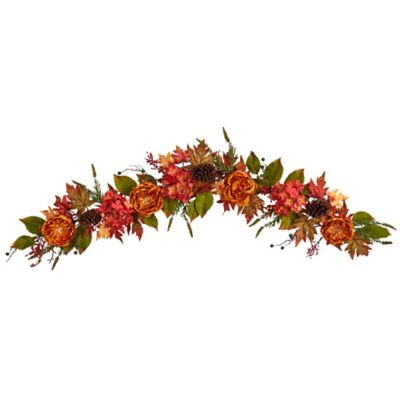
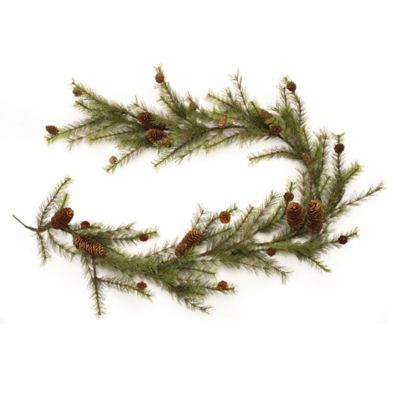
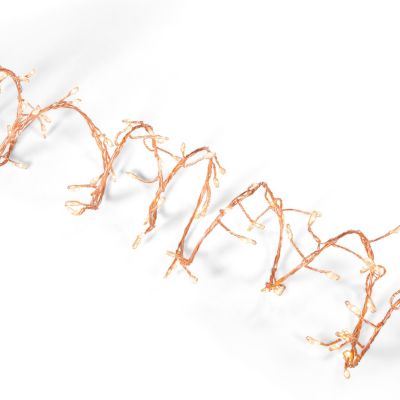
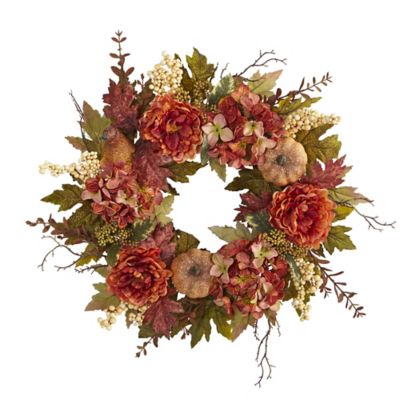
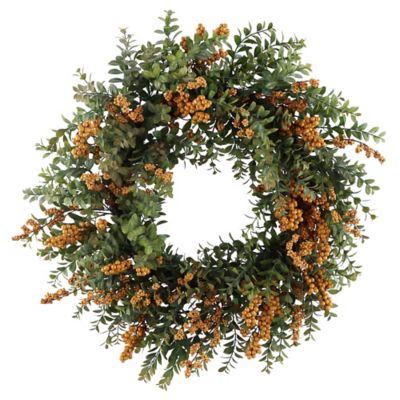
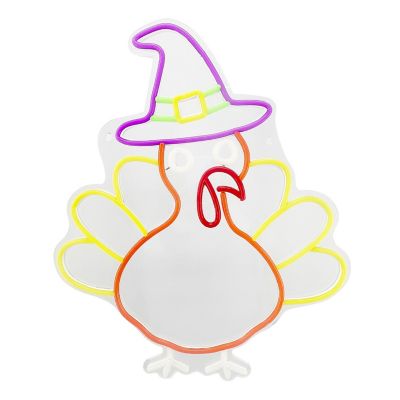
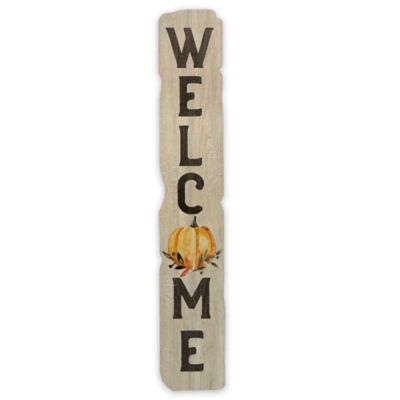
Thanksgiving garlands bring harvest color and texture to mantels, doorways, railings and gathering tables with strands of fall leaves, pumpkins, acorns, berries or seasonal shapes. Their long, flexible form makes them a natural fit for spaces where a wreath or centerpiece would feel too confined, whether that means a stretch of kitchen cabinets or a broad mantel above the hearth. Maple and oak leaf shapes give a display that familiar autumn look, while wheat-inspired stems, seed pods and muted greenery lean toward a quieter harvest feel. Rust, gold, burgundy and orange stand out against white walls and painted furniture; cream, tan and soft green sit easily alongside wood grain, stone and woven baskets. Felt pumpkins and turkey shapes bring a playful touch to a family gathering, while paper leaves or lettered banners can put the focus on thankfulness. The overall effect depends as much on spacing as on color. Closely packed foliage creates a fuller outline, while a simple cord with separated shapes leaves more of the wall or furniture showing. A narrow strand can frame a kitchen hutch without hiding the dishes inside, and a fuller garland can give a long sideboard a finished look without taking up much serving space. For Thanksgiving dinner, a low garland running along the center of the table keeps the harvest theme close to the meal without blocking conversation across the place settings. On a stair rail or entry table, it welcomes family before coats come off and the kitchen fills up. Leaf-focused styles can also fit into a broader fall display, while turkeys, pie shapes and gratitude messages keep the emphasis squarely on Thanksgiving. Choosing between those looks comes down to the setting: a busy family dining room may suit cheerful shapes, while a wood mantel with framed photographs may call for a simpler mix of leaves and small accents. Either way, Thanksgiving garlands offer a way to carry the same colors from one gathering space to the next.
Materials and construction make a real difference in how a Thanksgiving garland hangs, feels and holds its shape. Fabric leaves can provide a soft, layered look, while molded plastic foliage and berries tend to have a more defined outline. Felt shapes bring texture without much weight, and paper or cardstock banners have a light, flat profile that works well against a wall. Natural dried elements contribute earthy texture, though brittle leaves and stems generally need gentler handling than flexible artificial foliage. A wired center allows some strands to bend around corners or settle into a loose curve; a cord or ribbon base usually hangs with a softer drape. The connection points matter, too, especially where pumpkins, pinecones or other heavier accents meet the main strand. Secure attachments help those pieces stay in place through hanging, taking down and packing away. Length is another practical consideration. A garland that lies straight across a shelf needs less reach than one that dips between attachment points or trails down both sides of a doorway. Product measurements may include end loops or bare sections of cord, so the overall length does not always describe how much of the span carries foliage. Width and fullness deserve the same attention. A deep garland can crowd a narrow ledge, while a very slender strand may look sparse across a wide opening. For a dining table, a low profile leaves room for platters, elbows and easy conversation. Along a railing, placement should leave a clear handhold and keep loose ends out of the walkway. Hanging points need to support the full weight without pinching delicate leaves or pulling on individual accents. Indoor and outdoor suitability also matters: a covered porch still brings damp air, wind and sunlight, so outdoor placement calls for a garland labeled for that setting. These details help match the garland to the space, whether it will rest on a sheltered shelf or frame an entrance where guests pass throughout the day.
Care and storage help Thanksgiving garlands keep their shape and color for the next gathering. Artificial foliage often benefits from a light dusting with a soft, dry cloth, while felt, paper and dried plant materials call for handling that avoids crushing, snagging or moisture. Any cleaning directions on the product label take priority, particularly when a strand combines several materials. Damp wiping is not a good match for every surface, and soaking can loosen attached accents or affect finishes. Before packing a garland away, it helps to make sure it is clean and completely dry. Broad, loose curves put less strain on stems and attachment points than tight bends, and a box with enough room keeps heavier holiday pieces from flattening the leaves. Tissue between delicate shapes can reduce tangling and rubbing. Storage away from direct sunlight and excess moisture helps protect colors and materials between celebrations. Placement during the gathering deserves a little care as well. Garlands belong away from open flames, stove heat and hot light fixtures, even when their leaves look like natural greenery. On a mantel, clearance from the fireplace should follow the fireplace manufacturer’s directions. At the table, keeping foliage separate from food and serving surfaces makes room for the meal and helps prevent loose pieces from landing among the dishes. Small berries, acorns and detachable accents also belong out of reach of young children and pets. For a pulled-together entry, Thanksgiving garlands can share a color palette with
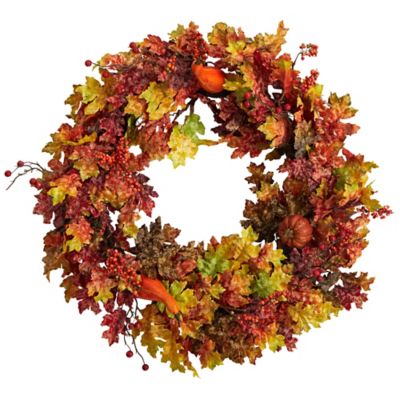
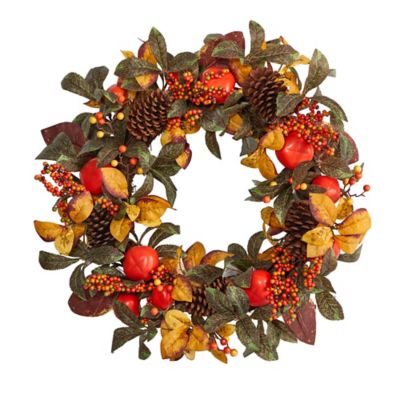
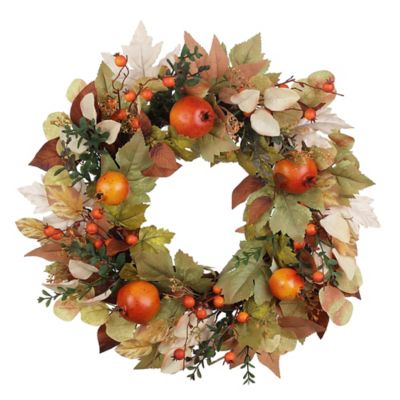
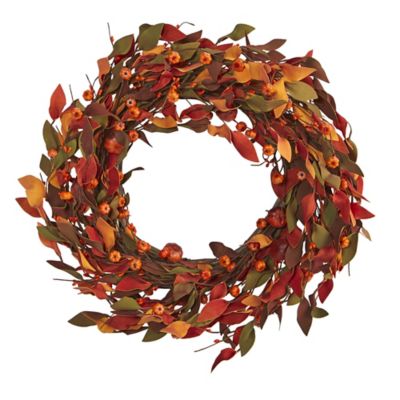
Thanksgiving Harvest Wreaths without matching every leaf and ribbon. A few repeated tones can connect the front door, dining room and mantel while letting each space feel comfortable rather than crowded. A garland can also make a thoughtful Thanksgiving host gift when its size and style suit the recipient’s home. From a small supper around the kitchen table to a house full of relatives, the right length, materials and placement let these harvest accents fit naturally around the people and traditions that make the holiday matter.