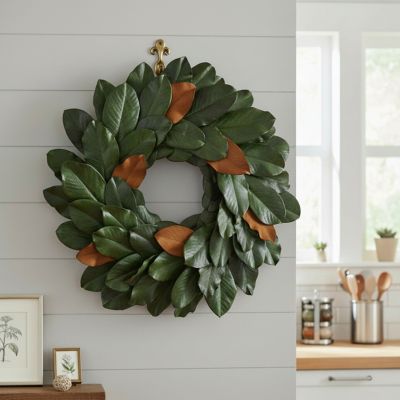
Natural wreaths are ring-shaped arrangements made with real plant materials, such as evergreen branches, eucalyptus, magnolia leaves, grapevine, dried grasses, herbs, and seed pods. They bring the shapes and textures of the outdoors to entry doors, walls, mantels, and gathering spaces without taking up much room. Some have a loose, branchy outline, while others form a full circle with closely layered foliage. That difference can change the whole feel of a space: a spare grapevine ring lets a painted door show through, while broad magnolia leaves create a stronger focal point against a plain wall. Fresh, dried, and preserved wreaths each have their own character. Fresh greenery may carry a noticeable plant scent and gradually change as it loses moisture. Dried materials tend to have a papery, woody, or softly textured appearance, and preserved foliage has been treated to help retain certain characteristics, such as color or flexibility. Not every natural wreath is fragrant, and scent can vary with the plant material, treatment, and age of the arrangement. Looking closely at the material description helps set expectations for both appearance and care. The foundation matters, too. Grapevine and twig bases can remain visible as part of the design, while wire frames may sit behind the foliage and give a fuller arrangement its shape. A wreath described as natural may still include wire, ribbon, adhesive, or other nonplant components, so construction details are worth checking when an all-botanical look matters. For a farmhouse entry, a quiet reading corner, or a back hall that needs a finishing touch, these arrangements offer plenty of texture without requiring a shelf full of accessories. Their appeal often comes from small variations in leaves, branching, and color rather than a perfectly even surface. Knots in a vine, curled leaf edges, and slightly uneven stems can all be part of the material’s character, giving the finished circle an easygoing appearance that fits comfortably alongside wood furniture, painted cabinets, and everyday household pieces.
Size and placement have as much influence as the foliage itself. A natural wreath should suit the surface behind it, whether that is a narrow door, a broad fireplace surround, or an open stretch of wall above a bench. Diameter usually describes the overall span, but loose stems and leaf tips can make an arrangement look wider or less regular than its frame. Depth deserves a look as well, especially on an entry with a storm door or screen door. A full wreath needs enough clearance that its branches are not pressed flat every time the door closes. For a broad wall or roomy entry,
large wreaths can provide a stronger focal point, while a smaller circle may fit more comfortably on a cabinet door or between windows. Leaving some open space around the edges helps the outline stand out instead of crowding nearby trim, lights, or hardware. Color contrast makes a difference at a glance: pale dried grasses show clearly against darker wood, and deep green leaves have more definition on a light painted surface. An open center can frame the grain of a plank door or let a favorite wall color remain part of the look. Weight and hanging hardware are practical considerations, not just finishing details. The support needs to suit both the wreath’s weight and the surface where it will hang, and a secure attachment to the frame helps keep pressure off fragile stems. A door hanger also needs enough clearance to let the door shut freely. In a busy mudroom or narrow hallway, a flatter profile leaves more passing room and is less likely to catch a coat sleeve. Above a mantel, clearance from heat and open flames matters more than filling every inch of wall. A wreath can also serve as a tabletop accent when its construction allows it to lie flat, with any loose plant pieces kept away from serving dishes and uncovered food.
Care needs depend on the materials, so the best fit is an arrangement that matches the attention it will receive. Fresh greenery naturally changes over time, and its care instructions may call for moisture that would be unsuitable for dried grasses, paper-like leaves, or treated foliage. Preserved materials have their own requirements and should not automatically receive the same treatment as fresh branches. Dried wreaths generally benefit from gentle handling and a spot away from dampness, strong direct sunlight, and sources of heat. Those considerations make placement important: a location beside a steamy shower or directly over an active fireplace puts different demands on plant material than an interior hallway. Outdoor placement should follow the wreath’s stated indoor or outdoor use rather than appearance alone. A natural look does not mean every arrangement belongs on an exposed door. Occasional light dusting, following the maker’s directions, can help keep leaves and stems looking their best without bending brittle pieces. Some shedding is possible with real botanicals, particularly when an arrangement is moved or brushed against. A location beyond the reach of curious pets and small children helps protect both the wreath and the household; plant materials and added treatments should never be assumed safe to chew or eat. When a wreath is taken down, a roomy container can protect its outline better than a tight space that crushes the foliage. Storage suitability still depends on whether the materials are fresh, dried, or preserved. These details also matter when choosing a natural wreath as a housewarming, host, or anniversary gift. Someone with a covered entry and a love of leafy textures may appreciate a different arrangement than a recipient furnishing a small apartment or avoiding noticeable fragrance. Matching the size, scent, and upkeep to the home makes the gesture more thoughtful. Whether it hangs beside family photographs or welcomes folks at the front door, a well-chosen natural wreath brings real botanical character to a familiar space.