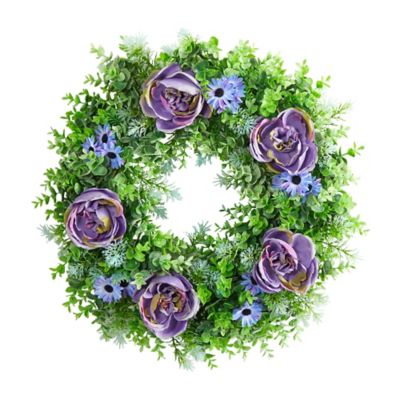
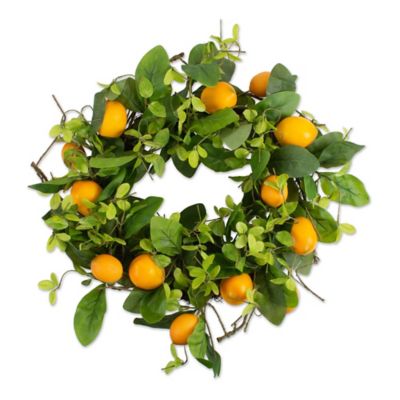
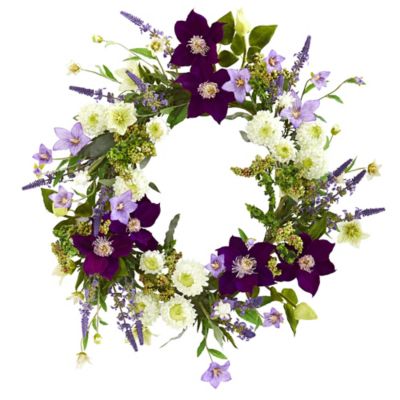
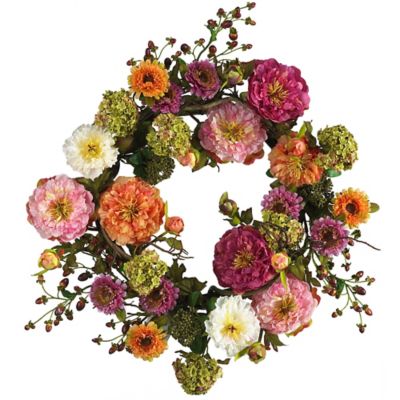
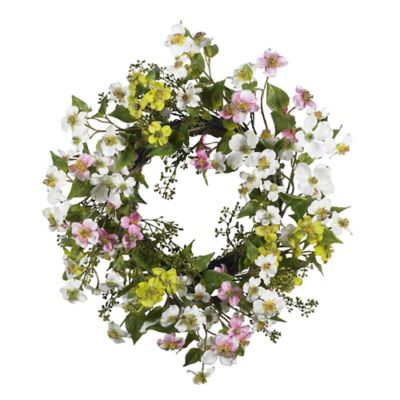
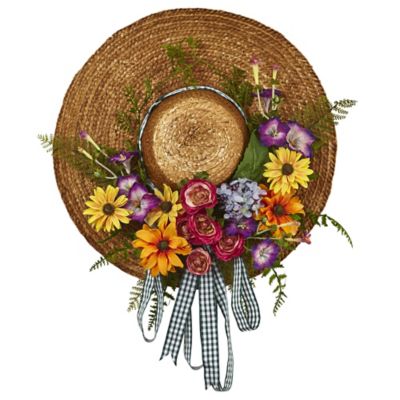
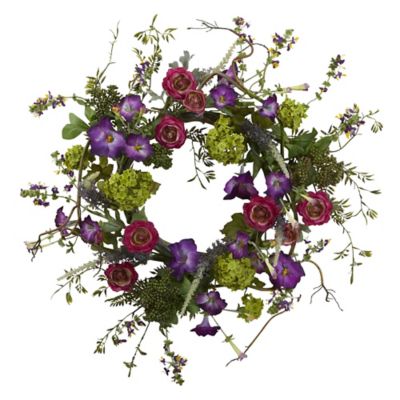
Colorful wreaths bring flowers, foliage, berries, ribbon, and other bright accents together in a circular arrangement for doors, walls, and entryways. Their appeal comes from the mix: peach blossoms beside purple petals, sunny yellow flowers against green leaves, or touches of cream that give stronger colors a little breathing room. A wreath can make a plain front door feel welcoming, add life above an entry bench, or pull together the colors already found in a room. Floral wreaths often pair large blooms with smaller flowers and leafy stems, giving the arrangement depth without making every inch look crowded. Sunflower shapes, daisies, peonies, and tulip-style blooms each bring a different feel, from loose and meadowlike to full and neatly arranged. Berry clusters and ribbon loops offer another way to introduce color, especially for someone who prefers fewer flowers. Materials help set the overall look, too. Grapevine bases have visible twists and an earthy texture that suits a farmhouse entry, while wire frames can support fuller arrangements with less of the base showing. Polyester petals, fabric leaves, and molded plastic greenery can provide layered color without the watering or trimming that living plants require. Dried botanical materials offer their own texture, though their care and placement needs differ from those of artificial flowers. Some arrangements leave part of the circular frame exposed; others cover it completely for a fuller outline. Neither approach needs a room full of matching accents to feel at home. A few shared colors can tie a wreath to a painted cabinet, a patterned rug, or the cushions on an entry bench. For a quieter look, several shades of one color create interest without a strong contrast. For something livelier, pink, orange, yellow, and purple can share the same arrangement, with green foliage helping the colors sit comfortably together. The right balance depends as much on the surrounding space as it does on the flowers themselves.
Size and shape make a big difference in how a colorful wreath looks once it is hanging. The listed diameter generally describes the outside span, but projecting stems, loose leaves, and ribbon tails can extend beyond the main ring. Depth matters just as much, particularly on an entry door with a storm door in front of it. A full arrangement needs enough clearance that petals and branches do not get pressed flat each time the door closes. The center opening also affects the look: a wide opening keeps more of the door visible, while a smaller opening gives the wreath a denser appearance. On a narrow door, a more compact outline can leave room around the handle, lock, and trim. A broad doorway, tall wall, or open space above a mantel may call for more visual weight;
Large Wreaths offer a helpful comparison when a smaller circle would look lost against the background. Color deserves a little thought in relation to that background, too. Pale peach and cream stand out against dark paint, while deep purple, red, and green can hold their shape visually on a light-colored surface. A multicolored wreath with plenty of foliage can bridge the gap between a bold door and nearby wood or brick. Hanging hardware should suit both the wreath’s weight and the mounting surface, with attention to the hanger’s stated weight limit and any surface restrictions. Over-door hangers need enough clearance at the top of the door, and a hanging loop should sit securely rather than balance on the edge of a hook. An indoor wall, a sheltered entry, and an outdoor door are different settings, so the product’s placement guidance matters more than appearance alone. An artificial wreath is not automatically intended for outdoor display. For glass doors or walls with finishes that need special care, compatible mounting hardware helps protect the surface while keeping the arrangement steady.
Care is usually straightforward, but the materials deserve a gentle touch. Fabric petals and leaves can collect dust along their folds, while grapevine and closely packed stems have small spaces that take a bit more attention. A soft brush can lift loose dust from many artificial arrangements; wiping or other cleaning methods should follow the care directions for the particular materials. Soaking can affect glued connections, dyes, and wrapped stems, and dried flowers may shed or break if handled roughly. Supporting the frame when lifting a wreath puts less strain on the flowers and helps preserve the arrangement’s shape. Some wired branches allow light shaping after unpacking, but rigid or dried stems should not be bent in the same way. A little space around the outer edge also helps prevent petals from catching on coats, bags, or a nearby cabinet door in a busy mudroom. Where children or pets can reach, firmly attached accents and placement above easy grabbing height are sensible considerations, especially when an arrangement includes small berries or other loose pieces. Wreaths belong well away from open flames and sources of strong heat, including around a working fireplace. Between displays, a roomy box or wreath container can keep the frame supported and protect projecting flowers from being flattened. Ribbons hold their shape better when they are not tucked beneath a heavy arrangement, and fragile botanical details benefit from a little extra room. These practical details matter when giving a wreath, too. For a housewarming, birthday, or thank-you gift, colors that suit the recipient’s home often feel more personal than simply choosing the brightest mix. Someone with a small apartment entry may appreciate a lighter, more compact arrangement, while a broad farmhouse doorway can carry a fuller circle of flowers and greenery. A colorful wreath makes a lasting visual welcome without taking up table or floor space, whether it hangs above the family’s boot bench, beside a kitchen doorway, or on the door that friends know to knock on.