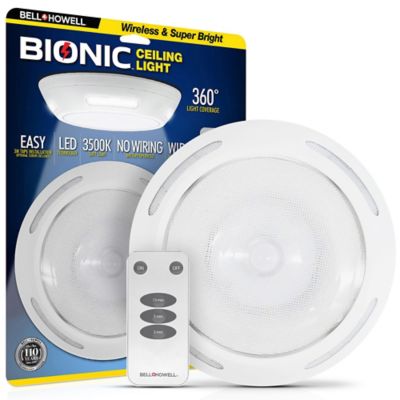
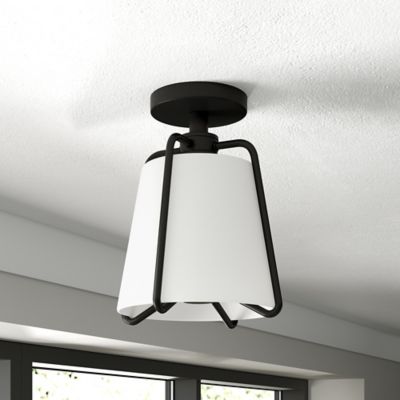
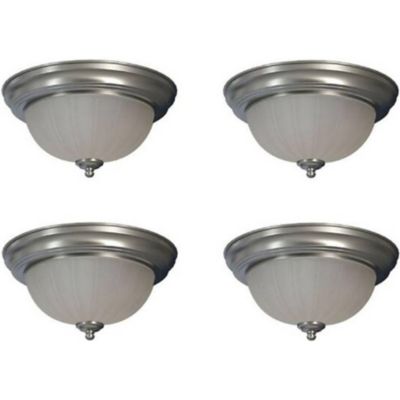
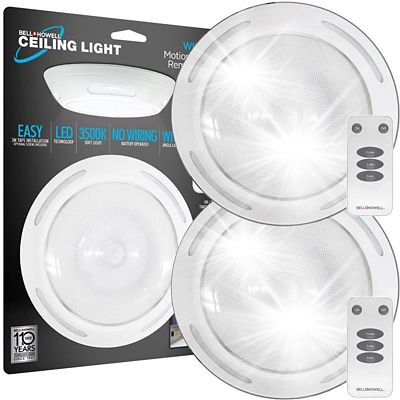
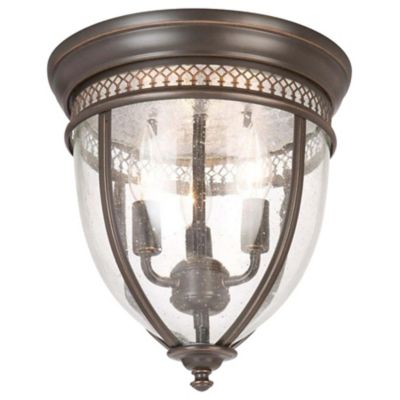
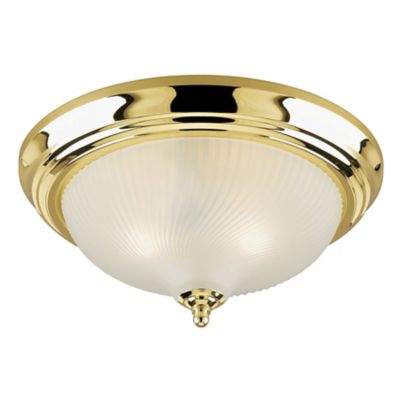
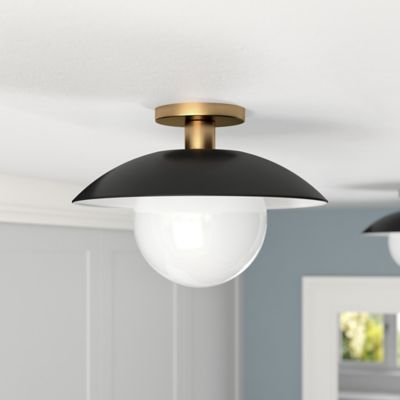
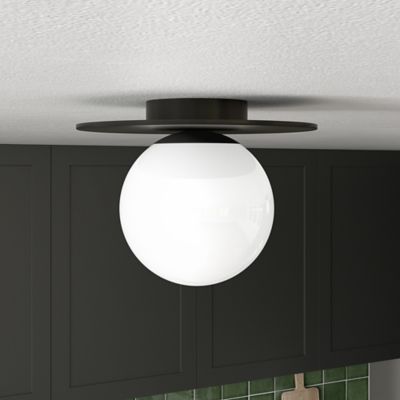
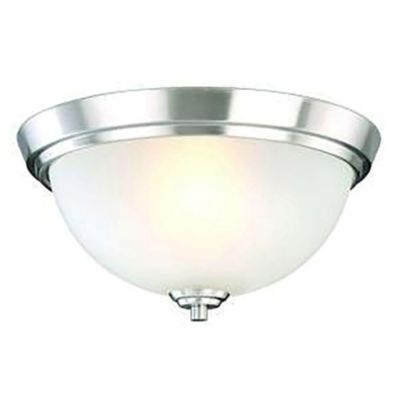
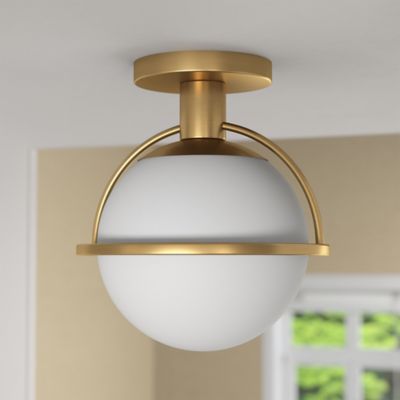
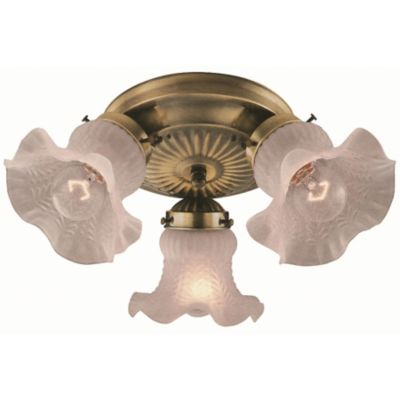
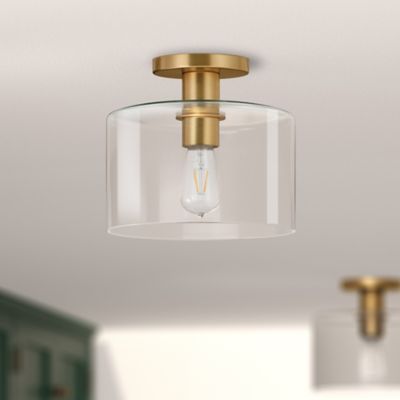
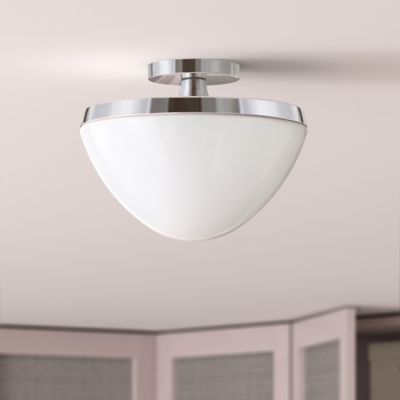
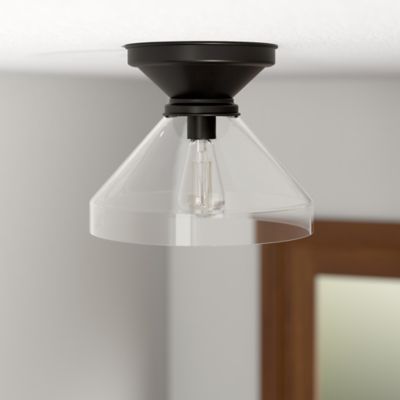
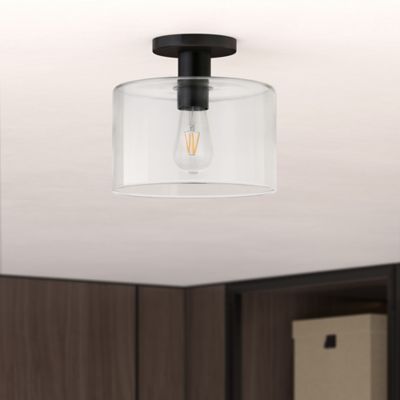
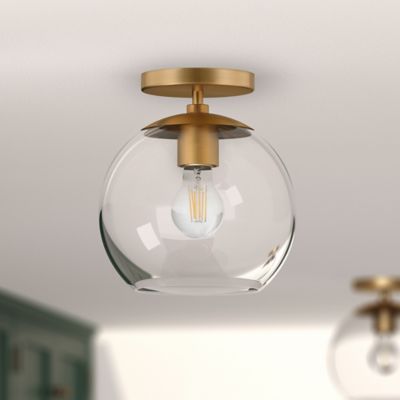
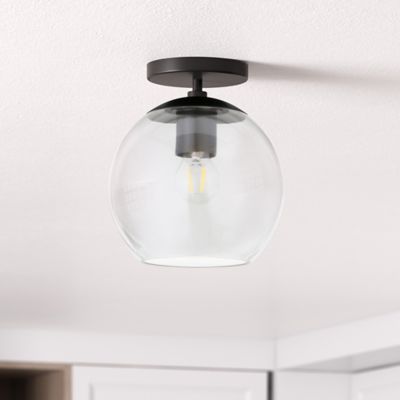
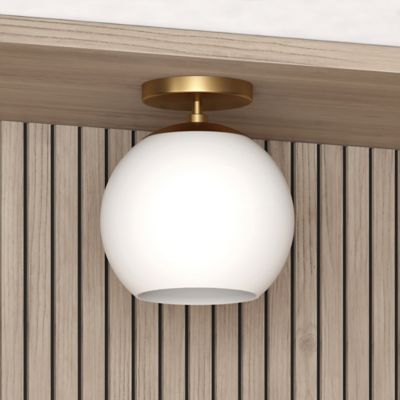
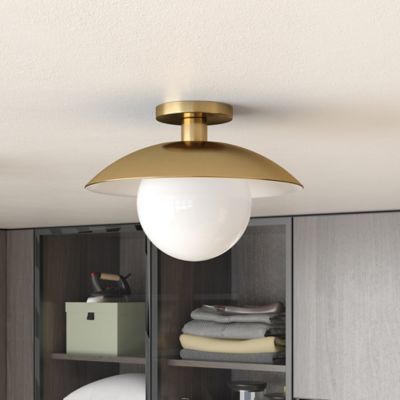
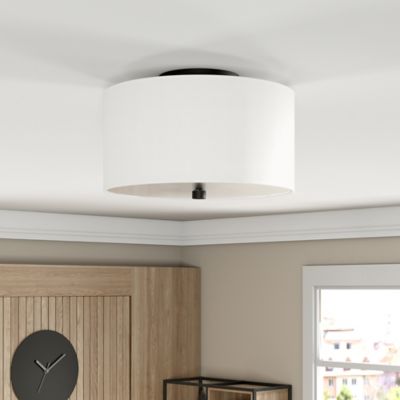
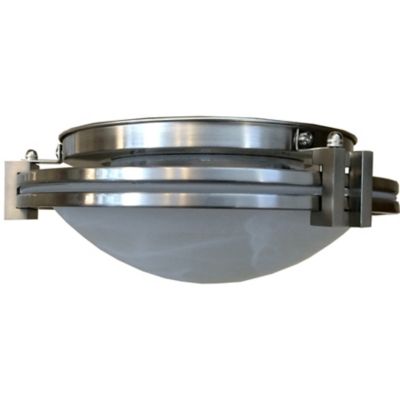
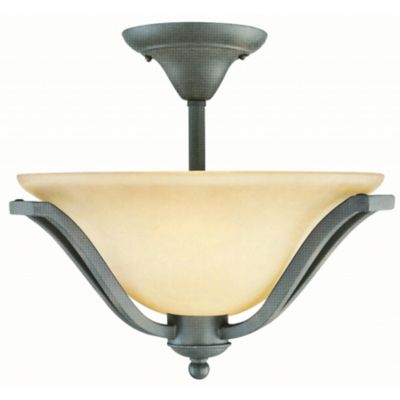
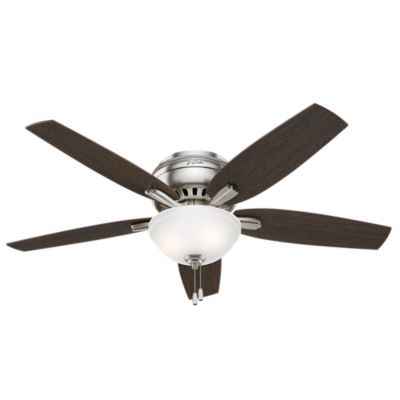
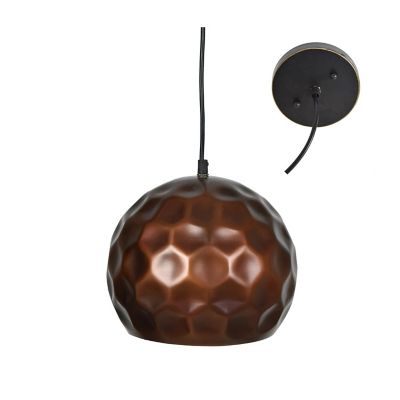
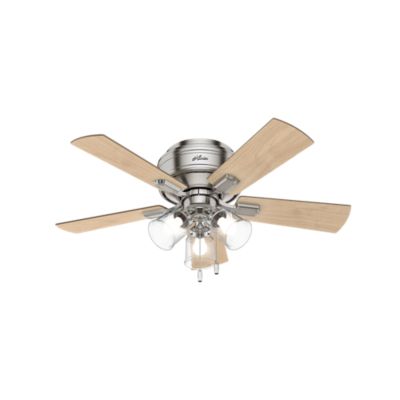
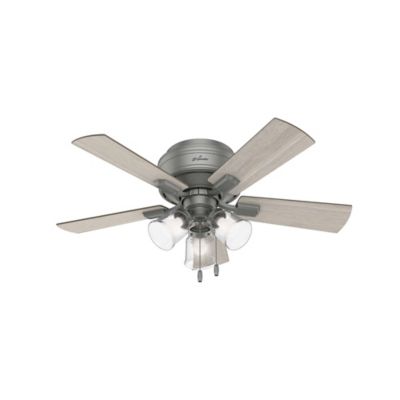
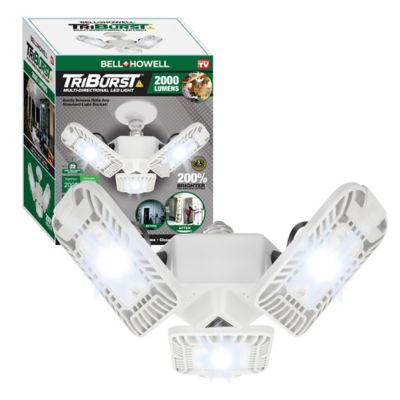
Low profile ceiling light fixtures are a practical way to brighten a room without giving up valuable headroom. Also called flush mount or semi-flush mount lights, these fixtures sit close to the ceiling, with many extending less than 2 inches below the surface. Their slim shape works especially well in homes, barns, workshops, cabins, offices, and other spaces where a hanging fixture could feel cramped or get in the way. They are a smart fit for ceilings under 8 feet, narrow hallways, closets, laundry rooms, mudrooms, porches, bedrooms, and utility areas. A low ceiling can make a room feel boxed in when a bulky light hangs overhead, but a thin surface-mounted light keeps the ceiling line clean and open. In a farmhouse kitchen, a simple round fixture can spread useful light across the work area without competing with cabinets or open shelving. In a back entry, it can make muddy boots, coats, and feed sacks easier to sort through during the darker part of the day. These lights also suit modern rooms with simple lines, since the fixture blends into the ceiling rather than becoming the main feature. Round and square shapes are common, along with finishes such as white, matte black, brushed nickel, and other neutral tones that can coordinate with existing hardware. When comparing options, start with the room’s size and purpose, then consider the fixture’s diameter, depth, brightness, and appearance. A 12- to 15-inch light is often a useful size for a bedroom, hallway, pantry, or small office, while larger rooms may need more than one fixture for even coverage. Measuring the ceiling space before shopping helps prevent a light from crowding nearby beams, cabinets, doors, or trim. It is also worth checking whether the light is intended for dry, damp, or wet locations, especially when shopping for a covered porch, bathroom, laundry area, or other spot where moisture may be present.
Brightness is generally listed in lumens, while energy use is listed in watts. Many slim LED ceiling lights in the 12- to 15-inch range use about 20 to 25 watts while producing roughly 1,500 to 1,800 lumens, which can provide light similar to an older 100- to 150-watt incandescent bulb while using less electricity. Lumens tell you how much light the fixture gives off, but placement and room color matter, too. A dark-paneled room may need more light than a small room with white walls and plenty of reflective surfaces. For a bedroom or sitting area, warm light around 2700K to 3000K gives the room a softer, more welcoming feel. Neutral light around 3500K to 4000K can be handy in kitchens, laundry rooms, offices, and mudrooms where people need to see details clearly. Daylight tones around 5000K may work well in a shop, storage room, or work area, though they can feel too sharp for a relaxing living space. Some LED fixtures have selectable color temperature settings, allowing the installer to choose between warm, neutral, and daylight tones with a switch on the fixture. That flexibility is useful when one light style is being used throughout several rooms with different jobs. Dimming can be another helpful feature for bedrooms, dining areas, porches, and multipurpose rooms, but the fixture and dimmer must be compatible. Check the package details for support with standard TRIAC or ELV dimmers, and follow the manufacturer’s instructions to help avoid flickering or uneven performance. LED fixtures are often designed as integrated lights, meaning the LED board is built into the fixture instead of using a replaceable screw-in bulb. This creates a very thin profile and a smooth look, but it also makes the fixture’s rated life, warranty, and replacement process important details to review before buying. Look for information about color rendering, estimated operating life, and whether the light is rated for enclosed or damp locations when those features matter for the installation.
Installation details deserve just as much attention as style and brightness. Many low profile ceiling lights mount to an existing junction box, making them a useful choice when replacing an older flush mount light. Other slim wafer-style or canless recessed fixtures fit into a ceiling cutout and may require different wiring, mounting hardware, or clearance around insulation. Before removing an old fixture, turn off the power at the breaker and verify that the circuit is no longer energized. If the ceiling does not have a suitable junction box, if new wiring is needed, or if the installation involves an unfamiliar circuit, a qualified electrician can help make sure the work is safe and up to local code. Check the fixture’s dimensions and mounting method carefully, since a light that looks thin from the room still needs enough space for its bracket, connections, and required clearances above the ceiling. Homeowners often choose these fixtures during a room refresh, while landlords, shop owners, and farm families may use them to update several tired-looking lights at once. They can be especially helpful in older homes where low ceilings, narrow passageways, and uneven lighting are part of everyday life. A spare fixture can also make a practical housewarming gift for someone fixing up a farmhouse, finishing a basement, or setting up a new workshop, particularly when the style is simple enough to work with many kinds of decor. For more ideas suited to tight overhead spaces, browse
Ceiling Lights for Low Ceilings. As the weather warms and outdoor chores pick up, a bright light in the mudroom, garage, or covered entry can make early starts and evening cleanups easier. During the cooler months, dependable overhead lighting helps keep hallways, storage rooms, laundry areas, and workspaces useful when daylight fades early. Choosing the right size, light color, brightness, mounting style, and location can give a low-ceiling room a cleaner look and the steady illumination needed for everyday work.