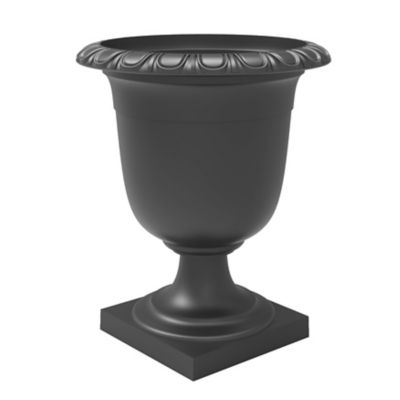
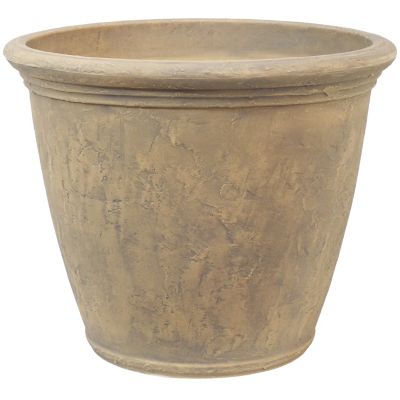
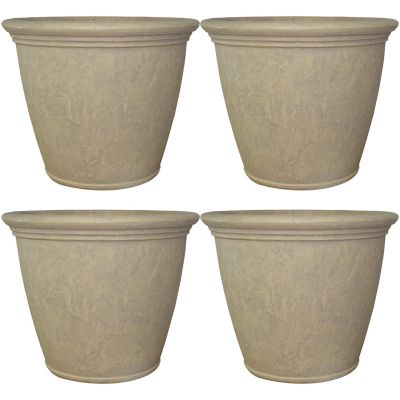
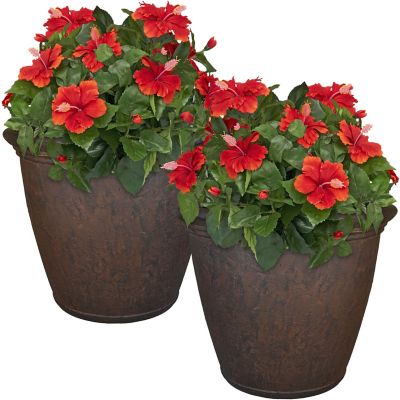
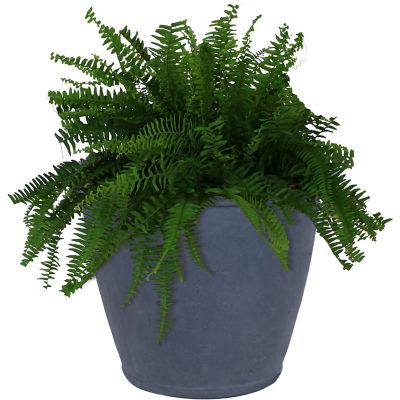
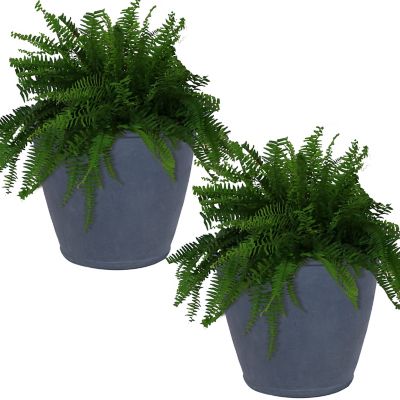
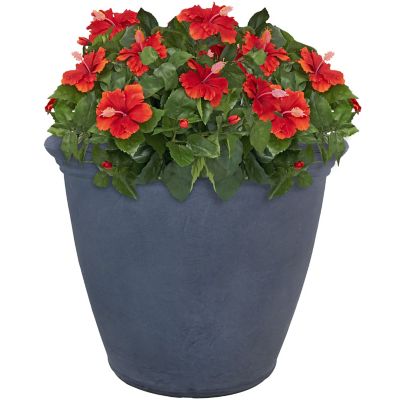
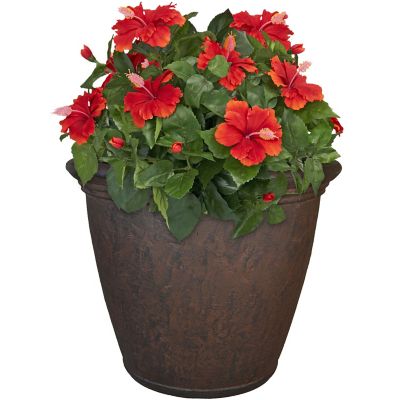
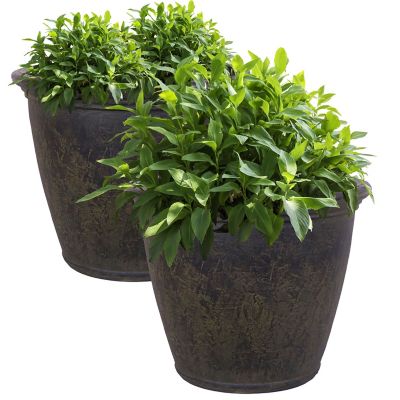
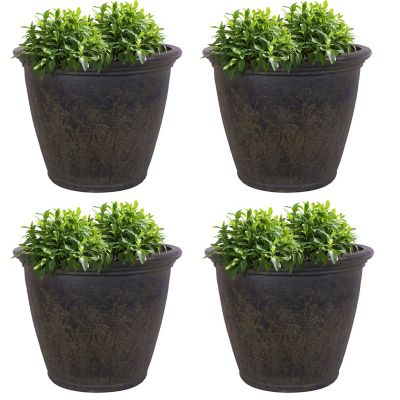
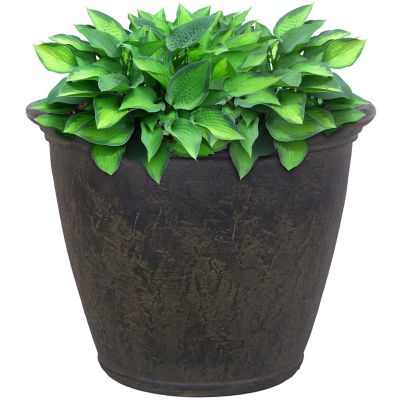
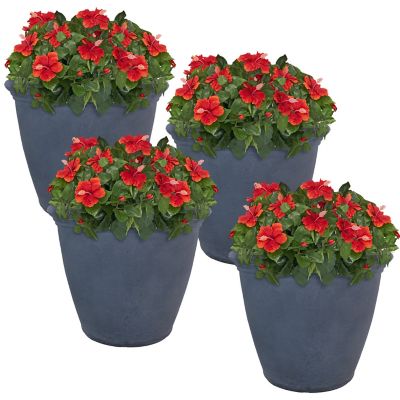
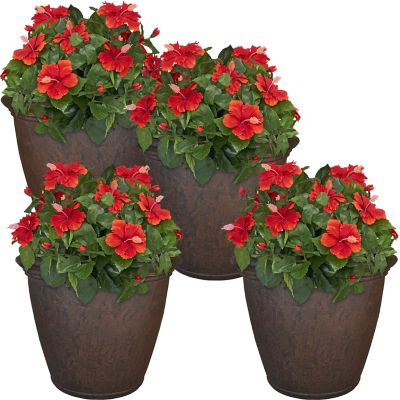
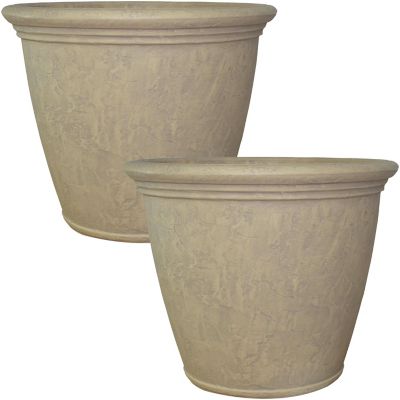
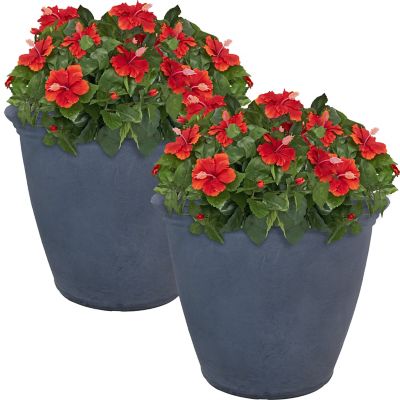
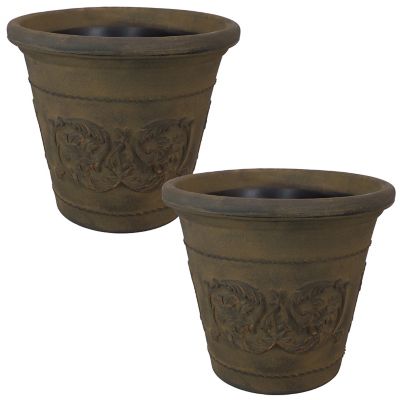
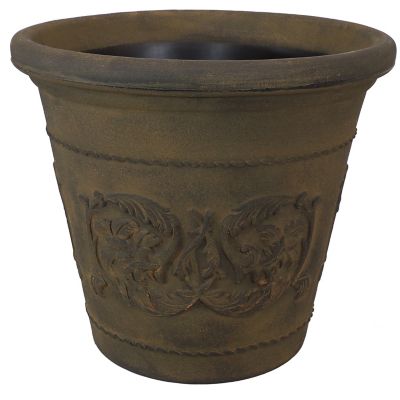
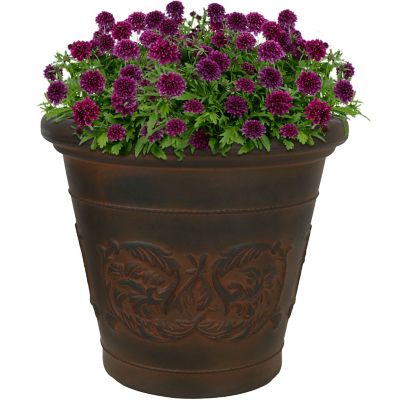
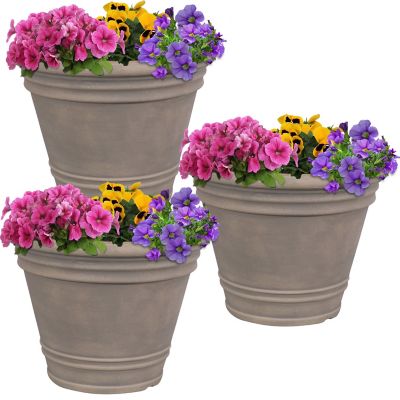
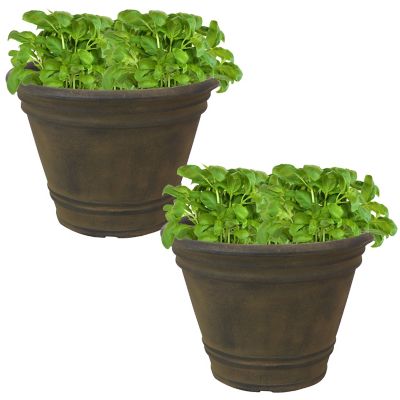
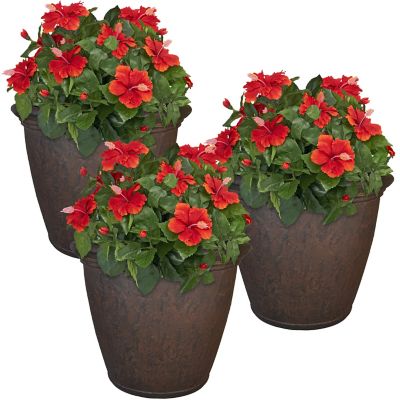
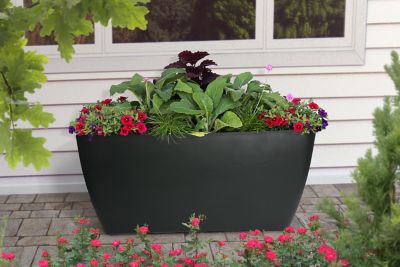
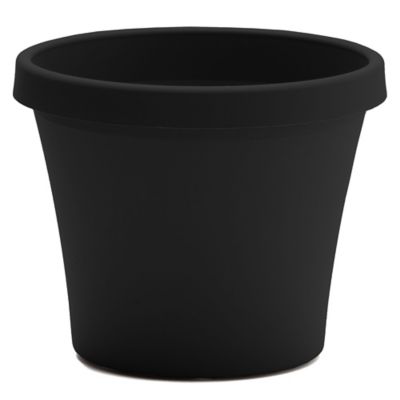
Large patio flower pots give flowers room to spread their roots and bring a welcoming touch to the places where folks gather, from a farmhouse porch to a paved sitting area beside the garden. Their size makes them a good fit for broad spaces where smaller containers can get lost against a long railing, a wide doorway, or a stretch of blank wall. A pair beside an entrance can frame the path to the door, while a few pots near a bench can make a simple spot for taking off work boots feel more inviting. There’s plenty of room for different planting styles, too. One substantial container might hold a flowering shrub suited to container growing, while another might carry an upright centerpiece with lower flowers around its base and trailing stems spilling over the rim. The best fit depends on more than how much space a pot takes up on the patio. Interior depth and width determine how much room roots have, and a wide lip or thick wall can make the planting space smaller than the outside measurements suggest. A deep-rooted plant needs a different container than a shallow-rooted grouping, even when both arrangements look about the same size above the soil. Enough space for growth helps keep a planting from becoming crowded too quickly, though an oversized pot around a small root ball can leave excess potting mix wet longer than the plant needs. For a comfortable layout, the pot’s full footprint matters alongside the mature spread of the flowers. A generous container can anchor a seating area without crowding chair legs, narrowing a walkway, or interfering with a gate. Round pots soften the lines of steps and siding, while
Large Square Outdoor Planters offer another shape for corners, straight patio edges, and evenly spaced arrangements. Either shape can look right at home when its proportions suit the planting and the space around it.
Materials play a big part in how large patio flower pots look, feel, and handle everyday use. Unglazed terra-cotta has an earthy appearance and porous walls that allow moisture to move through the material, so its potting mix may need watering more often than mix in a less porous container. Glazed ceramic offers a smoother surface and a range of colors, with enough heft to make placement worth thinking through before filling. Concrete also brings substantial weight and a solid presence, making it a practical match for a spot where the container will stay put. Resin and other plastic containers generally weigh less before planting, which can make carrying them through a gate or rearranging a patio easier. Wall thickness, construction, and the strength of the base still matter; two pots with similar dimensions may feel quite different when lifted. Metal containers bring another look, but their suitability depends on the material, finish, and whether the planting sits directly inside or in a separate liner. Wood containers can blend naturally with porch posts and outdoor furniture, while joints, fasteners, and any liner deserve attention because they affect how the container holds soil and manages moisture. Across materials, a sound base and a rim that stands up to routine handling help support a longer service life. Drainage is just as important as appearance. Most flowering plants need excess water to escape rather than collect around their roots, so drainage openings and any removable plugs are worth checking. A pot without an outlet may work as an outer container around a separate nursery pot, provided collected water can be emptied. Adding gravel to the bottom does not replace a drainage hole. Where a saucer protects the surface underneath, it needs room for runoff and access for emptying. Pot feet can provide clearance beneath a container and help keep an outlet from sitting flush against the patio, but they need to support the filled weight without leaving the base uneven.
Living with a large flower pot is easier when its size and setup match the way the space gets tended. Potting mix designed for containers generally provides a better balance of air space and moisture retention than soil dug straight from the yard, which can settle tightly inside a pot. The total load includes the container, moist growing mix, and the planting itself, so even a lightweight shell can become a serious lift once filled. On a raised deck or balcony, that weight calls for attention to the structure’s load limits rather than guesswork. At ground level, a firm, even surface helps keep a tall pot steady, especially when the planting has a broad canopy. A plant caddy can make repositioning more manageable if its weight rating covers the entire filled container and its wheels suit the surface underneath. Access matters just as much: a pot tucked behind a chair may look fine but become awkward to water, trim, or check for blocked drainage. Containers near a hose connection or within easy reach of a watering can tend to fit daily routines better than ones squeezed into hard-to-reach corners. The flowers themselves need a location that matches their light requirements, and plants sharing one pot should have similar watering needs. Self-watering designs can add a water reservoir, though the reservoir size, overflow arrangement, and planting requirements still determine how they perform. Routine care includes clearing drainage openings, removing fallen plant material, and cleaning the container between plantings with a method suited to its finish. Mineral buildup, scratches, and loose fittings may call for different attention depending on the material. For gardeners working with limited bed space, large patio flower pots open up growing room without adding an in-ground border. Taller designs can also bring some tending tasks closer to a comfortable reach, depending on the gardener and the container’s height. They can make a thoughtful housewarming gift for someone with a roomy porch or a favorite patio chair, particularly when the recipient has enough space to place and maintain one. With the right proportions and practical details, a large pot becomes a natural part of the place, with room for flowers and everyday life alongside them.