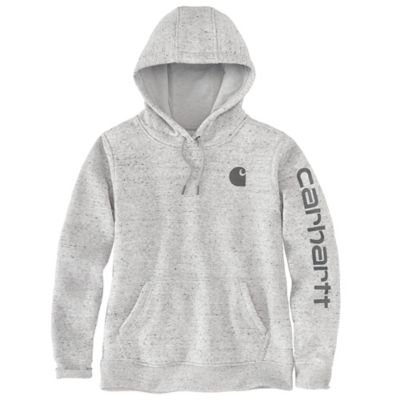
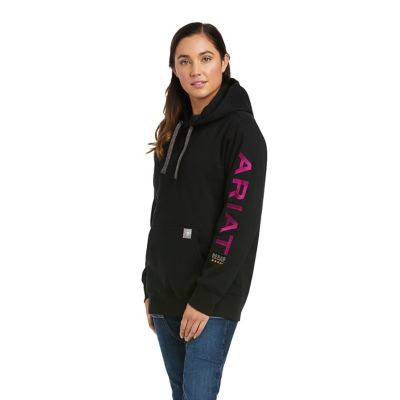
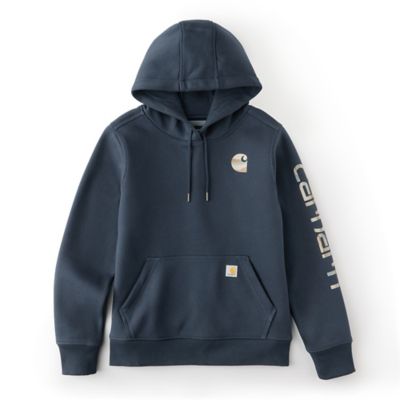
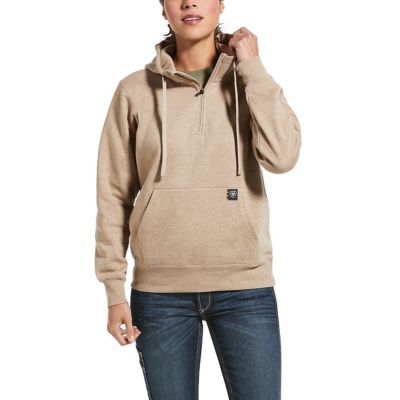
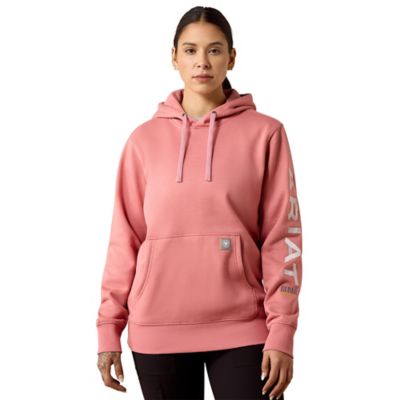
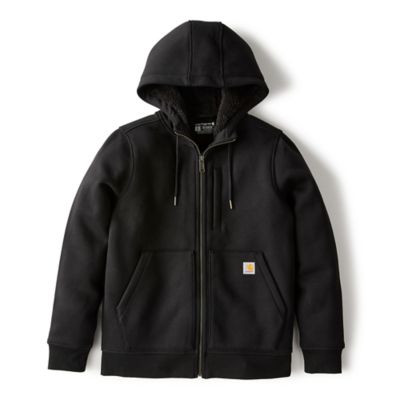
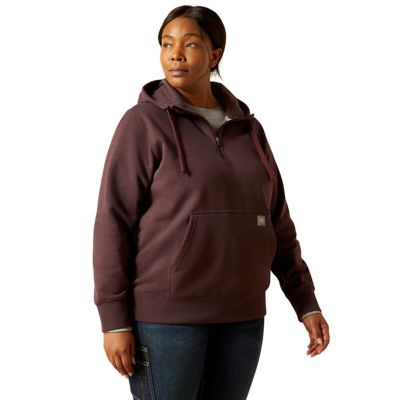
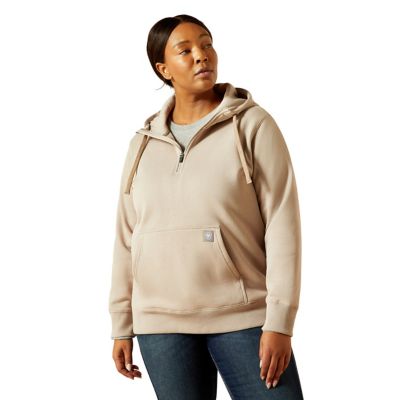
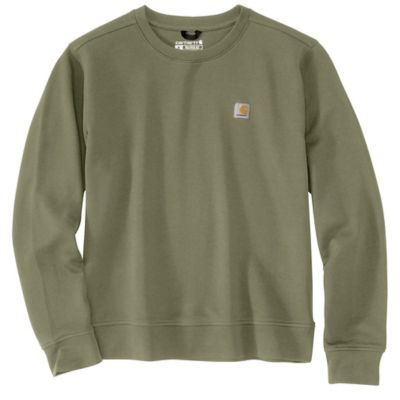
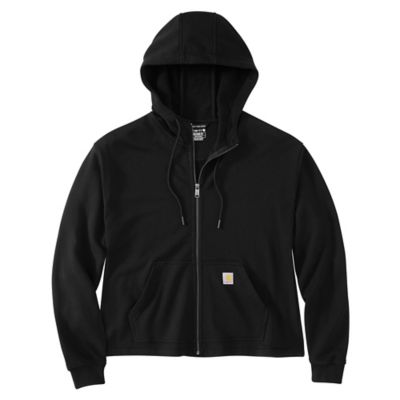
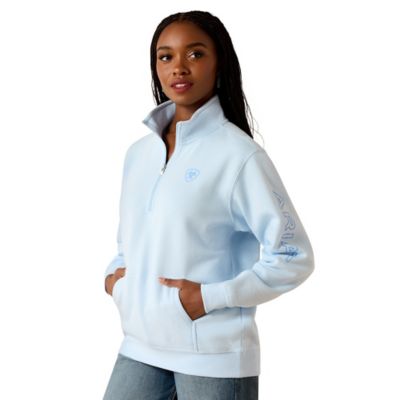
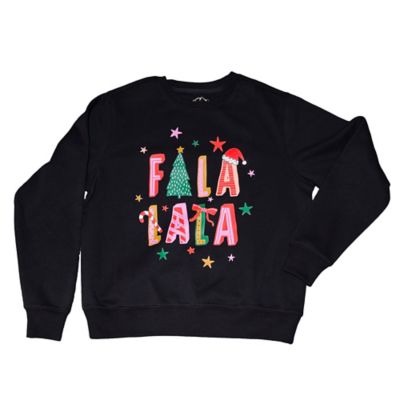
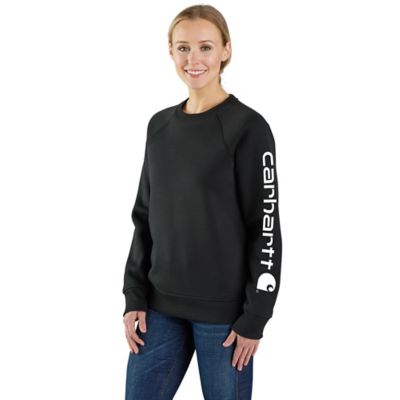
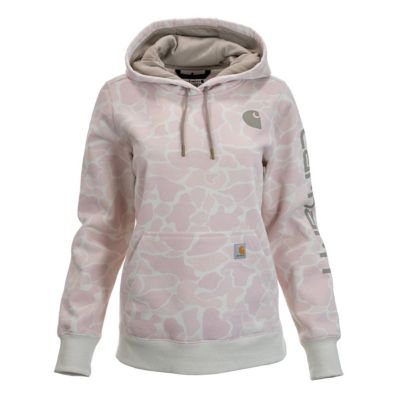
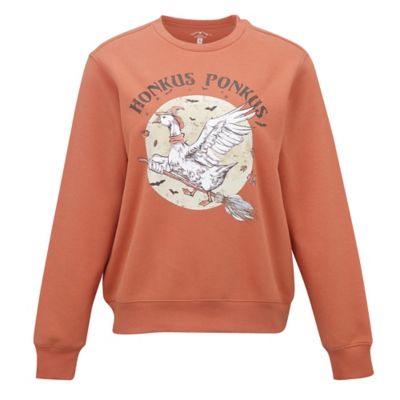
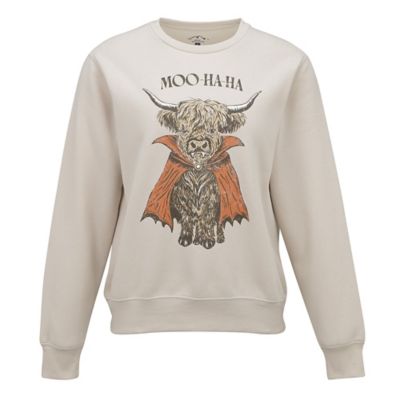
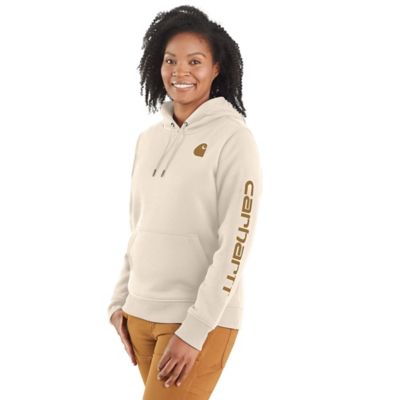
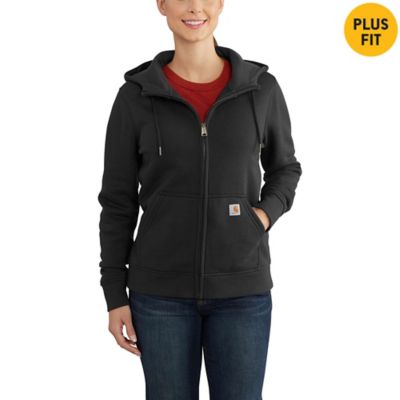
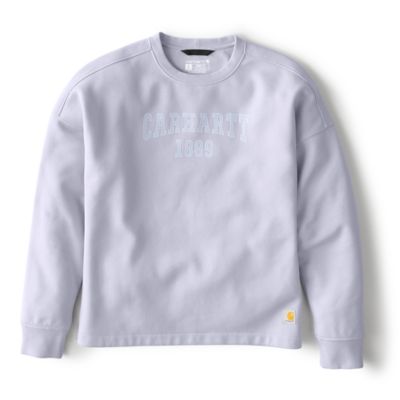
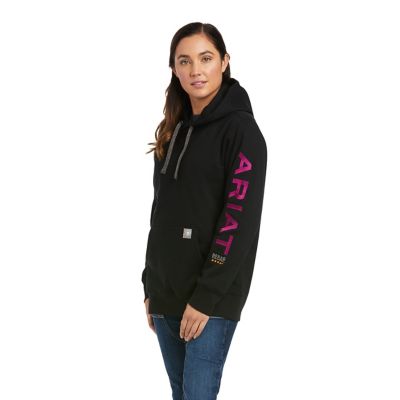
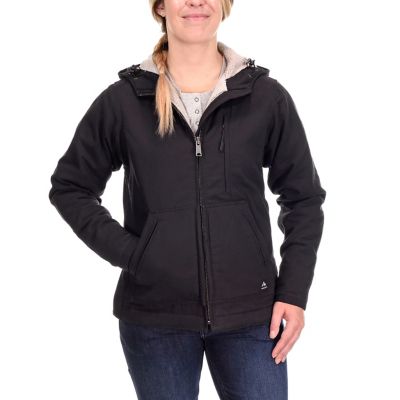
Ladies sweatshirts include crewnecks, hoodies, quarter-zips, and full-zip styles, with fits ranging from close to the body to roomy and oversized. These everyday layers work with jeans, leggings, joggers, and work pants, whether the day involves feeding animals, driving into town, or settling in after chores. The differences come down to fabric, construction, and how a sweatshirt sits when moving around. Cotton feels soft against the skin and gives many sweatshirts a familiar, substantial feel. Cotton-polyester blends combine that softness with fibers that generally dry faster and help the garment hold its shape. The exact balance depends on the fabric percentages, knit, and care requirements. Fleece usually has a brushed interior with a fuzzy feel, while French terry has small loops on the inside and a less plush texture. Fabric weight matters, too: a lighter sweatshirt folds easily into a tote, while a heavier knit has more substance and may keep a more structured silhouette. Neither is automatically better; the right feel depends on whether the sweatshirt is mainly for lounging, errands, or an active day on the property. A smooth interior can slide comfortably over a T-shirt, while a brushed interior feels different against bare arms. Stretch fibers can add give through the shoulders and elbows, though the amount of stretch varies by garment. Ribbed cuffs and waistbands help shape the sleeves and hem, and their snugness affects how the whole piece wears. Plain colors offer an easy match for everyday clothes, while graphics, lettering, and contrasting panels give an outfit a different look without changing its basic comfort. For women who go straight from the feed room to a grocery run, a sweatshirt can be an uncomplicated part of getting dressed. There is no need for an elaborate outfit when the fabric feels good, the sleeves stay put, and the cut leaves enough room to get through the day.
Fit makes a noticeable difference when reaching for a shelf, carrying a feed bucket, or spending a few hours behind the wheel. A regular fit generally follows the body without much extra fabric, while a relaxed fit allows more room through the chest and waist. Oversized sweatshirts have a deliberately roomier shape, often with dropped shoulders or wider sleeves; simply buying a larger size may also change the neckline, sleeve length, and placement of the hem. Measurements give a clearer picture than a size letter alone, especially when comparing different cuts. Chest, hip, sleeve, and garment-length measurements help show whether a sweatshirt will sit at the waist, reach the hip, or offer longer coverage. A shorter hem pairs differently with high-rise jeans than a longer, curved hem does with leggings. Shoulder seams that pull when arms move forward can signal a restrictive fit, while excess sleeve length may get in the way of hands-on tasks. Crewneck sweatshirts keep the neckline simple and leave no hood resting behind the neck. Hoodies offer a more laid-back shape, with pullover versions keeping the front uninterrupted apart from any pocket. A full-length zipper makes a sweatshirt easier to put on or take off without pulling it over the head, and a quarter-zip allows some adjustment at the neckline. Pockets deserve a little attention beyond their appearance. A kangaroo pocket gives hands a place to rest, while separate side pockets keep the front divided; pocket depth and closures affect how securely small belongings stay tucked away. Loose cords, dangling fabric, and overly long sleeves need particular care around equipment, and ordinary sweatshirts do not take the place of task-specific protective clothing. For everyday movement, comfort comes from having enough room without constantly tugging a cuff back or pulling the hem down. That balance matters just as much for a long drive or a walk with the dog as it does for a chore-filled afternoon.
How a sweatshirt holds up depends on its fabric, stitching, trim, and care, not just how thick it feels. Even seams, firmly attached pocket openings, and ribbing that returns to shape after a gentle stretch are useful construction details to notice. High-friction areas, including the underarms, cuffs, and sides, may develop pilling as fibers rub together. A seat belt, shoulder bag, or repeated contact with a work surface can contribute to that wear. Washing according to the care label helps protect the garment’s fit and finish. Cotton-rich fabrics may shrink, especially with heat, while printed designs, zippers, and stretch fibers can have their own care requirements. Turning a sweatshirt inside out can reduce rubbing against its outer surface in the wash, and keeping it away from exposed hook-and-loop fasteners helps prevent snags. Prompt attention to dirt, feed dust, and everyday spills can make cleanup simpler, but stain treatment should suit the fabric and follow the treatment label. Some sweatshirts allow tumble drying; others call for a different method, so the sewn-in instructions matter more than a blanket rule. Folding a substantial sweatshirt rather than leaving it on a narrow hanger can help avoid stretched shoulders. These small habits support repeated wear without making laundry complicated. Sweatshirts also make practical gifts for women who appreciate comfortable clothes they can reach for often, from a daughter heading to class to a friend who spends weekends around horses. A familiar neckline, preferred fit, and favorite color are usually more useful clues than a guess about what someone ought to wear. Someone who lives in pullovers may appreciate another easy crewneck, while someone who dislikes pulling clothing over her hair may favor a zip-front style. For another everyday wardrobe,
Men's Sweatshirts offer a related place to browse. The best match is a sweatshirt that suits the wearer’s routine, feels comfortable through a full day, and fits naturally alongside the clothes already in the closet.