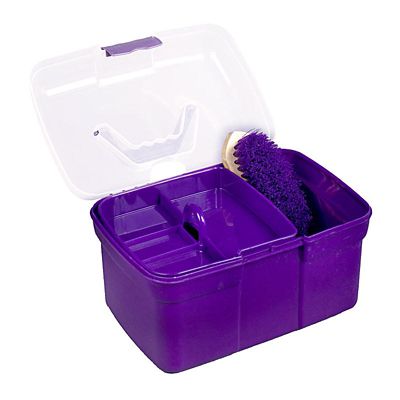
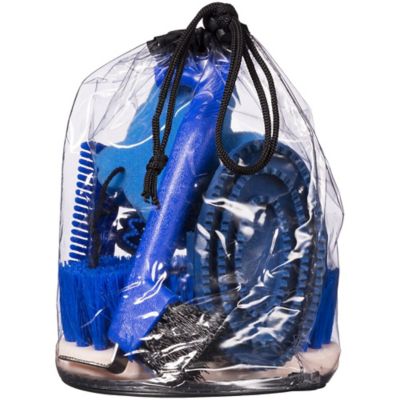
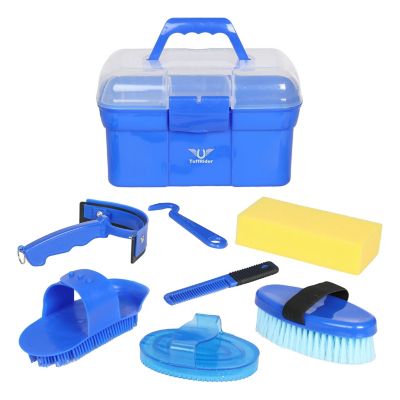
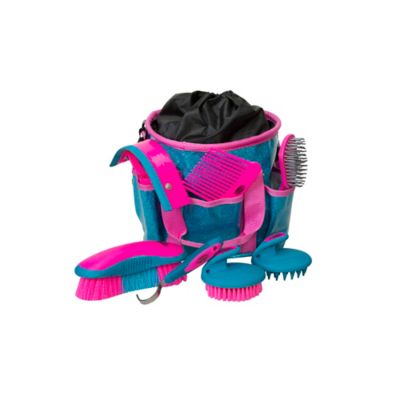
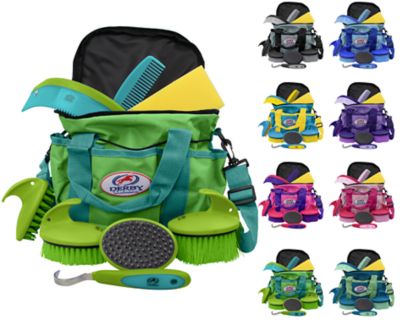
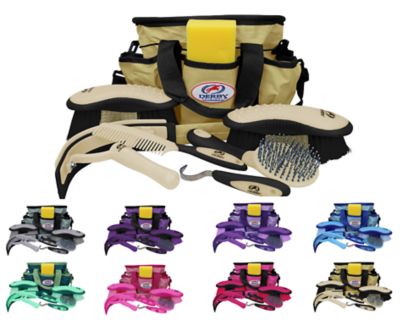
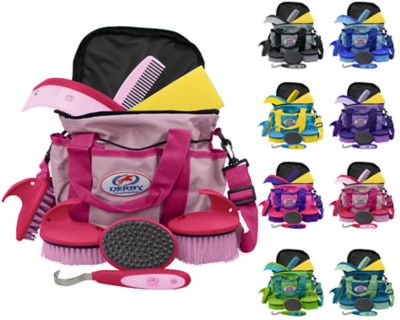
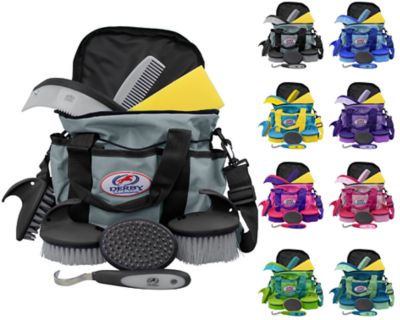
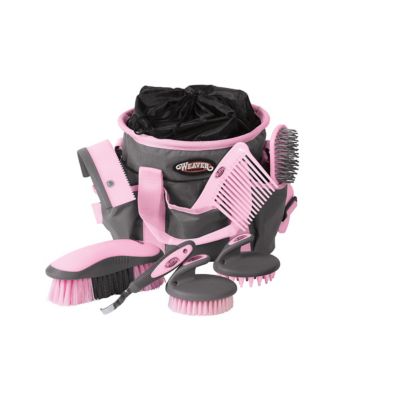
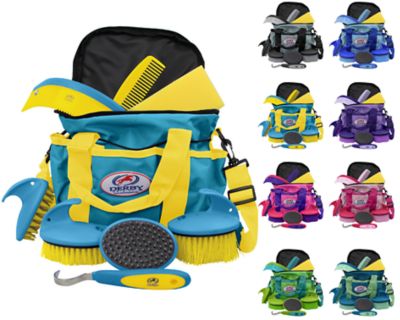
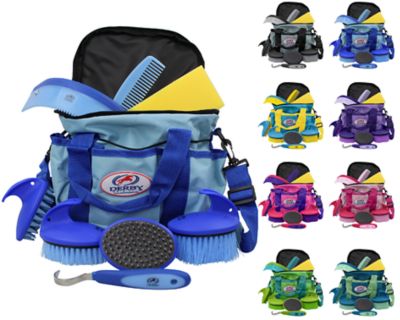
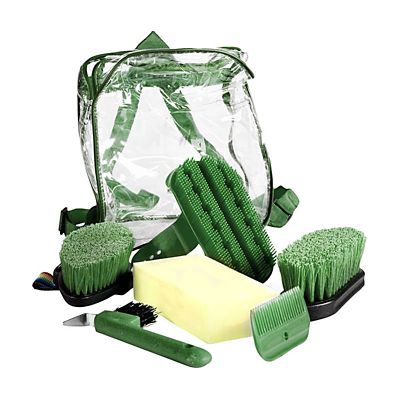
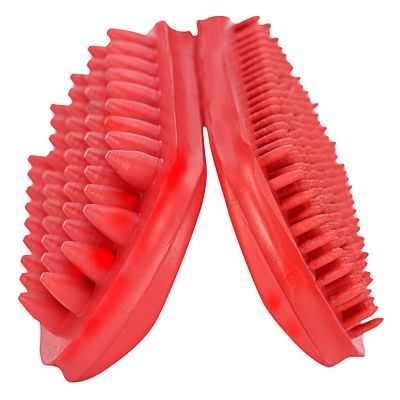
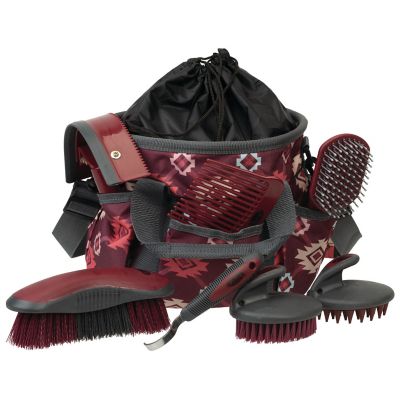
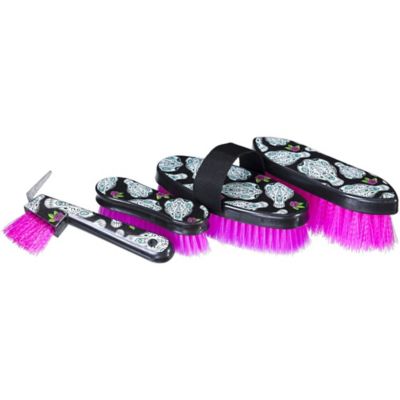
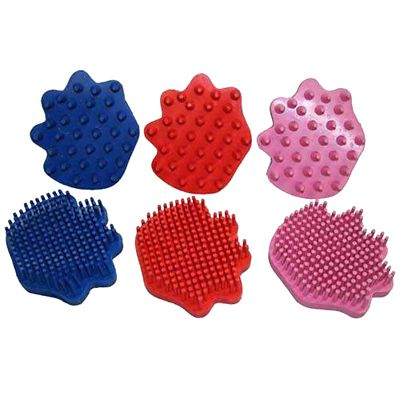
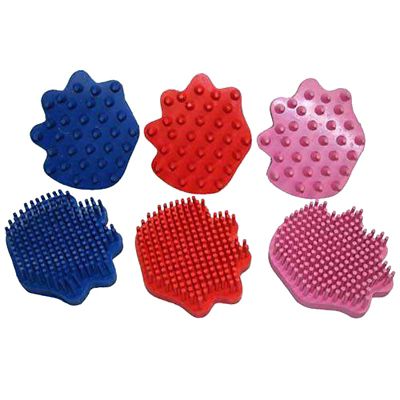
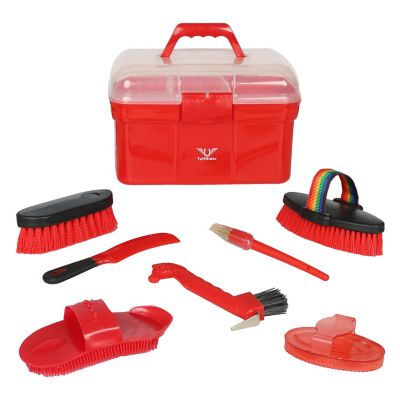
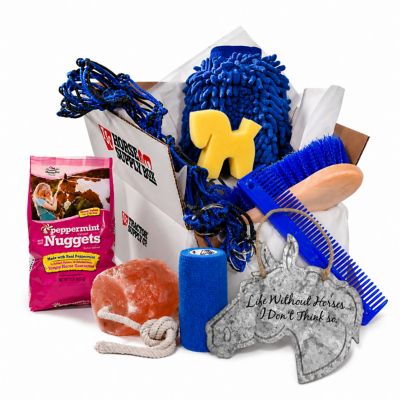
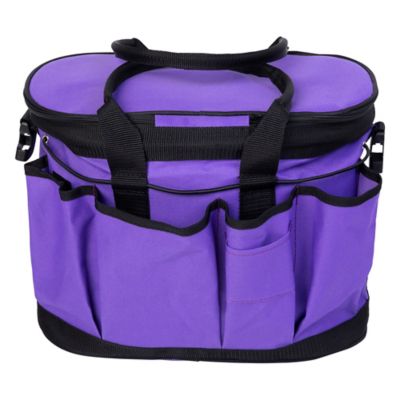
Junior horse grooming gift kits are sets of horse-care brushes, combs, and tools designed for smaller hands, often packed in a tote, backpack, or grooming box. They give young riders a practical way to take part in everyday barn routines, whether they are brushing a patient pony before a lesson or helping an experienced adult care for a family horse. Contents vary by set, but common pieces include a curry comb, a body brush, a softer finishing brush, and a mane and tail comb. Some sets also include a hoof pick or other tools that call for closer adult instruction. A kit intended for real horse care is different from a toy grooming set, so the recommended age range and intended use matter as much as the look of the bag. For a child just getting comfortable around horses, a manageable assortment can feel less overwhelming than a container full of unfamiliar tools. Smaller brush backs, easy-grip handles, and a balanced carrying bag help little hands hold on without stretching or squeezing too hard. A brush still needs enough surface area to work through a horse’s coat, though, so small does not have to mean tiny. The horse matters, too: a sensitive pony may tolerate soft bristles better than a stiff brush, while a thick coat may call for a different combination of tools. Flexible rubber curry combs generally belong on fleshy, well-muscled areas rather than the face or lower legs, and brushes should match the area being groomed. That mix of hand fit, coat suitability, and adult oversight gives these gifts a purpose beyond their cheerful colors. A child can carry a familiar set to the grooming area, recognize each tool, and build confidence through short, calm sessions alongside someone who knows the horse. For young riders, that routine can become as much a part of horse time as putting a foot in the stirrup.
Materials and construction make a difference when a grooming kit travels between the tack room, the barn aisle, and a lesson facility. Molded plastic brush backs are generally easy to wipe clean, while rubber gripping surfaces can help a child keep hold of a brush. Synthetic bristles often lend themselves to straightforward cleaning; natural-bristle brushes may need different care depending on their construction. Rounded comb teeth and smooth edges are worth attention, especially for children still learning how much pressure to apply. Secure bristle attachment, sound stitching, and firmly attached handles help a set stand up to repeated carrying and regular grooming. The container deserves a close look, too. An open tote makes tools easy to spot, while a zippered bag helps keep smaller pieces together during the trip to the barn. A rigid box can keep its shape on a shelf, though its weight and handle size should suit the child carrying it. Separate pockets make it easier to keep a hoof pick away from softer brushes, and a roomy opening leaves space for small hands to put things back without a struggle. The full kit should feel manageable when loaded, not just when empty. Grooming tools also need a little care of their own. Loose hair and dirt collect between bristles and comb teeth, and brushes put away damp can leave the whole bag musty. Cleaning methods should follow the maker’s directions, with tools allowed to dry fully before being packed away. Wood-backed brushes, fabric bags, and rubber tools may not all tolerate the same washing method. A sheltered storage spot away from feed, standing water, and busy walkways helps keep everything in working shape. In barns with several horses, individual grooming sets can also make it easier to keep tools assigned to one animal. When a horse has a skin condition or a suspected infection, the barn’s horse-care professional or veterinarian should direct cleaning and sharing practices.
As a gift, a junior horse grooming kit fits children who already spend supervised time around horses and want a bigger part in their care. It can mark a birthday, the start of riding lessons, or a milestone such as learning to groom with less hands-on help. A pony-loving child who does not have regular access to a horse may need a different sort of present, since real grooming tools are meant for practical animal care rather than pretend play. For a lesson rider, a quick check with the instructor helps establish whether personal brushes are welcome and which tools suit the barn’s horses. For a child with a family horse, matching the set to that animal’s coat and temperament makes the gift more useful from the start. Bright colors and coordinated pieces can help young riders recognize their belongings on a busy grooming shelf, but comfort and function should lead the choice. A bag that opens easily, a brush that sits comfortably in the palm, and enough room to return everything after a lesson all matter once the wrapping is gone. Families comparing grooming supplies for different animals can also browse
Animal Grooming Kits, keeping each animal’s needs in mind rather than treating every brush as interchangeable. Around horses, even a child-sized set belongs within an adult-led routine. A calm horse, a clear working area, sturdy footwear, and close supervision matter more than how complete a kit looks. Hoof care and work near sensitive areas require instruction from an experienced adult, and no grooming bag replaces that support. With those pieces in place, the gift becomes something a young rider can reach for before each lesson: a familiar tote on the rail, a brush that fits their hand, and a hands-on role in caring for the horse before the saddle ever comes out.