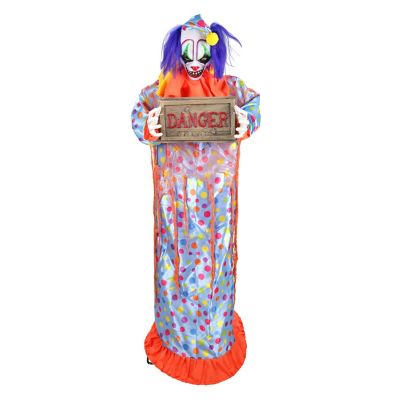
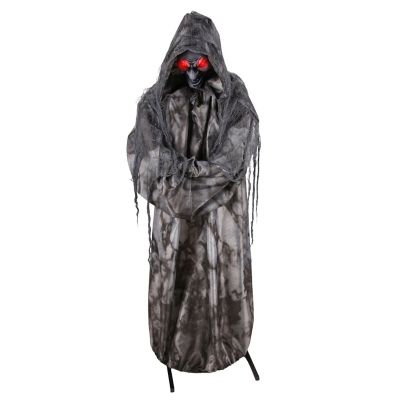
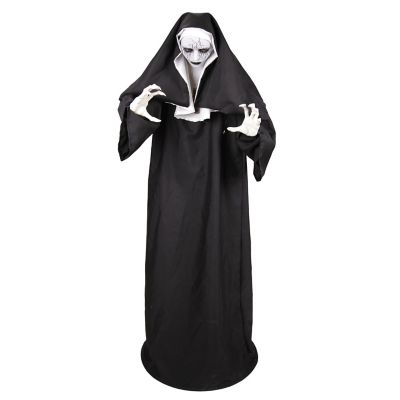
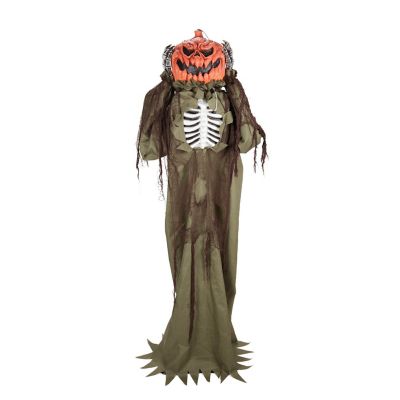
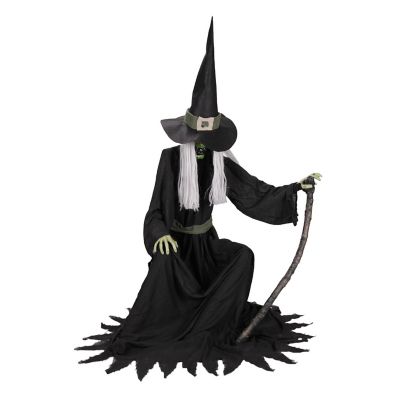
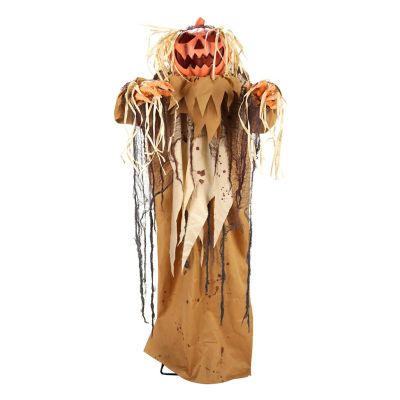
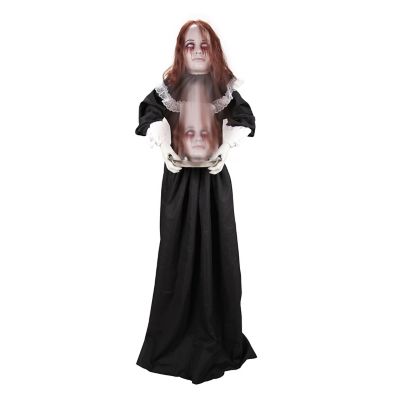
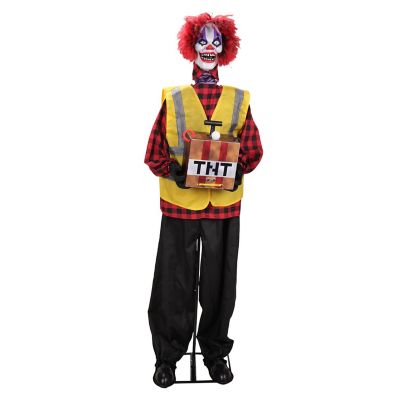
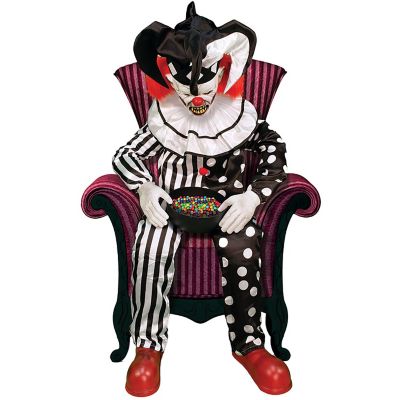
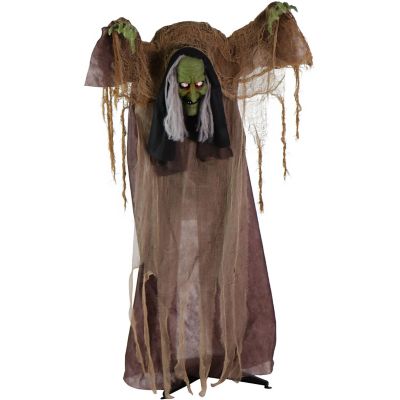
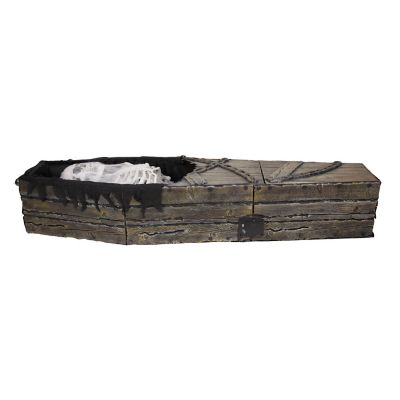
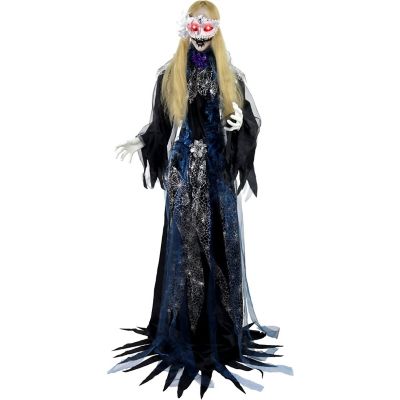
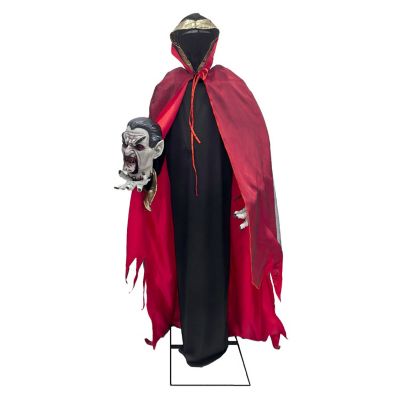
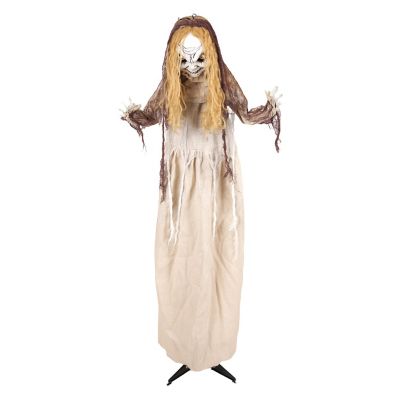
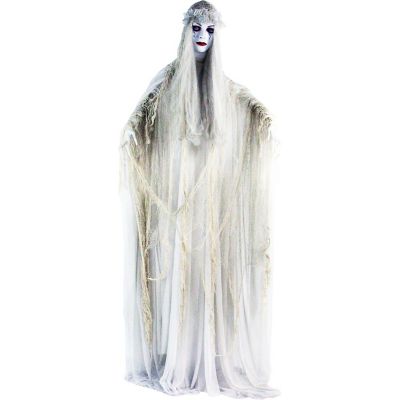
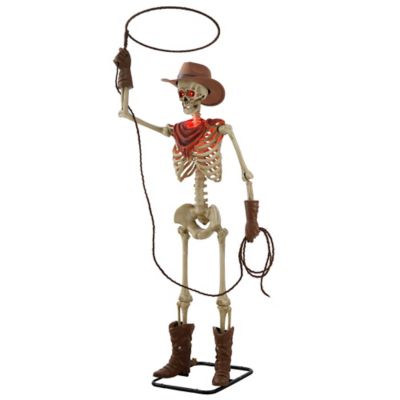
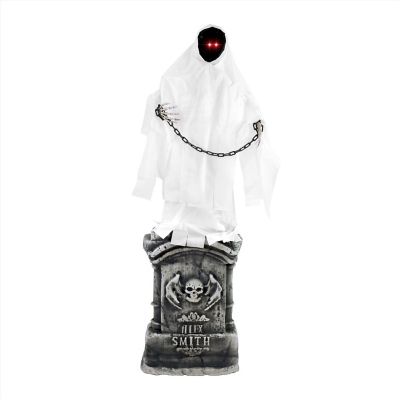
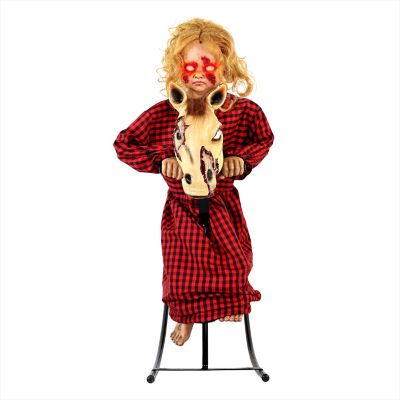
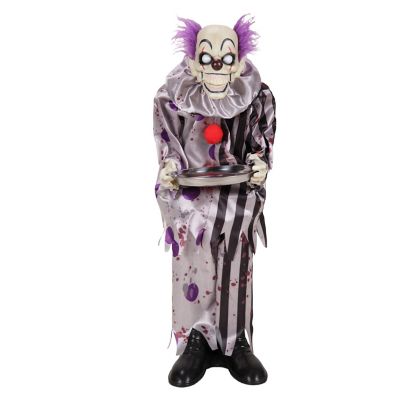
Jump scare Halloween animatronics bring a haunted scene to life with a sudden burst of movement, often paired with eerie sounds and glowing eyes. Unlike figures that stand still or repeat a steady motion, these props build their scare around a surprise: a creature lunging from a crouch, a figure rising from behind a headstone, or a hidden character snapping into view. Depending on the design, a motion sensor, sound sensor, pressure mat, or manual control starts the action when someone approaches. That pause before the movement is a big part of the fun. A shadowy figure beside a porch post can look harmless until its head turns and its arms reach forward. Low-sitting creatures create a different effect, drawing attention toward the ground before springing into motion. Taller figures can anchor a haunted entryway or serve as the main attraction in a Halloween party scene. Motors and mechanical linkages power many designs, while some larger haunt setups rely on spring-loaded or pneumatic mechanisms with their own setup requirements. The action, reach, reset time, and trigger type all shape how a prop fits into a display. A quick pop-up creates a brief jolt, while a slower rise followed by a sudden lunge stretches out the suspense. Sound effects can add anything from a short shriek to a drawn-out growl, although volume controls and silent operation vary by model. For folks putting together a front-porch fright, a garage haunt, or a Halloween gathering out at the farm, the appeal is the same: a scene that reacts to its visitors rather than simply sitting in the background. Jump scare Halloween animatronics work especially well as a focal point, with still figures and scenery giving guests something to study before the moving character takes over. A single well-placed scare can give a modest display plenty of personality without filling every corner.
The right fit comes down to more than a figure’s standing height. Its full movement range matters just as much, especially beside porch rails, under a low roof, or near a narrow doorway. A character that leans forward needs open space in front of its base; a rising figure needs clearance overhead. Listed dimensions may describe the resting position, so operating measurements and setup instructions help show how much room the complete action needs. Materials also affect the look, weight, and handling of these moving Halloween props. Depending on the design, a frame may combine metal supports with molded plastic parts, while fabric clothing, foam details, or flexible outer surfaces create the character’s shape. Loose sleeves and ragged hems can make movement look more lifelike, but they need to stay clear of joints, gears, and sensor openings. Broad bases and properly fitted supports help keep a figure steady through repeated cycles. Anchoring provisions vary, and any stakes, brackets, or tie-down points should match the manufacturer’s directions rather than pulling against a moving arm or lightweight costume section. Indoor, covered-outdoor, and outdoor ratings are important distinctions, too. A roof overhead does not automatically protect a prop from windblown rain, damp ground, or condensation, and fabric clothing is not proof that the electronics beneath it can handle moisture. Battery power can offer flexibility where an outlet is out of reach, while plug-in designs need a suitable power source and a cord route away from foot traffic. Pneumatic figures may also require a compatible air supply, adding equipment and space considerations beyond the character itself. Assembly can involve joining frame sections, connecting labeled wires, and arranging clothing around the mechanism. Secure connections, accessible controls, and manageable sections make a difference for anyone planning to set up the display for more than one Halloween event. Those practical details matter just as much as a frightening face when the goal is a scene that runs smoothly through an evening of visitors.
A good Halloween scare leaves room for people to laugh, step back, and keep moving. Along a trick-or-treat route, a jump scare animatronic belongs beside the walking path rather than where its movement could block the next step. Steps, loose gravel, cords, and low obstacles become harder to notice when someone is watching a looming figure instead of the ground. Keeping the full action zone separate from guests gives the mechanism room to work and helps protect curious fingers from pinch points. Younger children, easily startled visitors, and pets may be happier with a gentler scene or a clear way around the active display. For a family gathering, adjustable sound or selectable activation modes, when included, can make the same figure easier to fit into different parts of the evening. Sensor placement affects the experience as well: a trigger facing a busy walkway may cycle constantly, while one tucked behind fabric or scenery may miss approaching guests. Reset time matters when several people arrive together, since some mechanisms need a pause before the next movement. Pairing an animated focal point with
Halloween Scary Props can help build a fuller scene, whether the setting is a make-believe graveyard beside the porch or a dim corner reserved for party frights. Background pieces should leave the sensor, moving parts, and walking space clear. After the gathering, care is mostly about protecting the working parts and keeping moisture from lingering. Disconnecting power before cleaning or adjustments, following the care label for fabric and molded surfaces, and letting permitted surfaces dry before packing help preserve the figure for another Halloween. Removable batteries should come out before extended storage when the instructions call for it, and frame sections, connectors, and fasteners stay easier to find when packed together. A dry storage space and gentle support around faces, hands, and projecting parts help prevent crushing between celebrations. For a Halloween enthusiast, an animatronic can also make a fun gift when its size, power needs, and scare level suit the recipient’s space.