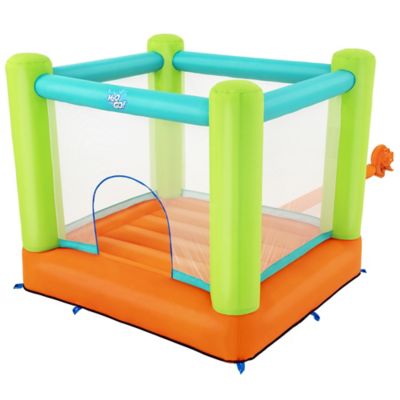
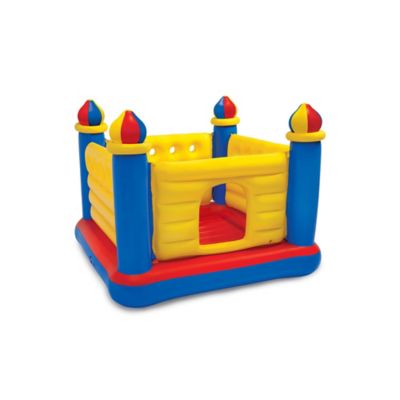
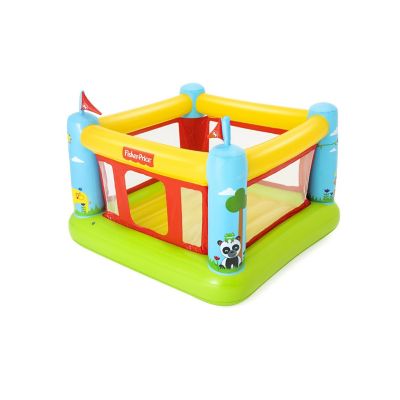
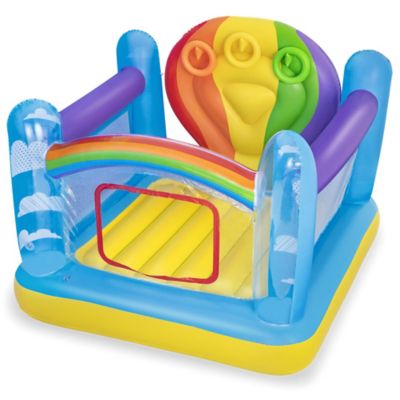
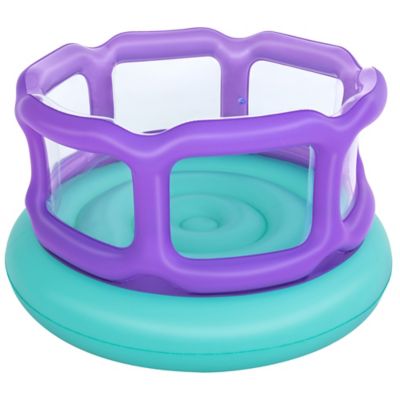
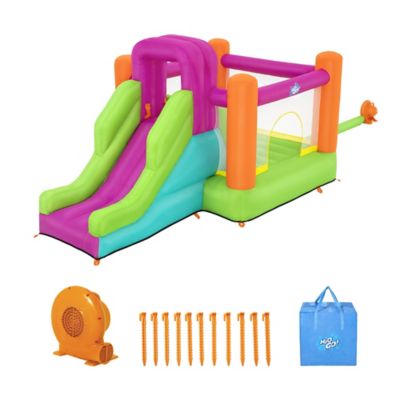
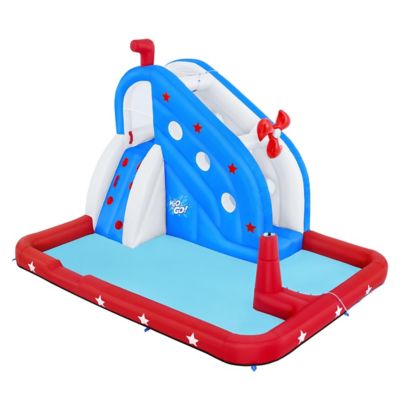
Inflatable jumpers give kids a place to bounce, hop and burn off some energy, whether the occasion is a backyard birthday party or an afternoon with the cousins. Often called bounce houses or inflatable bouncers, these play structures range from simple enclosed jumping areas to larger layouts with slides, climbing sections and basketball hoops. A traditional jumper keeps the action in one space, while a combination design gives children several activities within the same footprint. Inflatable water play structures may add splash areas and water slides, but water belongs only on models specifically designed for wet play. Compact bouncers can suit smaller play spaces, though a small footprint alone does not make an outdoor jumper suitable for a playroom. Indoor use requires the manufacturer's approval and enough clearance from ceilings, walls, light fixtures and furniture. Materials also help distinguish different types of inflatable jumpers. Residential designs commonly feature woven Oxford fabric, often polyester or nylon with a coating, while commercial designs frequently incorporate heavier PVC vinyl. Construction varies, so the fabric name alone does not tell the whole story. Reinforced seams, protected attachment points and extra material around entrances and other high-contact areas are worth a close look. Mesh walls provide visibility and help define the jumping area, allowing supervising adults to keep an eye on the action from outside. Taller sidewalls and enclosed platforms serve different purposes depending on the layout, and neither replaces active adult supervision. The best match is a jumper built for the children's ages, the planned activities and the setting where it will operate. A straightforward bounce area may suit children who mainly want room to hop, while a combination layout can appeal to kids who enjoy climbing up and sliding down between rounds of bouncing. More activities also mean more entrances, transitions and spaces for an adult to watch.
Fit matters just as much in the yard as it does inside the jumping area. The listed dimensions should be considered alongside the manufacturer's required clearance around every side, including room for the blower, inflation tube, anchors and entrance. A level patch of lawn may look roomy until the full layout is measured, especially when a slide extends beyond the main bounce area. The site needs to meet the maker's surface requirements and stay clear of fences, branches, sharp objects, farm equipment, animal areas and other hazards. Ground protection may be required, but it is not a substitute for a suitable surface. Anchoring is another essential part of the setup: stakes or other approved anchoring equipment must match the instructions and the installation site. Indoor setups need their own approved securing method rather than an improvised substitute. Many fabric bounce houses require a blower to run continuously throughout play; sealed-air bouncers operate differently, so their inflation instructions are not interchangeable. Whether a blower comes with the structure varies, and the correct blower specifications matter for proper inflation. For powered models, access to a suitable electrical outlet is part of the space requirement. Outdoor electrical connections should have ground-fault protection, and any extension cord must meet the equipment manufacturer's directions. Cords, plugs and the blower belong away from foot traffic and water. Inside the jumper, the total weight limit, individual weight limit, age range and maximum number of children all apply together. A roomy-looking floor does not cancel those limits. Children of similar size should play together, with separate turns when larger and smaller kids want to join in. Shoes, food, drinks and sharp accessories stay outside the play area, and flips or roughhousing have no place in a bounce house. An adult should remain close enough to enforce the rules, watch the entrance and stop play if the structure loses firmness or anything appears out of place.
Care and storage have a lot to do with how an inflatable jumper holds up between play days. Before each setup, the fabric, seams, mesh, anchor loops and inflation tube need a look for tears, worn spots or loose connections. The blower housing, cord and plug also deserve attention before power is connected. A small problem at an entrance or seam can grow under repeated bouncing, so repairs should follow the manufacturer's directions and use materials approved for that structure. Cleaning instructions vary by fabric and coating, but removing loose grass and dirt before packing helps keep grit out of folds and seams. When washing is permitted, the recommended cleaner and a gentle approach help protect the surface; harsh chemicals and abrasive scrubbing can damage some materials. Thorough drying is especially important after cleaning or approved water play. Moisture trapped inside a folded jumper can lead to mildew, odors and damage that may not show until the next setup. The storage bag should accommodate the folded structure without forcing sharp bends around attached parts, and the packed unit belongs in a dry, protected spot away from rodents and sharp tools. Packed size and weight matter for everyday handling, too. A larger play area may call for two adults to move, unfold and put away, along with enough storage room for the blower and anchoring equipment. For families considering an inflatable jumper as a gift, checking with the parents first can prevent a surprise that will not fit the yard, the children or the available storage space. Birthday celebrations, family gatherings and regular supervised play can all be a good match when the structure's limits suit the group. Shoppers comparing a dedicated bounce area with other outdoor play layouts can explore
Backyard Inflatables for a broader look at the category. The right choice leaves room not just for bouncing, but also for safe access, attentive supervision and the practical work of setting everything up and packing it away.