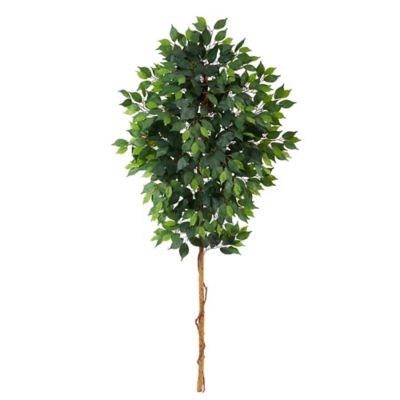
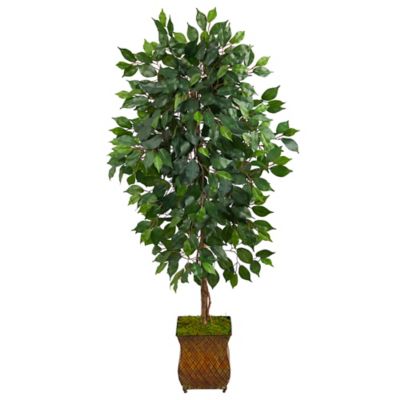
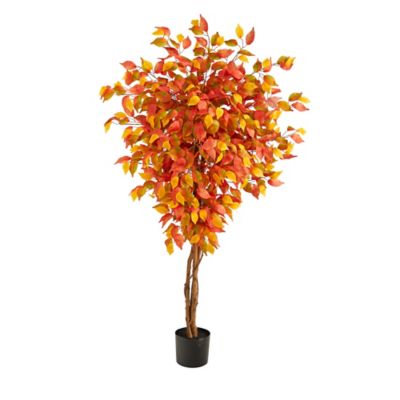
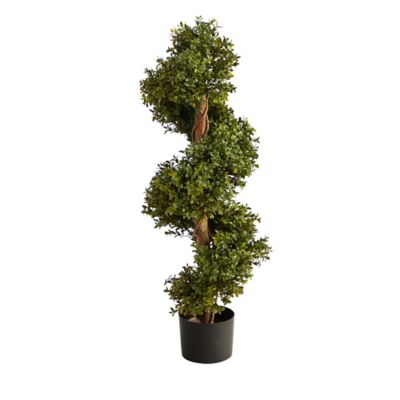
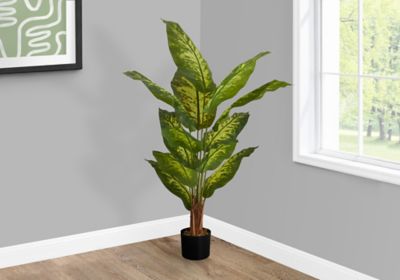
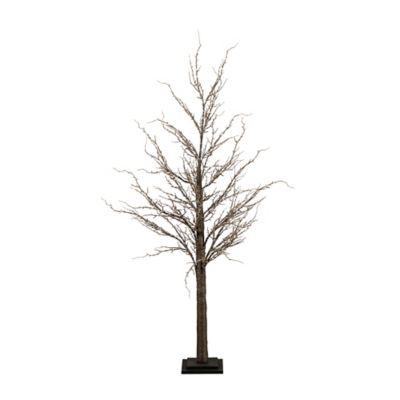
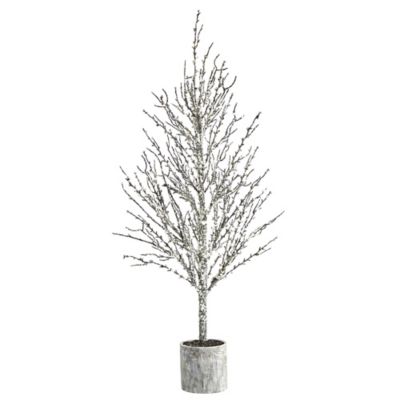
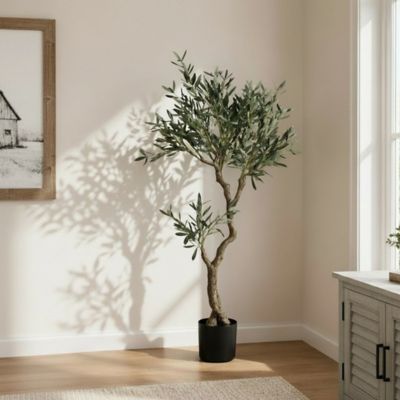
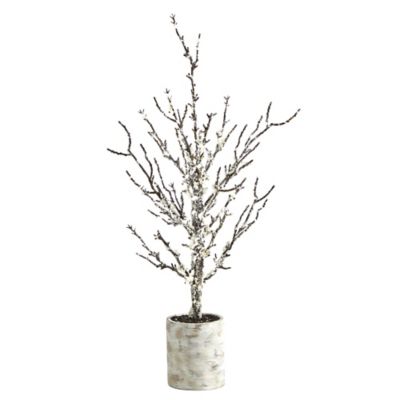
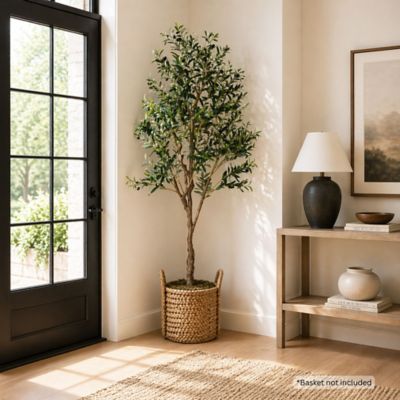
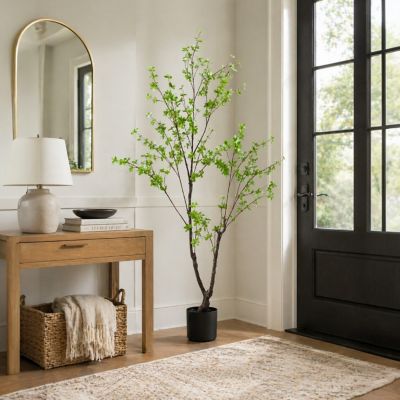
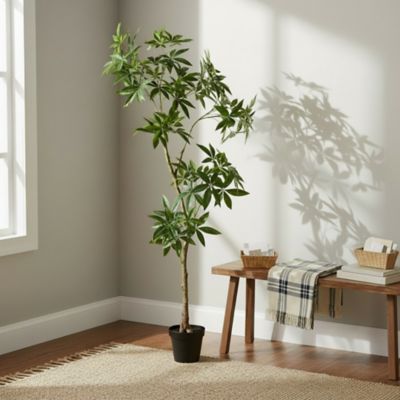
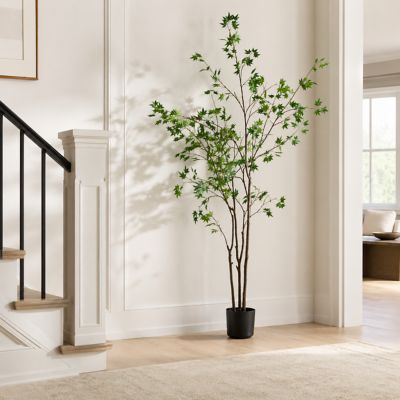
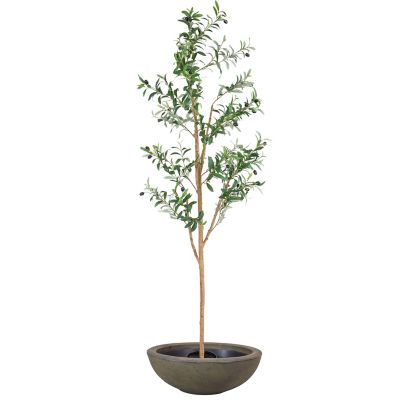
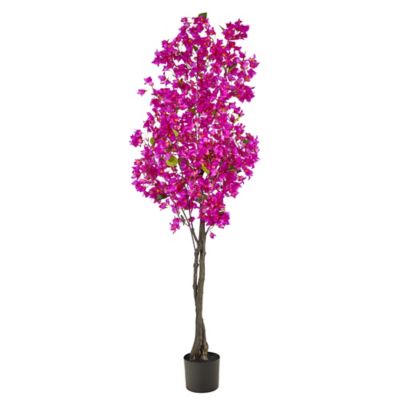
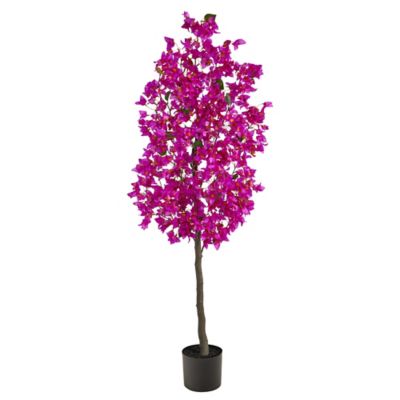
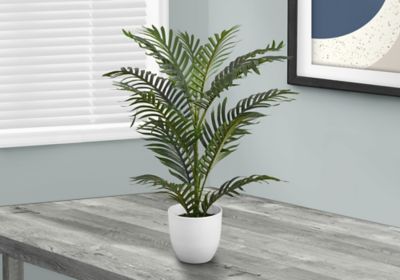
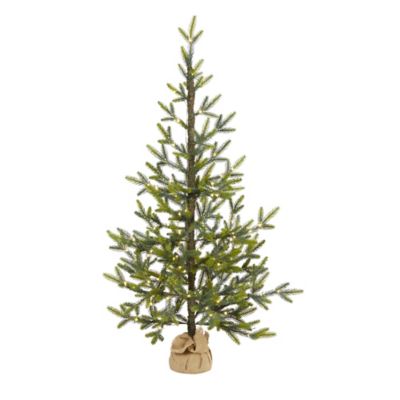
Indoor faux trees bring a little of the outdoors into the house without adding watering, pruning, or repotting to the chore list. A leafy tree beside a reading chair can soften a bare corner, while a tall, open-branched shape can give an entryway a welcoming feel without filling it with furniture. These artificial trees work well in living rooms, dining areas, home offices, and other indoor spaces where a living plant might need more attention than the household schedule allows. Their appeal goes beyond easy upkeep: they stay the same size, keep their foliage, and do not depend on a bright window to look at home. Different leaf shapes create different looks. Broad leaves have a bold presence against a plain wall, narrow leaves give branches a lighter outline, and palm-style fronds spread out above nearby furniture. An airy canopy lets the wall show through, while fuller foliage makes a stronger visual statement. Height matters, but width often makes the bigger difference once a tree is in place. A tall tree with a slim footprint may fit neatly beside a cabinet, while a shorter one with wide branches may need more breathing room. Listed measurements deserve a close look, especially when the overall height includes the pot and the widest point depends on how the branches are arranged. A little clearance below the ceiling keeps the tree from looking squeezed in. At floor level, there should still be room for cabinet doors to open, chairs to slide back, and folks to walk through without brushing the leaves. In a busy farmhouse entry, that might mean a narrow shape set away from the bench where boots come off. In a quiet sitting room, a broader canopy can fill the space beside a sofa. The best fit looks settled into the room rather than wedged into whatever corner happens to be empty, with enough space around the trunk and foliage for the whole shape to show.
Materials and construction affect how indoor artificial trees look up close, how their branches hold position, and what kind of care they need. Foliage may be made from plastic, fabric, or a blend of materials, with differences in surface texture, leaf thickness, and flexibility. Fabric leaves can have a softer appearance, while molded leaves may show more pronounced veins or a waxy-looking finish. Trunks may feature natural wood, molded materials, or a combination, and visible bark texture can help the tree blend with wood furniture and other familiar household finishes. Branch spacing matters as much as leaf count; some open space around the trunk gives the shape depth instead of making it look like a solid wall of green. Many designs have bendable branches that need gentle arranging after unpacking. Where the care directions allow, small adjustments can separate overlapping leaves and give the canopy a balanced outline without forcing stems at their connection points. Assembly details are worth checking, too, since some taller trees arrive in sections. A secure connection and a level base help the finished tree sit as intended. The included pot may serve mainly as a support base rather than the final look for the room. When placing it inside another planter or basket, the inner pot should sit flat and steady, with enough room to fit without tilting. A larger outer container changes both the footprint and the overall height, so those added inches count. Stability deserves extra attention around children, pets, and busy walkways; a weighted base still needs sensible placement and any anchoring recommended by the maker. Routine care is usually straightforward, but the material determines the method. A soft duster or gentle cloth can lift everyday dust from leaves and branches. Water, sprays, and cleaning solutions should only touch surfaces when the care directions permit them. Gentle handling helps protect leaf attachments, and keeping foliage clear of heaters, fireplaces, and frequently handled objects reduces unnecessary wear. Indoor-rated trees also belong in indoor spaces, even when their appearance suggests a porch or patio setting.
An indoor faux tree can tie a room together without making the whole space feel staged. Beside a leather chair, green foliage breaks up a run of brown tones; against a light wall, its branching outline adds depth without another framed picture. A simple planter keeps attention on the leaves, while a basket or textured container can echo the wood, woven fibers, and practical furnishings already in the house. The container and tree should look balanced together, with a base that visually supports the canopy rather than disappearing beneath it or overwhelming the trunk. Placement can follow the way the room gets lived in. A tree near a dining-room corner can add softness without taking over the table, and one beside a desk can bring greenery into view without crowding the work surface. For a tighter spot,
Small Artificial Trees offer a smaller-scale option for spaces where a full-height canopy would get in the way. A compact tree can also suit a raised stand, provided the stand is level, strong enough for the weight, and wide enough to support the pot securely. Repeating a similar leaf shape in adjoining rooms can create a connected look, though every corner does not need a matching tree. Sometimes one well-placed shape does more than several crowded together. Faux greenery can be a thoughtful housewarming gift for someone settling into a first apartment, fixing up a home office, or wanting plants without another daily responsibility. It is also a practical fit for households that spend plenty of time away from home, since it does not need a plant sitter. When choosing for someone else, the room size, preferred colors, and available floor space matter more than sheer height. A tree with a comfortable footprint, a pleasing branch shape, and care requirements that suit the household can become an easy part of the room, bringing a steady touch of green to the places where folks gather, work, and unwind.