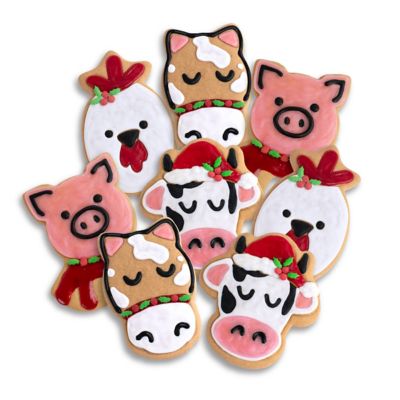
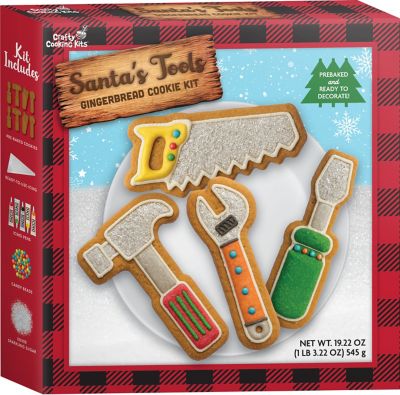
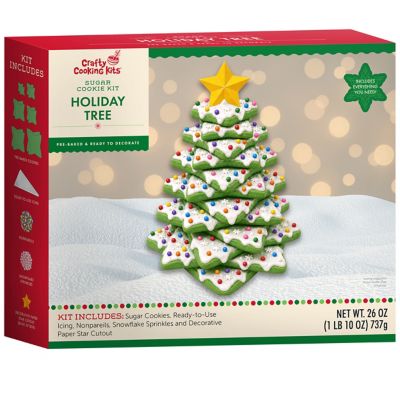
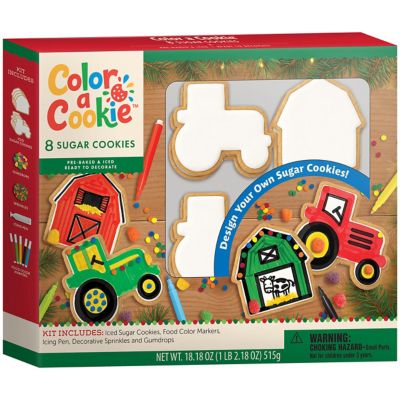
Holiday cookie decorating kits bring cookies, icing, and edible toppings together for a hands-on holiday activity at the kitchen table. Many kits include pre-baked sugar cookies or gingerbread cookies, letting families skip the baking and get straight to adding color, patterns, and a little personality. Other sets center on icing and toppings for cookies baked at home, so the package contents help distinguish a ready-to-finish activity from supplies that need a little more preparation. Sugar cookies generally offer a mild, sweet base, while gingerbread brings a spiced flavor that fits right in with Christmas gatherings. Trees, stars, ornaments, and gingerbread people give everyone a familiar starting point, whether the finished cookies are headed for a dessert tray or a plate beside the fireplace. Depending on the set, icing may come ready to squeeze, in separate piping bags, or as a mix that needs preparation according to the package directions. Sprinkles, colored sugar, and small candy pieces add texture as well as color. The number and size of the cookies make a difference, too: a few larger shapes can keep a small group busy with detailed patterns, while a greater number of smaller cookies gives more people a chance to join in. Cookie count alone does not tell the whole story, since shared icing colors and topping portions also affect how comfortably a kit serves a gathering. Broad, flat cookie shapes leave room for little hands to spread icing, while shapes with narrow branches or small edges suit someone who enjoys slower, more detailed work. A kit with several colors gives each person room to take a different approach, from simple snowy stripes to a gingerbread person wearing bright red boots. That mix of familiar flavors and open-ended play makes holiday cookie kits a good fit for family evenings, cookie exchanges, and get-togethers where spending time together matters more than getting every line straight.
The details inside a cookie decorating kit shape both the experience and the cleanup afterward. Cookies need enough structure to handle spreading and piping, though thin points and narrow edges still deserve gentle handling. Texture varies by recipe: some cookies have a crisp bite, while others are softer, and their flavor and freshness depend on the ingredients, packaging, and storage directions. Icing behaves differently as well. A thicker icing can hold dots, outlines, and little details, while a looser consistency spreads across a broad surface more easily. Some icings set firm enough for careful packaging; others stay soft and work better for cookies served on a tray. Drying time matters when cookies are meant for gift bags, since a surface that feels set may still need more time before stacking. Any included squeeze bottles, piping tips, spreaders, or cutters should be intended for food contact. Silicone, plastic, and stainless steel each have their place in cookie-making supplies, but cleaning needs vary, and not every component belongs in the dishwasher. Reusable pieces benefit from prompt cleaning before icing hardens inside narrow openings, followed by thorough drying before storage. Disposable piping bags keep cleanup simple, while washable tools may suit a household that makes cookie time a yearly tradition. Grip and size matter for comfort: a small bag can be easier for a child to manage than a large, tightly filled one, and a broad spreader offers a different kind of control than a fine piping tip. Age guidance and adult supervision remain important when children handle small candy pieces or tools. Ingredient labels also deserve attention when cookies will be shared, especially around food allergies or dietary restrictions. Cookies, icing, and toppings can have different ingredients and cross-contact statements, so the full package information matters. Storage and freshness dates apply to the whole experience, from keeping unopened components in the conditions listed on the label to protecting finished cookies from moisture, crushing, and curious pets.
A holiday cookie decorating kit can be as much about the gathering as the cookies themselves. At a farmhouse kitchen table, one person might carefully outline every star while another piles sprinkles onto a tree until hardly any icing shows. Both approaches belong, and a kit that leaves room for different skill levels helps keep the activity easygoing. Younger children often enjoy broad shapes and simple spreading, while older kids, teens, and adults may spend more time on lettering, layered colors, or matching patterns across a batch. For grandparents sharing an afternoon with grandchildren, having cookies and toppings gathered together can mean less time measuring ingredients and more time sitting side by side. For a holiday host, a cookie station gives guests something to do between a meal and dessert without requiring everyone to follow the same pace. Enough elbow room, shared supplies within reach, and a washable table covering help the activity fit an everyday home rather than a picture-perfect setup. These kits can also make thoughtful gifts for a family, a neighbor who enjoys baking, or someone hosting visitors over Christmas. The best match depends on whether the recipient would enjoy a ready-to-finish treat or prefers a project that includes baking, along with how many people are likely to take part. A compact kit suits a quiet evening, while a larger gathering calls for enough cookies and icing to keep sharing comfortable. For cookies headed to a friend’s house or a community gathering, a firm finish and packaging that protects the shapes help them travel without smearing or breaking. A welcoming porch with
holiday door accents can set the scene before everyone settles around the table. Inside, the appeal stays simple: familiar holiday shapes, something sweet to share, and a chance to make memories together without needing a baker’s touch.