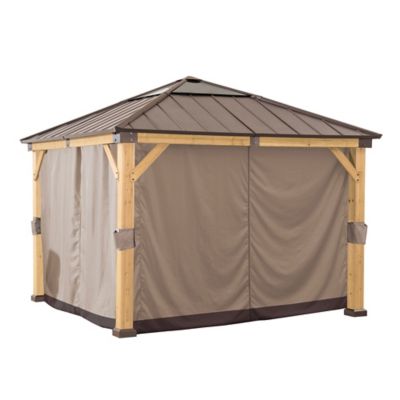
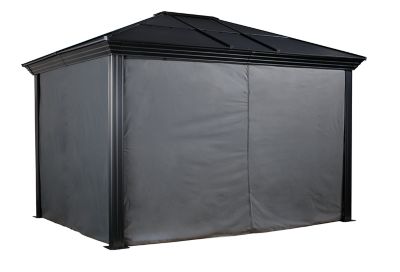
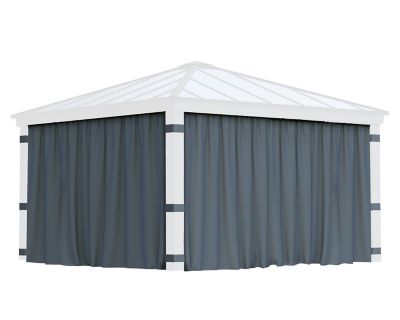
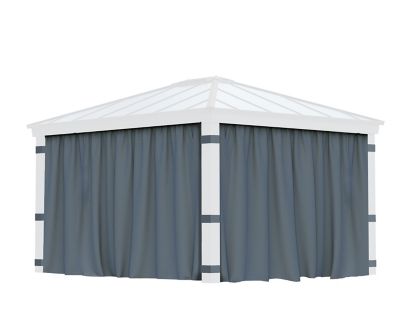
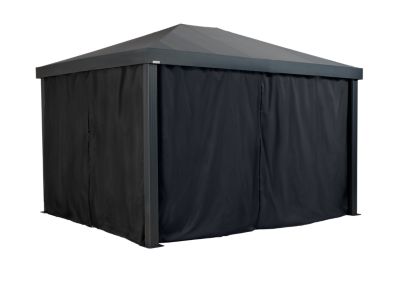
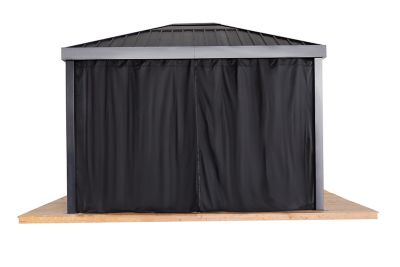
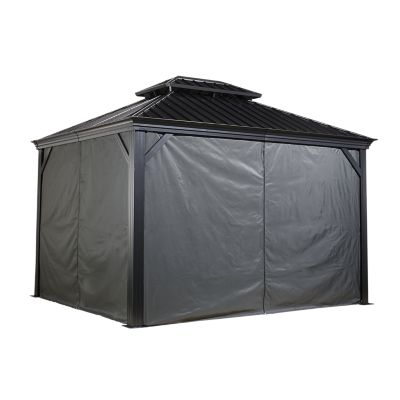
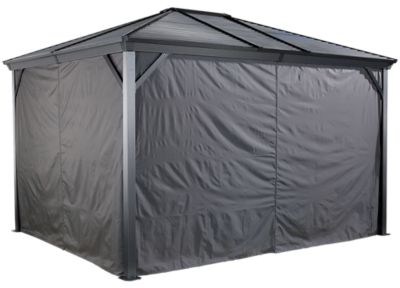
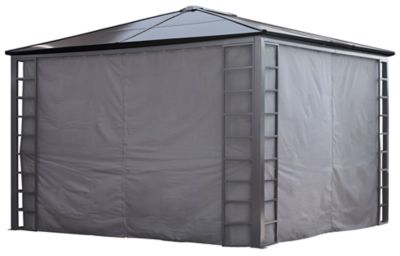
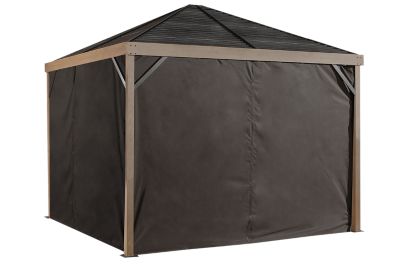
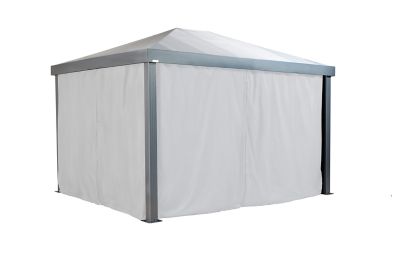
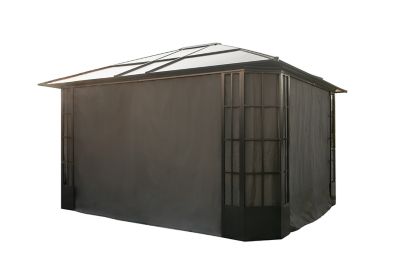
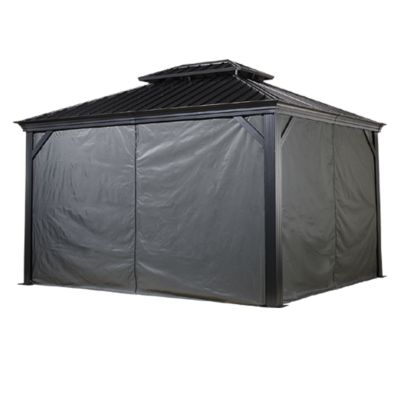
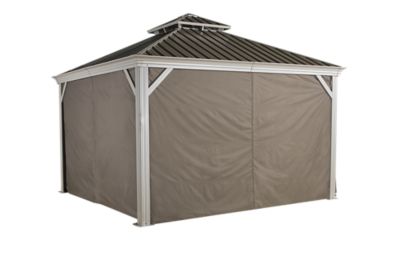
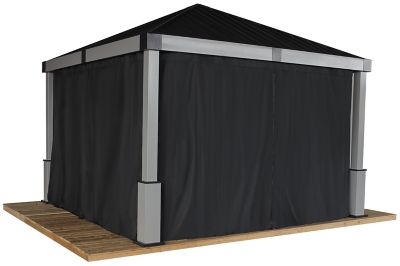
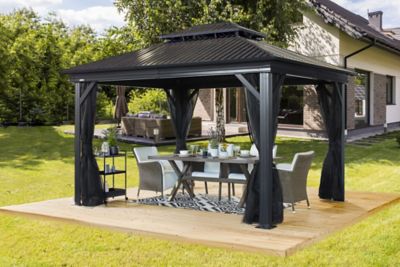
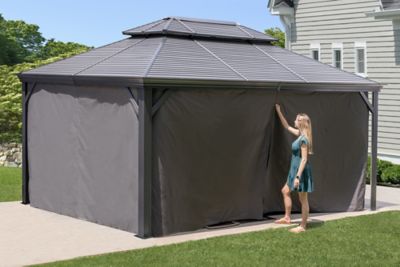
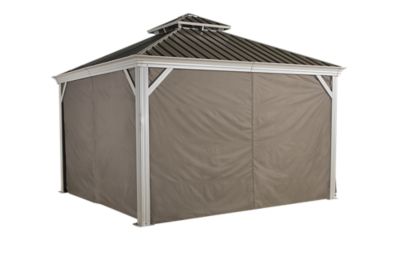
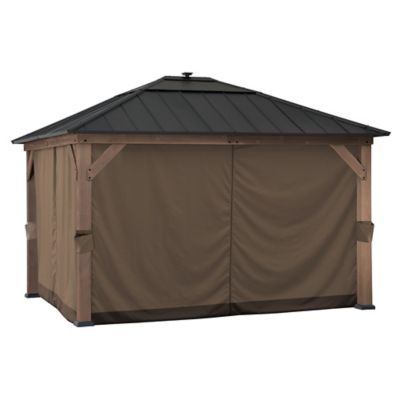
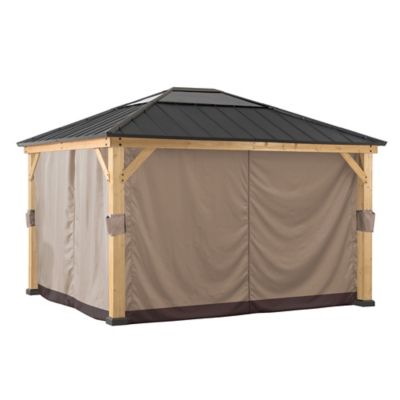
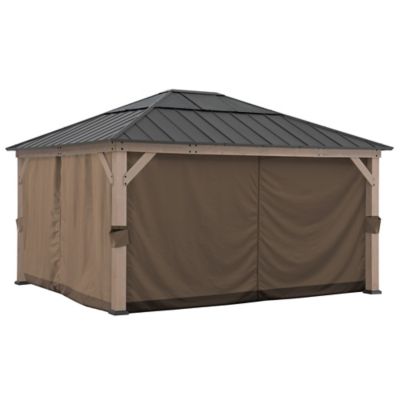
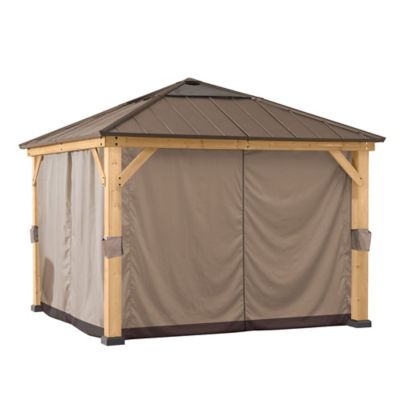
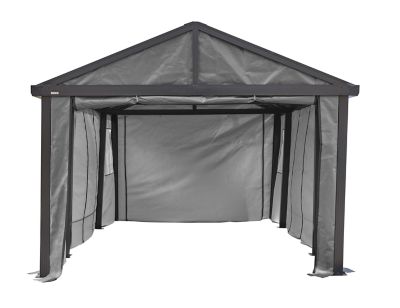
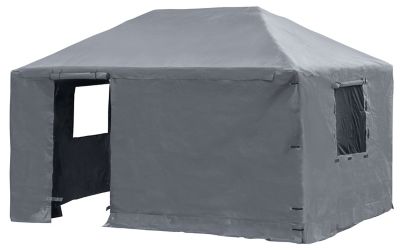
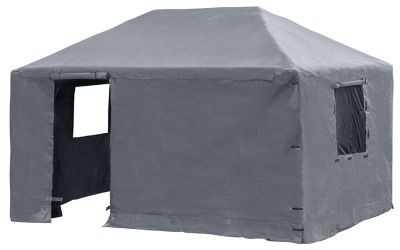
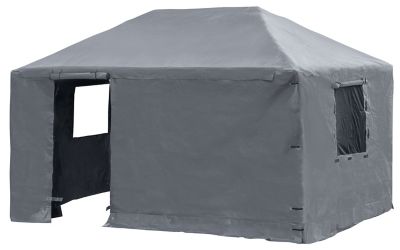
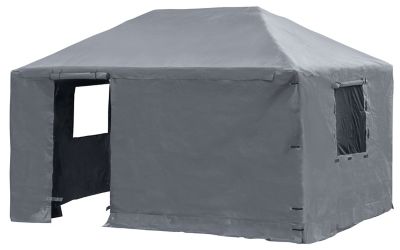
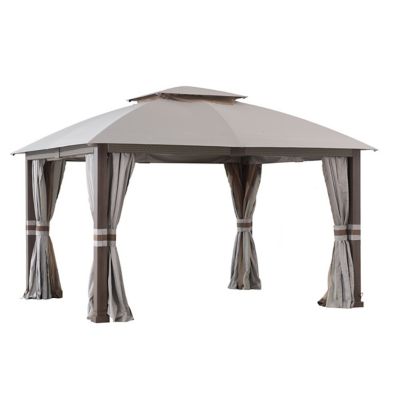
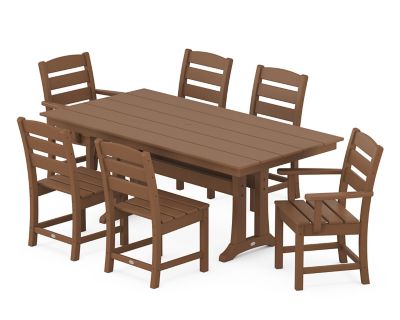
Heavy duty outdoor curtains help turn an open porch, pergola, gazebo, barn-side sitting area, or covered patio into a more comfortable space for everyday living. Hung along the sides of a structure, they can soften bright sunlight, add privacy, slow down wind, and help keep out light rain, dust, pollen, and chilly drafts during the cooler months. They are useful anywhere folks gather outside, from a back-porch coffee spot to a shaded area beside the pool, fire pit, grilling station, or hot tub. A good set of outdoor curtains can also make a plain shelter feel more finished and inviting. Picture a long farmhouse table beneath a pergola, with the curtains pulled open during a warm afternoon and tied back when supper is served. Later, when the breeze picks up, the panels can be drawn closed to make the space feel snug without giving up the pleasure of being outdoors. They may be especially handy for rural homes, campgrounds, hunting cabins, workshops, and event spaces where a little extra protection from the elements goes a long way. Outdoor curtains can make a thoughtful housewarming gift for someone with a new patio or covered porch, or a practical gift for a family that enjoys backyard meals and gatherings. For stronger shade and privacy, look for tightly woven, triple-weave polyester fabric in the range of roughly 230 to 300 GSM or more. This type of material has a substantial hand, commonly blocks about 80% to 90% of sunlight, and may be water-repellent and machine washable, depending on the construction and care instructions. Vinyl and PVC-coated panels offer a different kind of protection. Heavier 13- to 18-ounce PVC-coated vinyl is built for demanding outdoor use, with strong resistance to water, tearing, and rough handling. Clear vinyl panels can help block rain and cold air while preserving a view of the yard, pasture, garden, or surrounding landscape. The best material depends on how the space is used, how much weather it sees, and whether the main goal is shade, privacy, rain protection, or a combination of all three.
Before choosing heavy duty outdoor curtains, measure the area carefully and consider both the width and the drop from the hanging point to the ground. Measure each side of the structure rather than assuming all openings are identical, especially on older porches, handmade pergolas, or buildings that have settled over time. Panels should cover the opening with enough fullness for a finished appearance, but they should not drag heavily on the ground or bunch in a way that holds moisture. Leave room for the curtain hardware, roof overhang, posts, railings, and any doors or gates that need to swing freely. Grommet spacing matters, too. Rust-proof stainless steel or brass grommets hold up better around rain, humidity, sprinklers, and damp ground than hardware that is likely to corrode. Reinforced top hems and securely stitched edges help prevent stretching when the fabric is pulled across a wide opening. In breezy country settings, wind resistance deserves close attention. Bottom hems with weighted chains, corner grommets for tie-downs, hook-and-loop straps, tiebacks, or weight bags can help keep panels from snapping and flapping. No curtain is a substitute for a properly secured structure, and panels should be opened, tied back, or removed when severe weather is expected. Sun exposure can bleach fabric over time, so UV-resistant materials and fade-resistant treatments are worth considering for south- and west-facing spaces. Water resistance is not always the same as waterproof construction. A water-repellent fabric may shed passing showers, while a waterproof vinyl panel is better suited for steady rain or a spot that regularly gets hit by runoff. Check the care instructions before washing, and allow fabric to dry completely before storing it so mildew and musty odors do not settle in. A little routine care—brushing off leaves, checking grommets, tightening tie-downs, and inspecting seams—can add useful seasons to an outdoor curtain setup.
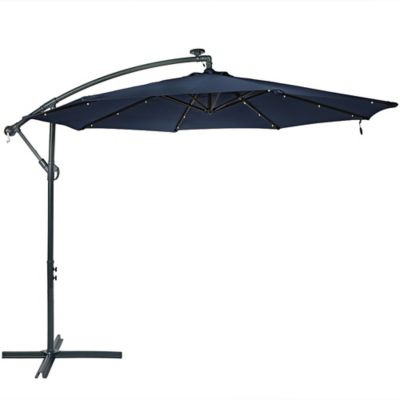
Installation is usually easiest when the hanging surface is planned before the curtains arrive. A sturdy rod, track, cable, or other compatible outdoor curtain hardware should be anchored into sound wood, metal, masonry, or another solid surface, with fasteners suited to the structure. Avoid relying on a lightweight indoor rod for a wide opening or a location that catches strong wind. Curtains that slide easily are more likely to be used, so make sure the hardware leaves enough clearance for panels to open fully and stack neatly at the sides. Tiebacks can keep fabric away from a grill, heater, walkway, or doorway, while a bottom connection helps maintain privacy and reduces movement. In a screened porch, curtains can be layered with existing screens for added shade and weather control; around a pergola or gazebo, they can define separate areas for dining, relaxing, or storing cushions between uses. Some homeowners use them seasonally, putting them up as the weather warms and keeping them in place through cooler outdoor evenings, while others leave durable panels installed for most of the year and adjust them as conditions change. If the goal is overhead shade rather than side protection,
Heavy Duty Outdoor Umbrellas can provide another way to cover seating and work areas. Whether you are dressing up a small porch, making a backyard gathering space more useful, or adding a practical layer to a working outdoor shelter, choose curtains that match the structure, climate, and daily routine. The right combination of durable material, secure hardware, proper sizing, and dependable tie-downs can help create a shaded, private, and more comfortable place to enjoy fresh air through changing outdoor conditions.