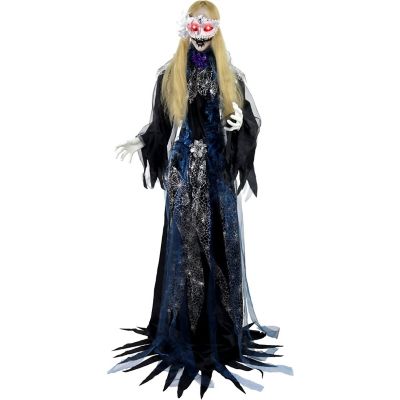
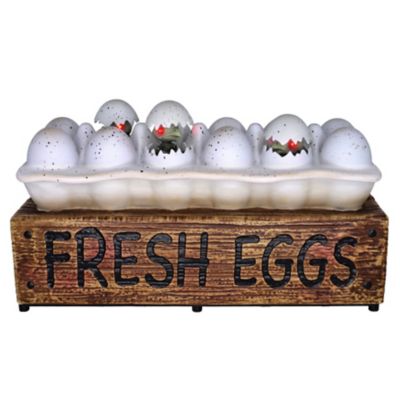
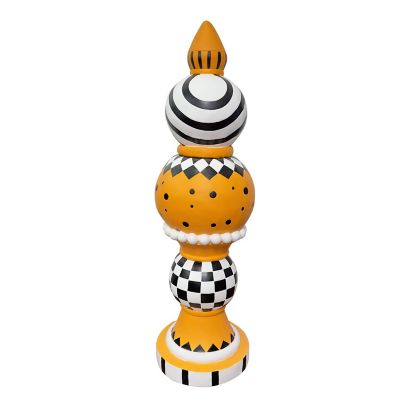
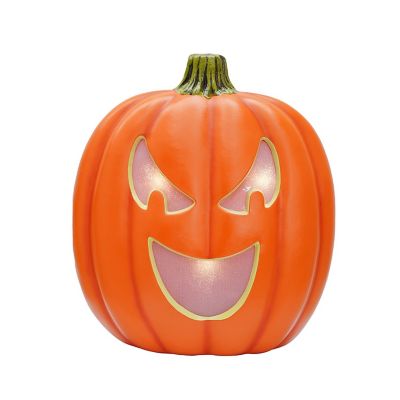
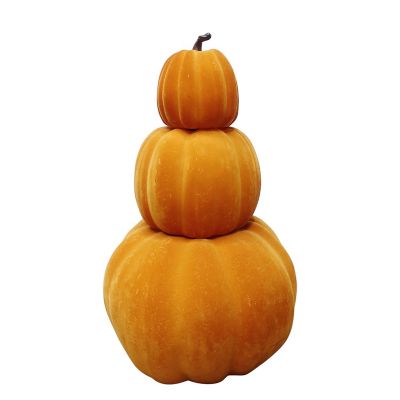
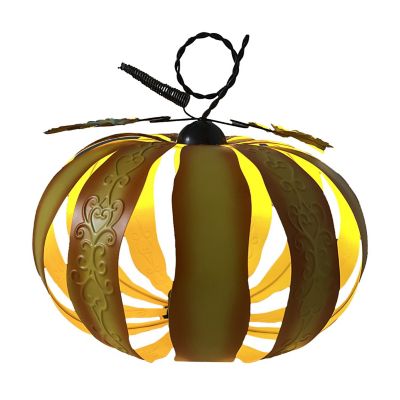
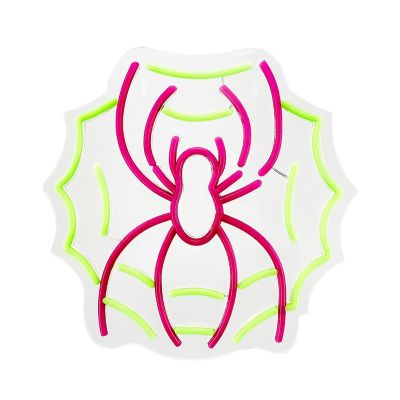
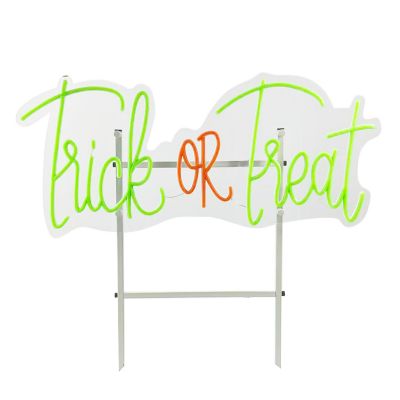
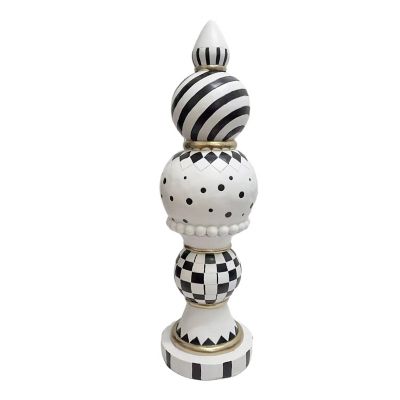
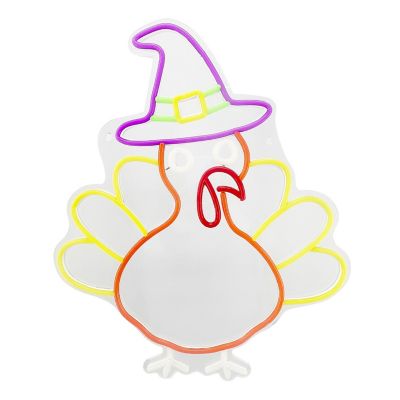
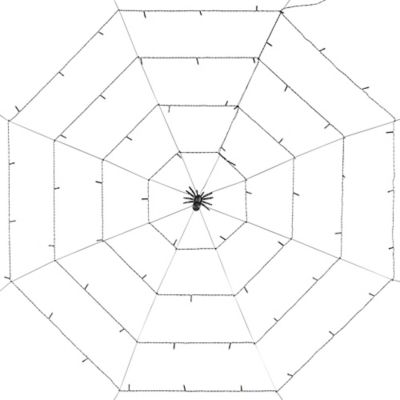
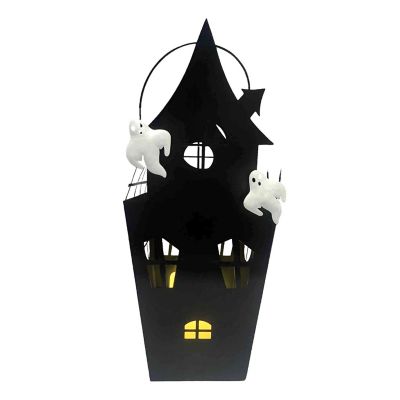
Indoor Halloween decorations range from dark, gothic styles and simple black-and-white displays to bright, playful looks built around classic orange and black. Some lean into the spooky side of the holiday with deep colors, shadowy shapes and finishes that catch just a little light. Others feel more like a fall gathering, with warm colors, soft textures and just enough Halloween detail to set them apart from everyday autumn accents. In a family room where kids spread out for a Halloween movie, bold shapes and friendly faces are easy to spot from across the room. In a dining room set for a sit-down supper, charcoal, cream and a touch of deep red can give the space a more understated look. Farmhouse rooms with natural wood and warm lighting take well to muted orange and brown, while a white wall gives black silhouettes a crisp edge. There’s no need for every room to strike the same note. A playful entryway can greet kids coming in from trick-or-treating, while a darker display farther inside suits a gathering that lasts past supper. The size of the display matters as much as the style. On a wide mantel, a few larger shapes with room between them tend to read better from the couch than a row of little details. In a small apartment or a house with a narrow front hall, a single spot that catches the eye from the doorway can carry the theme without taking over the room. Even in a bigger house, it helps to think about where people naturally look when they walk in and where they’ll spend most of their time. A grouping that feels tucked away in daylight might be just what stands out once the lamps are on, especially if there’s a clear bit of wall behind it rather than a backdrop already full of family photos.
Materials make a difference in how indoor Halloween accents look, where they fit and how well they hold up from one year to the next. Fabric brings a softer feel to a room and is often easy to pack away, though lint and pet hair tend to show on darker cloth. Paper and thin card work well where extra weight would be a problem, but corners can bend in a busy spot, and damp hands can leave marks. Wood and metal can lend a display a more substantial look, especially on an open surface where there’s room to see the finish. Weight alone doesn’t tell the whole story: a broad, flat base may sit more steadily than a tall, narrow shape, and thin edges or raised details can still get knocked around. Glass and ceramic can suit a shelf out of the traffic path better than the narrow table where keys land and the dog brushes past. For anything that hangs, check the weight and how it attaches, particularly on a painted wall or a door that gets opened often. Fit is about more than getting everything onto a surface, too. Low arrangements make sense on a kitchen table where folks still need to see each other, pass plates and make room for homework the next day. Taller displays can work on a sideboard if they leave enough space for serving dishes and don’t get in the way when someone reaches across. Lighted accents show up best where other lighting doesn’t wash them out. Battery-powered designs can suit shelves away from an outlet, while plug-in styles make more sense where a cord can stay out of the walkway. Look for indoor-use markings and follow any instructions for placement and clearance. In homes with young children or animals, keep cords, loose parts and breakable materials well away from the spots where little hands or curious noses are likely to find them.
Halloween indoor decorations can dress up a whole house for a party or make one familiar corner feel different for a quiet night in. For a get-together, the entryway and the room where people settle tend to do more for the mood than a display down a hall few guests will see. When the welcome starts outside,
Halloween Outdoor Inflatable Decorations can set a playful tone out by the drive or front walk, and a similar color or expression can carry it through the front door without taking up much room. Indoor accents also make an easy Halloween gift for a host who puts on a gathering every year, a neighbor who has just moved in or a relative who likes marking the holiday without filling the whole house. Something small with a steady base leaves the recipient more choices about where to put it. A cheerful look is a good fit for a family that makes Halloween about costumes and candy, while a quieter palette may suit someone who prefers a few seasonal touches that blend in with the room. For displays that come out year after year, it’s worth thinking about what happens after the last guest heads home. A smooth finish is generally easier to dust than a deeply textured one, and care directions matter before wiping a painted or printed surface with anything damp. Let materials dry fully before packing them away. Keep heavier pieces from pressing down on fabric or paper, give breakable pieces enough padding that they can’t knock against each other, and take batteries out before long-term storage if the care instructions call for it. Flat accents can often tuck away with little fuss, while taller shapes or parts that stick out may need a box of their own. A display that fits the room, holds up to the bustle and packs away without a struggle is one that’s easy to bring back whenever Halloween rolls around again.