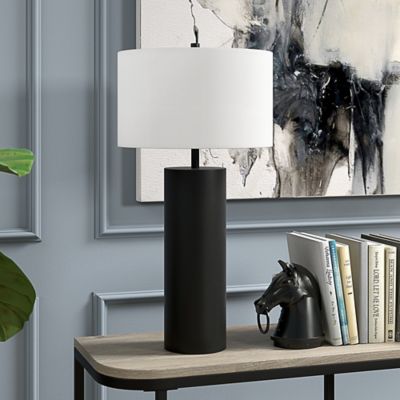
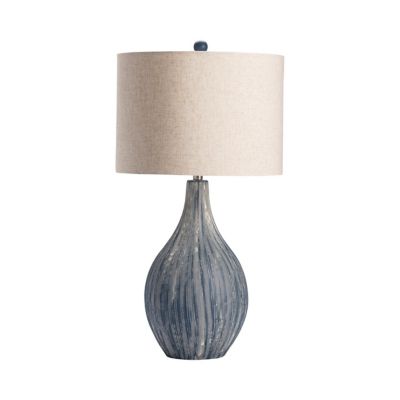
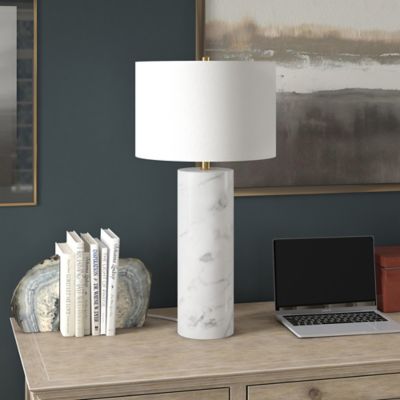
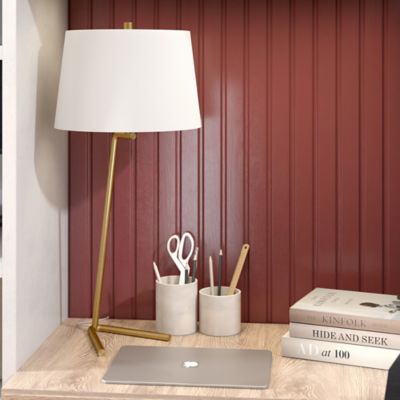
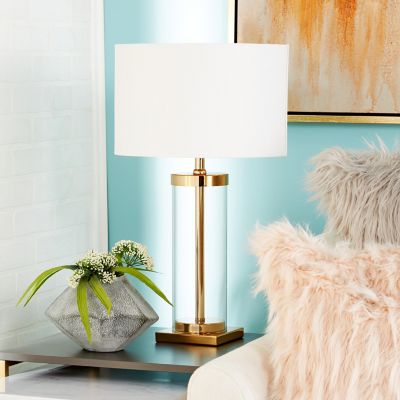
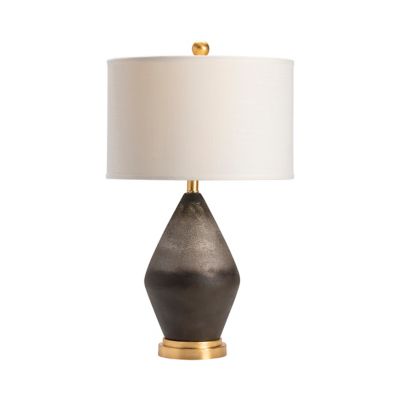
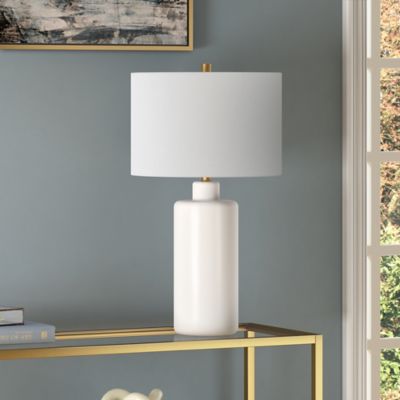
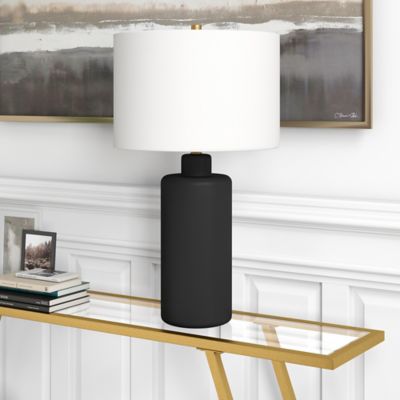
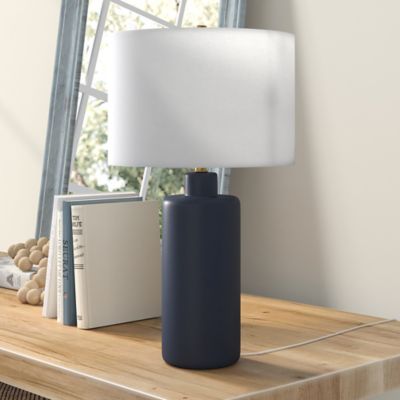
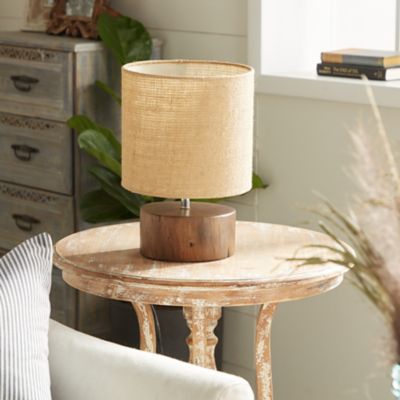
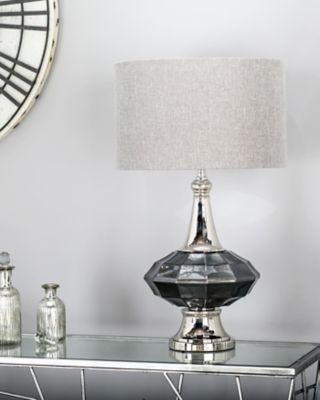
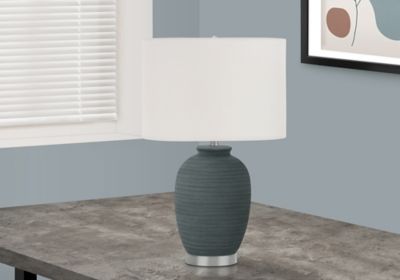
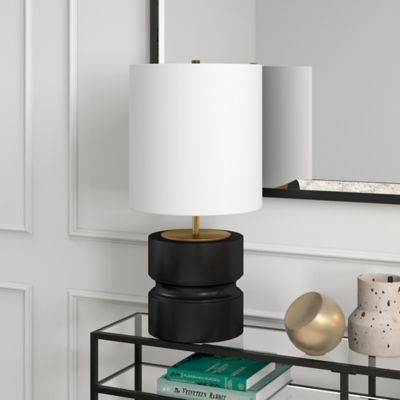
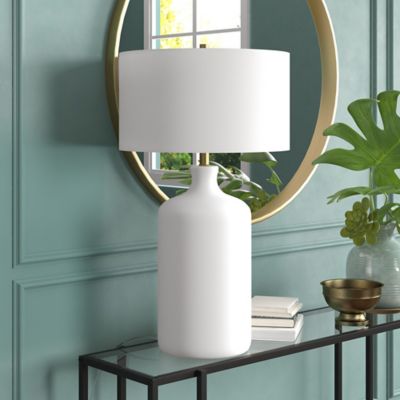
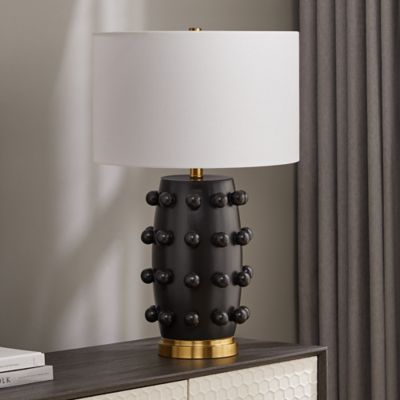
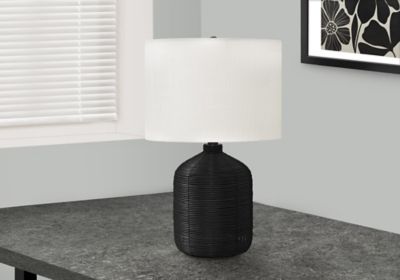
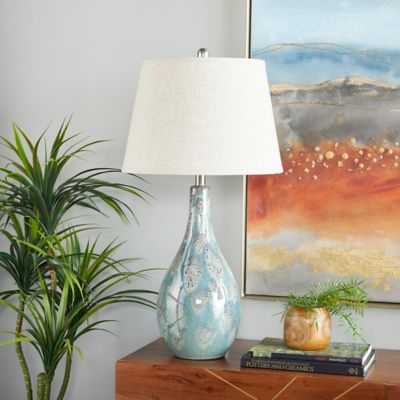
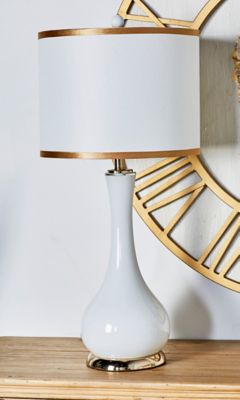
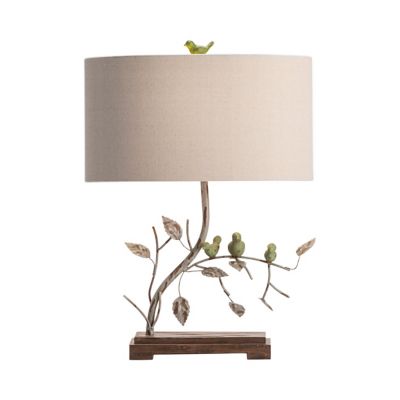
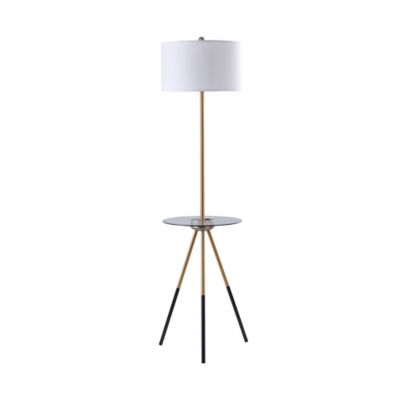
Drum shade table lamps bring a simple, balanced shape to bedside tables, living room end tables, and entryway consoles. A drum shade has straight sides with equal or nearly equal top and bottom diameters, giving it a cylindrical profile rather than the sloping outline of a tapered shade. That broad, open shape lets light travel upward and downward, while the shade material determines how much light passes through the sides. A light-colored fabric shade can soften the glow around a seating area; a darker or more opaque shade generally directs more of the light through its openings. The result depends on the bulb, lining, and shade dimensions as well as the fabric itself. It’s an easy shape to work into a country home without making every piece in the room match. Picture a lamp beside a well-loved armchair, with enough light for an evening’s reading and a gentle glow across the wall behind it. A rounded ceramic base can keep the look relaxed, while a slender metal base leaves more tabletop space for a coffee mug and a stack of mail. Wood tones, textured finishes, and neutral fabrics sit comfortably alongside pine furniture, leather seating, and woven rugs. Smooth surfaces and crisp contrasts also suit rooms with cleaner lines. The shade’s straight silhouette helps bridge those different looks, so a lamp can feel at home even when furniture comes from several chapters of family life. During the cooler months, when more evenings settle indoors, table lamps add a welcoming layer of light without requiring the overhead fixture to carry the whole room. They work especially well where folks gather to read, visit, sew, or wind down after chores. For a guest bedroom, a drum shade lamp can make an unfamiliar space feel settled, with a bedside light that’s easy to reach after the rest of the house goes quiet. Its appeal is straightforward: a familiar shape, a broad choice of base styles, and light placed where daily life happens.
When comparing drum shade table lamps, start with the space the whole lamp will occupy, not just the footprint of its base. The shade is often the widest part, and its diameter matters on a narrow nightstand or a table tucked between a sofa and a wall. Leave room for everyday belongings, and make sure the shade won’t hang into a walkway or bump nearby curtains. Overall height matters just as much. For a lamp beside a reading chair, a useful starting point is to place the bottom edge of the shade around seated eye level, then check that the bulb stays out of direct view. The right fit depends on the chair, table, and person sitting there; a tall end table may call for a shorter lamp than a low bedside chest. Shade width should look balanced with the base while still allowing the clearance specified for the bulb. A broad base can give a substantial lamp a grounded appearance, but stability also depends on its weight, construction, and the surface beneath it. In a busy household with children or pets, position the lamp away from table edges and route the cord where it won’t catch a foot or invite a tug. Consider the finish in terms of everyday upkeep, too. Smooth glazed surfaces are generally easy to wipe down according to the care directions, while ridged bases and textured fabrics may need a little more attention when dusting. Shade color deserves a close look because it affects both the lamp’s appearance and the light around it. White and ivory fabrics tend to keep the effect lighter, while deeper colors can create a more concentrated pool of light below. A fabric’s weave and lining can change that effect considerably. If you’re weighing a round silhouette against one that follows the lines of a narrow console,
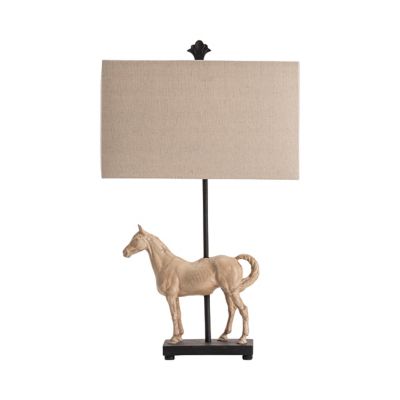
Rectangular Shade Table Lamps offer another shape to consider. Either way, checking the listed dimensions against your actual tabletop is more helpful than judging scale from a photo alone.
The electrical details are worth checking before choosing a drum shade table lamp, especially if it will be a daily reading light rather than an occasional accent. Confirm the socket type, maximum bulb wattage, and whether a bulb comes with the lamp. For LED bulbs, compare lumens for brightness and check the bulb’s actual wattage against the fixture limit; the larger incandescent-equivalent number on the package describes comparable light output, not power consumption. A warm white bulb around 2700K to 3000K often suits bedrooms and sitting rooms, while a cooler color temperature may appeal to someone who prefers a crisper-looking light for desk work. Shade fabric can alter how that light appears, so the same bulb may look different behind ivory fabric than behind bright white fabric. If adjustable brightness matters, check that the lamp, bulb, and any dimming control are compatible. A three-way socket needs a compatible three-way bulb to provide its intended settings. Switch placement can make a surprising difference in daily comfort: a socket switch, base switch, or cord switch each requires a different reach. For a bedside lamp, think about finding that control from the pillow rather than only while standing beside the table. Where listed, touch controls or charging connections may add convenience, but those features vary by lamp and should be confirmed in the product details. Also check cord length and outlet placement so the lamp can sit where it belongs without stretching its cord across the room. These practical details matter for gifts, too. Drum shade table lamps can be thoughtful housewarming or wedding gifts, or a useful addition for someone setting up a first apartment, furnishing a guest room, or making a favorite reading corner more comfortable. A neutral shade and a base finish that works with the recipient’s furniture can make the choice easier to live with. Matching lamps can bring balance to a bed or long console, while a single lamp can give a small corner a clear purpose. Whether it lights a knitting basket beside the couch or the last few pages before bedtime, the best fit combines comfortable light, manageable proportions, and controls that suit the person reaching for them.