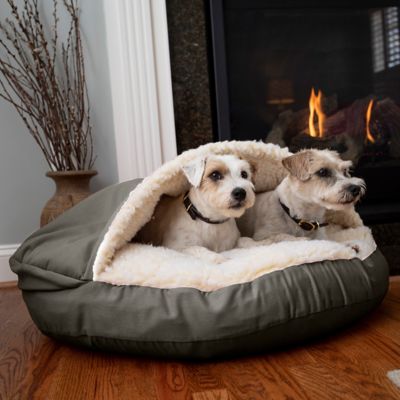
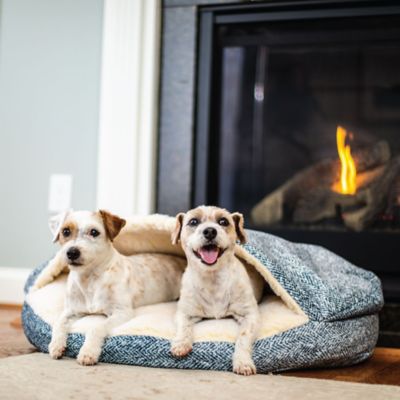
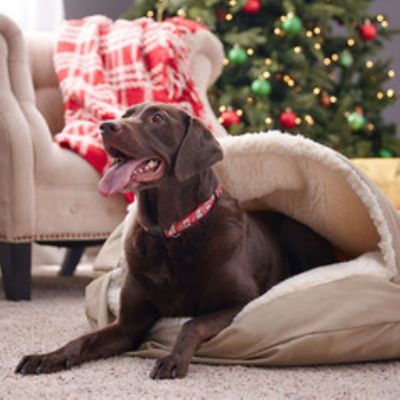
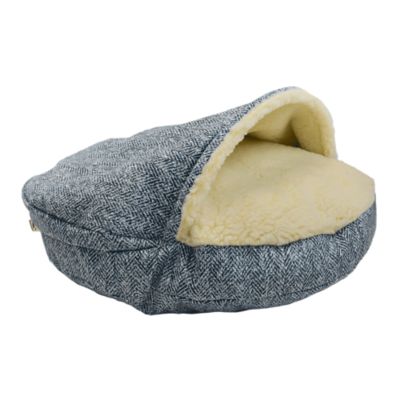
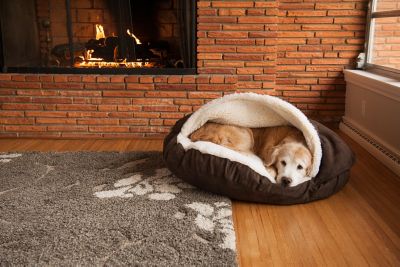
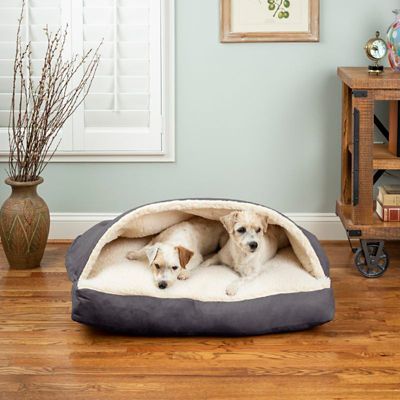
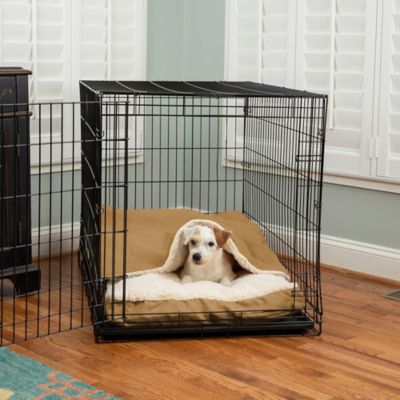
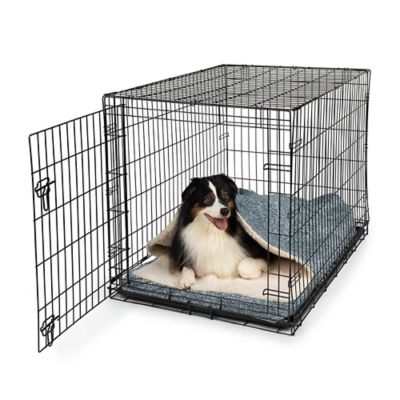
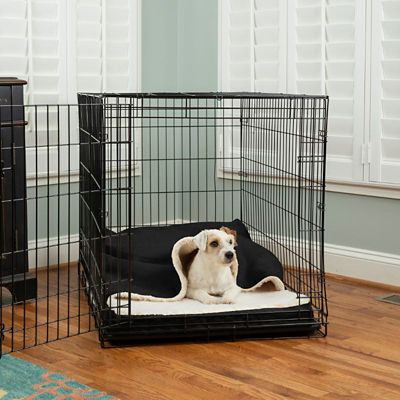
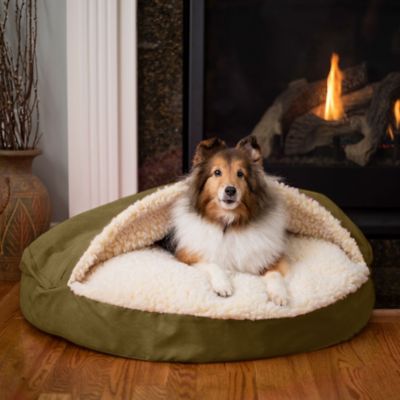
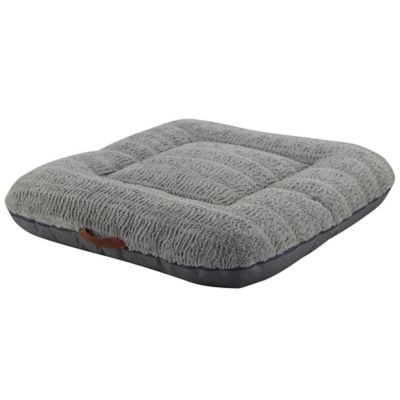
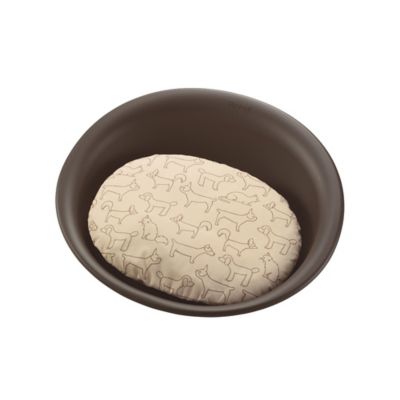
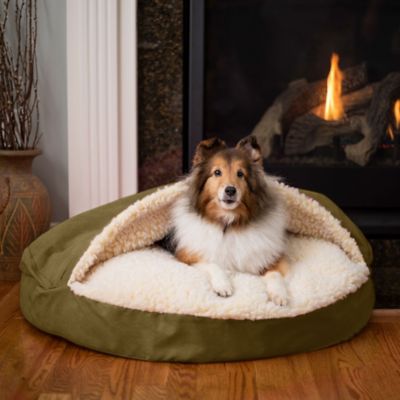
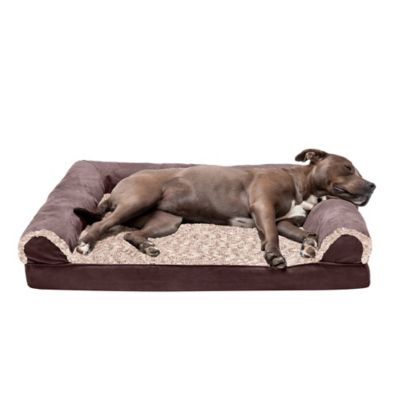
Cave dog beds give dogs that like to burrow a soft sleeping spot with a cover overhead, bringing the feel of a tucked-away nook into the house. Unlike an open cushion, a cave-style bed has a hood, pocket, or enclosed upper section that lets a dog settle partly or completely beneath the fabric. That makes this style a natural match for the blanket burrower, the little dog that disappears between couch pillows, or the companion that curls up under the covers at bedtime. Some designs have a supported opening that stays raised, while others have a loose, blanket-like top that rests closer to the sleeping surface. A supported hood can make the entrance easier to find; a softer pocket gives dogs more fabric to nuzzle beneath. Neither arrangement suits every sleeper, and dogs that prefer to stretch out in the open may appreciate a less enclosed resting place. For dogs that enjoy cover, though, the sheltered shape can offer a quiet retreat from everyday household activity. Picture a dog settling down after a walk along the fence line, with its nose near the opening and its back nestled against a soft lining. During the cooler months, that cover can help hold body warmth around the sleeping area, especially for small or short-coated dogs that seek out warm spots. The entrance should still allow easy movement and airflow, and a dog should always be able to leave when it gets warm. A cave bed belongs in a dry, sheltered indoor space unless its care information specifically allows another setting; a fabric hood is not protection from outdoor weather. These beds can make a comfortable resting spot beside a chair, near a home office, or in a quiet bedroom corner. They offer a place to settle on the dog’s own terms, rather than a substitute for a crate, supervision, or care for ongoing distress.
The feel of a cave dog bed comes from both its outer fabric and what sits beneath the dog. Fleece, plush polyester, and sherpa-style linings provide a soft surface for nesting, while woven outer covers can give the bed a more structured finish. Smooth fabrics may be easier to brush free of loose hair, whereas deep-pile linings can catch fur, grass, and the occasional leaf carried indoors. For a dog that paws at its sleeping spot before lying down, close stitching, reinforced seams, and a firmly attached hood matter just as much as softness. No fabric bed is chew-proof, so dogs that pull apart bedding need close supervision and a sleeping arrangement suited to that behavior. Inside the base, fiberfill creates a cushioned, nest-like feel and may need regular fluffing to keep it evenly spread. Foam offers a steadier surface, and beds described as orthopedic generally feature cushioning intended to distribute weight and provide support. The label alone does not tell the whole story: foam thickness, firmness, and how well the base supports the dog’s weight all affect comfort. A dog that rises slowly may do better with a stable base and a low entrance than with a deep pocket that takes effort to climb into. Fit also includes the covered space, not just the bed’s outside dimensions. The sleeping area needs room for the dog’s usual curled or stretched position, and the opening needs enough clearance for its shoulders and back. A roomy outer edge does not necessarily mean a roomy interior, especially when thick walls or bolsters take up space. Weight recommendations can help narrow the choices, but body length, sleeping habits, and ease of turning around are worth considering, too. Even two dogs of the same weight may need different shapes: a long-backed dog that sleeps on its side takes up space differently from a compact dog that curls nose to tail. The best fit leaves room to settle comfortably without making entry or exit a squeeze.
Everyday care is a big part of keeping a covered dog bed pleasant for both the dog and the household. After a damp walk or a romp across the yard, towel-dried paws and a dry coat help keep moisture from collecting inside the hood. Removable covers can make cleanup simpler, but washing directions vary between the cover, lining, filling, and any support pieces. Some covers allow machine washing, while foam inserts or hood supports may need separate care or removal before laundering. A washable cover does not automatically mean the whole bed can go into the washer. Access to the inside corners matters as well, since that is where shed hair and tracked-in grit tend to gather. Routine vacuuming or brushing between washes helps keep the resting space tidy, and thorough drying before reassembly helps prevent lingering dampness. A spare cover, where the design allows one, can keep a familiar sleeping spot in service while another cover dries. Placement makes a difference in daily comfort, too. A level patch of floor away from a busy doorway gives the dog room to step out without landing in foot traffic. On slick flooring, a nonslip base can help limit shifting, particularly when a dog pushes against the hood on the way inside. Beds should stay well away from woodstoves, space heaters, and other direct heat sources, even when a dog seems determined to claim the warmest corner. For a room with earthy colors, a
Brown Dog Bed can sit comfortably alongside wood furniture, leather seating, and everyday household fabrics. Color can help a bed blend into the room, though cleaning needs remain the same regardless of shade. A covered bed can also be a thoughtful gift for someone whose dog already loves sleeping beneath a blanket, provided the dog’s measurements and habits are known. Whether it sits beside the family’s favorite chair or in a peaceful corner down the hall, a well-fitting cave bed gives a cover-loving dog a familiar place to curl up when the day’s activity winds down.