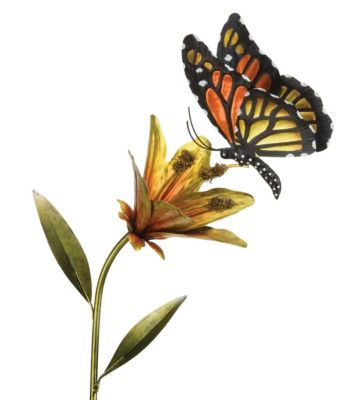
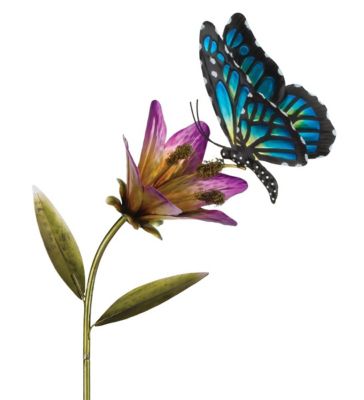
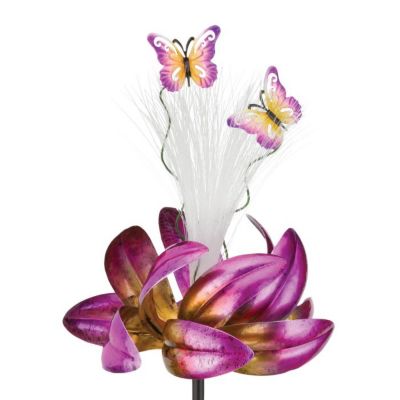
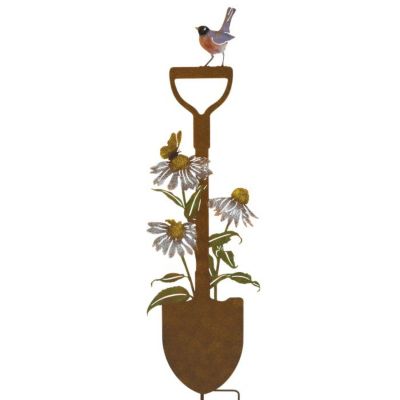
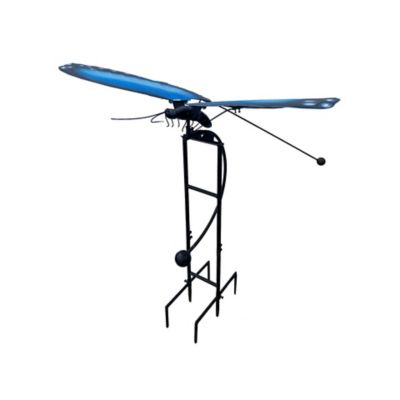
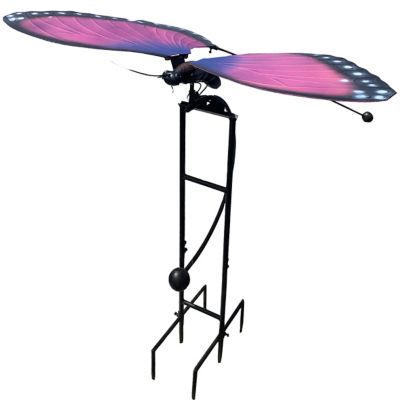
Butterfly garden stakes are ornaments with butterfly-shaped tops and pointed stems that slip into the soil. They bring a spot of color to flower beds, porch pots, raised planters and the edges of garden paths without taking up much planting space. A single butterfly tucked between two clumps of flowers can look like it’s resting there, while a few at different heights give a long bed something to catch the eye as you walk past. The right size has as much to do with where the stake will be seen as with where it will go. A small butterfly with finely marked wings is easy to appreciate in a pot beside the back steps, where people pass close enough to see the pattern. Seen from the porch or across the yard, a wider wing shape and a strong color contrast tend to show up better than fine markings. Height matters, too: The part of the stem that goes into the ground doesn’t count toward the height you’ll see once it’s in place. A short stake can sit just above low foliage without making a little pot look top-heavy. A taller stem can lift the wings above a thick clump of leaves, provided enough of the stem sits in firm soil to keep it steady. There’s also the width of the wings to think about, especially by a gate or along a path where a sleeve, hose or wheelbarrow might brush past. Inside a bed, a little room between the ornament and the plants keeps the butterfly visible and leaves space to reach in for watering or tending. Butterfly shapes can stand on their own, but they also fit alongside simple plant markers or other silhouettes from the broader selection of
Garden Stakes. In a mixed grouping, repeating one wing color can tie the pieces together without making every pot look the same.
Painted metal, copper, acrylic and flexible PVC give butterfly stakes different looks and handle everyday contact differently. Painted metal generally has a firmer shape and a more defined outline than thin plastic, so the wings can stand out against a fence or a full bed of greenery. Opaque paint shows the color from the viewing side even when there’s no light coming through the wings. Bare copper starts with a warmer metallic tone and can develop a patina over time, especially where it comes into contact with moisture. Clear or translucent acrylic gives a different effect: Light passing through the colored wings can make the edges appear brighter, which is especially noticeable when there’s a darker backdrop behind the stake. Flexible PVC wings are light enough to shift on a slender wire stem, and printed patterns can mimic the spots and veins on real butterfly wings. Some butterfly stakes hold the wings in a fixed position, while others have a spring between the butterfly and the stem that lets the top bob with a little movement. A fixed shape can be a better fit in a tight cluster of plants, where moving wings would keep catching on leaves. An open spot gives a spring-mounted butterfly room to move. For a stake that will be moved between pots or lifted out while a bed is being tended, the connection between the wings and the stem matters as much as the wing material. A broad metal top on a thin stem puts more strain on that joint than a small, lightweight top does. A firmer shaft is handy in packed soil; a finer wire is easier to place in loose potting mix but can bend if it hits a stone or a thick root. For a shallow planter, a shorter stake that can sit securely without reaching the bottom will usually fit better than a tall one with most of its stem left above the soil.
Butterfly garden stakes don’t take much looking after, though the way they go into the ground and come back out can make a difference in how long they hold up. Pushing on the stem instead of the wings keeps pressure off the painted surface and the joint at the top. If the ground is hard or full of gravel, a starter hole gives the stem a clear path and is easier on thin wire than forcing it past a stone. In a container, a spot where the stem won’t scrape the rim or crowd the main plant leaves room for both the stake and the roots. Once the stake is in place, a soft cloth can take care of most soil and watering splashes. Rough scrubbers can cloud clear acrylic or scratch a painted finish, so gentle wiping is usually enough. Gripping the shaft near the soil line is less likely to bend it or loosen a spring than pulling the stake out by its wings. These pieces suit just about anyone who likes a bit of color around the yard, from a gardener with a long border to a neighbor with room for one pot by the door. As a gift, scale is a good place to start: A little butterfly can sit beside a favorite herb without covering it up, while a larger silhouette is easier to see in a bed at the far end of a walk. For someone who spends time watching the real butterflies that visit the yard, a stake with familiar wing markings can be a nice nod to that interest. It adds a butterfly shape to the planting but doesn’t take the place of nectar flowers or the host plants caterpillars feed on. Set among plants with plenty of room to grow, a butterfly stake can give a plain patch of leaves a bright focal point or mark the bend in a path without stealing the show from the garden itself.