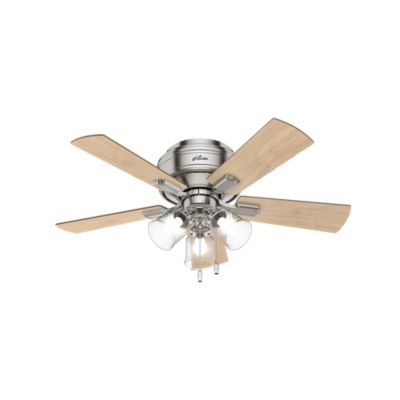
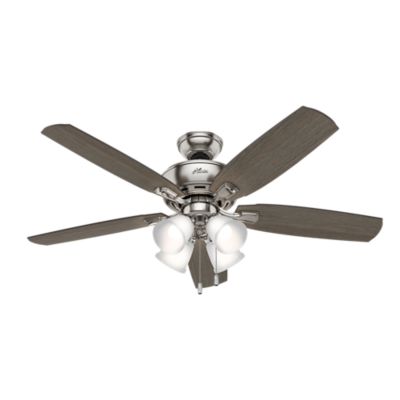
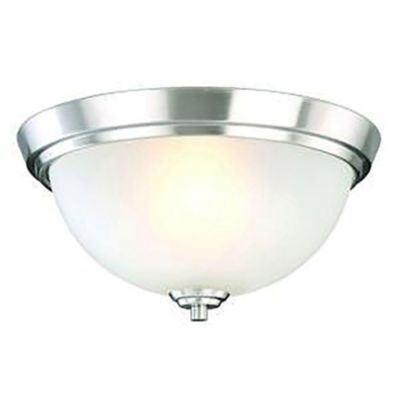
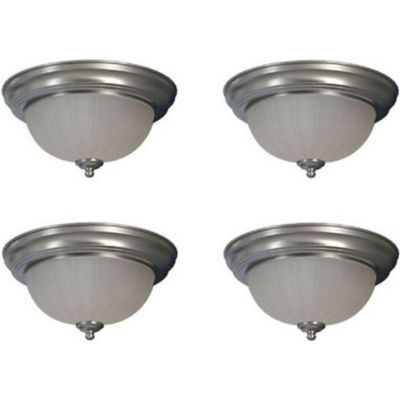
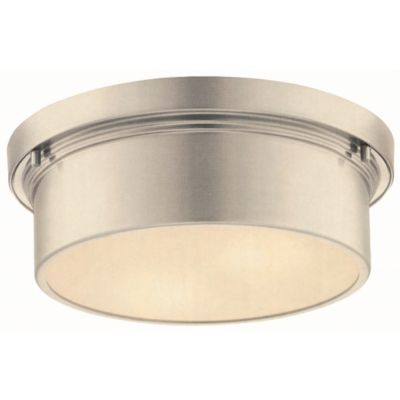
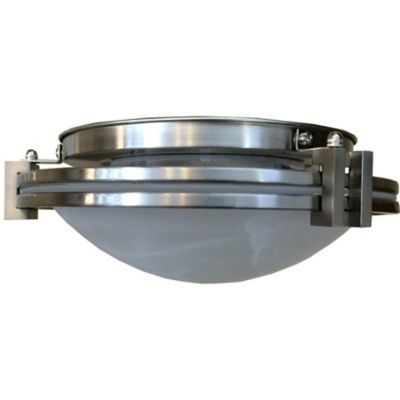
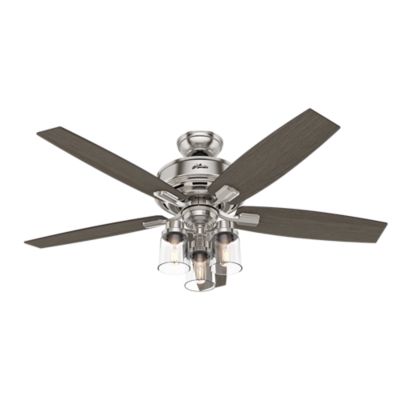
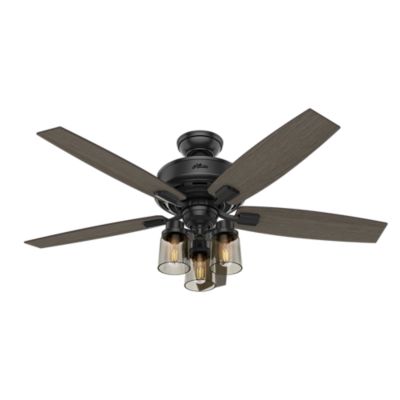
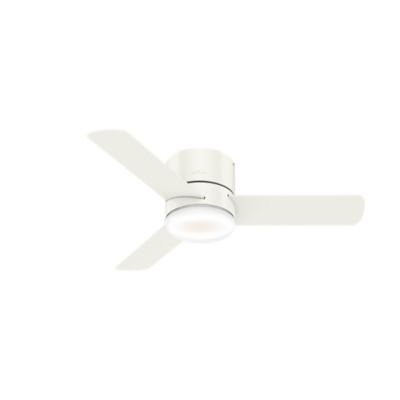
Brushed nickel flush mount ceiling lights sit close to the ceiling, bringing overhead light to rooms where a hanging fixture would take up too much headroom. Their softly brushed, silver-toned finish has less shine than polished chrome and pairs comfortably with painted cabinets, natural wood, stone, and everyday household hardware. That makes them an easy fit for a farmhouse kitchen, a ranch house hallway, or a bedroom over the garage without tying the whole room to one particular look. The finish describes the outer surface, not necessarily solid nickel construction; fixture bodies may combine steel, aluminum, or other materials with glass, acrylic, or fabric shades. Round glass domes have a familiar, understated shape, while shallow disks keep the ceiling line simple. Drum shades and metal-ring designs give the light a little more presence without the drop of a pendant. Flush mount lighting works especially well where people carry laundry baskets, pull on coats, or move supplies through a busy doorway. The fixture’s actual height still matters, though, since some domes extend farther below the ceiling than their name might suggest. Diameter matters just as much: a small light can look lost in a broad bedroom, while a wide drum can crowd a narrow passage. In a kitchen with open shelving and wood cabinets, brushed nickel trim can echo the cabinet pulls without making every metal surface match exactly. Against a white ceiling, a thin nickel rim stays quiet; against darker paint or wood planks, the same finish stands out a bit more. For rooms that call for different fixture shapes while keeping a similar finish,
Brushed Nickel Ceiling Light Fixtures brings that broader look into the picture. A close-to-ceiling design is a practical starting point for homeowners fitting out everyday living spaces, whether the room sees muddy boots at the door or a stack of clean quilts at the end of the day.
The light beneath that brushed nickel finish can vary quite a bit, so brightness and light color deserve as much attention as the shape. Bulb-based flush mounts have replaceable lamps, letting the homeowner choose compatible bulbs within the fixture’s socket type, size, and wattage limits. Integrated LED flush mounts have their light source built into the fixture, often allowing a shallower profile and an evenly lit face. Their rated service life varies by model, and replacing the light source may mean replacing a module or the fixture rather than simply changing a bulb. Neither construction alone guarantees a brighter room; lumen output is the better measure of light quantity. A narrow hallway needs a different amount of illumination than a kitchen where supper gets prepared and school papers cover the table. Ceiling height, room dimensions, shade construction, and dark walls all affect how bright the space feels. Color temperature, measured in kelvins, describes whether the light looks warmer or cooler. Around 2700K to 3000K gives bedrooms and sitting areas a warmer cast, while around 3500K to 4000K offers a more neutral appearance that can suit laundry rooms and kitchens. Higher settings, such as 5000K, look cooler and more like daylight, though preferences vary from room to room. Some fixtures offer selectable color temperature, but that feature should be confirmed in the specifications rather than assumed. Frosted glass and white acrylic help spread the light and soften the view of the bulbs or LEDs; clear glass leaves the light source more visible and may create sharper highlights. Fabric drums bring a softer look to dry living spaces, though their care needs differ from wipeable shades. Dimming can make the same room work for morning chores and a quieter evening, provided the fixture, bulbs, and dimmer are compatible. Over a kitchen sink or work surface, separate task lighting may still be helpful because a central ceiling light can leave shadows where someone stands.
Room conditions and construction details help determine where brushed nickel flush mount lighting belongs and how it holds up to everyday life. A bedroom or interior hall generally calls for a fixture rated for a dry location. Bathrooms, covered outdoor areas, and spaces with moisture need the appropriate location rating; a brushed nickel finish by itself does not make a light suitable for damp or wet conditions. An enclosed porch that collects condensation is a different setting from a heated entryway, even when both are under a roof. Fixtures near showers also have placement and electrical requirements beyond their appearance, so the manufacturer’s directions and local code matter. In a busy laundry room, a smooth glass or acrylic shade may be easier to keep clean than a fabric shade that catches lint. Glass can be heavier and can break if dropped during cleaning, while acrylic is lighter but may scratch if scrubbed with abrasive materials. Metal trim, shade attachments, and the way the cover comes off also affect day-to-day upkeep. A cover that can be removed without an awkward reach makes bulb changes and occasional cleaning less of a chore, especially on a ceiling that already requires a stepladder. With power switched off and the fixture cool, gentle cleaning according to the manufacturer’s instructions helps protect the brushed finish; harsh cleaners and scouring pads can damage surfaces. Mounting deserves the same care as maintenance. These fixtures commonly attach to a ceiling electrical box, and the box, wiring, mounting hardware, and ceiling surface must suit the installation. Sloped ceilings require particular attention because not every flush mount is designed for them. A qualified electrician can address uncertain wiring or mounting conditions before the light goes up. For a spare bedroom, an everyday entry, or a kitchen that stays busy through the cooler months, the right combination of clearance, light output, shade material, and finish keeps the fixture working with the room rather than getting in its way. Brushed nickel offers a settled, easygoing look that fits both well-kept older homes and freshly finished spaces.