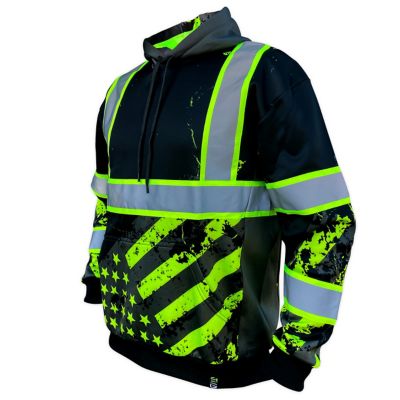
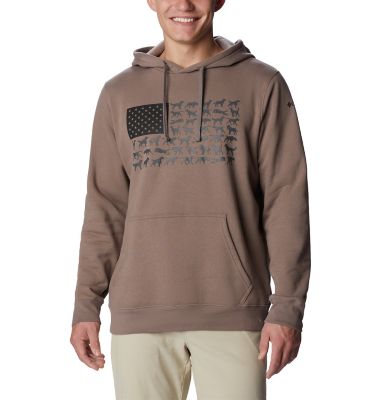
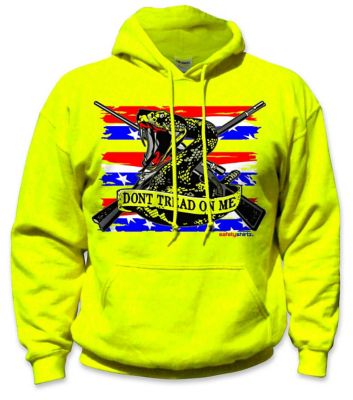
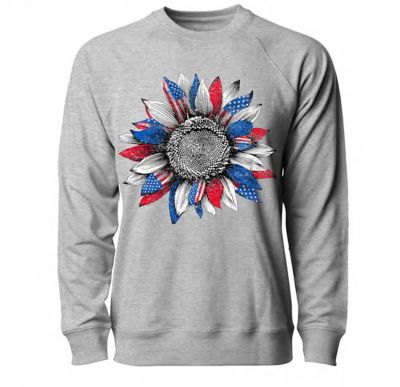
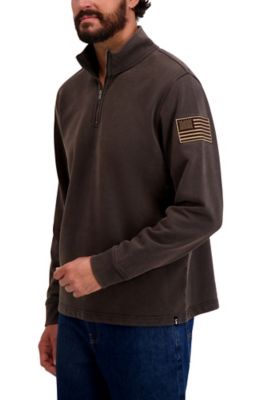
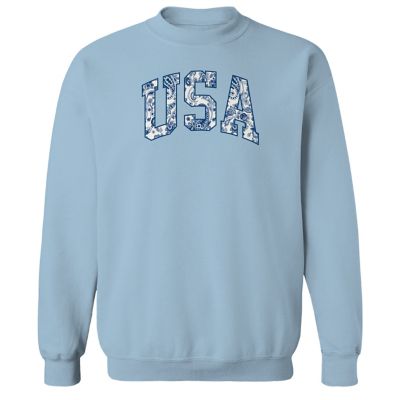
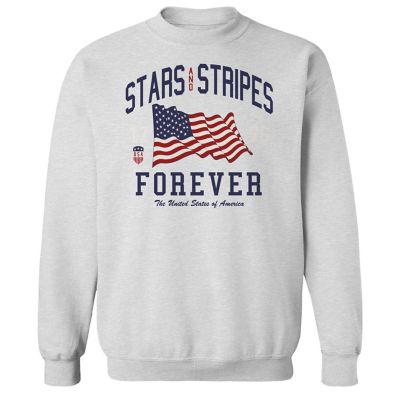
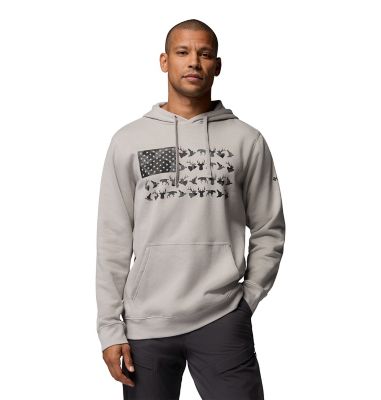
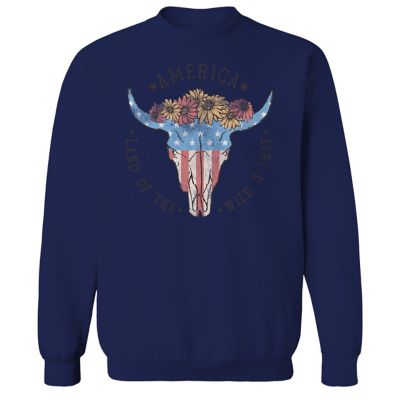
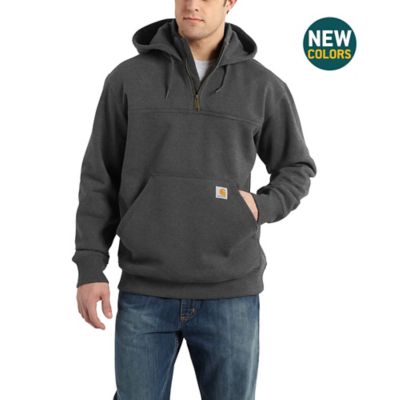
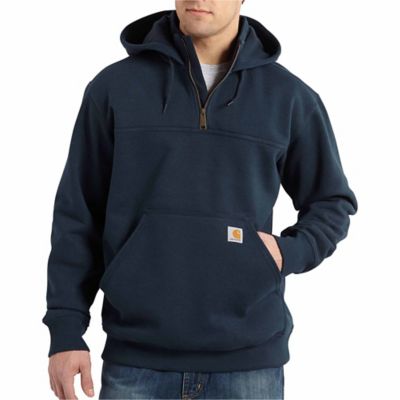
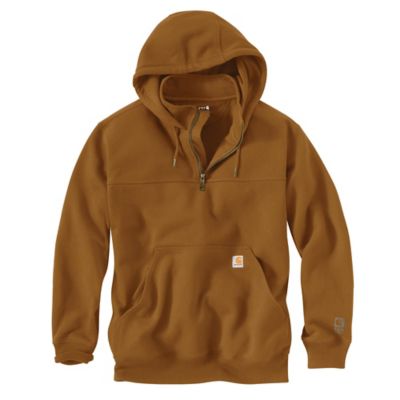
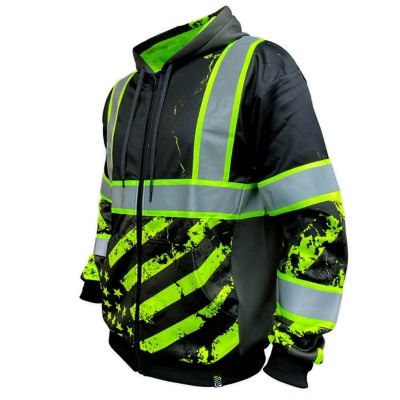
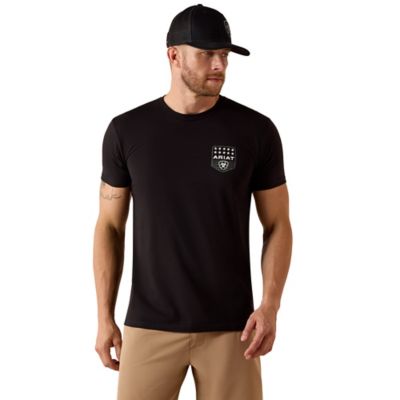
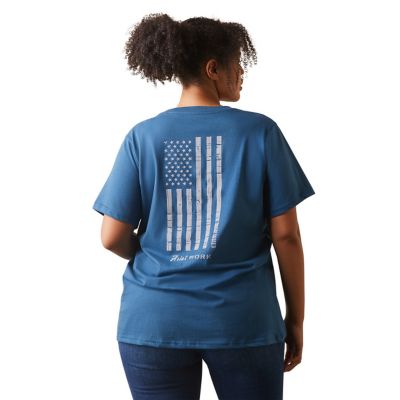
American flag sweatshirts bring a familiar symbol to an everyday layer, whether the day involves a feed-store stop, a family cookout, or a seat in the bleachers. Stars and stripes give a simple sweatshirt a clear point of view without requiring a dressed-up outfit. The look can range from a small flag at the chest to a larger design across the back, with sleeve graphics adding another place for the pattern to show. Full-color red, white, and blue makes a bold statement, while a flag rendered in a single shade has a more understated feel. Those differences matter when a sweatshirt is headed into someone’s regular rotation rather than coming out only for an occasion. A smaller graphic pairs easily with jeans and work pants, while a broad chest print becomes the main feature of an otherwise simple outfit. Crewneck shapes keep the neckline straightforward, and hooded styles bring a different silhouette, especially when paired with a cap. Ribbed cuffs, a defined waistband, and the way the shoulders sit all contribute to the finished look as much as the flag itself. These sweatshirts suit people who enjoy showing their connection to the country through familiar, practical clothing, from folks heading to a community gathering to families getting together for a patriotic celebration. Memorial Day and Veterans Day events may call for a flag-themed layer, but the design also fits an ordinary Saturday spent running errands or visiting friends. There is no need to build an entire outfit around the graphic; denim, plain tees, and everyday boots let it stand on its own. For someone who prefers clothing with a little meaning behind it, an American flag sweatshirt combines an easygoing shape with a recognizable symbol that carries personal significance in different ways.
Fabric and construction make a real difference in how an American flag sweatshirt feels throughout the day. Cotton-rich fabrics generally have a soft, familiar hand, while blends that include polyester can help the garment hold its shape and dry more readily after washing. Fiber content alone does not tell the whole story, though. Fabric weight, knit structure, and the finish on the inside all affect the feel. A brushed fleece interior has a fuzzy surface against the skin, while a looped interior has a different texture and often a less lofty feel. Neither finish automatically makes a sweatshirt the better choice; the right match depends on how someone likes a layer to sit and what goes underneath it. A substantial knit can give a crewneck a more structured appearance, while a lighter fabric may drape more loosely over a T-shirt. Fit deserves just as much attention. A close-fitting sweatshirt can look neat but leave less room through the shoulders, chest, and upper arms. A relaxed cut gives more space for reaching toward a shelf, carrying a feed scoop, or settling in for a long ride in the truck. Extra room is helpful only when the proportions still work: sleeves that extend well past the hands and a waistband that hangs too low can get in the way. Garment measurements and size charts offer a better reference than assuming the same size fits alike across every cut. Shoulder placement, sleeve length, body length, and ribbing tension each affect how a sweatshirt moves. Seams should sit comfortably without rubbing, and cuffs should hold their shape without pinching the wrists. For a layer worn over a collared shirt, a little room at the neckline and through the upper body helps keep the shirt from bunching. For casual wear over a tee, the goal may be a simpler fit that moves easily without feeling oversized.
The flag treatment also deserves a closer look because the graphic is part of what makes these sweatshirts worth reaching for. Printed artwork can create anything from crisp blocks of color to a faded-looking finish, while stitched designs add texture and may feel firmer where the thread meets the fabric. Larger prints can change how the front or back panel bends, especially when the design covers a broad area. Someone who favors a soft, flexible feel may prefer less coverage, while someone drawn to a stronger visual statement may enjoy a larger flag. Care should follow the garment label, since the fabric and graphic may need different handling. Turning a sweatshirt inside out before washing helps limit direct rubbing against the design, and keeping it away from exposed zippers or hook-and-loop closures can reduce snags. Lower dryer heat, when the label permits machine drying, can help limit shrinkage and stress on printed details. Letting the garment dry fully before folding keeps it ready for the next wear. Over time, friction from seat belts, bag straps, and repeated washing may leave signs of wear, so tidy seams, resilient ribbing, and an even knit are useful construction details to consider. A sweatshirt intended for casual wear is not a substitute for task-specific protective clothing around machinery, sparks, or other work hazards. As a gift, an American flag sweatshirt makes the most sense for someone whose everyday style already includes graphic tops and easy layers. A familiar fit and a flag design that matches the recipient’s taste can make it a welcome addition without needing a special occasion. For another take on the same theme,
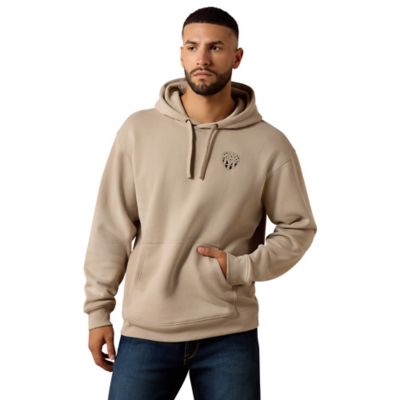
patriotic hoodies put the focus on hooded silhouettes. Whether the preference is a plain crew neckline, roomy sleeves, or a bold stars-and-stripes graphic, the appeal comes back to a comfortable everyday garment with a message the wearer is glad to carry.